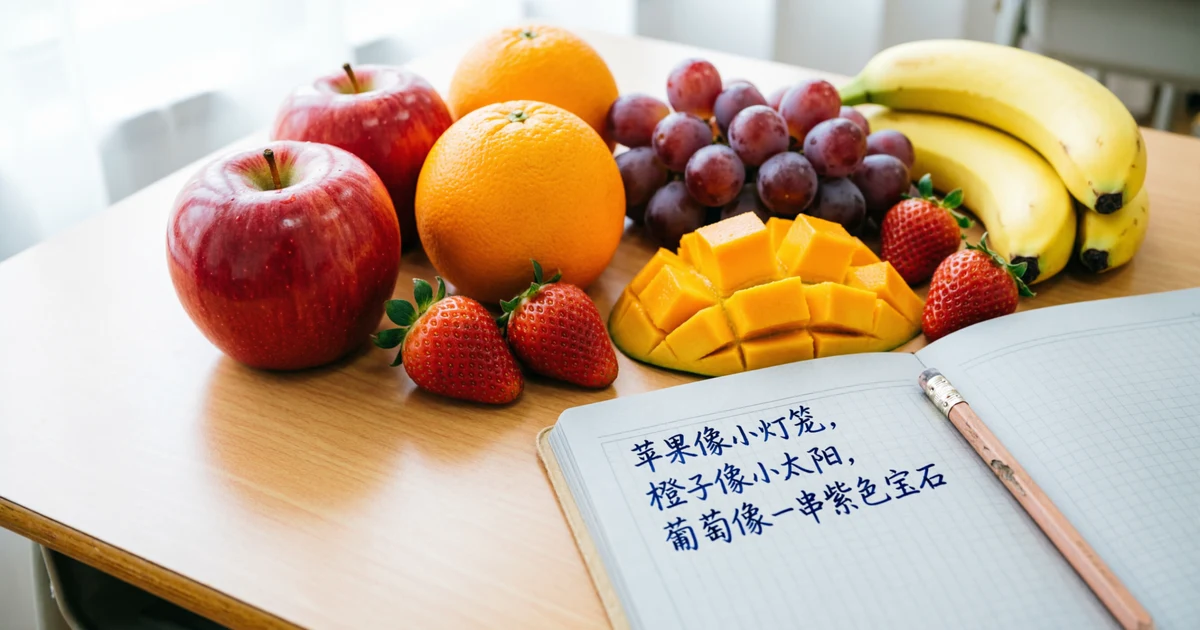
Fruit gives writers a rich way to describe taste, color, freshness, beauty, growth, and even decay. A good fruit simile can make a sentence feel bright, clear, and full of life.
When you compare something to fruit, you can show sweetness, softness, ripeness, freshness, or damage in a simple way. For example, a smile can shine like a ripe peach, or a bad idea can spread like rotten fruit in a basket.
In this guide, you will learn what a simile for fruit means, how writers use fruit comparisons, and how you can write your own natural fruit similes for school work, poems, stories, and creative sentences.
What Simile for Fruit Means in Simple Words
A simile for fruit compares fruit to another person, place, feeling, or thing using the words like or as. It helps readers picture the idea more clearly.
A fruit simile can describe:
- Taste
- Color
- Smell
- Shape
- Freshness
- Sweetness
- Growth
- Decay
- Emotion
- Beauty
For example:
Her cheeks looked as red as ripe cherries.
This sentence compares her cheeks to cherries because both look bright red. The simile helps the reader imagine the color quickly.
Another example:
The mango tasted like summer in my mouth.
This simile connects mango with summer because mango often feels sweet, warm, and refreshing. It does not only describe flavor. It also creates a mood.
A simile for fruit works best when the comparison feels clear and natural. You should choose fruit that matches the exact idea you want to show.
Why Writers Use Similes to Describe Fruit
Writers use fruit similes because fruit already carries strong images in the reader’s mind. Most people know how an apple looks, how an orange smells, how a strawberry tastes, or how a banana feels when it turns soft.
Fruit similes help writers describe things without long explanations.
For example:
The child’s laughter felt as fresh as sliced watermelon.
This sentence gives the laughter a light, clean, joyful feeling. The writer does not need to say the child sounded happy, bright, and refreshing. The fruit simile does that work in one image.
Writers use fruit similes to:
- Make descriptions more visual
- Add taste and smell to writing
- Show emotion through familiar images
- Create a natural and pleasant tone
- Make simple sentences more memorable
Fruit also connects with human experience. A ripe fruit can suggest success, maturity, beauty, or readiness. A sour fruit can suggest bitterness or disappointment. A rotten fruit can suggest failure, neglect, or hidden damage.
That makes fruit useful in poems, stories, essays, and descriptive writing.
Best Similes for Fruit With Clear Meanings
Here are some strong fruit similes with simple meanings. You can use them in creative writing, school assignments, and descriptive sentences.
- As sweet as a ripe mango
Meaning: Very sweet, warm, or pleasant
Example: Her words felt as sweet as a ripe mango. - As red as a cherry
Meaning: Bright red in color
Example: His face turned as red as a cherry after the compliment. - As fresh as a green apple
Meaning: Clean, crisp, and lively
Example: The morning air felt as fresh as a green apple. - As soft as a ripe peach
Meaning: Gentle, smooth, or tender
Example: The baby’s skin felt as soft as a ripe peach. - As juicy as an orange slice
Meaning: Full of flavor or excitement
Example: The story sounded as juicy as an orange slice. - As golden as a ripe banana
Meaning: Bright yellow or warm in color
Example: The sunlight looked as golden as a ripe banana. - As bright as a bowl of berries
Meaning: Colorful and cheerful
Example: The garden looked as bright as a bowl of berries. - As sour as a lemon
Meaning: Bitter, sharp, or unpleasant
Example: His mood felt as sour as a lemon. - As round as an apple
Meaning: Smooth and round in shape
Example: The little ornament looked as round as an apple. - As delicate as a strawberry
Meaning: Soft, fragile, or beautiful
Example: The tiny flower looked as delicate as a strawberry.
These examples work because each fruit gives the reader a clear image. The best fruit similes do not feel forced. They match the idea naturally.
Simple Similes for Fruit for Students
Students often need fruit similes for essays, poems, worksheets, and classroom writing. Simple similes work best because they sound clear and easy to understand.
Here are easy fruit similes for students:
- The apple was as red as a sunset.
- The grapes looked like purple jewels.
- The banana was as yellow as sunshine.
- The orange smelled like a fresh morning.
- The watermelon was as sweet as candy.
- The peach felt as soft as a pillow.
- The lemon tasted as sour as vinegar.
- The berries looked like tiny drops of paint.
- The mango was as smooth as silk.
- The pear looked like a little green bell.
Students should choose fruit similes that match the sense they want to describe. For color, use fruits with strong colors like cherries, apples, lemons, oranges, and berries. For taste, use fruits with clear flavors like mangoes, lemons, grapes, and strawberries.
A strong student sentence might look like this:
The basket of fruit looked like a rainbow resting on the table.
This sentence sounds simple, but it creates a strong image. It also shows color without listing every fruit.
Sweet Fruit Similes for Happy Writing
Sweet fruit similes work well when you want to describe joy, kindness, love, comfort, or pleasant memories, Sweet fruit often suggests warmth and happiness.
Examples:
Her smile was as sweet as a ripe strawberry.
His voice felt like honeydew on a hot day.
The party felt as cheerful as a basket of fresh mangoes.
My grandmother’s stories tasted in my mind like sweet peaches.
Sweet fruit similes can describe people, places, and feelings. They make writing feel warm and inviting.
You can use sweet fruit similes for:
- A kind person
- A happy memory
- A loving moment
- A peaceful home
- A joyful celebration
- A pleasant smell
- A beautiful smile
More examples:
The child’s laugh was as sweet as grapes in summer.
The room felt like a bowl of ripe fruit, full of color and joy.
Her kindness spread through the house like the scent of fresh oranges.
Sweet similes work best when you avoid overdoing them. One strong sweet image can make a sentence memorable. Too many sweet comparisons can make the writing feel heavy.
Fresh Fruit Similes for Nature Description
Fresh fruit similes help writers describe nature with energy and clarity. They work well for mornings, gardens, rain, spring, trees, flowers, and open fields.
Examples:
The morning air felt as fresh as a sliced apple.
The grass smelled like green pears after the rain.
The garden shone like a basket of fresh fruit.
The sky at dawn looked as soft as the skin of a peach.
Fresh fruit similes often create a clean and natural feeling. They help readers sense smell, color, and freshness at the same time.
You can use fresh fruit similes to describe:
- Spring mornings
- Rainy gardens
- Clean air
- New flowers
- Green fields
- Fruit trees
- Sunlit farms
Example paragraph:
After the rain, the garden smelled as fresh as a bowl of green apples. The leaves shone like polished limes, and the flowers opened like bright pieces of fruit under the soft morning sun.
This kind of writing gives the reader a clear picture. It also uses natural details that feel real.
Juicy Fruit Similes for Sensory Writing
Juicy fruit similes help writers describe taste, sound, excitement, and rich detail. A juicy fruit feels full, flavorful, and alive. That makes it useful for sensory writing.
Examples:
The orange burst in my mouth like a splash of sunshine.
The gossip sounded as juicy as a ripe peach.
The berries tasted like drops of summer rain.
The watermelon felt as cool and juicy as a sweet drink on a hot day.
A juicy fruit simile can describe more than food. It can describe a story, a secret, a song, or a lively conversation.
For example:
Her story was as juicy as a ripe plum.
This means the story felt interesting, full of detail, and exciting.
You can use juicy fruit similes for:
- Food descriptions
- Exciting stories
- Rich details
- Strong emotions
- Summer scenes
- Fresh drinks
- Lively conversations
Example sentence:
The first bite of the peach filled my mouth like sunlight melting into sugar.
This simile gives taste, warmth, and feeling. That makes it stronger than saying, The peach tasted good.
Colorful Fruit Similes for Descriptive Sentences
Fruit offers many bright colors, so it helps writers describe scenes in a vivid way. You can use fruit similes to describe red, yellow, orange, purple, green, pink, and golden colors.
Examples:
Her dress was as yellow as a ripe banana.
The sunset looked like a sliced orange spread across the sky.
The grapes shone like purple beads.
The apples glowed as red as little lanterns.
The lime green scarf looked as fresh as a young pear.
Colorful fruit similes work well in descriptive writing because they help readers see the scene clearly.
Here are some useful fruit color ideas:
- Cherry for bright red
- Strawberry for soft red
- Lemon for sharp yellow
- Banana for warm yellow
- Orange for glowing orange
- Lime for bright green
- Grape for purple
- Peach for soft pink
- Blueberry for deep blue
- Mango for golden yellow
Example paragraph:
The market looked like a painting made from fruit. Oranges glowed like small suns, grapes shone like purple glass, and apples sat in red piles as bright as festival lights.
This type of simile helps readers imagine a full scene, not just one object.
Ripe Fruit Similes for Growth and Readiness
Ripe fruit often suggests maturity, success, preparation, and readiness. Writers use ripe fruit similes when they want to show that a person, idea, plan, or moment has reached the right stage.
Examples:
Her talent grew as ripe as a peach in summer.
The idea felt as ready as fruit on a branch.
His confidence opened like a ripe mango.
The moment felt as full as a tree heavy with ripe apples.
These similes work well in essays, stories, and motivational writing. Ripe fruit gives the feeling that something has developed through time.
You can use ripe fruit similes for:
- Personal growth
- A mature decision
- A finished plan
- A successful project
- A child growing older
- A dream becoming real
- A moment of opportunity
Example:
After months of practice, her voice sounded as ripe as fruit warmed by the sun.
This sentence shows growth and richness. It tells the reader that the voice developed through effort.
Ripe fruit similes often feel positive, but they can also carry pressure. A ripe fruit can fall if someone waits too long. That idea can help you write about missed chances.
Example:
The opportunity hung before him like ripe fruit, ready for one brave hand.
Rotten Fruit Similes for Decay and Disappointment
Rotten fruit similes help writers describe failure, damage, neglect, corruption, or disappointment, Rotten fruit gives a strong image because readers can imagine the smell, texture, and unpleasant appearance.
Examples:
The promise turned rotten like fruit left in the sun.
His excuse smelled as bad as spoiled apples.
The plan collapsed like a basket of rotten peaches.
The friendship soured like fruit forgotten in a dark corner.
These similes create a serious or negative mood. They work well in stories, arguments, and critical writing.
You can use rotten fruit similes to describe:
- Broken trust
- Failed plans
- Bad habits
- Neglected work
- A corrupt system
- A ruined mood
- A painful memory
Example paragraph:
At first, the deal sounded sweet, but it soon turned rotten like fruit hidden under a market stall. Every promise lost its shine, and every smile carried a sour smell.
This paragraph uses fruit to show disappointment and distrust. It does not need a long explanation because the image feels strong.
Use rotten fruit similes carefully. They can sound harsh, so they work best when you want a strong emotional effect.
Fruit Similes for Taste and Flavor
Taste gives fruit similes strong sensory power. You can use fruit to describe sweetness, sourness, bitterness, freshness, richness, or sharpness.
Examples:
The juice tasted as sweet as ripe grapes.
The candy was as sour as a green lemon.
The pie tasted like apples warmed by cinnamon and sunlight.
The drink felt as sharp as fresh pineapple.
Her words tasted bitter like an unripe plum.
Taste similes help readers feel the scene instead of only seeing it. They work well in food writing, stories, poems, and personal essays.
Here are useful fruit taste comparisons:
- Mango for rich sweetness
- Strawberry for gentle sweetness
- Lemon for sourness
- Grapefruit for bitterness
- Pineapple for sharp sweetness
- Watermelon for cool sweetness
- Apple for crisp freshness
- Plum for deep sweetness
- Grape for soft sweetness
- Orange for bright freshness
Example:
The first bite tasted like sunshine trapped inside a peach.
This sentence gives the taste a warm emotional feeling. It sounds more vivid than saying, The peach tasted sweet.
Fruit flavor similes also work for nonfood ideas.
Example:
Her reply felt as bitter as grapefruit.
This means her reply carried a sharp or unpleasant feeling.
Fruit Similes for Smell and Freshness
Fruit smells can create strong memories. Writers use fruit similes for smell when they want to describe kitchens, gardens, markets, summer days, perfumes, or fresh mornings.
Examples:
The kitchen smelled like oranges after rain.
Her perfume was as soft as ripe peaches.
The market smelled as fresh as sliced melon.
The room filled with a scent like strawberries in the sun.
Fruit smell similes help create atmosphere. They can make a place feel clean, warm, sweet, crowded, or peaceful.
You can use fruit smell similes for:
- A bakery
- A fruit market
- A garden
- A summer picnic
- A clean room
- A sweet perfume
- A childhood memory
Example paragraph:
The kitchen smelled like apples and warm sugar. Every corner carried the sweetness of fruit, and the whole house felt as welcoming as a fresh pie cooling near a window.
This example uses smell to create comfort. It also helps the reader enter the scene.
Choose the fruit carefully. Lemon gives a clean and sharp smell. Peach gives a soft and sweet smell. Orange gives a bright and cheerful smell. Strawberry gives a gentle and romantic smell.
Fruit Similes for Shape and Appearance
Fruit similes also help describe shape, size, texture, and appearance. Many fruits have clear shapes that readers can picture easily.
Examples:
The moon looked as round as an orange.
The baby’s cheeks looked like small peaches.
The lamp hung like a pear from the ceiling.
The buttons looked like tiny blueberries.
The hill rose like a green melon in the distance.
Shape similes work well when you describe objects, faces, landscapes, or decorations.
Useful fruit shape ideas include:
- Apple for roundness
- Pear for a narrow top and wide bottom
- Banana for a curved shape
- Grape for small round objects
- Orange for smooth round objects
- Melon for large round shapes
- Strawberry for heart shaped forms
- Lemon for oval shapes
- Peach for soft roundness
- Plum for small oval shapes
Example:
The old streetlights curved over the road like bananas bending toward the pavement.
This sentence gives a clear picture of shape. It also adds a playful tone.
Fruit appearance similes can also describe texture.
Example:
The stone felt as smooth as an apple skin.
This helps the reader imagine the surface through touch.
Fruit Similes for Poems and Creative Writing
Fruit similes work beautifully in poems because they carry color, taste, smell, and emotion. A poet can use fruit to describe love, loss, memory, youth, nature, or time.
Examples:
Her laughter fell like berries into the morning.
The moon ripened like a pale apple in the sky.
My memories tasted like peaches from an old summer.
His silence sat between us like a bruised plum.
Poetic fruit similes do not need to sound ordinary. They can feel more imaginative, as long as the comparison still makes sense.
Fruit can symbolize many ideas in creative writing:
- Apple can suggest temptation, childhood, or beauty
- Peach can suggest softness or tenderness
- Lemon can suggest bitterness or sharpness
- Mango can suggest warmth and sweetness
- Grape can suggest abundance or celebration
- Pomegranate can suggest mystery and richness
- Banana can suggest humor or lightness
- Plum can suggest depth or sadness
- Strawberry can suggest romance or delicacy
- Orange can suggest brightness and energy
Example poetic lines:
The day opened like a peach in warm hands.
Her voice drifted through the room like the scent of oranges.
The old dream stayed in my heart like a seed inside fruit.
These lines use fruit to create mood and meaning. A good poetic simile gives the reader an image and a feeling at the same time.
Fruit Similes for Story Settings
Writers can use fruit similes to make story settings feel more alive. A market, kitchen, orchard, picnic, garden, village, or summer street can gain color through fruit comparisons.
Examples:
The market glowed like a basket of ripe fruit.
The orchard smelled as sweet as apples after rain.
The kitchen felt as warm as peaches in the sun.
The village street curved like a banana between the houses.
Fruit similes help readers feel the setting through sight, smell, and mood.
Example story setting:
The fruit market woke before the rest of the town. Mangoes shone like small golden lamps, grapes hung like purple beads, and oranges filled the air with a scent as bright as morning.
This description gives the setting movement and detail. It also avoids plain listing.
You can use fruit similes for different types of settings:
- A cheerful market
- A quiet orchard
- A warm kitchen
- A summer picnic
- A colorful festival
- A tropical island
- A family garden
- A farm road
- A school lunchroom
- A street vendor scene
Fruit similes can also change the mood of a setting.
A fresh fruit simile creates joy.
A rotten fruit simile creates tension.
A ripe fruit simile creates abundance.
A sour fruit simile creates discomfort.
Fruit Similes for Feelings and Emotions
Fruit similes can describe emotions in a simple but powerful way. Feelings often seem hard to explain, but fruit can give them a shape, taste, or color.
Examples:
Her joy was as bright as a bowl of oranges.
His anger burned like sour lemon on a cut.
My hope grew like fruit ripening in the sun.
The sadness sat in her chest like a bruised peach.
Their friendship felt as sweet as ripe grapes.
Fruit similes work for both positive and negative emotions. Sweet fruit can show happiness, love, and comfort. Sour fruit can show anger, regret, or bitterness. Rotten fruit can show shame, disappointment, or decay.
Here are useful emotion based fruit similes:
- Happiness as sweet as mango
- Love as soft as peach
- Hope like fruit ripening
- Anger as sharp as lemon
- Sadness like a bruised plum
- Jealousy as sour as unripe grapes
- Peace as fresh as melon
- Excitement as bright as oranges
- Fear like fruit dropping from a branch
- Regret as bitter as grapefruit
Example:
His regret tasted as bitter as grapefruit, and he could not swallow it.
This sentence gives regret a physical feeling. That makes the emotion more vivid.
Funny Similes for Fruit in Light Writing
Fruit can also create funny and playful similes. These work well in light stories, classroom writing, jokes, captions, and humorous descriptions.
Examples:
He slipped on the floor like a banana in a cartoon.
Her hat looked as round as a giant watermelon.
The baby’s cheeks looked like two tiny peaches.
My brother stood there as confused as a grape in a salad.
The old car bounced like a melon in a shopping cart.
Funny fruit similes work because fruit can look silly in unexpected places. The humor often comes from surprise.
Tips for writing funny fruit similes:
- Choose a fruit with a clear shape
- Put the fruit in an unexpected situation
- Keep the sentence simple
- Avoid mean comparisons
- Use playful images that readers can picture
More examples:
His dance moves looked like a banana fighting the wind.
The cat stared at the cucumber like it had met a green alien.
My backpack felt as heavy as a watermelon full of bricks.
The joke landed like a grape dropped in a quiet room.
Funny similes should still make sense. A random fruit comparison may confuse the reader. A clear silly image works better than a strange one.
Short Similes for Fruit That Students Can Remember
Short fruit similes help students write quickly and clearly. They also work well in poems, captions, and simple descriptive sentences.
Here are easy ones:
- As red as a cherry
- As yellow as a banana
- As sour as a lemon
- As sweet as mango
- As round as an orange
- As soft as a peach
- As fresh as an apple
- As juicy as watermelon
- As purple as grapes
- As bright as berries
- As green as a lime
- As smooth as plum skin
- As small as a berry
- As golden as pineapple
- As crisp as an apple
Short similes work best when the fruit has a strong quality. A cherry gives red color. A lemon gives sour taste. A peach gives softness. A watermelon gives juiciness.
Example sentences:
Her cheeks were as red as cherries.
The drink tasted as sour as lemon.
The morning felt as fresh as an apple.
The child’s voice sounded as sweet as mango.
Students can use these similes in school writing because they sound natural and easy to understand.
Strong Example Sentences Using Fruit Similes
Strong fruit similes do more than name a fruit. They create a clear image and add meaning to the sentence.
Here are practical examples:
- Her smile was as bright as a bowl of oranges on a sunny table.
- The old memory tasted as sweet as a peach picked in childhood.
- His anger struck the room like lemon juice on an open cut.
- The baby’s cheeks looked as soft as ripe peaches.
- The market shone like a rainbow made of fruit.
- Their friendship grew like apples ripening slowly on a tree.
- The bad news spread through the office like rotten fruit in a basket.
- The garden smelled as fresh as sliced melon.
- The moon hung in the sky like a pale orange.
- Her dress glowed as red as cherries under summer light.
- The secret felt as juicy as a ripe plum.
- His words tasted as bitter as grapefruit.
- The road curved like a banana through the hills.
- The morning opened like a mango split by sunlight.
- The child’s laugh fell like berries into the quiet room.
To make your own sentence stronger, connect the fruit to a clear sense. Ask yourself what you want the reader to see, taste, smell, hear, or feel.
Weak sentence:
She was nice like fruit.
Stronger sentence:
Her kindness felt as sweet as ripe mango on a warm day.
The stronger sentence names the exact fruit and explains the feeling through detail.
How to Write Your Own Fruit Simile Naturally
You can write a natural fruit simile by starting with the idea you want to describe. Do not choose the fruit first. Choose the meaning first.
Follow these steps:
- Decide what you want to describe
Think about a person, feeling, place, object, sound, or taste. - Choose the main quality
Ask what quality matters most. Does it feel sweet, sour, fresh, bright, soft, ripe, round, juicy, or rotten? - Pick a fruit that matches that quality
Use lemon for sourness, peach for softness, cherry for redness, apple for freshness, mango for sweetness, and orange for brightness. - Use like or as
A simile needs like or as. - Add a small detail
A detail makes the simile feel original.
Example process:
Idea: A happy morning
Quality: Fresh and bright
Fruit: Orange
Simile: The morning felt as bright as a fresh orange split open in sunlight.
Another example:
Idea: A painful comment
Quality: Sharp and sour
Fruit: Lemon
Simile: Her comment stung like lemon juice on a small cut.
Avoid vague similes like:
The day was like fruit.
This does not tell the reader enough.
Use a clearer version:
The day felt as sweet and warm as a ripe peach.
Good fruit similes come from careful observation. Think about how fruit looks, smells, tastes, and feels. Then connect that quality to your subject.
Conclusion
A simile for fruit helps writers describe color, taste, smell, shape, mood, and emotion in a clear and memorable way. Fruit gives readers familiar images, so your writing can feel natural and vivid without long explanations.
Use sweet fruit similes for joy and kindness, Use fresh fruit similes for nature and clean scenes, Use ripe fruit similes for growth and readiness, Use rotten fruit similes for disappointment, damage, or decay. When you choose the right fruit for the right idea, your sentence gains life.
The best fruit simile sounds simple, but it carries a strong image. Start with the meaning, choose a fruit that matches it, and add one clear detail. That simple method can turn an ordinary sentence into a sentence readers remember.
FAQs
What is a simile for fruit?
A simile for fruit compares fruit to something else using like or as. For example, Her cheeks were as red as cherries.
What is a good simile for fruit?
A good simile for fruit creates a clear image. For example, The basket looked like a rainbow made of apples, oranges, grapes, and berries.
What is a simple fruit simile for students?
A simple fruit simile for students is, The lemon was as sour as vinegar. It sounds clear and easy to understand.
What is a sweet fruit simile?
A sweet fruit simile describes something pleasant or kind. For example, Her smile was as sweet as a ripe mango.
What fruit works best for a color simile?
Cherries work well for red, lemons for yellow, limes for green, grapes for purple, and oranges for orange.
Can I use fruit similes in poems?
Yes, fruit similes work well in poems because they add color, taste, smell, and emotion. For example, The moon ripened like a pale apple.
What is a fruit simile for happiness?
A good fruit simile for happiness is, Her joy was as bright as a bowl of oranges.
What is a fruit simile for sadness?
A good fruit simile for sadness is, His heart felt like a bruised plum.
What is a fruit simile for freshness?
A good fruit simile for freshness is, The morning air felt as fresh as a green apple.
How do I write my own fruit simile?
Choose the quality you want to describe, then match it with a fruit. Use like or as, then add a clear detail. For example, The room smelled like oranges after rain.