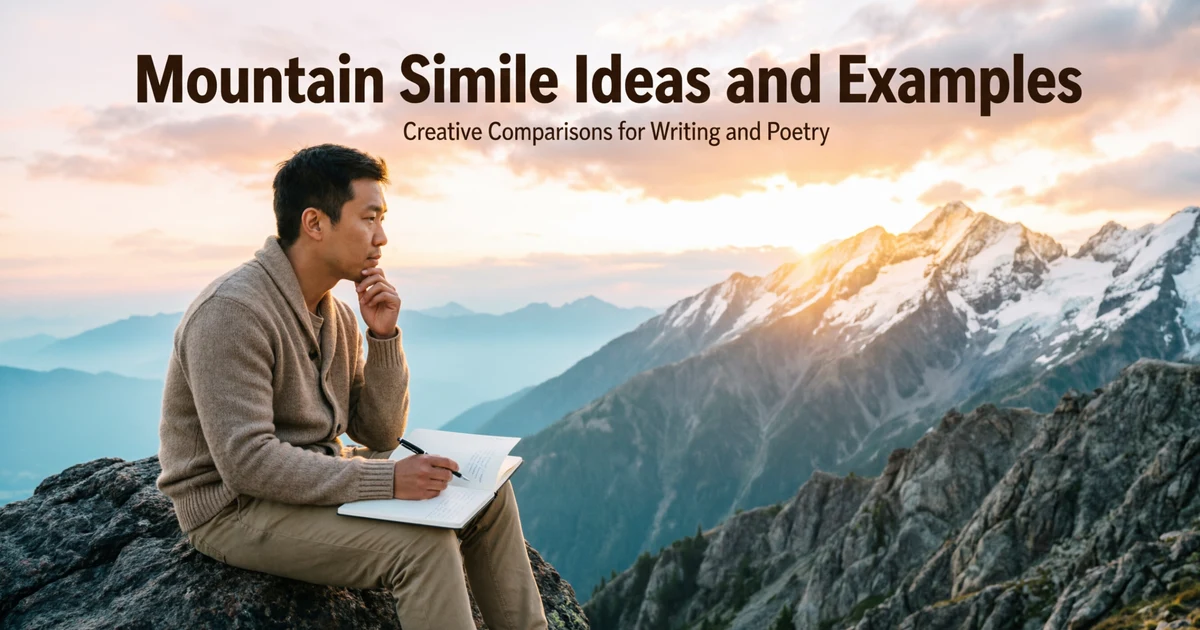
Mountains inspire people in many ways. Writers often use mountain similes to describe strength, peace, beauty, emotions, and challenges. A good mountain simile can turn a simple sentence into a vivid image that readers remember for a long time.
In this guide, you will learn what mountain similes mean, how to use them in writing, and how they improve descriptions in stories, poems, essays, and conversations. You will also find creative examples, tips, and common mistakes to avoid.
What Is a Mountain Simile
A mountain simile compares something to a mountain by using words such as like or as. It helps readers picture a strong image in their minds.
Examples:
• She stood like a mountain during hard times.
• His patience felt as steady as a mountain.
• The old castle rose like a mountain above the town.
These comparisons make writing more emotional and visual.
How Mountain Similes Create Strong Imagery
Mountain similes help readers imagine size, power, calmness, and beauty. Mountains naturally represent strength and stability, so writers use them to create emotional impact.
For example:
• Her confidence towered like a mountain above everyone else.
• The silence spread across the valley like a sleeping mountain.
These lines paint clear mental pictures instead of giving plain descriptions.
Best Mountain Similes for Creative Writing
Creative writing becomes stronger when descriptions feel alive and detailed.
Popular mountain similes include:
• Strong like a mountain
• Silent like a snow covered mountain
• Tall as a mountain peak
• Firm like a rocky mountain
• Proud like a mountain touching the sky
Example in a story:
The warrior stood like a mountain while chaos filled the battlefield.
This sentence sounds more powerful than simply saying the warrior looked brave.
Common Mountain Similes With Meanings
Here are some common mountain similes and what they express.
| Mountain Simile | Meaning |
|---|---|
| Strong like a mountain | Very powerful and dependable |
| Quiet as a mountain lake | Peaceful and calm |
| Tall like a mountain peak | Extremely tall |
| Cold like a snowy mountain | Emotionally distant |
| Solid as a mountain rock | Stable and trustworthy |
These similes work well in essays, poems, and conversations.
Mountain Similes for Students
Students often need simple similes for school work and classroom writing.
Easy examples:
• The teacher stood like a mountain during the noisy class.
• My father works as hard as a mountain climber.
• The school building looked like a giant mountain.
These examples use clear language that younger learners can understand easily.
Mountain Similes for Poetry
Poets use mountain similes to create emotion and rhythm.
Examples:
• Her love rose like a mountain at sunrise.
• His sorrow rested like dark clouds over a mountain.
• Dreams climbed like travelers toward distant mountains.
Poetry often connects mountains with human emotions and natural beauty.
Mountain Similes for Describing Strength
Mountains symbolize power and endurance. Writers often compare strong people or ideas to mountains.
Examples:
• He remained strong like a mountain through every challenge.
• Her determination stood like a mountain against fear.
• The team defended their goal like a mountain wall.
These similes add force and confidence to writing.
Mountain Similes for Calm and Peaceful Scenes
Mountains also represent silence and peace.
Examples:
• The village rested like a quiet mountain valley.
• Her voice sounded calm like wind over mountains.
• The lake sat still like a mountain mirror.
These lines create relaxing and beautiful imagery.
Mountain Similes for Love and Emotions
Mountain similes can express deep emotions and emotional stability.
Examples:
• His love felt strong like a mountain.
• Her heart carried pain like a heavy mountain.
• Their friendship stood firm like ancient mountains.
These comparisons make emotional writing feel more meaningful.
Mountain Similes for Nature Writing
Nature writers use mountain similes to describe landscapes and outdoor scenes.
Examples:
• The clouds rolled like mountains across the sky.
• The waves crashed like falling mountains.
• Trees rose like green mountains above the valley floor.
Nature similes help readers feel connected to the environment.
Funny Mountain Similes That Sound Creative
Funny similes make writing more entertaining.
Examples:
• He snored like a mountain exploding.
• My backpack felt as heavy as a mountain.
• She ate pancakes like a mountain bear after winter.
Humor adds personality and keeps readers interested.
Short Mountain Similes for Quick Descriptions
Short similes work well in captions, essays, and quick dialogue.
Examples:
• Strong like a mountain
• Tall as a mountain
• Cold like mountain snow
• Quiet like the mountains
• Brave as a mountain climber
These phrases sound simple but effective.
Deep Mountain Similes With Emotional Meaning
Some mountain similes carry deeper emotional ideas.
Examples:
• His guilt sat like a mountain on his chest.
• Her dreams stood tall like mountains beyond the horizon.
• Fear rose like a dark mountain before him.
These similes create emotional depth and stronger storytelling.
Mountain Similes for Storytelling
Stories become more immersive when writers use vivid comparisons.
Example:
The castle stood like a mountain above the frightened village.
Another example:
The giant moved through the forest like a walking mountain.
These images help readers visualize scenes clearly.
Similes That Compare People to Mountains
People often compare strong or calm personalities to mountains.
Examples:
• My grandmother remains steady like a mountain.
• The coach looked as fearless as a mountain eagle.
• He stayed calm like a mountain during the argument.
These comparisons describe personality in a memorable way.
Similes About Tall Mountains and Huge Landscapes
Writers use large mountain imagery to describe size and scale.
Examples:
• The skyscraper rose like a mountain over the city.
• The crowd looked like waves around a mountain.
• The desert stretched wide like endless mountains.
Large scale imagery creates dramatic scenes.
Mountain Similes for Instagram Captions
Short mountain similes fit perfectly in social media captions.
Examples:
• Strong like the mountains
• Calm as mountain air
• Dreams rise like mountains
• Heart steady like stone mountains
• Wild like mountain winds
These captions sound natural and creative.
Easy Mountain Similes for ESL Learners
ESL learners benefit from simple sentence patterns.
Examples:
• He is strong like a mountain.
• The hill looks like a small mountain.
• She stayed calm like a mountain lake.
• The snow felt cold like mountain ice.
These examples help learners practice comparison words easily.
Common Mistakes When Writing Mountain Similes
Many writers make mountain similes too complicated or repetitive.
Common mistakes include:
• Using too many similes in one paragraph
• Repeating the same idea again and again
• Creating confusing comparisons
• Mixing emotions that do not fit the image
Bad example:
Her happiness looked like a sad mountain.
This comparison confuses readers.
Good example:
Her happiness shined like sunlight over mountains.
Tips to Create Original Mountain Similes
Strong similes feel fresh and specific.
Helpful tips:
• Focus on one clear emotion or image
• Think about real mountain qualities
• Use sensory details
• Keep comparisons simple and natural
• Match the simile with the mood of the sentence
Example:
The storm rolled down the valley like angry mountains breaking apart.
This line feels vivid because it combines motion, sound, and emotion.
Conclusion
Mountain similes bring power, beauty, and emotion into writing. They help readers imagine scenes clearly and connect with ideas on a deeper level. Whether you write stories, poems, essays, or captions, mountain similes can make your words stronger and more memorable.
Simple comparisons often work best. Focus on clear imagery, natural language, and emotional meaning. With practice, you can create mountain similes that sound original and meaningful.
FAQs
What is a mountain simile?
A mountain simile compares something to a mountain by using words such as like or as.
Why do writers use mountain similes?
Writers use them to create strong imagery and emotional impact.
What does strong like a mountain mean?
It means someone feels powerful, stable, and dependable.
Can mountain similes appear in poetry?
Yes. Poets often use mountain imagery to express emotions and beauty.
Are mountain similes useful for students?
Yes. They improve creative writing and descriptive skills.
What makes a good mountain simile?
A good simile sounds natural, clear, and emotionally meaningful.
Can mountain similes sound funny?
Yes. Funny similes add humor and creativity to writing.
How can ESL learners practice mountain similes?
They can start with simple comparisons using like or as.
What is the difference between a simile and a metaphor?
A simile uses like or as, while a metaphor makes a direct comparison.
Where can I use mountain similes?
You can use them in essays, poems, stories, speeches, captions, and conversations.