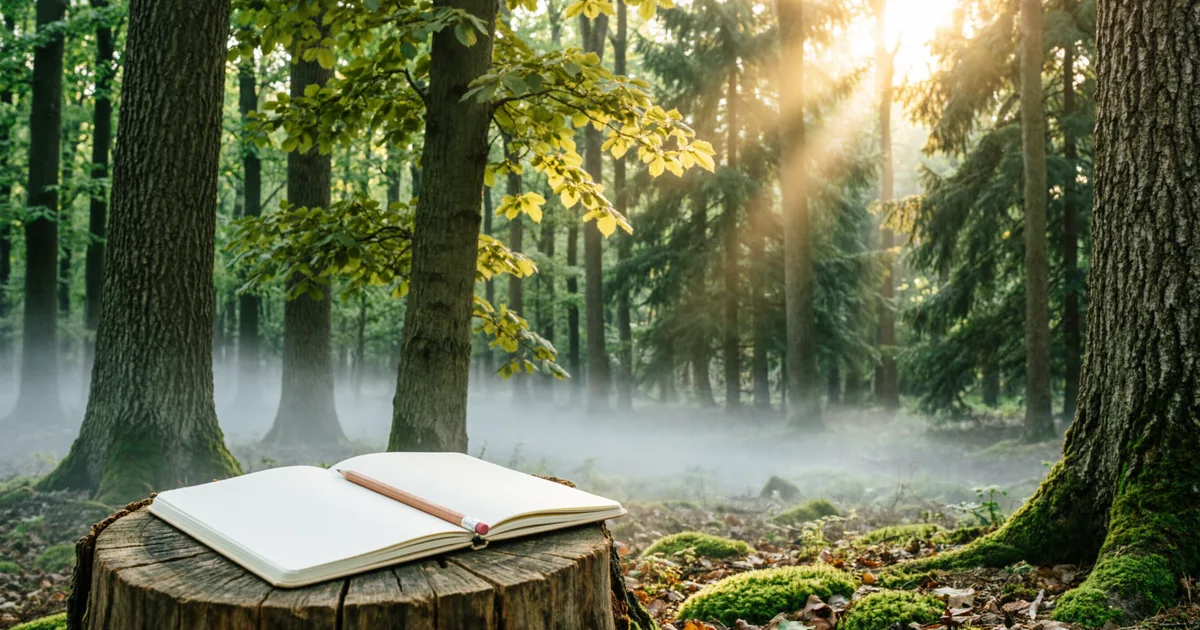
A forest can feel calm, mysterious, magical, ancient, or frightening depending on how a writer describes it. A good simile helps readers see the forest clearly instead of only reading the word forest and moving on.
A simile compares one thing with another using words such as like or as. When you use a simile for forest, you can show mood, color, sound, movement, size, and emotion in a simple but powerful way.
In this guide, you will learn strong forest similes with meanings, examples, and practical writing tips. You will also see how to use forest similes in poems, essays, stories, and descriptive writing without making them sound forced.
What Simile for Forest Means in Simple Words
A simile for forest compares a forest to something else so readers can imagine it better. It uses like or as to make the comparison clear.
For example:
The forest stood like a green wall around the village.
This simile compares the forest to a wall. It helps readers understand that the forest looked thick, tall, and difficult to pass through.
Another example:
The forest was as quiet as a sleeping child.
This simile shows silence in a gentle way. It does not only say that the forest was quiet. It gives the quietness a soft and peaceful feeling.
A forest simile can describe:
- The color of trees
- The sound of leaves
- The darkness under branches
- The age of old woods
- The peaceful feeling of nature
- The fear of entering deep trees
- The magic of an unknown place
A strong simile does more than decorate a sentence. It helps the reader feel the scene.
Why Writers Use Similes to Describe a Forest
Writers use similes because forests carry many moods. A forest can comfort one character and frighten another. It can look beautiful in the morning and dangerous at night. Similes help a writer show that difference.
A plain sentence says:
The forest was dark.
A stronger sentence says:
The forest was dark like a room with no windows.
The second sentence gives the reader a clearer image. It also creates a stronger mood.
Writers use forest similes to:
- Create atmosphere
- Show emotion
- Build suspense
- Make nature feel alive
- Help readers picture a setting
- Add beauty to descriptive writing
- Make simple scenes more memorable
For example:
The trees rose like silent guards beside the path.
This simile gives the forest a watchful feeling. It works well in a mystery, fantasy story, or adventure scene.
A good forest simile should match the purpose of the sentence. A peaceful scene needs a soft comparison. A scary scene needs a darker one. A magical scene needs wonder.
Best Similes for Forest With Clear Meanings
Here are some strong similes for forest with simple meanings.
The forest was like a green ocean.
Meaning: The forest looked wide, deep, and full of life.
Example: From the hilltop, the forest spread like a green ocean under the morning sun.
The forest stood like a silent army.
Meaning: The trees looked tall, still, and powerful.
Example: The forest stood like a silent army along the edge of the road.
The forest was as quiet as a secret.
Meaning: The forest felt silent and mysterious.
Example: At dawn, the forest was as quiet as a secret waiting to unfold.
The forest was like a cathedral of trees.
Meaning: The forest felt grand, peaceful, and almost sacred.
Example: Sunlight slipped between the branches, and the forest felt like a cathedral of trees.
The forest was as thick as a woven blanket.
Meaning: The forest looked dense and full.
Example: The forest ahead was as thick as a woven blanket, hiding the path from view.
The forest was like a living maze.
Meaning: The forest felt confusing and full of hidden paths.
Example: After sunset, the forest became like a living maze around us.
These examples show different moods. Some feel peaceful, some feel powerful, and some feel mysterious.
Simple Similes for Forest for Students
Students often need easy similes that make sense quickly. A simple forest simile should use familiar objects and clear images.
Good student examples include:
The forest was like a big green blanket.
The trees stood like tall soldiers.
The forest was as quiet as a library.
The leaves moved like tiny hands in the wind.
The forest path twisted like a snake.
The branches covered the sky like a roof.
These similes work well because they use things students already understand. A library means quiet. A roof means cover. A snake means a twisting shape.
Here are a few complete sentences:
The forest was like a big green blanket covering the hills.
The trees stood like tall soldiers beside the narrow path.
The forest was as quiet as a library in the early morning.
The path twisted like a snake between the trees.
Students should avoid confusing comparisons. A simile should make the sentence clearer, not harder to understand.
Beautiful Similes for a Peaceful Forest
A peaceful forest needs soft, calm, and gentle comparisons. These similes work well in nature writing, reflective essays, and poems.
Examples:
The forest rested like a dream beneath the sunlight.
The trees swayed like slow dancers in the breeze.
The forest felt as calm as a still lake.
The leaves whispered like gentle voices above us.
The sunlight fell through the trees like warm honey.
Each simile adds a peaceful mood. Words such as rested, calm, whispered, and gentle help the sentence feel quiet.
Example paragraph:
The forest rested like a dream beneath the pale morning light. Leaves whispered like gentle voices overhead, and the narrow path curved through the trees as softly as a stream. Nothing felt rushed there. Even the wind moved with care.
This kind of writing suits a scene where a character feels safe, thoughtful, or healed by nature.
Dark Similes for a Scary Forest
A scary forest needs similes that create tension. Darkness, silence, strange sounds, and hidden movement can make the scene feel dangerous.
Examples:
The forest closed around us like a trap.
The trees stood like black fingers against the sky.
The path vanished like a secret swallowed by night.
The forest was as dark as the inside of a cave.
The branches scratched the window like long nails.
These similes work because they create fear through image and sound. A trap suggests danger. Black fingers suggest threat. Long nails suggest discomfort.
Example paragraph:
The forest closed around us like a trap. The trees stood like black fingers against the fading sky, and the path vanished like a secret swallowed by night. Every crack of a branch sounded too close.
Use dark forest similes when you want suspense, fear, uncertainty, or danger. Do not use too many scary comparisons in one short paragraph. One or two strong similes can create enough tension.
Magical Similes for an Enchanted Forest
An enchanted forest should feel full of wonder. Magical similes can describe glowing light, strange trees, hidden creatures, or a dreamlike atmosphere.
Examples:
The forest glittered like a box of emeralds.
The trees arched over the path like a doorway to another world.
The fireflies floated like tiny stars among the branches.
The leaves shone like coins under moonlight.
The forest hummed like a spell beneath the wind.
These similes create beauty and mystery at the same time. They work well in fantasy writing, fairy tales, and imaginative stories.
Example paragraph:
The forest glittered like a box of emeralds under the silver moon. Fireflies floated like tiny stars between the trees, and the path curved ahead like a doorway to another world. Every leaf seemed to hold a secret.
A magical forest simile should not only look pretty. It should make the reader feel that something unusual could happen at any moment.
Quiet Forest Similes for Calm Writing
Quiet forest similes help writers describe stillness without making the sentence dull. Silence can feel peaceful, lonely, mysterious, or tense.
Examples:
The forest was as quiet as falling snow.
The trees stood like listeners in the dark.
The forest held its silence like a deep breath.
The leaves rested like sleeping birds.
The path lay quiet like an empty room.
Each example creates a different type of quiet. Falling snow feels peaceful. Listeners create mystery. A deep breath creates suspense.
Example sentences:
The forest was as quiet as falling snow, and even my footsteps sounded too loud.
The trees stood like listeners in the dark, waiting for something to happen.
The forest held its silence like a deep breath before the storm.
Quiet similes work best when the scene needs space. They allow the reader to pause and feel the atmosphere.
Green Forest Similes for Nature Description
Green forest similes help writers describe freshness, growth, life, and natural beauty. These similes work well in essays, poems, travel writing, and environmental descriptions.
Examples:
The forest spread like a green carpet across the valley.
The leaves shone like polished emeralds after the rain.
The forest looked as fresh as a garden after spring rain.
The trees rose like green towers against the blue sky.
The moss covered the stones like soft velvet.
These similes focus on color and texture. Emeralds suggest brightness. Velvet suggests softness. A carpet suggests wide coverage.
Example paragraph:
The forest spread like a green carpet across the valley. After the rain, the leaves shone like polished emeralds, and moss covered the stones like soft velvet. The whole place looked alive with color.
Use green forest similes when you want readers to notice freshness, richness, and natural life.
Dense Forest Similes for Mystery and Depth
A dense forest feels thick, deep, and hard to enter. Similes can show how crowded the trees look and how little light reaches the ground.
Examples:
The forest was as thick as a crowd at a market.
The trees grew close together like locked doors.
The branches tangled like a net above the path.
The forest rose like a wall of leaves before us.
The undergrowth spread like a green knot around our feet.
These similes show difficulty and mystery. A wall blocks movement. A net traps. Locked doors suggest hidden secrets.
Example paragraph:
The forest rose like a wall of leaves before us. Branches tangled like a net above the path, and the undergrowth spread like a green knot around our feet. Each step pulled us deeper into shadow.
Dense forest similes work well when characters feel lost, trapped, curious, or unsure about what lies ahead.
Ancient Forest Similes for Powerful Imagery
An ancient forest needs similes that show age, wisdom, and strength. Old trees can feel like witnesses to history.
Examples:
The ancient forest stood like a kingdom older than memory.
The trees rose like old giants from the earth.
The roots twisted like the hands of time.
The forest watched like a wise elder.
The trunks stood as strong as stone pillars.
These similes give the forest dignity and power. Giants suggest size and age. A wise elder suggests knowledge. Stone pillars suggest strength.
Example paragraph:
The ancient forest stood like a kingdom older than memory. Its trees rose like old giants from the earth, and their roots twisted like the hands of time. Every trunk seemed to carry a story.
Ancient forest similes work well in fantasy, historical writing, nature essays, and scenes that need depth.
Forest Similes for Poems and Creative Writing
Poems need similes that carry emotion and rhythm. A forest in a poem can represent peace, grief, memory, fear, hope, or imagination.
Examples:
The forest breathed like a sleeping heart.
The leaves shimmered like thoughts in sunlight.
The trees leaned like friends sharing secrets.
The path faded like a memory at dusk.
The moonlight touched the forest like a silver song.
These similes feel more poetic because they connect nature with emotion. They do not only describe what the forest looks like. They suggest what the forest means.
Example lines:
The forest breathed like a sleeping heart,
and moonlight touched each leaf like a silver song.
A poem can use a forest as a symbol. It can show loneliness, growth, mystery, or escape. Choose similes that match the emotion of the poem.
Forest Similes for Story Settings
A story setting needs clear details that support the plot. A forest simile can tell readers whether the place feels safe, dangerous, magical, or unknown.
Examples for adventure stories:
The forest stretched like an endless challenge before them.
The trail curved like a question through the trees.
Examples for mystery stories:
The forest waited like a locked room full of clues.
The shadows gathered like secrets under the branches.
Examples for fantasy stories:
The trees glowed like lanterns in an unseen festival.
The forest opened like a gate to a hidden world.
Examples for realistic stories:
The forest stood like a quiet shelter beyond the farm.
The pine trees lined the road like old neighbors.
In stories, a simile should support character feeling. A brave character may see the forest as an adventure. A frightened character may see it as a trap. The same forest can change meaning through the eyes of different characters.
Forest Similes for Describing Sounds
A forest has many sounds. Leaves rustle, birds call, insects hum, branches crack, and wind moves through trees. Similes can make these sounds vivid.
Examples:
The leaves rustled like paper in nervous hands.
The birds called like tiny bells in the morning air.
The wind moved through the trees like a low song.
The branches cracked like old bones underfoot.
The insects hummed like a distant machine.
These similes help readers hear the scene. They also shape mood. Tiny bells feel cheerful. Old bones feel eerie. A low song feels calm or sad.
Example paragraph:
The wind moved through the trees like a low song. Birds called like tiny bells above us, while dry leaves rustled like paper in nervous hands. The forest seemed quiet at first, but every corner had a sound.
Sound similes help bring forest writing to life because readers do not only see the setting. They hear it too.
Forest Similes for Describing Light and Shadows
Light can change a forest completely. Morning light can make it peaceful. Moonlight can make it magical. Deep shadows can make it frightening.
Examples:
Sunlight slipped through the trees like golden thread.
The shadows stretched like dark fingers across the path.
Moonlight lay on the leaves like silver dust.
The forest glowed like stained glass after sunrise.
The branches cut the light like lace against the sky.
These similes help describe shape, color, and mood. Golden thread feels delicate. Dark fingers feel scary. Silver dust feels magical.
Example paragraph:
Sunlight slipped through the trees like golden thread. The branches cut the light like lace against the sky, and small patches of brightness danced on the forest floor. The whole place seemed gentle and alive.
For a darker scene:
The shadows stretched like dark fingers across the path, and moonlight lay on the leaves like cold silver dust.
Light and shadow similes work well because forests often contain both beauty and mystery.
Forest Similes for Describing Animals and Movement
A forest never stays completely still. Animals move through branches, leaves shake in the wind, and unseen creatures stir in the undergrowth.
Examples:
The squirrels darted through the trees like sparks.
The deer moved like shadows between the trunks.
The birds rose from the branches like scattered leaves.
The fox slipped through the bushes like a flame.
The leaves trembled like nervous hands.
These similes add life and motion. They also help readers picture speed, silence, grace, or fear.
Example paragraph:
The deer moved like shadows between the trunks. A fox slipped through the bushes like a flame, and birds rose from the branches like scattered leaves. The forest seemed alive in every direction.
Use movement similes when you want the forest to feel active rather than still. They work especially well in stories and descriptive essays.
Short Similes for Forest That Students Can Remember
Short similes help students write quickly and clearly. They also work well in exams, class assignments, and simple creative writing.
Examples:
The forest was like a green sea.
The trees stood like guards.
The path curved like a snake.
The leaves shone like emeralds.
The forest slept like a child.
The shadows moved like ghosts.
The branches spread like arms.
The moss felt like velvet.
The wind sang like a flute.
The forest grew like a wall.
These short similes give students flexible choices. They can describe peace, fear, beauty, sound, or shape.
Here are some easy sentence examples:
The forest was like a green sea under the bright sky.
The trees stood like guards beside the path.
The wind sang like a flute through the branches.
The shadows moved like ghosts after sunset.
Students should choose the simile that matches the mood of the sentence. A green sea suits beauty. Ghosts suit fear. Guards suit strength or mystery.
Strong Example Sentences Using Forest Similes
Here are strong forest simile sentences with different moods.
Peaceful forest:
The forest rested like a soft green blanket over the hills.
The trees swayed like calm dancers in the afternoon breeze.
Scary forest:
The forest closed around me like a trap.
The shadows crawled like spiders across the path.
Magical forest:
The fireflies floated like tiny stars beneath the branches.
The forest shimmered like a dream under moonlight.
Dense forest:
The trees grew together like a locked gate.
The vines twisted like ropes around the old trunks.
Ancient forest:
The forest stood like an old king guarding his land.
The roots curled like ancient hands across the ground.
Sound focused forest:
The leaves whispered like pages turning in an old book.
The wind moved like a soft song through the pines.
Each sentence gives a clear image. Each one also creates a mood. That is what makes a simile useful.
How to Write Your Own Forest Simile Naturally
You can write your own forest simile by thinking about what you want the reader to feel first.
Follow this simple method:
- Choose the mood
Ask yourself what kind of forest you want to describe.
Is it peaceful, scary, magical, dense, ancient, bright, quiet, or wild?
- Choose one forest detail
Focus on one clear detail.
For example:
- Trees
- Leaves
- Roots
- Shadows
- Path
- Wind
- Birds
- Moss
- Moonlight
- Branches
- Compare it with something familiar
Pick something readers can picture easily.
For example:
- A wall
- A blanket
- A song
- A maze
- A secret
- A roof
- A crowd
- A flame
- A dream
- A library
- Build the sentence
Use like or as.
Examples:
The forest was like a maze of green shadows.
The leaves moved like soft hands in the wind.
The old trees stood as strong as stone towers.
- Check the meaning
Ask one question:
Does this simile make the forest clearer?
If yes, keep it. If no, change the comparison.
A natural simile should feel simple, useful, and connected to the scene.
Common Mistakes to Avoid When Writing Forest Similes
Many writers use similes, but weak similes can make a sentence feel strange or unclear. Avoid these common mistakes.
Do not use a comparison that does not fit the mood.
Weak example:
The scary forest looked like a birthday cake.
This comparison does not match fear unless the story uses humor.
Better example:
The scary forest looked like a mouth waiting to close.
Do not use too many similes in one paragraph.
Too many comparisons can slow the writing. Choose the strongest one.
Weak example:
The forest was like a sea, like a blanket, like a wall, and like a dream.
Better example:
The forest spread like a green sea beneath the hill.
Do not use a simile only for decoration.
A simile should add meaning. It should help the reader understand the setting.
Weak example:
The forest was like a spoon.
Better example:
The forest was like a green roof over the narrow path.
Do not copy the same common similes every time.
Simple similes can help, but strong writing often needs a fresh detail.
Common:
The forest was as green as grass.
Stronger:
The forest shone like emerald cloth after the rain.
A good forest simile feels clear, natural, and purposeful.
Conclusion
A simile for forest helps readers see, hear, and feel a natural setting more clearly. It can make a forest peaceful like a dream, dark like a cave, magical like a sky full of stars, or ancient like a kingdom older than memory.
The best forest similes match the mood of the writing. Use simple similes for school work, vivid similes for stories, soft similes for poems, and darker similes for suspense. Focus on one detail, choose a clear comparison, and make sure the simile adds meaning to the sentence.
When you write with care, a forest does not remain only a group of trees. It becomes a place full of sound, shadow, color, memory, and emotion.
FAQs
What is a good simile for forest?
A good simile for forest is The forest was like a green ocean. It shows that the forest looked wide, deep, and full of life.
What is a simple simile for forest?
A simple simile for forest is The forest was as quiet as a library. Students can use it easily because the meaning feels clear.
What is a scary simile for forest?
A scary simile for forest is The forest closed around us like a trap. It creates fear and shows that the place feels dangerous.
What is a beautiful simile for forest?
A beautiful simile for forest is The forest rested like a dream beneath the sunlight. It creates a peaceful and gentle image.
What is a magical simile for forest?
A magical simile for forest is The fireflies floated like tiny stars among the trees. It works well for fantasy writing and enchanted settings.
How do you describe a forest using a simile?
Choose one detail, such as trees, leaves, shadows, or sounds. Then compare it with something clear. For example, The branches spread like arms above the path.
What is a simile for a dense forest?
A strong simile for a dense forest is The forest rose like a wall of leaves. It shows thickness and makes the forest feel hard to enter.
What is a simile for forest sounds?
A good simile for forest sounds is The wind moved through the trees like a soft song. It helps the reader hear the scene.
Can I use forest similes in essays?
Yes, you can use forest similes in essays when they make your description clearer. Keep the simile simple and connect it to your main idea.
What is the difference between a forest simile and a forest metaphor?
A forest simile uses like or as, such as The forest was like a maze. A metaphor says the forest is something else, such as The forest was a maze.