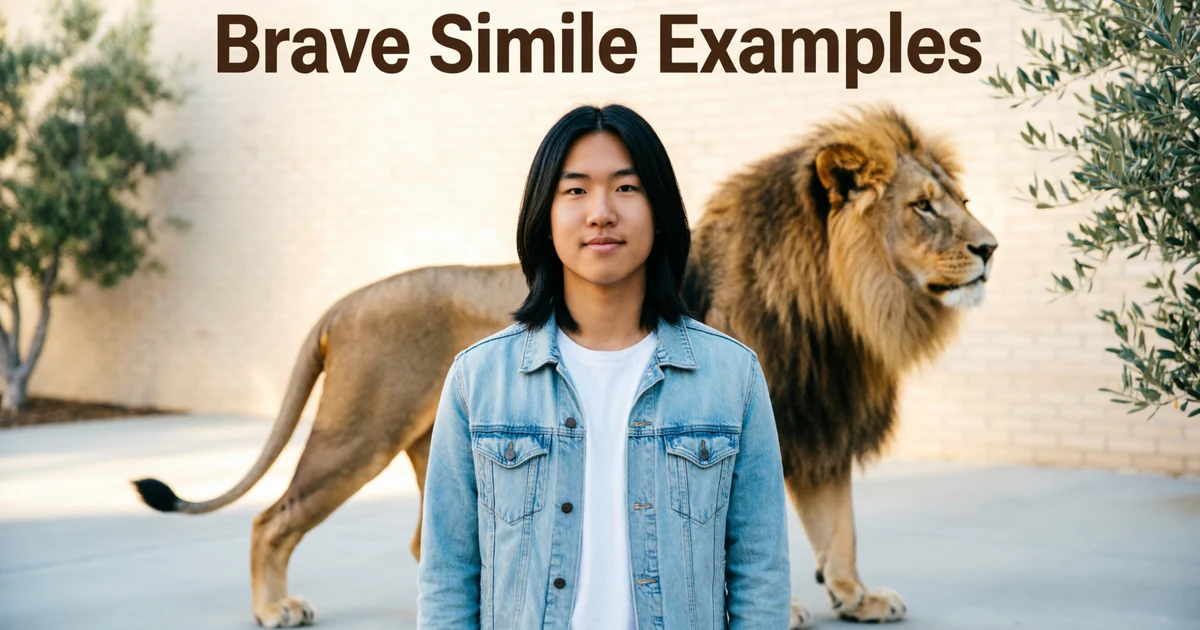
Courage often feels hard to describe in plain words. That is why similes help so much. A good brave simile paints a clear picture and helps your reader feel the strength, calm, or fearlessness behind a person’s actions.
In this guide, you will learn what a brave simile means, how to use one well, and which examples work best for students, writers, and ESL learners. You will also find practical sentence examples, writing tips, and common mistakes to avoid.
What Does Brave Simile Mean?
A brave simile compares a brave person or action to something else by using like or as.
A simile helps you describe courage in a vivid and memorable way.
For example:
• As brave as a lion
• Like a firefighter running into smoke
• As steady as a rock in a storm
These comparisons help readers understand not only that someone feels brave, but also what kind of bravery they show.
A brave simile can describe:
• Physical courage
• Emotional strength
• Moral courage
• Quiet determination
• Fearless action
Best Brave Simile Examples for Students
Students usually need simple and clear similes that sound natural in essays and classwork. These examples work well because they are easy to understand and easy to remember.
• As brave as a lion
This simile shows strong and obvious courage.
• As brave as a soldier in battle
This simile suggests discipline and fearlessness.
• Like a hero in a storm
This simile highlights courage during a hard situation.
• As bold as an eagle in flight
This simile gives a sense of confidence and freedom.
• Like a torch in the dark
This simile shows courage that guides others.
Example sentences:
• Sara felt as brave as a lion when she stood up to the bully.
• The boy walked into the hospital room like a hero in a storm.
• Amina spoke in front of the class as bold as an eagle in flight.
Brave Similes With Meanings and Sentence Examples
Here are strong brave similes with simple meanings and useful sentence examples.
As brave as a lion
Meaning: Very courageous and strong
Sentence: The rescuer ran into the fire as brave as a lion.
As brave as a soldier
Meaning: Ready to face danger with courage
Sentence: He stayed calm during the crisis as brave as a soldier.
Like a knight guarding a castle
Meaning: Protective and fearless
Sentence: She stood by her family like a knight guarding a castle.
As fearless as a hawk
Meaning: Sharp, confident, and unafraid
Sentence: The young athlete stepped onto the field as fearless as a hawk.
Like a rock in a storm
Meaning: Calm and strong under pressure
Sentence: My mother stayed like a rock in a storm when the family faced trouble.
As steady as a mountain
Meaning: Brave in a calm and grounded way
Sentence: The nurse remained as steady as a mountain during the emergency.
Like a lamp in the darkness
Meaning: Brave enough to give hope
Sentence: Her words shone like a lamp in the darkness.
As bold as thunder
Meaning: Powerful and impossible to ignore
Sentence: The activist spoke as bold as thunder at the public meeting.
Common Brave Similes Used in Everyday Writing
Many brave similes appear often because they sound natural and fit many situations.
Common examples include:
• As brave as a lion
• As bold as brass
• As fearless as fire
• Like a hero
• Like a warrior
You can use these in:
• School essays
• Short stories
• Speeches
• Personal writing
• Classroom assignments
Example:
• My little sister looked as brave as a lion before her first surgery.
• He walked onto the stage like a warrior ready for battle.
These similes work best when the tone matches the moment. A serious scene needs a serious simile. A light classroom sentence can handle a simpler one.
Brave as a Lion and What It Really Means
As brave as a lion remains one of the most popular similes for bravery. People use it because the lion often symbolizes strength, courage, leadership, and confidence.
When you say someone feels as brave as a lion, you mean that person shows courage in a strong and noticeable way.
You can use it for:
• A student facing an audience
• A child getting an injection
• A player joining a big match
• A character protecting a friend
Examples:
• Zahra stood as brave as a lion during the debate competition.
• The child walked into the clinic as brave as a lion.
• The captain faced the final match as brave as a lion.
This simile sounds effective, but many writers overuse it. If you want fresh writing, mix it with other brave similes too.
Brave Similes for Describing a Hero
Heroes often show courage through action, sacrifice, and loyalty. Brave similes for heroes should sound strong and uplifting.
Useful similes:
• As brave as a lion
• Like a shield in battle
• As fearless as a warrior
• Like a flame that never dies
• As steady as a captain at sea
Example sentences:
• The firefighter entered the burning house like a shield in battle.
• The hero stood as fearless as a warrior before the enemy.
• She kept helping others like a flame that never dies.
These similes help you describe a hero who acts with courage and purpose.
Brave Similes for Describing a Child
Children often show bravery in small but meaningful ways. A child may not face battle, but a child can still face fear with courage.
Good similes for a child:
• As brave as a little lion
• Like a star shining through clouds
• As steady as a small tree in the wind
• Like a bird taking its first flight
Examples:
• The little boy sat in the dentist chair as brave as a little lion.
• She entered her new classroom like a bird taking its first flight.
• The child smiled through tears like a star shining through clouds.
These similes feel softer and suit childhood experiences better.
Brave Similes for Describing a Soldier
A soldier often represents discipline, endurance, and courage under pressure. Similes in this area should reflect strength, loyalty, and readiness.
Useful similes:
• As brave as a soldier in battle
• Like steel in a fire
• As steady as a guard at the gate
• Like a wall against danger
Examples:
• The young officer stood as steady as a guard at the gate.
• He faced the mission like steel in a fire.
• The troops held their ground like a wall against danger.
These similes show bravery with control and purpose.
Brave Similes for Describing a Leader
A brave leader does more than face danger. A brave leader makes hard choices, speaks honestly, and helps others move forward.
Good similes for leaders:
• As steady as a captain in rough seas
• Like a torch in the night
• As bold as thunder
• Like an oak in strong wind
Examples:
• The principal remained as steady as a captain in rough seas during the crisis.
• She spoke to the team like a torch in the night.
• He stood before the crowd like an oak in strong wind.
These similes fit leaders who inspire trust through courage.
Brave Similes for Stories and Creative Writing
Creative writing gives you more freedom. You can move beyond common similes and create fresh images that fit the scene and character.
Here are some imaginative brave similes:
• Like a candle refusing to go out
• As brave as dawn after the darkest night
• Like a lone wolf facing the winter
• As calm as the moon above a storm
• Like a hand reaching through fire
Example sentences:
• Mira stepped into the haunted house like a candle refusing to go out.
• He faced his grief as brave as dawn after the darkest night.
• The boy crossed the river like a lone wolf facing the winter.
In creative writing, choose images that match the mood of your story.
Brave Similes for School Essays
School essays need clear language. Your teacher will value accuracy, relevance, and strong expression more than dramatic wording.
Strong essay friendly similes include:
• As brave as a lion
• As steady as a rock
• Like a hero facing danger
• As bold as a leader in hard times
Example:
• Malala spoke for education as brave as a lion despite serious danger.
• Nelson Mandela remained as steady as a rock during years of hardship.
Tips for essays:
• Keep the simile relevant to the topic
• Do not force too many similes into one paragraph
• Use one strong simile instead of several weak ones
• Follow the simile with a clear explanation when needed
Brave Similes That Show Quiet Courage
Not all bravery looks loud. Some courage appears in patience, honesty, endurance, or silent sacrifice.
Similes for quiet courage:
• Like a candle in a silent room
• As steady as a heartbeat
• Like a root holding firm in dry soil
• As calm as morning light
Examples:
• She cared for her sick father like a candle in a silent room.
• He faced the diagnosis as steady as a heartbeat.
• The girl kept going like a root holding firm in dry soil.
These similes work well when you want to show inner strength rather than dramatic action.
Brave Similes That Show Fearless Action
Some moments demand fast and bold action. These similes highlight direct and visible courage.
Useful similes:
• Like lightning striking the ground
• As fierce as a lion protecting its cubs
• Like a firefighter charging through smoke
• As swift as an arrow
Examples:
• The rescuer moved like lightning striking the ground.
• She defended her friend as fierce as a lion protecting its cubs.
• He rushed forward like a firefighter charging through smoke.
These similes fit action scenes, sports writing, and dramatic storytelling.
Brave Similes for Emotional Strength
Emotional bravery means facing pain, loss, fear, or disappointment without giving up.
Helpful similes:
• As strong as a tree after winter
• Like a heart that keeps beating through pain
• As steady as the tide
• Like sunlight after rain
Examples:
• After the breakup, she stayed as strong as a tree after winter.
• He faced grief like a heart that keeps beating through pain.
• She handled the loss as steady as the tide.
These similes help you describe resilience, healing, and inner courage.
Brave Similes for Facing Danger
This type of bravery appears when someone faces a real threat with courage and calm.
Strong similes include:
• As brave as a lion before a fight
• Like a climber on a sharp cliff
• As firm as a shield
• Like a sailor in rough water
Examples:
• The rescue worker climbed the broken building like a climber on a sharp cliff.
• He stood before the attacker as firm as a shield.
• She kept control in the emergency like a sailor in rough water.
Use these similes when the scene involves risk, pressure, or danger.
Brave Similes for Speaking the Truth
Speaking the truth takes courage, especially when the truth may upset others or bring consequences.
Useful similes:
• As bold as thunder
• Like a bell ringing in silence
• As clear as a torch in darkness
• Like a judge with no fear
Examples:
• She answered the question as bold as thunder.
• He spoke up like a bell ringing in silence.
• The witness told the truth as clear as a torch in darkness.
These similes fit essays, speeches, and moral lessons.
Brave Similes for Characters in Literature
Literature often presents brave characters in many forms. Some fight openly. Others endure pain, injustice, or loneliness with strength.
You can describe literary characters with similes such as:
• As brave as a lion
• Like a torch in a dark hall
• As steady as a mountain
• Like a heart that never bends
Example uses:
• The protagonist remained as steady as a mountain through every challenge.
• The heroine moved through fear like a torch in a dark hall.
• The young rebel stood like a heart that never bends.
When you write about literature, connect the simile to the character’s actions and growth.
Simple Brave Similes for ESL Learners
ESL learners benefit from short and clear similes with familiar images.
Simple examples:
• As brave as a lion
• As strong as a rock
• Like a hero
• As bold as a tiger
• Like a soldier
Simple sentences:
• Ali was as brave as a lion.
• My sister looked like a hero.
• The boy stood as strong as a rock.
• The girl felt as bold as a tiger.
Tips for ESL learners:
• Start with short similes
• Learn the meaning of each image
• Use them in one sentence at a time
• Practice speaking them aloud
• Read them in stories and essays
How to Use Brave Similes Naturally in Sentences
A simile works best when it fits the context. It should add meaning, not crowd the sentence.
Here are simple ways to use brave similes well:
Match the simile to the situation
A child in a clinic may feel as brave as a little lion. A leader in a crisis may stand as steady as a captain in rough seas.
Keep the image clear
Use images people understand quickly, such as lion, rock, torch, or mountain.
Avoid too many in one paragraph
One strong simile often makes more impact than three average ones.
Make sure the tone fits
A serious moment needs a serious simile. A classroom exercise can use a simpler one.
Examples:
• The girl walked onto the stage as brave as a lion.
• He faced the bad news like a rock in a storm.
• She defended her friend as bold as thunder.
Common Mistakes to Avoid When Writing Brave Similes
Writers often make a few common mistakes with similes. If you avoid them, your writing will sound stronger.
Using very common similes too often
As brave as a lion works well, but constant repetition makes your writing dull.
Choosing a weak comparison
A simile should clearly connect to bravery. Do not compare courage to something that does not suggest strength or confidence.
Forcing the simile into the sentence
A simile should feel natural. If it sounds awkward, choose a simpler one.
Mixing too many images
Do not write a sentence that compares one person to a lion, a storm, and a mountain all at once.
Ignoring the context
A soft emotional scene may need a gentle simile, not a dramatic battle image.
Weak example:
She was brave like a lion and thunder and fire and war.
Better example:
She stood as steady as a rock while her family needed her.
Conclusion
A brave simile helps you turn a simple idea into strong and memorable writing. It gives shape to courage and helps readers picture the kind of bravery you want to show. Some similes highlight fearless action. Others reveal quiet strength, emotional resilience, or moral courage.
The best brave simile depends on your purpose. If you write for school, choose clear and direct examples. If you write a story, try fresher images that match the mood. Keep your language natural, choose comparisons that fit the situation, and let each simile add real meaning to your sentence.
FAQs
1. What is a brave simile?
A brave simile compares bravery to something else by using words like like or as. For example, as brave as a lion.
2. What is the most common simile for brave?
The most common one is as brave as a lion because it clearly shows courage and strength.
3. Can students use brave similes in essays?
Yes. Students can use brave similes in essays, stories, and speeches to make their writing more vivid and expressive.
4. What is a simple brave simile for kids?
A simple example is as brave as a little lion. It sounds clear, gentle, and easy for kids to understand.
5. How do I write a good brave simile?
Choose a clear image that connects strongly with courage. Keep it natural and match it to the situation.
6. Are brave similes useful in creative writing?
Yes. Brave similes add emotion, imagery, and character depth in stories and descriptive writing.
7. What is the difference between a simile and a metaphor?
A simile uses like or as. A metaphor makes a direct comparison without those words.
8. Can I use brave similes in speech writing?
Yes. Brave similes make speeches more powerful and help listeners remember your message.
9. What brave simile shows quiet courage?
A good example is like a candle in a silent room because it shows calm and gentle strength.
10. Why should ESL learners study brave similes?
Brave similes help ESL learners build vocabulary, improve expression, and understand figurative language in a practical way.