The word amazing is useful, but it can feel plain when you use it too often. Students, writers, and ESL learners often need stronger, more colorful ways to describe something impressive, surprising, beautiful, exciting, or hard to believe. That is where idioms for amazing can help.
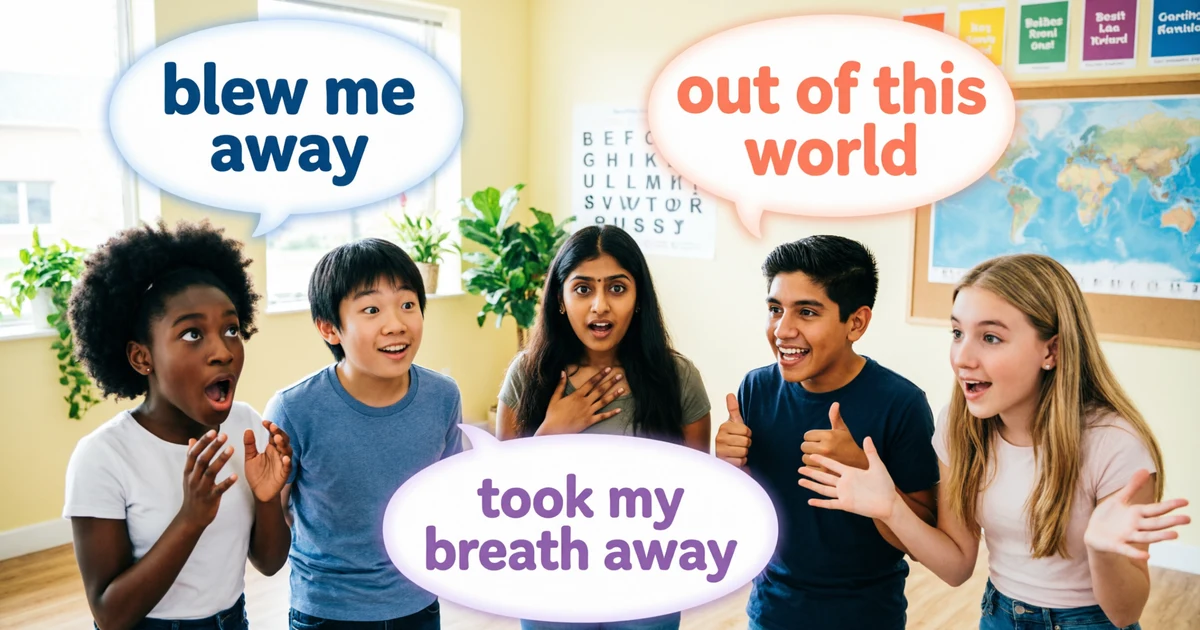
Instead of saying, “The performance was amazing,” you could say, “The performance blew me away.” Instead of saying, “Her talent is amazing,” you could say, “Her talent is out of this world.” These phrases sound more natural, expressive, and memorable.
The main difference is simple: amazing is a direct adjective, while an idiom for amazing is a fixed phrase that expresses the same idea in a more creative or figurative way. Both can describe something impressive, but idioms often add emotion, personality, and style.
This guide explains what idioms mean, what amazing means, how they overlap, when to use each one, and the best idioms for amazing with clear examples.
What Idioms Mean
An idiom is a phrase whose meaning is different from the literal meaning of its words. You usually cannot understand an idiom by translating each word one by one. You need to learn the phrase as a whole.
For example, blow someone away does not usually mean that strong wind pushed a person across the room. In everyday English, it means to impress or surprise someone very strongly.
Simple definition:
An idiom is a common phrase with a figurative meaning.
Purpose:
Idioms help people express ideas in a natural, colorful, and emotional way.
How it works:
An idiom uses familiar words, but the full phrase carries a special meaning.
Short example:
“The magic show blew me away.”
Why it gets confused with amazing:
Many idioms can express the same meaning as amazing, so learners may think the idiom and the adjective work the same way. They do not. “Amazing” describes something directly. An idiom describes it through a fixed expression.
What Amazing Means
Amazing is an adjective. It describes something that causes surprise, admiration, wonder, or strong positive feeling. People use it for great performances, beautiful places, impressive skills, exciting news, delicious food, and unexpected success.
For example, you can say:
“Her singing voice is amazing.”
This sentence is clear and direct. It does not use figurative language. It simply tells the reader or listener that her voice is very impressive.
Simple definition:
Amazing means very surprising, impressive, or wonderful.
Purpose:
The word amazing helps you describe something strongly and positively.
How it works:
It comes before a noun or after a linking verb such as “is,” “was,” “seems,” or “looks.”
Short example:
“That was an amazing story.”
Why it gets confused with idioms:
Many idioms mean “amazing” in context, but they do not always fit the same grammar pattern. For example, you can say, “The movie was amazing,” but you cannot say, “The movie was blew me away.” You must say, “The movie blew me away.”
Idioms for Amazing vs Amazing: The Core Difference
The core difference is that amazing is a direct word, while idioms for amazing are expressive phrases.
Use amazing when you want clear, simple, neutral language. Use an idiom for amazing when you want your sentence to sound more vivid, emotional, casual, or memorable.
For example:
“The view was amazing.”
This sentence works well. It sounds clear and natural.
“The view took my breath away.”
This sentence gives the same basic idea, but it feels stronger and more visual. It suggests that the view was so beautiful or impressive that the speaker almost could not speak.
So, the choice depends on tone. “Amazing” works almost anywhere. Idioms work best when you want style, emotion, or a more conversational feeling.
Quick Comparison Table
| Point | Amazing | Idioms for Amazing |
|---|---|---|
| Definition | A direct adjective meaning very impressive, surprising, or wonderful | Fixed phrases that express amazement in a figurative or natural way |
| Scope | Broad and general | More specific depending on the idiom |
| Purpose | To describe something clearly | To add color, emotion, and personality |
| Length | One word | Usually two or more words |
| Structure | Simple adjective | Phrase, clause, or expression |
| Meaning | Direct meaning | Figurative or contextual meaning |
| Use in writing | Good for essays, explanations, reviews, and simple descriptions | Good for stories, dialogue, reviews, speeches, and creative writing |
| Example | “The concert was amazing.” | “The concert blew me away.” |
How Idioms Work
Idioms work by creating meaning through usage, not through literal word definitions. Native speakers understand idioms because they have heard them many times in real situations.
Take the idiom out of this world. Literally, it sounds like something from space. But when someone says, “The dessert was out of this world,” they mean the dessert was extremely good or impressive.
Idioms often carry tone. Some sound casual, some sound dramatic, and some sound poetic. That is why you need to choose the right idiom for the situation.
For example:
“Her dress was out of this world.”
This sounds enthusiastic and conversational.
“The sunset took my breath away.”
This sounds more emotional and descriptive.
“The invention was a game changer.”
This sounds practical and modern, especially in business, technology, or education.
Idioms for amazing do not all mean the exact same thing. Some focus on beauty. Some focus on surprise, Some focus on excellence, Some focus on strong emotional impact.
How Amazing Works
The word amazing works like a normal adjective. You can use it before a noun:
“She gave an amazing performance.”
You can also use it after a linking verb:
“The performance was amazing.”
This makes amazing easy for students and ESL learners. It fits many sentence patterns and works in both spoken and written English.
However, because amazing is so common, it can lose power if you repeat it too often. A paragraph full of “amazing,” “really amazing,” and “so amazing” may sound weak or repetitive.
Compare these two examples:
“The trip was amazing. The hotel was amazing. The food was amazing.”
This is clear, but it sounds repetitive.
“The trip was unforgettable. The hotel exceeded our expectations. The food was out of this world.”
This version gives more detail and variety. It still communicates amazement, but it sounds stronger and more polished.
Key Differences in Simple Language
The word amazing tells the meaning directly. Idioms for amazing show the meaning with more style.
Amazing is usually safer in formal writing. Idioms are often better in conversation, creative writing, reviews, and personal storytelling.
Amazing is broad. It can describe almost anything positive or impressive. Idioms are narrower. For example, took my breath away usually works best for beauty, emotion, or shock. Knocked my socks off works better for a fun, casual reaction. A sight to behold works well for something visually impressive.
Amazing is easier for beginners. Idioms require more practice because their grammar and tone can change from phrase to phrase.
Can Idioms and Amazing Overlap?
Yes, idioms and amazing can overlap because many idioms express the idea of amazement. They can describe the same thing, but they do it differently.
For example:
“The fireworks were amazing.”
“The fireworks were a sight to behold.”
Both sentences communicate a positive reaction. The first sentence is direct. The second sounds more descriptive and expressive.
They can also appear together:
“The concert was amazing. It completely blew me away.”
This works because the first sentence gives the direct meaning, and the second adds emotional impact. Writers often use this pattern when they want clarity and style together.
The overlap happens in meaning, not always in grammar. You cannot replace “amazing” with every idiom word for word. You often need to rewrite the sentence.
Incorrect:
“The movie was blew me away.”
Correct:
“The movie blew me away.”
Correct:
“The movie was amazing.”
Examples of Idioms for Amazing
Below are useful idioms for amazing, with meanings and natural examples.
1. Blow Someone Away
Meaning: To impress or surprise someone very strongly.
Example:
“Her speech blew everyone away.”
This idiom works well when something is much better than expected. You can use it for performances, talent, speeches, art, writing, music, and results.
More examples:
“The final scene blew me away.”
“His guitar solo blew the audience away.”
“The quality of her work really blew me away.”
2. Take Someone’s Breath Away
Meaning: To amaze someone because something is extremely beautiful, powerful, or emotional.
Example:
“The mountain view took my breath away.”
This idiom often describes beauty, nature, art, music, romance, or emotional moments.
More examples:
“The bride looked so beautiful that she took everyone’s breath away.”
“The sunset over the ocean took my breath away.”
“Her performance took my breath away.”
3. Out of This World
Meaning: Extremely good, impressive, or enjoyable.
Example:
“The chocolate cake was out of this world.”
This idiom sounds enthusiastic and informal. It works especially well for food, experiences, talent, and entertainment.
More examples:
“The service at that hotel was out of this world.”
“His acting was out of this world.”
“The special effects were out of this world.”
4. Beyond Belief
Meaning: So impressive, surprising, or extreme that it is hard to believe.
Example:
“The speed of the new train is beyond belief.”
This phrase can describe both positive and negative things, so context matters. For amazing things, use it when something feels almost unbelievable.
More examples:
“Her progress in one year is beyond belief.”
“The beauty of the valley was beyond belief.”
“The level of detail in the painting is beyond belief.”
5. A Sight to Behold
Meaning: Something very impressive or beautiful to look at.
Example:
“The city skyline at night was a sight to behold.”
This idiom sounds slightly formal or literary. It works well in writing, travel descriptions, stories, and speeches.
More examples:
“The garden in spring was a sight to behold.”
“The fireworks display was a sight to behold.”
“The old castle at sunrise was a sight to behold.”
6. Knock Someone’s Socks Off
Meaning: To impress someone greatly.
Example:
“Your presentation will knock their socks off.”
This idiom is casual and energetic. Use it in friendly conversation, informal writing, or motivational speech.
More examples:
“That singer knocked my socks off.”
“The new design knocked our socks off.”
“Her confidence on stage knocked everyone’s socks off.”
7. Leave Someone Speechless
Meaning: To amaze someone so much that they do not know what to say.
Example:
“The surprise party left her speechless.”
This idiom works well for emotional, shocking, beautiful, or impressive moments.
More examples:
“His kindness left me speechless.”
“The ending of the movie left the audience speechless.”
“The size of the stadium left us speechless.”
8. Second to None
Meaning: Better than all others; the best.
Example:
“Her attention to detail is second to none.”
This idiom works well in formal writing, reviews, recommendations, and professional descriptions.
More examples:
“The restaurant’s service is second to none.”
“His knowledge of history is second to none.”
“The school’s music program is second to none.”
9. A Game Changer
Meaning: Something that creates a major improvement or changes the situation completely.
Example:
“The new app is a game changer for language learners.”
This phrase works well for technology, business, education, sports, and personal improvement.
More examples:
“That study method was a game changer for me.”
“The new rule became a game changer for small businesses.”
“Online classes were a game changer for many students.”
10. Work Wonders
Meaning: To produce excellent results.
Example:
“A little practice can work wonders for your confidence.”
This idiom often describes improvement, solutions, methods, medicine, habits, or techniques.
More examples:
“Daily reading works wonders for vocabulary.”
“A fresh coat of paint worked wonders for the room.”
“Good feedback can work wonders for a writer.”
11. Nothing Short of Amazing
Meaning: Truly amazing; completely impressive.
Example:
“Her recovery was nothing short of amazing.”
This phrase is not a strong figurative idiom like “blow someone away,” but it works as a fixed expression. It adds emphasis while staying clear and formal enough for essays.
More examples:
“The team’s comeback was nothing short of amazing.”
“His dedication is nothing short of amazing.”
“The view from the top was nothing short of amazing.”
12. Like Nothing Else
Meaning: Unique, special, and hard to compare with anything else.
Example:
“Seeing the northern lights was like nothing else.”
This phrase works well for unique experiences, travel, memories, and emotional moments.
More examples:
“The energy in the stadium was like nothing else.”
“Her voice is like nothing else I have heard.”
“That first win felt like nothing else.”
13. One for the Books
Meaning: Something memorable, unusual, or impressive enough to remember.
Example:
“That final match was one for the books.”
This idiom works well for events, achievements, competitions, stories, and special moments.
More examples:
“The graduation ceremony was one for the books.”
“His comeback was one for the books.”
“That road trip was one for the books.”
14. Worth Its Weight in Gold
Meaning: Extremely valuable or useful.
Example:
“Her advice was worth its weight in gold.”
This idiom does not always mean “amazing” in the emotional sense. It means something is amazingly useful, helpful, or valuable.
More examples:
“A good teacher is worth their weight in gold.”
“That study guide was worth its weight in gold.”
“Clear feedback is worth its weight in gold for new writers.”
15. The Best Thing Since Sliced Bread
Meaning: Something people think is excellent, useful, or exciting.
Example:
“My brother thinks his new phone is the best thing since sliced bread.”
This idiom can sound playful or slightly humorous. Use it carefully. It often suggests strong enthusiasm, sometimes with a little exaggeration.
More examples:
“She says this planner is the best thing since sliced bread.”
“To many students, grammar apps are the best thing since sliced bread.”
“He acts like that coffee machine is the best thing since sliced bread.”
Examples of Amazing
The word amazing works in many everyday sentences. Here are natural examples:
“She has an amazing voice.”
“That was an amazing answer.”
“We had an amazing time at the beach.”
“The museum has an amazing collection of paintings.”
“Your progress this semester has been amazing.”
“The science experiment gave us amazing results.”
“It is amazing how quickly children learn new words.”
Amazing can describe people, places, experiences, results, skills, ideas, and events. It is simple, flexible, and easy to understand.
You can also use related words:
“Amazed” describes how a person feels.
“I was amazed by her courage.”
“Amazingly” describes how something happens.
“He finished the project amazingly fast.”
“Amazement” is a noun.
“The children watched the magician in amazement.”
Idioms for Amazing vs Amazing in Literature and Writing
In literature and creative writing, the word amazing can work, but it often tells the reader what to feel instead of helping the reader experience it. Idioms and stronger descriptive phrases can make writing more vivid.
For example:
Plain sentence:
“The castle was amazing.”
Stronger sentence:
“The castle at sunrise was a sight to behold.”
The second sentence gives the reader a clearer image. It sounds more polished and visual.
However, idioms can also become weak if you overuse them. Phrases like out of this world, blew me away, and took my breath away are common. They work well, but too many idioms in one paragraph can make writing sound exaggerated.
In stories, idioms often fit naturally in dialogue:
“That performance blew me away,” Maya said.
In narration, you may want a more original description:
The first note filled the hall, and the room fell silent.
That sentence does not use the word amazing or an idiom, but it shows amazement through action. Good writers use all three tools: direct adjectives, idioms, and specific description.
Idioms for Amazing vs Amazing for Students and ESL Learners
For students and ESL learners, amazing is easier to use because its grammar is simple. You can place it before a noun or after a verb like “is” or “was.”
Examples:
“an amazing book”
“an amazing teacher”
“The trip was amazing.”
Idioms need more care. Each idiom has its own grammar pattern.
Correct:
“The view took my breath away.”
Incorrect:
“The view was took my breath away.”
Correct:
“The singer blew me away.”
Incorrect:
“The singer was blew me away.”
Correct:
“The food was out of this world.”
Incorrect:
“The food out of this world me.”
A good learning method is to study idioms in full sentences, not as isolated phrases. This helps you remember meaning, grammar, and tone together.
For school essays, use idioms carefully. Some idioms sound informal. In academic writing, a phrase like highly impressive or remarkable may fit better than knocked my socks off.
Compare:
Informal:
“The experiment knocked my socks off.”
Better for school writing:
“The experiment produced remarkable results.”
Natural for a personal essay:
“The results completely blew me away.”
Common Mistakes and Confusion
Many learners understand the meaning of idioms for amazing but use them incorrectly in sentence structure. Here are the most common mistakes.
1. Using an Idiom Like a Normal Adjective
Incorrect:
“The movie was blew me away.”
Correct:
“The movie blew me away.”
“Blew me away” already contains the verb “blew,” so you do not need “was.”
2. Using Casual Idioms in Formal Writing
Casual:
“The speaker knocked my socks off.”
Formal:
“The speaker delivered an impressive presentation.”
Casual idioms are not wrong, but they may not fit academic essays, reports, or formal emails.
3. Overusing Amazing
Weak:
“The lesson was amazing, the teacher was amazing, and the activity was amazing.”
Better:
“The lesson was engaging, the teacher explained clearly, and the activity helped everyone understand the topic.”
Specific words often improve writing more than repeated strong adjectives.
4. Choosing the Wrong Idiom for the Context
“The soup took my breath away” may sound strange unless the soup truly surprised someone in a powerful way. For food, out of this world sounds more natural.
Natural:
“The soup was out of this world.”
5. Translating Idioms Word for Word
Idioms often do not translate directly between languages. A phrase that sounds natural in one language may sound confusing in English. Learn English idioms as full expressions with examples.
When to Use Idioms and When to Use Amazing
Use amazing when you want clear and simple language. It works well for beginner writing, school answers, reviews, and everyday conversation.
Use idioms for amazing when you want more expression, emotion, or personality. They work especially well in stories, speeches, informal reviews, social media captions, dialogue, and personal writing.
Use amazing when:
1-You are writing for beginners.
2-You want a neutral positive tone.
3-You do not want to sound too casual.
4-You need a sentence that works in almost any context.
Use idioms for amazing when:
1-You want your writing to sound vivid.
2-You want to show strong emotion.
3-You are writing dialogue or personal experience.
4-You want to avoid repeating amazing.
5-You want a more natural native-speaker style.
Examples:
Simple:
“The view was amazing.”
More expressive:
“The view took my breath away.”
Simple:
“She gave an amazing performance.”
More expressive:
“She gave a performance that blew everyone away.”
Simple:
“The new tool is amazing.”
More specific:
“The new tool is a game changer.”
Related Terms People Often Confuse With Them
Idiom
An idiom is a fixed phrase with a figurative meaning.
Example: “That song blew me away.”
Adjective
An adjective describes a noun. Amazing is an adjective.
Example: “That was an amazing song.”
Synonym
A synonym is a word with a similar meaning. Words like wonderful, excellent, incredible, and remarkable are synonyms of amazing.
Metaphor
A metaphor compares one thing to another without using “like” or “as.”
Example: “Her voice was music to my ears.”
Some idioms contain metaphorical meaning, but not every metaphor is an idiom.
Simile
A simile compares two things using “like” or “as.”
Example: “The stars shone like diamonds.”
Similes can describe amazing things, but they are not the same as idioms.
Hyperbole
Hyperbole means intentional exaggeration.
Example: “I was so amazed I nearly fainted.”
Many idioms for amazing use exaggeration, so idioms and hyperbole can overlap.
Slang
Slang is very informal language used by certain groups.
Example: “That concert was fire.”
Slang can mean amazing, but it may not work in formal or school writing.
More Natural Ways to Say Amazing
Sometimes you do not need an idiom. A strong adjective may work better. Here are useful alternatives:
Incredible
“The results were incredible.”
Wonderful
“We had a wonderful evening.”
Remarkable
“Her improvement was remarkable.”
Impressive
“That was an impressive answer.”
Stunning
“The view was stunning.”
Extraordinary
“He showed extraordinary courage.”
Unforgettable
“That was an unforgettable trip.”
Breathtaking
“The scenery was breathtaking.”
Outstanding
“She did an outstanding job.”
Exceptional
“The service was exceptional.”
These words help you avoid repeating amazing while keeping your writing clear and natural.
Idioms for Amazing in Different Situations
Different idioms fit different situations. Choosing the right one makes your English sound more natural.
For Beauty
“The view took my breath away.”
“The garden was a sight to behold.”
“The waterfall was beyond belief.”
For Talent
“Her voice blew me away.”
“His skill is second to none.”
“That young pianist is out of this world.”
For Food
“The dessert was out of this world.”
“That pasta was the best thing since sliced bread.”
“The chef’s special knocked my socks off.”
For Success
“The team’s comeback was one for the books.”
“Her progress was nothing short of amazing.”
“The new strategy worked wonders.”
For Technology or Ideas
“This app is a game changer.”
“The new feature works wonders.”
“That invention is beyond belief.”
For Emotional Moments
“The surprise left her speechless.”
“His kindness took my breath away.”
“The final scene blew me away.”
Idioms for Amazing in Sentences
Here are more examples to help you see how these phrases work naturally.
“The museum’s new exhibit is a sight to behold.”
“Your final draft is nothing short of amazing.”
“The singer’s high note left the crowd speechless.”
“That goal in the final minute was one for the books.”
“The new learning app is a game changer for ESL students.”
“The kindness of the volunteers blew me away.”
“The view from the airplane window took my breath away.”
“This simple trick can work wonders for your writing.”
“The hotel staff were second to none.”
“The homemade pizza was out of this world.”
Practice: Change Amazing into an Idiom
Try replacing “amazing” with a natural idiom.
- The sunset was amazing.
Better: The sunset took my breath away. - Her presentation was amazing.
Better: Her presentation blew everyone away. - The new software is amazing.
Better: The new software is a game changer. - The dessert was amazing.
Better: The dessert was out of this world. - The final match was amazing.
Better: The final match was one for the books. - The palace was amazing to see.
Better: The palace was a sight to behold. - His improvement was amazing.
Better: His improvement was nothing short of amazing.
This kind of practice helps learners move from basic description to more expressive English.
Conclusion
The word amazing and idioms for amazing both help you describe something impressive, surprising, or wonderful. The difference is in style and structure. Amazing is direct, simple, and flexible. Idioms are more colorful, emotional, and expressive.
For students and ESL learners, start with amazing because it is easy to use correctly. Then learn common idioms such as blow someone away, take someone’s breath away, out of this world, a sight to behold, and leave someone speechless. These phrases will make your English sound more natural and engaging.
For writers, idioms can add personality, but use them with care. The best choice depends on tone, audience, and context. Sometimes “amazing” is enough. Sometimes a stronger adjective works better. And sometimes an idiom says exactly what you want with more feeling.
FAQs
1. What is the best idiom for amazing?
One of the best idioms for amazing is blow someone away. It means to impress or surprise someone very strongly. For example, “Her performance blew me away.”
2. What does “out of this world” mean?
Out of this world means extremely good, impressive, or enjoyable. People often use it for food, music, performances, and experiences. For example, “The dessert was out of this world.”
3. Is “amazing” an idiom?
No. Amazing is an adjective, not an idiom. It directly describes something that causes surprise, admiration, or wonder.
4. Can I use idioms for amazing in essays?
You can use some idioms in essays, but choose carefully. Formal essays usually need clear and professional language. Phrases like remarkable, impressive, or extraordinary may work better than casual idioms like knocked my socks off.
5. What is a formal way to say amazing?
Formal alternatives to amazing include remarkable, exceptional, extraordinary, impressive, and outstanding. For example, “The study produced remarkable results.”
6. What idiom means very beautiful or impressive?
Take someone’s breath away means to amaze someone because something is very beautiful, powerful, or emotional. For example, “The mountain view took my breath away.”
7. What is the difference between amazing and an idiom for amazing?
Amazing is a direct adjective. An idiom for amazing is a phrase with a figurative or fixed meaning, such as blew me away or out of this world. Amazing is simpler, while idioms add more style and emotion.