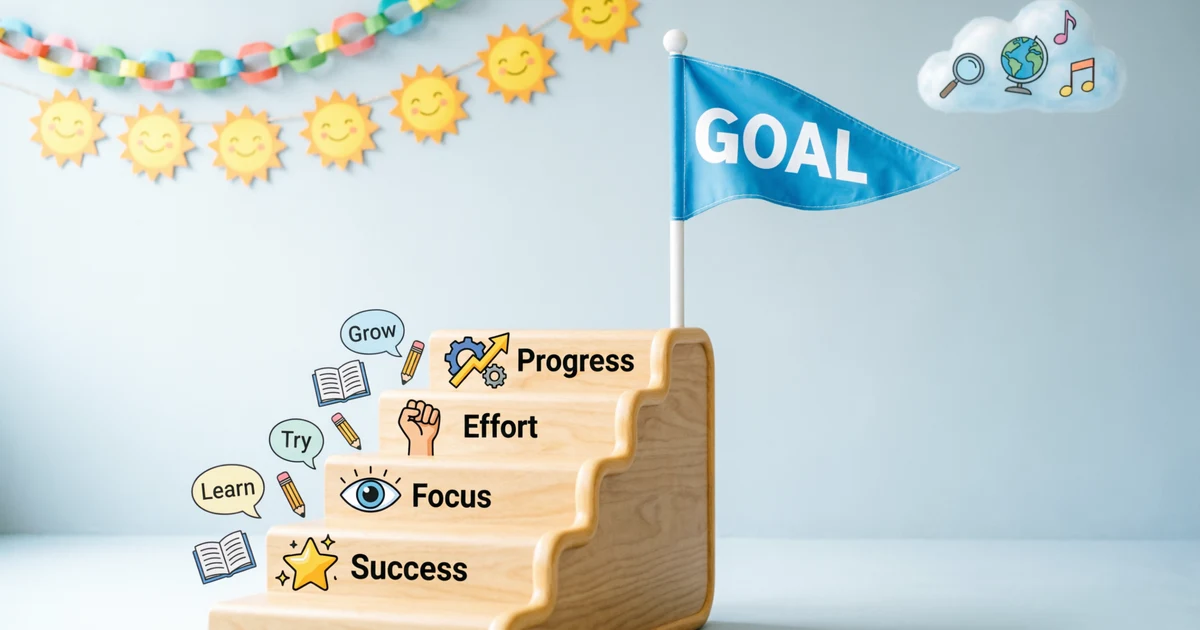
Idioms for achieving goals help writers and learners talk about progress, effort, success, ambition, and determination in a more natural way. Instead of saying someone “worked hard and succeeded,” English speakers often say they reached the finish line, hit their target, climbed the ladder, or crossed the finish line.
The main difference is simple: idioms for achieving goals use figurative language, while literal goal-related phrases say the meaning directly. For example, “She achieved her goal” is literal. “She crossed the finish line” is idiomatic because it compares success to finishing a race.
This difference matters for students, writers, and ESL learners because idioms can make writing more expressive, but they can also confuse readers when used in the wrong context. This guide explains how goal idioms work, how literal goal phrases work, where they overlap, and when to use each one.
What Idioms for Achieving Goals Mean
An idiom for achieving goals is a fixed or common expression that describes success, progress, effort, or ambition in a figurative way.
Simple definition:
An idiom for achieving goals is a phrase whose meaning is not always clear from the individual words.
Purpose:
It makes speech and writing more vivid, natural, and expressive.
How it works:
It uses images from sports, travel, work, climbing, building, or competition to describe reaching a goal.
Short example:
After years of practice, Mia finally reached the finish line and became a professional dancer.
Why it gets confused with literal goal phrases:
Many goal idioms sound direct, such as hit the target or reach a milestone, but they often carry a figurative meaning beyond the basic words.
What Literal Goal-Related Phrases Mean
A literal goal-related phrase states the idea of achievement directly. It does not depend on hidden meaning or figurative language.
Simple definition:
A literal goal-related phrase clearly says that someone planned, worked, progressed, or succeeded.
Purpose:
It gives clear information without making the reader interpret an image or comparison.
How it works:
It uses direct verbs and nouns such as achieve, complete, succeed, plan, improve, progress, and accomplish.
Short example:
Mia worked hard and achieved her goal of becoming a professional dancer.
Why it gets confused with idioms:
Some literal phrases, such as “reach a goal,” sound similar to idioms because they use action words like reach, move, or finish.
Idioms for Achieving Goals vs Literal Goal Phrases: The Core Difference
The core difference is that idioms express achievement through figurative meaning, while literal goal phrases express achievement directly.
If you write, “He achieved his goal,” the meaning is clear and direct. If you write, “He crossed the finish line,” the reader understands that he completed something important, even if there was no real race.
Idioms often add emotion, energy, or imagery. Literal phrases add clarity and precision. Good writers use both, depending on the tone and purpose of the sentence.
Quick Comparison Table
| Point | Idioms for Achieving Goals | Literal Goal-Related Phrases |
|---|---|---|
| Definition | Figurative expressions about success or progress | Direct expressions about success or progress |
| Scope | More expressive and image-based | More clear and exact |
| Purpose | To make writing natural, vivid, or memorable | To explain achievement clearly |
| Length | Often short fixed phrases | Can be short or long |
| Structure | Usually set expressions | Flexible sentence patterns |
| Meaning | Often not fully literal | Usually clear from the words |
| Use in writing | Best for essays, stories, speeches, and informal writing | Best for academic, formal, and instructional writing |
| Example | She hit her target. | She achieved her goal. |
How Idioms for Achieving Goals Work
Idioms for achieving goals work by turning achievement into a picture. That picture helps readers feel the effort behind the success.
For example, climb the ladder suggests steady progress. It often describes career success or social advancement. The image of climbing shows that success takes effort and time.
Example:
He started as an assistant and slowly climbed the ladder to become a manager.
Some idioms focus on the final result:
- Reach the finish line
- Cross the finish line
- Make it to the top
- Hit the target
- Achieve a breakthrough
Others focus on effort and persistence:
- Stay the course
- Keep your eyes on the prize
- Go the extra mile
- Push the envelope
- Move mountains
These idioms do more than say “success.” They show the attitude, struggle, and progress behind success.
How Literal Goal-Related Phrases Work
Literal goal-related phrases work by saying the exact meaning without figurative language. They help readers understand the message quickly.
Example:
She completed her project on time and reached her academic goal.
This sentence does not ask the reader to imagine a race, ladder, mountain, or target. It simply explains what happened.
Common literal goal phrases include:
- achieve a goal
- complete a task
- make progress
- reach an objective
- improve performance
- finish a project
- succeed in a plan
- meet a deadline
- develop a skill
- accomplish a mission
These phrases work well in school essays, reports, instructions, resumes, and formal writing because they sound clear and professional.
Key Differences in Simple Language
Idioms are more colorful. Literal phrases are more direct.
Idioms often create a mental picture. Literal phrases usually explain the fact.
Idioms can sound natural in conversation and creative writing. Literal phrases often work better in academic and formal writing.
Idioms may confuse beginners if they translate word by word. Literal phrases usually feel easier for ESL learners.
For example:
Idiomatic:
She kept her eyes on the prize and passed the exam.
Literal:
She stayed focused on her goal and passed the exam.
Both sentences mean almost the same thing, but the idiom sounds more expressive.
Can Idioms and Literal Goal Phrases Overlap?
Yes, they can overlap. Some expressions sit between idiomatic and literal language.
For example, reach a goal is mostly literal, but it uses the image of moving toward something. Reach a milestone can also feel slightly figurative because a milestone originally refers to a marker on a road.
The overlap happens because English often describes goals as physical destinations. We say people “move forward,” “get closer,” “fall behind,” or “reach success.” These phrases may sound literal, but they often come from spatial or journey-based thinking.
This is why students sometimes confuse idioms with normal phrases. A phrase can be clear and common, yet still carry a figurative image.
Examples of Idioms for Achieving Goals
Here are useful idioms for achieving goals with meanings and natural examples.
1. Hit the Target
Meaning:
To achieve exactly what you planned.
Example:
The team hit the target and completed the sales goal before Friday.
2. Reach the Finish Line
Meaning:
To complete a difficult task or long process.
Example:
After months of research, we finally reached the finish line.
3. Cross the Finish Line
Meaning:
To successfully complete something.
Example:
She worked late every night and crossed the finish line with a strong final project.
4. Climb the Ladder
Meaning:
To rise step by step in a career or position.
Example:
He climbed the ladder from junior designer to creative director.
5. Keep Your Eyes on the Prize
Meaning:
To stay focused on the final goal.
Example:
Even when the training felt hard, Sara kept her eyes on the prize.
6. Go the Extra Mile
Meaning:
To make more effort than expected.
Example:
He went the extra mile to prepare for the scholarship interview.
7. Stay the Course
Meaning:
To continue with a plan even when it becomes difficult.
Example:
The business struggled at first, but the founders stayed the course.
8. Move Mountains
Meaning:
To make a huge effort to achieve something difficult.
Example:
Her parents moved mountains to help her finish college.
9. Make a Breakthrough
Meaning:
To achieve an important discovery or success after difficulty.
Example:
After many failed experiments, the scientists made a breakthrough.
10. Get Over the Hump
Meaning:
To pass the hardest part of a task.
Example:
Once we finished the first draft, we finally got over the hump.
Examples of Literal Goal-Related Phrases
These phrases are clearer and more direct than idioms.
1. Achieve a Goal
Example:
He achieved his goal of learning English fluently.
2. Complete a Task
Example:
The students completed the assignment before the deadline.
3. Make Progress
Example:
She made progress in reading after practicing every day.
4. Reach an Objective
Example:
The class reached its learning objective by the end of the lesson.
5. Improve a Skill
Example:
He improved his writing skill through daily practice.
6. Finish a Project
Example:
They finished the science project on time.
7. Meet a Deadline
Example:
The writer met the deadline for the article.
8. Succeed in a Plan
Example:
The team succeeded in its plan to raise funds.
9. Accomplish a Mission
Example:
The volunteers accomplished their mission to clean the park.
10. Build Confidence
Example:
Practice helped her build confidence before the exam.
Idioms for Achieving Goals in Literature and Writing
In literature and creative writing, idioms can show a character’s ambition, struggle, or growth without long explanation.
For example:
Literal:
James worked hard and became successful.
Idiomatic:
James kept climbing the ladder, one difficult step at a time.
The idiomatic version feels more visual. It suggests progress, pressure, and effort. Writers often use goal idioms to create rhythm and emotional meaning.
However, too many idioms can weaken writing. If every sentence uses a phrase like hit the target, go the extra mile, and reach the finish line, the writing may sound crowded or unnatural.
Strong writers choose idioms carefully. They use them when the image supports the meaning.
Idioms for Achieving Goals for Students and ESL Learners
For students and ESL learners, idioms for achieving goals can improve vocabulary, speaking, and writing. These expressions often appear in classrooms, business English, motivational speeches, and everyday conversation.
The safest way to learn them is to study the whole phrase, not each word separately.
For example, keep your eyes on the prize does not mean you are literally looking at a prize. It means you stay focused on your goal.
ESL learners should also notice tone. Some idioms sound casual, while others fit formal writing.
More natural in conversation:
I know the course is hard, but stay the course.
Better in formal writing:
Students should remain focused on their academic goals.
Both are correct, but they fit different situations.
Common Mistakes and Confusion
One common mistake is translating idioms word for word. This often creates confusion because idioms depend on cultural and figurative meaning.
Another mistake is using idioms in very formal writing when a direct phrase would work better. For example, in an academic report, “The project achieved its main objective” sounds clearer than “The project hit the target.”
Students also confuse similar idioms. Reach the finish line and get over the hump do not mean exactly the same thing. Reaching the finish line means completing the whole task. Getting over the hump means passing the hardest part, even if some work remains.
A final mistake is using idioms without context. An idiom should fit the sentence naturally. It should not feel inserted only to sound advanced.
When to Use Idioms and When to Use Literal Goal Phrases
Use idioms when you want writing to sound lively, natural, or expressive. They work well in stories, speeches, blog posts, informal essays, and motivational writing.
Example:
She kept her eyes on the prize and worked hard until she passed the exam.
Use literal goal phrases when you need clarity, accuracy, or a formal tone. They work well in school assignments, reports, resumes, academic writing, and instructions.
Example:
She stayed focused on her goal and passed the exam.
In simple terms, choose idioms for color and choose literal phrases for clarity.
Related Terms People Often Confuse With Them
Metaphor
A metaphor compares one thing to another directly. Many idioms are metaphorical, but not every metaphor is an idiom.
Example:
Success is a ladder.
Simile
A simile compares two things using “like” or “as.”
Example:
Her progress was like climbing a mountain.
Proverb
A proverb is a short traditional saying that teaches a lesson.
Example:
Where there’s a will, there’s a way.
Cliché
A cliché is an expression used so often that it may feel boring or predictable.
Example:
Never give up on your dreams.
Motivational Phrase
A motivational phrase encourages effort or confidence. It may be literal or figurative.
Example:
Believe in yourself and keep going.
Collocation
A collocation is a natural word combination.
Example:
Achieve success, set goals, make progress.
Conclusion
Idioms for achieving goals help English speakers describe success, effort, focus, and progress in a more expressive way. Phrases like hit the target, go the extra mile, and cross the finish line create strong images that make writing feel natural and memorable.
Literal goal-related phrases, such as achieve a goal, complete a task, and make progress, explain the same ideas more directly. They work best when clarity matters.
The best choice depends on your purpose. Use idioms when you want energy and style. Use literal phrases when you want precision and simplicity. Strong English writing often uses both, but it uses them with care.
FAQs
What are idioms for achieving goals?
Idioms for achieving goals are figurative expressions that describe success, progress, effort, or ambition. Examples include hit the target, cross the finish line, and go the extra mile.
What is the difference between an idiom and a literal goal phrase?
An idiom uses figurative meaning, while a literal goal phrase says the meaning directly. “She hit the target” is idiomatic. “She achieved her goal” is literal.
Are goal idioms useful for ESL learners?
Yes. Goal idioms help ESL learners understand natural English in conversations, speeches, articles, and workplace communication. Learners should study each idiom as a complete phrase.
Can I use idioms for achieving goals in essays?
Yes, but use them carefully. Idioms can make essays more engaging, but formal academic writing often needs clearer literal phrases.
What is a common idiom for achieving success?
A common idiom is hit the target. It means to achieve exactly what you planned or expected.
Is “achieve a goal” an idiom?
No. “Achieve a goal” is a literal phrase. It clearly states the meaning without figurative language.
Which is better: idioms or literal phrases?
Neither is always better. Idioms add style and expression. Literal phrases add clarity and precision. The best choice depends on your audience, tone, and writing purpose.