Quick Answer
WAS is the past tense of is and am. It describes a person, thing, situation, or condition that existed or happened in the past. For example, “She was tired” means she felt tired at an earlier time. WAS can also appear as an abbreviation in specialized contexts, but in ordinary English, its grammatical meaning is by far the most common. Understanding the sentence helps you identify how was functions.
Introduction
The word was appears constantly in everyday English, so its meaning may seem simple. However, people searching for was meaning may want to understand its grammar, especially when learning English or comparing it with words such as is, were, and has been.
Was is a form of the verb be. We use it when talking about something that existed, happened, or described a person or thing in the past. For example, “I was tired,” “He was at school,” and “The movie was interesting” all describe past situations.
The word can also appear in questions, negative sentences, passive constructions, and conditional expressions. Although these structures may look different, the basic idea remains connected to a past state or situation.
What Does WAS Mean?
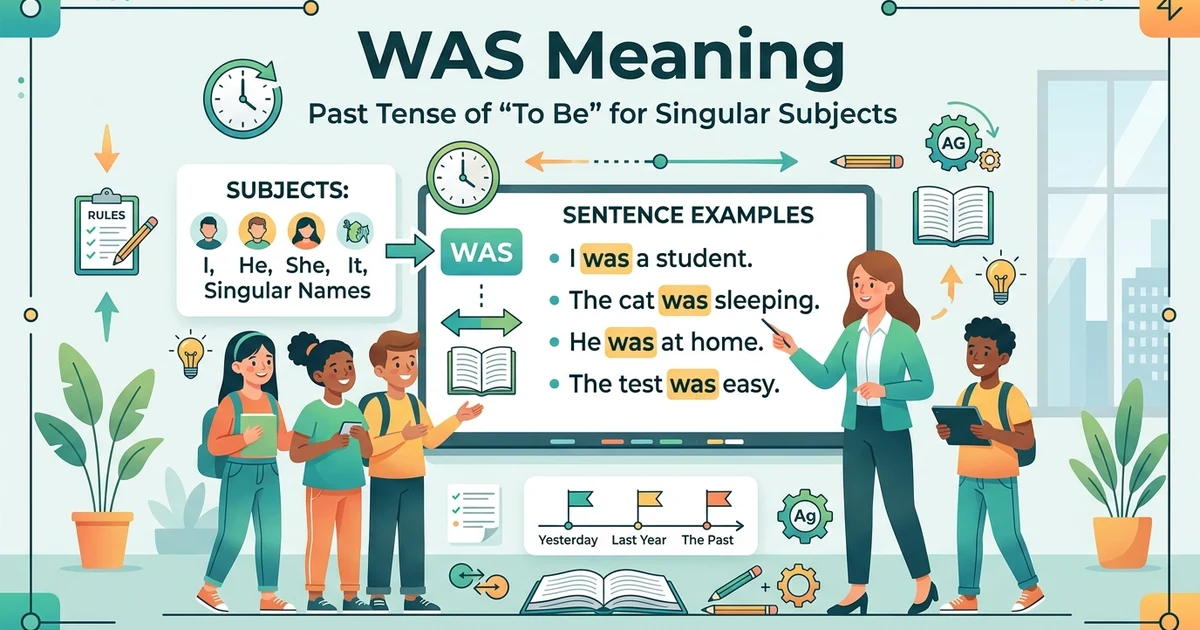
Was is the past tense form of the verb be used mainly with I, he, she, and it.
Examples include:
- I was happy.
- He was late.
- She was at home.
- It was cold.
In these sentences, was connects the subject with a condition, description, location, or identity in the past.
| Subject | Present Form | Past Form |
|---|---|---|
| I | am | was |
| He | is | was |
| She | is | was |
| It | is | was |
| You | are | were |
| We | are | were |
| They | are | were |
This table shows why was and were are not always interchangeable.
WAS as a Past Tense Verb
The most common use of was describes something that existed or was true in the past.
For example:
I was tired yesterday.
The sentence tells us that the speaker felt tired at an earlier time.
Another example:
She was at school this morning.
Here, was tells us about her location in the past.
You can use was with descriptions, locations, identities, feelings, and conditions.
Was vs Is
Is describes something in the present, while was usually describes something in the past.
| Word | Time | Example |
|---|---|---|
| Is | Present | He is tired. |
| Was | Past | He was tired. |
Compare these sentences:
The room is cold.
This means the room is cold now.
The room was cold.
This means the room was cold at an earlier time.
Changing is to was changes the time being described.
Was vs Were
Was and were are both past forms of be, but they usually work with different subjects.
Use was with:
- I
- He
- She
- It
Use were with:
- You
- We
- They
Examples:
I was busy.
She was happy.
They were busy.
We were happy.
There are also special structures where were can appear with singular subjects, such as hypothetical expressions.
Was in Questions
Was can appear at the beginning of a question.
Examples:
Was he at home?
Was she ready?
Was it difficult?
These questions ask about a past situation or condition.
A short answer can look like:
Yes, he was.
or:
No, she wasn’t.
Was Not and Wasn’t
The negative form of was is was not or the contraction wasn’t.
For example:
He was not ready.
He wasn’t ready.
Both forms have the same basic meaning.
Wasn’t is more common in casual conversation, while was not can sound more formal or provide stronger emphasis.
Was in Everyday Sentences
Here are some simple examples:
I was hungry after school.
This describes a past feeling.
She was at the library.
This describes a past location.
The movie was great.
This gives a past opinion or description.
It was raining yesterday.
This describes a past weather condition.
He was my teacher last year.
This describes a past relationship or role.
Was in Passive Sentences
Was can also appear in passive constructions.
For example:
The window was broken.
Here, was helps form the passive structure.
Another example:
The package was delivered yesterday.
The sentence focuses on the package and what happened to it rather than the person who delivered it.
Was in Conditional Sentences
You may also see was in hypothetical or conditional expressions.
For example:
I wish I was there.
This expresses a wish about a situation that is not currently true.
In some formal or traditional English structures, were may be preferred instead:
I wish I were there.
Both forms occur in English, but their use can depend on style, dialect, and the specific grammatical construction.
WAS as an Abbreviation
Although was is overwhelmingly common as an English verb, uppercase WAS can also function as an abbreviation in specialized contexts.
The exact expansion depends on the field, organization, or document.
If you see WAS in all capital letters in a technical, professional, academic, or organizational document, check the surrounding information before assuming it means the verb was.
Common Mistakes
One common mistake involves using was with every subject. For example, “They was happy” is not standard English. Standard English uses “They were happy.”
Another mistake involves using was when talking about the present. If something is true now, is may be the appropriate form instead.
Learners can also confuse was with were in questions and negative sentences. Checking the subject first can help.
Finally, do not assume that uppercase WAS always represents the verb. In specialized documents, it may function as an abbreviation.
How to Remember When to Use Was
A simple way to remember was is to connect it with singular subjects in the past.
Think:
I was
He was
She was
It was
Then remember:
You were
We were
They were
This pattern covers many everyday sentences.
Conclusion
The was meaning is usually straightforward: was is a past tense form of the verb be. It describes a past state, condition, location, identity, or situation.
Use was mainly with I, he, she, and it, while were generally works with you, we, and they. Was can also appear in questions, negative sentences, passive constructions, and hypothetical expressions.
If you see WAS written in capital letters in a specialized context, it may represent an abbreviation instead. In ordinary English, however, the grammatical meaning is the one you will encounter most often.
FAQs
What does was mean in English?
Was is a past tense form of the verb be. It describes something that existed, happened, or was true in the past.
What is the difference between is and was?
Is generally describes something in the present, while was describes something in the past.
Is was past tense?
Yes. Was is a past tense form of the verb be.
When should I use was?
Use was mainly with I, he, she, and it when describing a past state, condition, location, or situation.
What is the difference between was and were?
Was generally goes with I, he, she, and it. Were generally goes with you, we, and they.
What does wasn’t mean?
Wasn’t is the contraction of was not. It expresses a negative past state or situation.
Can WAS have another meaning?
Yes. In uppercase letters, WAS can represent an abbreviation in specialized fields. The exact meaning depends on the context.
Is “I was” correct English?
Yes. “I was” is the standard past form of “I am.” For example, “I was tired yesterday.”

Alexa Xolen is a humor writer at Punjokevault.com, creating witty jokes and clever puns to make your day brighter. She loves spreading smiles, one laugh at a time.