Quick Answer
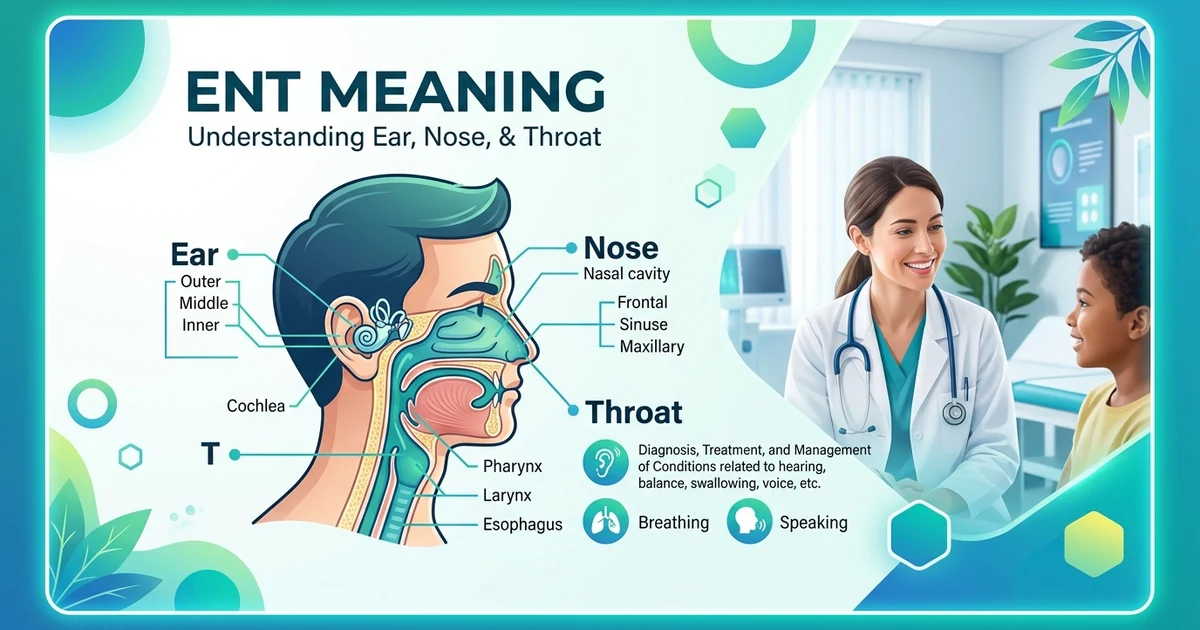
ENT can have several meanings depending on the context. In everyday health and medical discussions, ENT most commonly refers to ear, nose, and throat, especially the medical specialty that deals with conditions affecting these areas. An ENT doctor is also called an otolaryngologist. Outside healthcare, ENT can appear as an abbreviation for other terms, organizations, or concepts. The surrounding sentence usually tells you which meaning someone intends.
Introduction
The abbreviation ENT is common in medical conversations, appointments, health websites, and everyday discussions about ear, nose, or throat problems. When someone says they need to see an ENT, they usually mean they need to see a doctor who specializes in conditions involving the ear, nose, and throat.
You may also see ENT in other settings. Businesses, organizations, schools, technology companies, and other fields can use the same three letters as an abbreviation for something completely different. That can make ENT confusing when it appears without context.
For most general searches, the medical meaning deserves the most attention. Still, understanding the other possibilities can help you interpret ENT correctly when you encounter it elsewhere. This guide explains the main meaning, common examples, related terms, and how context changes the definition.
What Does ENT Mean?
ENT most commonly means ear, nose, and throat.
It can refer to the three body areas covered by a medical specialty, as well as the doctor who specializes in treating conditions involving those areas.
An ENT specialist may evaluate problems involving:
- Ears
- Nose
- Sinuses
- Throat
- Voice
- Hearing
- Balance
The formal medical specialty is called otolaryngology, and a doctor who practices it is an otolaryngologist.
| Term | Meaning | Common Context | Example |
|---|---|---|---|
| ENT | Ear, nose, and throat | Healthcare | I have an ENT appointment |
| ENT doctor | Specialist in ear, nose, and throat conditions | Healthcare | The ENT doctor checked my hearing |
| Otolaryngologist | Formal medical term for an ENT specialist | Medical writing | The patient saw an otolaryngologist |
| ENT clinic | Clinic providing ENT related care | Healthcare | The appointment is at the ENT clinic |
What Is an ENT Doctor?
An ENT doctor is a medical specialist who evaluates and treats conditions involving the ears, nose, throat, and related structures.
For example, a person might see an ENT specialist for ongoing hearing problems, certain sinus issues, voice concerns, or other conditions involving the upper airway and related areas.
ENT specialists can also work with problems involving balance, swallowing, and other functions connected to the head and neck.
The exact care someone needs depends on their symptoms and medical situation.
What Does an ENT Treat?
ENT specialists can manage many different conditions involving the ear, nose, throat, and related areas.
Examples can include:
- Hearing problems
- Ear infections
- Sinus conditions
- Nasal problems
- Throat conditions
- Voice problems
- Swallowing difficulties
- Balance related problems
Not every ear, nose, or throat symptom requires an ENT appointment. A primary care doctor may handle many common problems and recommend a specialist when appropriate.
ENT Meaning in Medical Appointments
You may see ENT on appointment websites, referral forms, medical records, or clinic signs.
For example:
I have an ENT appointment next Tuesday.
This usually means the person has an appointment with an ear, nose, and throat specialist.
Another example:
My doctor referred me to ENT.
This means the person received a referral to an ENT specialist or ENT department.
ENT vs Otolaryngologist
And ENT otolaryngologist generally refer to the same medical specialty, but they sound different.
| Term | Meaning | Style |
|---|---|---|
| ENT | Ear, nose, and throat | Common and easy to say |
| ENT doctor | Doctor specializing in ENT care | Everyday language |
| Otolaryngologist | Formal name for the specialist | Medical terminology |
| Otolaryngology | Name of the medical specialty | Formal medical terminology |
ENT is much easier to use in everyday conversation, while otolaryngologist commonly appears in formal medical settings.
When Should Someone See an ENT?
Whether someone needs an ENT depends on their symptoms and medical history.
A primary care clinician may recommend an ENT when a problem needs specialized evaluation or treatment.
Examples can include persistent hearing concerns, recurring ear problems, ongoing nasal or sinus issues, voice problems, or swallowing difficulties.
If symptoms are severe, sudden, or concerning, seek appropriate medical care rather than relying on an abbreviation or online explanation to decide what is happening.
ENT Meaning Outside Medicine
Although the medical meaning is very common, ENT can represent other terms in different fields.
For example, a company or organization may use ENT as part of its name or as an internal abbreviation.
Technology, education, business, entertainment, and other industries can also create abbreviations using the same letters.
When ENT appears in a nonmedical document, look at the surrounding words before assuming it means ear, nose, and throat.
ENT in Business and Organizations
In business writing, ENT can sometimes appear as a shortened form of a company name, organization name, department, or specialized term.
For example:
The ENT division published its annual report.
Without additional context, this sentence does not tell us exactly what ENT represents.
The document may define the abbreviation elsewhere. Check headings, introductions, footnotes, or a glossary for the full name.
ENT in Texting and Social Media
ENT is not as universally recognized as common texting abbreviations such as LOL, BRB, or IDK.
If you see ENT in a message, its meaning depends on the conversation.
For example, if someone says:
My ENT appointment is tomorrow.
The medical meaning is obvious.
If ENT appears in a gaming group, business chat, or specialized online community, it may represent something else.
Common Mistakes
One common mistake involves assuming that ENT always means ear, nose, and throat. That is the most common general meaning, but abbreviations can have different definitions in specialized settings.
Another mistake involves confusing ENT with the name of a specific doctor. ENT usually describes the medical specialty or a doctor who practices that specialty.
People can also assume that every ear, nose, or throat problem requires an ENT specialist. Many common problems can receive initial care from a primary care clinician.
Finally, do not use an online abbreviation definition as a medical diagnosis. If you have a health concern, a qualified healthcare professional can provide advice based on your situation.
How to Identify the Correct ENT Meaning
Start with the sentence containing ENT.
If you see words such as:
- Ear
- Hearing
- Sinus
- Nose
- Throat
- Doctor
- Clinic
- Appointment
ENT probably refers to the medical specialty.
If the sentence mentions:
- Company
- Department
- Organization
- Software
- Project
- Business
ENT may have a different meaning.
Context is the quickest way to narrow down the possibilities.
Conclusion
The ENT meaning most commonly refers to ear, nose, and throat, particularly the medical specialty known formally as otolaryngology.
An ENT doctor can evaluate and treat many conditions involving the ears, nose, throat, and related areas. You may encounter ENT in medical appointments, referrals, clinics, health information, and everyday conversations.
However, ENT can have other meanings in business, technology, organizations, and specialized communities. When the surrounding context is not medical, check the source carefully before assuming the abbreviation means ear, nose, and throat.
FAQs
What does ENT stand for?
ENT stands for ear, nose, and throat. It commonly refers to the medical specialty that deals with conditions affecting these areas.
What is an ENT doctor?
An ENT doctor is a medical specialist who evaluates and treats conditions involving the ears, nose, throat, and related structures. The formal term is otolaryngologist.
What does ENT mean in a hospital?
In a hospital, ENT usually refers to the ear, nose, and throat department or specialty.
What is the difference between ENT and otolaryngology?
ENT is the common short form, while otolaryngology is the formal name of the medical specialty.
What does ENT mean in texting?
ENT does not have one universal texting meaning. The intended definition depends on the conversation and context.
Can ENT have other meanings?
Yes. Organizations, businesses, technical fields, and other groups can use ENT as an abbreviation for different terms.
When should someone see an ENT?
A healthcare professional may recommend an ENT specialist when someone has a persistent or specialized ear, nose, throat, hearing, voice, balance, or related concern.
Is ENT a medical abbreviation?
Yes. ENT is a widely used abbreviation for ear, nose, and throat and the related medical specialty.