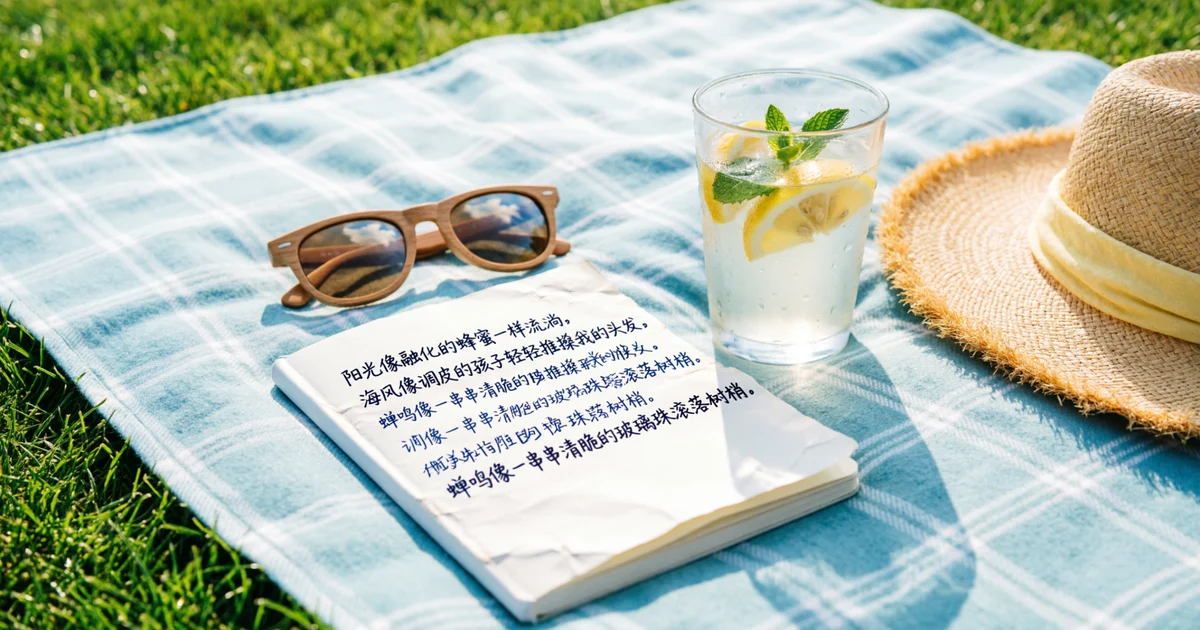
Summer fills writing with heat, color, light, movement, and feeling. A good summer simile can help a reader feel the sun on their skin, hear waves on the shore, taste cold lemonade, or picture a long golden afternoon.
A summer simile compares something to a summer image using like or as. Writers use it to make descriptions stronger and easier to imagine. Students can also use summer similes to improve poems, stories, essays, and creative paragraphs.
In this guide, you will learn what a summer simile means, how to use one, and how different summer images can show heat, joy, freedom, beauty, and adventure.
What a Summer Simile Means
A summer simile compares a person, place, feeling, or object to something connected with summer. It uses like or as to make the comparison clear.
For example:
- Her smile shone like summer sunlight.
- The room felt as hot as a July afternoon.
- The children ran like waves rushing toward the shore.
Each sentence connects an idea to a summer image. The first sentence shows brightness. The second sentence shows heat. The third sentence shows movement and excitement.
A summer simile works well when it helps the reader picture, feel, or understand something better. It should not only sound pretty. It should add meaning.
A weak simile says:
- The day was like summer.
That feels too plain. It does not tell the reader what part of summer matters.
A stronger simile says:
- The day stretched out like a lazy summer afternoon.
Now the reader can feel the slow, relaxed mood.
Why Writers Use Similes to Describe Summer
Writers use summer similes because summer already carries strong images. Most readers connect summer with sunshine, heat, beaches, vacations, gardens, ice cream, long days, and outdoor fun.
A summer simile can show:
- Heat
- Brightness
- Happiness
- Freedom
- Energy
- Calm
- Beauty
- Laziness
- Adventure
For example:
- His laughter burst out like sunlight after rain.
This simile does more than say he laughed. It shows a bright, sudden, cheerful feeling.
Summer similes also help writers avoid plain description. Instead of saying the grass looked green, a writer can say:
- The grass glowed like a summer field after rain.
That sentence gives the reader color, freshness, and mood.
Good similes help readers connect with a scene through the senses. Summer gives writers many sensory details, such as warm air, bright light, buzzing insects, cool water, melting ice cream, and the smell of cut grass.
Simple Summer Simile Definition for Students
A summer simile compares something to a summer thing using like or as.
Simple definition:
A summer simile describes something by comparing it to sunshine, heat, beaches, flowers, holidays, or other summer images.
Examples for students:
- The sun was like a giant golden lamp.
- Her dress was as bright as a summer garden.
- The pool sparkled like a box of blue jewels.
- The day felt as warm as a blanket in the sun.
- The beach sand burned like tiny sparks under my feet.
Students can use summer similes in many types of writing. They can describe weather, people, places, feelings, and actions.
For example, in a story:
- Maya raced across the grass like a kite dancing in the summer wind.
This sentence gives action and a clear picture. It also makes the scene feel lively.
Best Summer Simile Examples With Clear Meanings
Here are strong summer simile examples with simple meanings.
- The sun blazed like a golden fire in the sky.
Meaning: The sun looked very bright and hot.
- The lake glittered like broken glass in the summer light.
Meaning: The lake reflected the sunlight in sharp bright flashes.
- The air felt as heavy as a thick wool blanket.
Its Mean: The weather felt hot and difficult to breathe in.
- His joy spread like sunshine across a field.
Meaning: His happiness affected everyone around him.
- The beach was as crowded as a festival street.
Meaning: Many people filled the beach.
- Her voice felt as soft as a warm summer breeze.
Its Mean: Her voice sounded gentle and comforting.
- The children splashed like dolphins in the water.
Meaning: The children moved with playful energy.
- The afternoon moved like honey dripping from a spoon.
Meaning: The afternoon felt slow and lazy.
- The flowers opened like tiny umbrellas in the sun.
Its Mean: The flowers bloomed in a bright and cheerful way.
- The sunset burned like orange paint across the sky.
Meaning: The sunset looked bold, warm, and colorful.
The best summer similes match the feeling you want to show. Use bright images for happiness, hot images for discomfort, and soft images for peace.
Easy Summer Similes for Beginners
Beginners should start with simple summer images that everyone understands. Sunshine, heat, pools, beaches, ice cream, and flowers make good choices.
Easy summer similes:
- The sun was like a ball of fire.
- The water felt as cool as ice.
- The sky looked as blue as the ocean.
- The sand felt like warm sugar.
- The breeze moved like a gentle hand.
- The garden smelled as sweet as fruit.
- The clouds floated like cotton in the sky.
- The day felt as bright as a smile.
- The children played like happy puppies.
- The flowers stood like colorful little flags.
A beginner can build a summer simile with this simple pattern:
Something plus verb plus like or as plus summer image.
Examples:
- The road shimmered like a mirror in the heat.
- The sun felt as hot as a stove.
- The trees swayed like dancers in the warm wind.
Try to choose a comparison that fits the exact idea. A hot sidewalk and a soft breeze need different images.
Summer Simile Examples Using Like
Similes with like often feel natural in stories, poems, and descriptions. They work well when you want to show action, movement, or appearance.
Examples using like:
- The sun rose like a golden coin over the hills.
- The waves rolled like blue blankets across the shore.
- The lemonade sparkled like sunlight in a glass.
- The flowers nodded like sleepy children in the heat.
- The kite climbed like a bird into the summer sky.
- The pool shone like a bright blue mirror.
- The fireflies blinked like tiny stars in the grass.
- The leaves whispered like secrets in the warm breeze.
- The clouds drifted like boats across the sky.
- The picnic blanket spread like a patch of color on the lawn.
Use like when the sentence needs a smooth and direct comparison. It often gives the writing a relaxed flow.
For example:
- The ocean stretched like a blue road to the horizon.
This simile gives the ocean shape and distance. It helps the reader picture a wide beach scene.
Summer Simile Examples Using As
Similes with as often work well when you want to describe a quality. They can show how hot, bright, sweet, calm, or lively something feels.
Examples using as:
- The afternoon was as hot as an oven.
- The sky was as clear as polished glass.
- The sand was as warm as fresh bread.
- Her laugh was as bright as summer sunlight.
- The pool was as blue as a clear sky.
- The air was as still as a sleeping cat.
- The mango was as sweet as a summer memory.
- The garden was as colorful as a box of crayons.
- The beach was as noisy as a playground.
- The sunset was as red as ripe cherries.
Use as when you want to make a strong description quickly.
For example:
- The field was as golden as honey.
This simile gives the field color, warmth, and richness in a few words.
Summer Similes About Hot Weather
Hot weather gives writers strong sensory details. Readers understand heat through skin, breath, sweat, light, and movement.
Examples:
- The pavement burned like a frying pan.
- The air pressed down like a heavy hand.
- The sun glared like an angry eye.
- The classroom felt as hot as a greenhouse.
- The car seat stung like a hot iron.
- The afternoon sat on the town like a thick blanket.
- The heat rose from the road like invisible smoke.
- The yard felt as dry as old paper.
- The wind blew like air from an open oven.
- The sidewalk shimmered like water in the distance.
Hot weather similes work best when they show how the heat affects people or places.
Plain sentence:
- It was very hot.
Stronger sentence:
- The heat wrapped around us like a blanket we could not shake off.
This version helps the reader feel the discomfort.
Summer Similes About Sunshine
Sunshine can show warmth, beauty, energy, hope, or harsh brightness. Choose the mood before you choose the simile.
Happy sunshine similes:
- The sunlight danced like gold on the water.
- Her face lit up like a summer morning.
- The room glowed like a sunlit garden.
- The day sparkled like fresh lemonade.
- The hills shone like treasure under the sun.
Harsh sunshine similes:
- The sun beat down like a hammer.
- The light flashed like white fire.
- The glare struck my eyes like a sharp blade.
- The sun stared down like it owned the sky.
- The field blazed like a sea of gold.
A sunshine simile can change the whole mood of a scene. Soft sunshine creates comfort. Blazing sunshine creates pressure, thirst, or tension.
Example:
- The sunlight fell across the porch like a warm yellow quilt.
This simile creates a peaceful summer mood.
Summer Similes About Beaches and Ocean Waves
Beaches give writers sound, color, movement, and texture. A beach simile can describe waves, sand, shells, wind, or people.
Examples:
- The waves crashed like drums against the shore.
- The ocean glittered like a sheet of blue glass.
- The shells shone like tiny pieces of moonlight.
- The sand slipped through my fingers like sugar.
- The tide crawled up the beach like a curious cat.
- The sea foam spread like lace over the sand.
- The beach umbrellas bloomed like bright flowers.
- The surfers moved like birds across the water.
- The gulls cried like noisy children.
- The shoreline curved like a smile.
Beach similes work well in vacation writing, summer stories, travel scenes, and poems.
Example paragraph:
The waves rolled toward the shore like long blue ribbons. Sand warmed my feet like fresh toast, and the sea foam curled around my ankles like soft white lace.
This description uses touch, sight, and movement.
Summer Similes About Long Sunny Days
Long summer days often feel slow, open, relaxed, or full of possibility. These similes help show time and mood.
Examples:
- The day stretched like a road with no end.
- The afternoon moved like syrup in a jar.
- The evening opened like a golden door.
- The hours drifted like clouds across the sky.
- The day felt as wide as the ocean.
- The sunlight lingered like a guest who did not want to leave.
- The evening glow spread like honey over the rooftops.
- The shadows grew like sleepy giants on the grass.
- The day unfolded like a picnic blanket.
- The sunset faded like a soft song.
Use these similes when you want to show calm, freedom, childhood memories, or slow summer time.
Example:
- The afternoon stretched like a lazy cat in the sun.
This simile gives the afternoon a relaxed mood without explaining too much.
Summer Similes About Ice Cream and Cold Drinks
Ice cream and cold drinks add taste, texture, and relief to summer writing. They work well when you want to show sweetness, comfort, or contrast with heat.
Examples:
- The ice cream melted like snow in sunlight.
- The lemonade tasted as sharp as a splash of sunshine.
- The milkshake was as thick as a cloud.
- The cold soda fizzed like tiny fireworks.
- The popsicle dripped like colored rain.
- The ice cubes clicked like small bells in the glass.
- The juice tasted as sweet as a summer morning.
- The cone cracked like thin glass between my teeth.
- The smoothie cooled my throat like a breeze.
- The cold water felt like a gift from the sky.
These similes help readers taste and feel the scene.
Example:
- The lemonade cooled my mouth like a little burst of winter.
This comparison works because it contrasts summer heat with cold relief.
Summer Similes About Vacations and Travel
Summer often brings trips, road journeys, camps, family visits, and new places. Vacation similes can show excitement, movement, rest, or discovery.
Examples:
- The road stretched like a ribbon through the hills.
- Our suitcase sat in the hallway like a promise.
- The airport buzzed like a beehive.
- The train rushed like a silver snake through the fields.
- The hotel pool shone like a blue jewel.
- The map opened like a door to adventure.
- The city lights sparkled like stars after sunset.
- The campsite smelled as fresh as rain on pine trees.
- The mountains rose like sleeping giants.
- The vacation passed like a dream in sunlight.
Travel similes work best when they show emotion as well as place.
Plain sentence:
- We were excited for the trip.
Stronger sentence:
- Excitement fluttered in us like flags in a summer breeze.
This version shows the feeling in a fresh way.
Summer Similes About Flowers, Grass, and Nature
Summer nature gives writers bright colors, rich smells, and lively movement. Flowers, trees, grass, birds, bees, and gardens create strong simile choices.
Examples:
- The flowers opened like painted cups.
- The grass smelled as fresh as rain.
- The garden buzzed like a tiny city.
- The sunflowers stood like golden faces.
- The butterflies moved like floating petals.
- The trees waved like friendly giants.
- The meadow glowed like a green sea.
- The roses smelled as sweet as candy.
- The bees worked like tiny builders.
- The leaves shimmered like coins in the sun.
Nature similes add life to a summer scene. They also help writers show peace, growth, and beauty.
Example:
- The field rippled like green water under the summer wind.
This simile turns a field into something alive and moving.
Summer Similes That Show Joy and Freedom
Summer often represents freedom, especially for children and students. Writers can use summer similes to show relief, joy, and open space.
Examples:
- She felt as free as a kite in the sky.
- His laughter flew like birds over the field.
- The children burst from school like sunshine through clouds.
- My heart felt as light as a beach ball.
- We ran like the wind across the grass.
- The music lifted us like waves under a boat.
- The holiday felt like a door swinging open.
- Joy spread through the group like sunlight across water.
- The weekend sparkled like a jar of fireflies.
- Their smiles bloomed like flowers in June.
These similes work well in stories about summer break, family trips, friendship, and outdoor fun.
Example:
- When the last bell rang, we rushed outside like birds escaping a cage.
This simile shows freedom and excitement clearly.
Beautiful Summer Similes for Descriptive Writing
Descriptive writing needs detail that feels fresh and clear. Beautiful summer similes should create strong pictures without sounding too fancy.
Examples:
- The sunset spilled across the sky like warm peach juice.
- The lake shimmered like silk under the sun.
- The wheat field rolled like a golden ocean.
- The evening breeze brushed my face like a soft scarf.
- The moon rose like a pearl above the warm trees.
- The fireflies glowed like sparks from a quiet fire.
- The roses blushed like cheeks in the heat.
- The clouds floated like white petals.
- The porch light glowed like a small summer star.
- The river curled like a silver ribbon through the valley.
To write a beautiful simile, focus on one clear image. Do not crowd the sentence with too many comparisons.
Better:
- The river shone like silver in the sunset.
Too crowded:
- The river shone like silver, diamonds, glass, and stars in the sunset.
One strong image often works better than four weak ones.
Funny Summer Similes for Kids
Funny summer similes help children enjoy writing. They can sound silly, playful, and easy to understand.
Examples:
- The sun was as hot as a pizza oven.
- My hair stuck up like grass after a storm.
- The ice cream melted like it had somewhere to go.
- Dad snored like a lawn mower in the shade.
- The dog panted like a tiny train.
- My flip flops slapped the ground like clapping hands.
- The sprinkler sprayed like a sneaky octopus.
- My face turned as red as a tomato.
- The pool was as crowded as a bathtub full of frogs.
- The mosquito buzzed like a tiny angry motor.
Funny similes should still make sense. A silly image works best when readers can picture it right away.
Example:
- My little brother ran through the sprinkler like a noodle with legs.
This simile creates a funny image and shows movement.
Summer Similes for Poems
Poems need sound, rhythm, and feeling. Summer similes can make poems brighter, softer, or more emotional.
Examples for poems:
- The sun sleeps like gold on the hill.
- The breeze hums like a gentle song.
- The lake shines like a mirror for the sky.
- The roses glow like little hearts.
- The night falls like blue silk.
- The stars blink like fireflies above the trees.
- The grass bends like waves in a green sea.
- The moon floats like a pearl in warm air.
- The rain smells like a secret garden.
- The morning opens like a yellow flower.
In poetry, a simile can carry more emotion than a plain statement.
Plain line:
- The summer night was calm.
Poetic line:
- The summer night rested like a blue blanket over the town.
This line gives color, peace, and mood.
Summer Similes for Stories and Creative Writing
Stories need similes that fit the character, setting, and action. A child narrator may use simple images. An older narrator may use deeper or more thoughtful comparisons.
Story examples:
- The old house stood in the heat like a tired guard.
- Ava ran toward the lake like summer itself chased her forward.
- The town square buzzed like a fairground.
- The storm clouds gathered like a dark curtain.
- The porch swing creaked like an old song.
- The campfire glowed like a small orange heart.
- The sun followed us like a nosy neighbor.
- The road shimmered like a dream we could almost touch.
- The baseball field smelled like dust, grass, and warm leather.
- The night wrapped around the cabin like velvet.
A strong story simile should match the scene.
For a scary summer scene:
- The cornfield whispered like someone hiding in the dark.
For a happy summer scene:
- The yard rang with laughter like bells in the sun.
Both sentences use summer settings, but each creates a different mood.
How to Write Your Own Summer Simile
You can write a strong summer simile by choosing a clear subject, a summer image, and a shared quality.
Follow this simple method:
- Choose what you want to describe.
- Decide the feeling or quality.
- Pick a summer image that matches it.
- Use like or as.
- Read the sentence aloud.
Example process:
Subject: her smile
Quality: bright and warm
Summer image: morning sunlight
Simile: Her smile felt as warm as summer morning sunlight.
Another example:
Subject: the road
Quality: hot and shiny
Summer image: a mirror in the sun
Simile: The road shone like a mirror under the summer heat.
Helpful summer images to use:
- Sun
- Sand
- Waves
- Lemonade
- Ice cream
- Fireflies
- Flowers
- Grass
- Pool water
- Road trips
- Warm wind
- Long evenings
Check your simile with one question:
Does this comparison make the picture clearer?
If yes, keep it. If not, choose a more specific image.
Conclusion
A summer simile can turn a plain sentence into a bright and memorable image. It helps readers feel heat, see sunlight, hear waves, taste cold drinks, and understand emotions through familiar summer moments.
The strongest summer similes use clear comparisons. They do not try too hard. They connect one idea with one vivid summer image.
Use like or as with care. Choose details that fit your mood, whether you want to describe a hot afternoon, a joyful vacation, a peaceful garden, or a funny summer memory. With the right simile, summer writing feels alive on the page.
FAQs About Summer Similes
What is a summer simile?
A summer simile compares something to a summer image using like or as. Example: Her smile shone like summer sunlight.
What is a good simile for summer?
A good simile for summer is: Summer stretched before us like a golden road. It shows warmth, freedom, and possibility.
What is a simile for a hot summer day?
A strong simile for a hot summer day is: The day felt as hot as an oven. It gives a clear sense of extreme heat.
What is a summer simile for kids?
A simple summer simile for kids is: The sun was like a big yellow ball. It uses an easy image children can understand.
What is a summer simile using like?
An example using like is: The waves rolled like blue blankets across the beach.
What is a summer simile using as?
An example using as is: The sand was as warm as fresh bread.
How do you write a summer simile?
Choose something to describe, pick a summer image, and connect them with like or as. Example: The pool sparkled like blue glass.
What is a beautiful summer simile?
A beautiful summer simile is: The sunset spread across the sky like warm honey.
What is a funny summer simile?
A funny summer simile is: My ice cream melted like it had somewhere better to be.
Why do writers use summer similes?
Writers use summer similes to make descriptions clearer, brighter, and more emotional. They help readers picture a scene quickly.