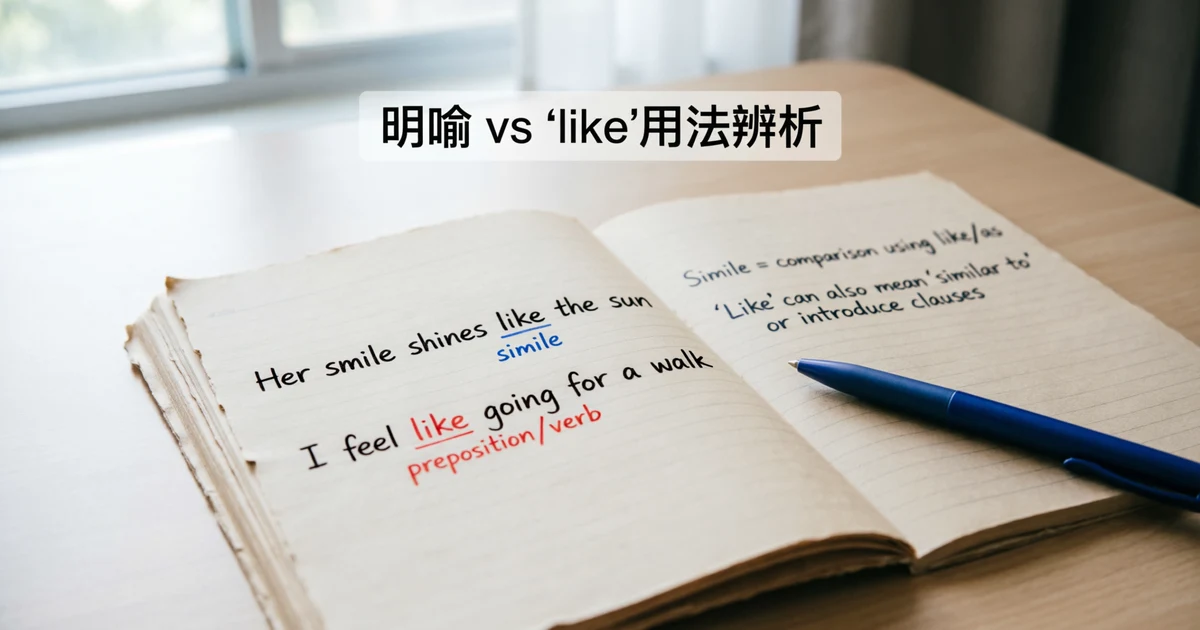
Many students see the word like in a sentence and quickly call it a simile. That sounds simple, but it can cause confusion. The word like can help create a simile, but it does not always create one.
This guide explains the clear difference between simile and like. You will learn how like works in comparisons, when it creates a simile, when it acts as a normal grammar word, and how to check any sentence with confidence. You will also see many examples that make the idea easy to remember.
What Simile vs Like Means in Simple Words
A simile compares two different things using words such as like or as. It helps the reader imagine something more clearly.
Example:
Her smile was like sunshine.
This sentence compares her smile to sunshine. The two things differ, but the comparison creates a bright and happy image.
The word like has a wider use. It can show comparison, but it can also mean enjoy, prefer, similar to, or in the same way as.
Examples:
I like mangoes.
He looks like his father.
She runs like the wind.
Only the third sentence creates a simile because it compares her running to the wind in a vivid way.
So the simple idea is this:
- A simile uses like to compare two different things in an imaginative way.
- Like can appear in many sentences that do not contain a simile.
Is Every Use of Like a Simile
No, every use of like does not create a simile. This is the most common mistake students make.
Look at these sentences:
I like reading books.
She looks like her sister.
The cake tastes like chocolate.
He fought like a lion.
Only the last sentence clearly works as a simile. It compares his fighting style to a lion to show courage or strength.
The first sentence uses like as a verb. It means enjoy. The second sentence shows resemblance. The third sentence describes taste. These sentences use like, but they do not create a strong figurative comparison.
A sentence with like becomes a simile only when it compares two different things to create a picture, feeling, or stronger meaning.
How Like Works Inside a Simile
Inside a simile, like acts as a comparison word. It connects one thing with another thing that has a shared quality.
Example:
The baby slept like an angel.
This sentence compares the baby to an angel. The shared idea is peace or innocence.
A simile usually has three parts:
- The subject
- The comparison word like
- The image or object used for comparison
Example:
The classroom was like a zoo.
Subject: The classroom
Comparison word: like
Image: a zoo
This simile does not mean the classroom had real animals. It means the classroom felt noisy, wild, or hard to control.
Like helps the writer move from a plain idea to a stronger image.
Plain sentence:
The room was noisy.
Simile:
The room was like a zoo.
The second sentence feels more alive because it gives the reader a picture.
Simple Rule to Tell Simile and Like Apart
Use this simple rule:
If like compares two different things to create a vivid image, the sentence has a simile.
If like means enjoy, prefer, resemble, or belong to a type, the sentence does not have a simile.
Examples:
She sings like a bird.
This is a simile because it compares her singing to a bird.
I like birds.
This is not a simile because like means enjoy.
He looks like his uncle.
This is not a strong simile because it shows family resemblance.
He moves like a shadow.
This is a simile because it creates an image of quiet movement.
Ask yourself this question:
Does the sentence use like to make the reader imagine one thing through another?
If yes, you likely have a simile.
Simile vs Like With Easy Examples
Clear examples help you understand the difference quickly.
Simile examples:
- Her voice was like music.
- The stars shone like diamonds.
- He stood like a statue.
- The child cried like a lost kitten.
- The runner moved like lightning.
These sentences compare unlike things. Voice and music, stars and diamonds, child and kitten all create images.
Like without simile:
- I like music.
- She looks like her mother.
- This shirt feels like cotton.
- They act like friends.
- He would like some tea.
These sentences use like in normal grammar. They do not create strong imaginative comparisons.
The difference depends on meaning, not only the word.
Like as a Comparison Word
Like often works as a comparison word. It can show that one thing has a quality similar to another thing.
Example:
The water felt like ice.
This compares cold water to ice. It helps the reader feel how cold the water was.
Another example:
His words cut like a knife.
This does not mean words can physically cut. The sentence shows emotional pain. The comparison makes the feeling sharper.
When like works as a comparison word in a simile, it usually makes writing more descriptive.
Plain sentence:
She was very quiet.
Simile:
She was quiet like a mouse.
The simile gives the reader a familiar image. That makes the meaning easier to feel.
Like as a Regular Grammar Word
Like also works as a normal grammar word. It can mean enjoy, want, resemble, or prefer.
Examples:
I like pizza.
Would you like water?
He looks like his brother.
This smells like coffee.
In these sentences, like does not create a poetic or imaginative comparison. It simply helps explain preference, offer, appearance, or smell.
Students often mark any sentence with like as a simile, but grammar needs more care. You must look at how the word functions.
Compare these two sentences:
I like a lion.
He roared like a lion.
The first sentence sounds strange unless someone means they enjoy a lion. The second sentence creates a simile because it compares his roar to a lion’s roar.
When Like Creates a Strong Simile
Like creates a strong simile when the comparison adds a clear image, emotion, or idea.
Strong simile:
Her courage burned like a flame.
This works well because courage and flame differ, but both suggest energy, brightness, and strength.
Another strong simile:
The old house groaned like a tired man.
This gives the house a human feeling and helps the reader imagine its age and sound.
A strong simile usually does three things:
- It compares two different things.
- It shares one clear quality between them.
- It makes the meaning more vivid.
Weak comparison:
The car was like another car.
This does not create a useful image because the two things seem too similar.
Strong comparison:
The car shot forward like a rocket.
This creates speed and power.
When Like Does Not Create a Simile
Like does not create a simile when it only shows taste, appearance, preference, category, or ordinary similarity.
Examples:
This soup tastes like chicken.
She looks like her aunt.
I like your idea.
He acts like a teacher.
These sentences use like, but they do not create a strong figure of speech.
A simile needs imagination. It should compare unlike things in a meaningful way.
Not a simile:
This phone looks like my old phone.
Simile:
The phone screen glowed like a tiny moon.
The first sentence compares similar objects. The second sentence compares a screen to the moon and creates a visual image.
Simile Examples Using Like
Here are useful simile examples with like:
- Her eyes sparkled like stars.
- The road twisted like a snake.
- His hands felt like ice.
- The news spread like wildfire.
- She danced like a leaf in the wind.
- The dog slept like a baby.
- His anger rose like a storm.
- The moon floated like a silver coin.
- The child smiled like the morning sun.
- The athlete jumped like a deer.
Each example uses like to compare two different things. The comparison helps the reader see, feel, or understand the subject better.
You can use these similes in stories, poems, essays, and daily writing. Just make sure the image fits the meaning.
Non Simile Sentences Using Like
Now look at sentences that use like but do not work as similes:
- I like cold drinks.
- She would like a new notebook.
- He looks like his cousin.
- This fabric feels like silk.
- The room smells like fresh paint.
- They seem like honest people.
- I feel like going outside.
- This song sounds like jazz.
- Do you like English grammar?
- It looks like rain.
These sentences use like in practical ways. They may show feeling, preference, prediction, resemblance, or sensory detail.
They do not create figurative comparisons between unlike things. That is why they do not count as similes.
Simile vs Like in School Grammar
In school grammar, teachers often introduce similes with this simple definition:
A simile compares two unlike things using like or as.
This definition helps beginners, but it can also create confusion. Students may think the word like always means simile. That idea needs correction.
A better school rule sounds like this:
A simile uses like or as to compare two unlike things in a descriptive or imaginative way.
This rule helps students avoid mistakes.
Example for school work:
The boy ran like a cheetah.
This is a simile because the boy and cheetah differ, and the comparison shows speed.
Not a simile:
The boy likes cheetahs.
Here, like means enjoys. It does not compare the boy to anything.
Simile vs Like for Students and Beginners
Students can understand simile vs like by using a simple checking method.
Look at the sentence:
The girl smiled like a flower.
Ask these questions:
- Does the sentence contain like?
- Does it compare two different things?
- Does the comparison create a picture?
- Does it make the meaning stronger?
The answer is yes, so the sentence has a simile.
Now look at this sentence:
The girl likes flowers.
This sentence contains likes, but it does not compare the girl to flowers. It tells what she enjoys. So it does not have a simile.
Beginners should focus on meaning first. The word like gives a clue, but the comparison decides the answer.
Common Mistakes With Simile and Like
Many learners make the same mistakes when studying similes.
Mistake 1: Calling every like sentence a simile
Example:
I like apples.
This is not a simile. Like means enjoy.
Mistake 2: Ignoring the comparison
Example:
She looks like her mother.
This shows resemblance, not a strong figurative comparison.
Mistake 3: Comparing things that seem too similar
Example:
The cat was like a kitten.
This comparison does not add much because the two things relate closely.
Mistake 4: Using unclear images
Example:
His idea was like a table.
This sounds confusing unless the writer explains the shared quality.
Good similes need clear meaning. The reader should understand the connection quickly.
How to Check If a Sentence Has a Simile
Use this quick test:
- Find the word like or as.
- Identify the two things compared.
- Ask whether the two things differ.
- Ask whether the comparison creates an image or stronger meaning.
- Decide whether the sentence works as figurative language.
Example:
Her laugh sounded like bells.
Two things compared: laugh and bells
Are they different? Yes
Does it create an image or sound? Yes
Result: simile
Example:
She likes bells.
Two things compared: none
Meaning of like: enjoys
Result: not a simile
This method helps students answer grammar questions with confidence.
Difference Between Like and As in Similes
Like and as both help create similes, but they work slightly differently.
Like usually compares a subject to a noun or image.
Examples:
- He swims like a fish.
- Her hair flowed like silk.
- The clouds moved like ships.
As often appears in fixed patterns such as as adjective as noun.
Examples:
- He is as brave as a lion.
- The room was as cold as ice.
- She is as gentle as a lamb.
Both forms create similes when they compare unlike things.
Like form:
The night was like a black blanket.
As form:
The night was as dark as coal.
Both sentences use comparison to create a stronger image.
Simile vs Metaphor vs Like
A simile compares two things using like or as.
Example:
Her voice was like music.
A metaphor says one thing is another thing.
Example:
Her voice was music.
Like is only a word. It can help form a simile, but it can also serve other grammar roles.
Compare these examples:
Simile:
His mind was like a locked door.
Metaphor:
His mind was a locked door.
Like without simile:
I like locked doors in mystery stories.
The simile compares. The metaphor directly identifies. The last sentence uses like as a verb.
This difference matters because similes and metaphors both add imagery, while like alone may not.
How Writers Use Like to Make Images Clear
Writers use like to help readers picture an idea quickly. A good simile can explain emotion, movement, sound, color, or personality in a few words.
Example:
The city at night glittered like a box of jewels.
This sentence gives the reader a bright visual image.
Another example:
His silence sat between them like a wall.
This simile makes silence feel heavy and uncomfortable.
Writers choose like when they want the comparison to feel clear and direct. It helps readers understand the mood without long explanation.
Weak sentence:
She felt nervous.
Stronger sentence:
Her hands shook like leaves in the wind.
The simile shows nervousness through action and image.
Practice Sentences for Simile vs Like
Read each sentence and decide whether it contains a simile.
- I like rainy days.
- The rain fell like silver threads.
- He looks like his grandfather.
- She moved like a dancer.
- Would you like some tea?
- His face turned like a red apple.
- The pillow felt like a cloud.
- They like football.
- The candle flame danced like a tiny spirit.
- This bag looks like leather.
Answers:
- Not a simile
- Simile
- Not a simile
- Simile
- Not a simile
- Simile
- Simile
- Not a simile
- Simile
- Not a simile
These practice sentences show that meaning decides the answer.
Quick Quiz on Simile vs Like
Choose the correct answer.
Question 1: Which sentence has a simile?
A. I like oranges.
B. Her cheeks glowed like roses.
C. He looks like his dad.
Answer: B
Question 2: In the sentence The boy ran like the wind, what does like do?
A-Shows enjoyment
B-Shows comparison
C-Shows ownership
Answer: B
Question 3: Is I like music a simile?
Answer: No. Like means enjoy.
Question 4: Is Her voice was like honey a simile?
Answer: Yes. It compares her voice to honey to suggest sweetness.
Question 5: Which sentence uses like as a normal grammar word?
A. His anger exploded like thunder.
B. I like quiet rooms.
C. The stars looked like diamonds.
Answer: B
Conclusion
The difference between simile and like becomes simple once you focus on meaning. A simile compares two different things in a clear and imaginative way. The word like can help create that comparison, but it does not always do so.
When you see like in a sentence, do not label it too quickly. Ask what the word does. If it creates a vivid comparison, you have a simile. If it shows enjoyment, resemblance, taste, or normal description, it does not work as a simile. This simple habit will help you read, write, and explain similes with confidence.
FAQs
What is the difference between simile and like?
A simile compares two different things using like or as. Like is a word that can show comparison, enjoyment, resemblance, or preference. Like creates a simile only when it helps form a vivid comparison.
Is every sentence with like a simile?
No. Every sentence with like does not contain a simile. For example, I like apples uses like as a verb. It does not compare two things.
What is an example of like as a simile?
She ran like the wind is a simile. It compares her running speed to the wind and creates a clear image of fast movement.
What is an example of like not as a simile?
I like swimming is not a simile. The word like means enjoy in this sentence. It does not compare one thing to another.
Can a simile use words other than like?
Yes. A simile can use as too. For example, He is as brave as a lion uses as to create a simile.
How do I know if like creates a simile?
Check whether like compares two different things and creates a strong image. If the comparison helps the reader imagine the meaning, it likely creates a simile.
Is she looks like her mother a simile?
Usually, no. It shows resemblance between two people. It does not create a strong figurative comparison.
Is like always a comparison word?
No. Like can work as a verb, comparison word, preposition, or part of a phrase. Its meaning depends on the sentence.
What is the easiest simile with like?
He runs like a cheetah is an easy simile. It compares a person’s running speed to a fast animal.
Why do writers use like in similes?
Writers use like to make comparisons clear. It helps readers picture an idea, feeling, action, or description in a stronger way.