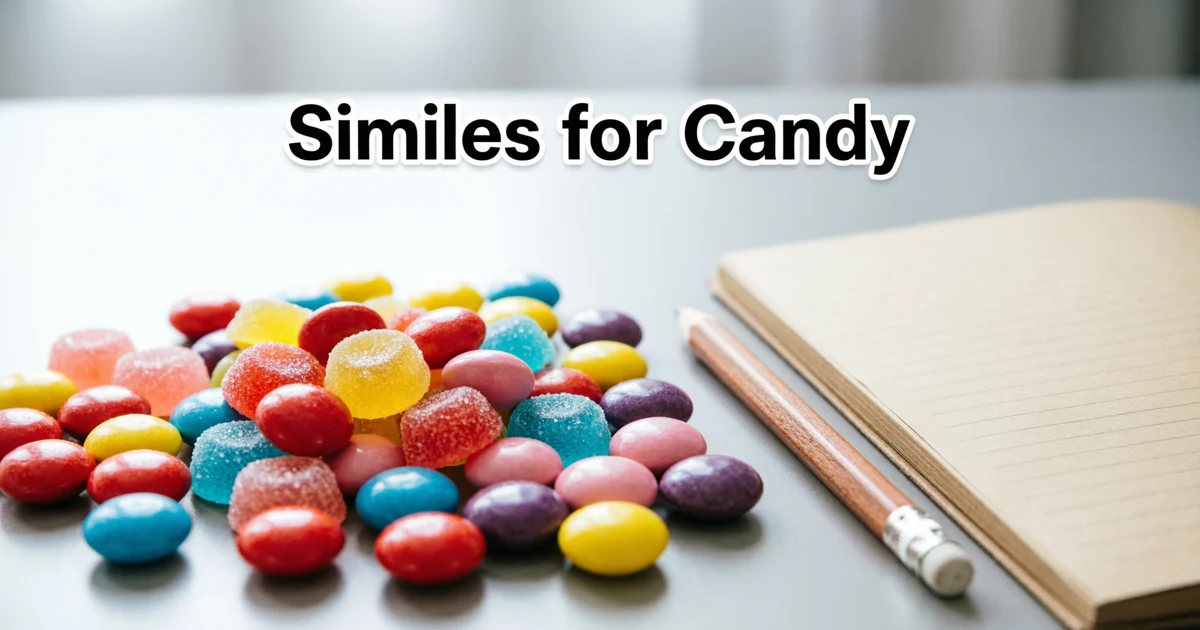
Candy brings color, sweetness, fun, and memory into writing. A good candy simile can make a sentence feel brighter, warmer, or more playful. Writers often use candy comparisons to describe a smile, a voice, a room, a childhood moment, a sweet taste, or even a tempting idea.
In this article, you will learn clear and creative similes for candy with meanings and examples. You will also see how to use candy similes in school writing, stories, poems, conversations, and everyday sentences without making them sound forced.
What Simile for Candy Means in Simple Words
A simile for candy compares something to candy by using words like like or as. It helps readers imagine sweetness, color, softness, happiness, or temptation.
A candy simile can describe many things, such as:
- Sweetness
Example: Her voice was as sweet as candy. - Bright color
Example: The balloons looked like candy in the sky. - Childhood joy
Example: His laugh felt like candy from a summer fair. - Temptation
Example: The offer looked as tempting as candy in a shop window. - Softness or smoothness
Example: The frosting melted like candy on my tongue.
Candy similes work well because most readers understand the feeling of candy. They can picture its taste, smell, shape, and color quickly.
Best Similes for Candy With Clear Meanings
The best candy similes feel simple, natural, and easy to understand. They do not confuse the reader. They create a clear image in only a few words.
Here are strong examples:
- As sweet as candy
Meaning: Very sweet, kind, or pleasant
Example: Her thank you note sounded as sweet as candy. - Like candy in a glass jar
Meaning: Bright, pretty, and eye catching
Example: The beads shone like candy in a glass jar. - As colorful as candy wrappers
Meaning: Full of bright colors
Example: The festival street looked as colorful as candy wrappers. - Like candy melting in the mouth
Meaning: Soft, smooth, or pleasing
Example: The music felt like candy melting in the mouth. - As tempting as candy on a counter
Meaning: Hard to resist
Example: The new game looked as tempting as candy on a counter.
These similes help with different writing needs. Some describe taste. Others describe color, feeling, beauty, or desire.
Simple Similes for Candy for Students
Students often need similes that sound clear and easy. A simple candy simile works best when it connects to something familiar.
Examples for students:
- Her smile was as sweet as candy.
Meaning: Her smile looked kind and pleasant. - The room looked as bright as a bowl of candy.
Meaning: The room had many cheerful colors. - His laugh was like candy on a happy day.
Meaning: His laugh felt joyful and warm. - The cake tasted as sweet as candy.
Meaning: The cake tasted very sweet. - The gift looked like candy in shiny paper.
Meaning: The gift looked colorful and attractive.
Students can use these similes in essays, stories, poems, and classroom activities. They work best when the sentence needs a cheerful or descriptive tone.
Sweet Similes for Candy in Everyday Writing
Everyday writing needs natural language. A candy simile should not sound too fancy unless the topic needs a poetic style.
Here are useful candy similes for normal sentences:
- Her words were as sweet as candy.
Meaning: Her words sounded kind and gentle. - The baby’s smile looked like candy on a sunny morning.
Meaning: The smile looked soft and joyful. - The drink tasted as sweet as candy.
Meaning: The drink had a strong sweet taste. - His compliment felt like candy after a hard day.
Meaning: The compliment felt comforting and pleasant. - The shop window glowed like a box of candy.
Meaning: The shop looked bright and inviting.
Use these similes when you want a friendly, warm, or cheerful tone. They fit personal writing, captions, simple stories, and light descriptions.
Creative Similes for Describing Candy
Creative candy similes do more than say something tastes sweet. They describe shape, color, mood, memory, and feeling.
Examples:
- The candy sparkled like tiny pieces of festival glass.
Meaning: The candy looked bright and shiny. - The sweets sat in the bowl like little drops of joy.
Meaning: The candy looked cheerful and inviting. - The lollipop shone like a small rainbow on a stick.
Meaning: The lollipop had many bright colors. - The chocolate curled on my tongue like a soft song.
Meaning: The chocolate felt smooth and rich. - The candy shop smelled like childhood waking up.
Meaning: The smell brought back happy memories.
Creative similes work well in stories, poems, food writing, and descriptive paragraphs. They help the reader feel the scene instead of only seeing it.
Similes for Candy That Show Sweetness
Candy often stands for sweetness, so many writers use it to describe kind people, pleasant voices, happy moments, and sugary food.
Examples:
- Her voice was as sweet as candy.
Meaning: Her voice sounded gentle and pleasant. - The mango dessert tasted like soft candy.
Meaning: The dessert had a rich sweet taste. - His message felt as sweet as candy after a long day.
Meaning: His message brought comfort and happiness. - The song sounded like candy for the ears.
Meaning: The song sounded pleasant and enjoyable. - The little girl’s laugh was as sweet as candy floss.
Meaning: Her laugh sounded light and lovely.
Sweetness similes should match the tone. Use them for joy, kindness, taste, affection, or warmth.
Similes for Candy That Show Bright Colors
Candy comes in many colors, so it gives writers a useful way to describe bright scenes. These similes work well for clothes, flowers, markets, decorations, toys, and festivals.
Examples:
- The flowers looked as colorful as candy.
Meaning: The flowers had many bright shades. - The children’s clothes shone like candy wrappers.
Meaning: Their clothes looked bright and cheerful. - The market stalls looked like bowls of candy.
Meaning: The stalls had many lively colors. - The sunset spread across the sky like melted candy.
Meaning: The sky had soft pink, orange, and purple colors. - The beads glittered as brightly as sugar candy.
Meaning: The beads looked shiny and colorful.
These similes help create visual detail. They make a scene feel lively without long explanation.
Similes for Candy That Show Childhood Joy
Candy often connects with childhood memories, school fairs, birthday parties, and small rewards. A candy simile can show innocence, excitement, and simple happiness.
Examples:
- His excitement bubbled like candy in a child’s pocket.
Meaning: He felt full of simple joy. - Her smile opened like a candy box on Eid morning.
Meaning: Her smile showed surprise and happiness. - The birthday table looked like a candy dream.
Meaning: The table looked joyful and colorful. - Their laughter felt like candy shared after school.
Meaning: Their laughter felt warm and innocent. - The fairground smelled like candy and childhood.
Meaning: The place brought back happy memories.
These similes suit personal essays, childhood stories, poems, and family writing.
Similes for Candy That Describe Taste
Candy similes can describe taste in a direct and vivid way. They help readers imagine sweetness, richness, sharpness, fruitiness, or softness.
Examples:
- The strawberry drink tasted like candy.
Meaning: The drink tasted very sweet and fruity. - The dessert was as sweet as a jar of candy.
Meaning: The dessert had a strong sugary taste. - The grapes tasted like tiny fruit candies.
Meaning: The grapes tasted sweet and juicy. - The icing was like candy spread over the cake.
Meaning: The icing tasted sugary and smooth. - The apple tasted as crisp as a candy shell.
Meaning: The apple had a firm and fresh bite.
Good taste similes use clear sensory details. They help readers imagine flavor instead of reading a plain description.
Similes for Candy That Describe Smell
Candy has a strong smell that can feel fruity, sugary, warm, or rich. Writers can use candy similes to describe bakeries, shops, perfumes, drinks, and memories.
Examples:
- The bakery smelled like warm candy.
Meaning: The bakery had a sweet and comforting smell. - Her perfume smelled as sweet as fruit candy.
Meaning: Her perfume smelled soft and sugary. - The kitchen smelled like caramel candy on a cold evening.
Meaning: The kitchen had a warm sweet smell. - The fair smelled like cotton candy and happiness.
Meaning: The fair had a cheerful sweet scent. - The drink smelled as bright as lemon candy.
Meaning: The drink had a fresh and sweet smell.
Smell similes work best when they connect scent with mood. Candy scents often suggest comfort, fun, warmth, or nostalgia.
Similes for Candy That Describe Texture
Candy can feel smooth, sticky, chewy, crisp, hard, or soft. These textures help writers describe food, objects, and even feelings.
Examples:
- The caramel stretched like soft candy.
Meaning: The caramel felt sticky and smooth. - The cookie edge cracked like a candy shell.
Meaning: The cookie had a crisp outer layer. - The fudge felt as smooth as melted candy.
Meaning: The fudge had a soft and creamy texture. - The gum was as chewy as candy from a fair.
Meaning: The gum needed a lot of chewing. - The frosting sat on the cake like whipped candy.
Meaning: The frosting looked soft and sweet.
Texture similes make food writing stronger because they help the reader feel the bite, not just imagine the taste.
Funny Similes for Candy That Sound Natural
Funny candy similes can make writing playful. They work well in casual stories, captions, jokes, and light classroom writing.
Examples:
- He guarded his phone like candy in a room full of children.
Meaning: He protected it very carefully. - She smiled like someone who found candy in her homework bag.
Meaning: She looked happily surprised. - The dog stared at the treat like it was candy from heaven.
Meaning: The dog wanted the treat badly. - His excuse melted like candy in the sun.
Meaning: His excuse failed quickly. - The kids ran to the table like candy had called their names.
Meaning: The kids rushed with excitement.
Funny similes need a clear picture. Avoid strange comparisons that make readers pause for the wrong reason.
Beautiful Similes for Candy in Poems
Poems often need softer and more emotional candy similes. Candy can show sweetness, love, color, memory, or delight.
Examples:
- Her smile was like candy under morning light.
Meaning: Her smile looked sweet and bright. - The stars shone like sugar candy in a dark bowl.
Meaning: The stars looked small, bright, and beautiful. - Your words stayed on my heart like candy on the tongue.
Meaning: The words felt sweet and lasting. - The roses opened like candy wrapped in red silk.
Meaning: The roses looked rich and beautiful. - The moon looked like a silver sweet in the sky.
Meaning: The moon looked soft and lovely.
Poetic similes should create mood. They do not need to explain everything. They should leave a clear image in the reader’s mind.
Candy Similes for Stories and Creative Writing
Stories need similes that match character, setting, and emotion. A candy simile can describe a place, a person, a memory, or a feeling.
Examples:
- The shop lights glowed like candy in the rain.
Meaning: The lights looked bright against a dull background. - Her dress looked like candy at a birthday party.
Meaning: Her dress looked colorful and cheerful. - The secret felt as tempting as candy hidden in a drawer.
Meaning: The secret created curiosity and desire. - His kindness came like candy after bitter medicine.
Meaning: His kindness felt comforting after pain. - The town fair spread before them like a candy colored dream.
Meaning: The fair looked magical and bright.
In creative writing, choose candy similes that fit the scene. A happy scene can use bright candy images. A sad scene can use melting candy or forgotten candy to show loss.
Short Similes for Candy With Examples
Short similes help when you need quick, clear description. They work well in captions, poems, school writing, and simple paragraphs.
Examples:
- As sweet as candy
Example: Her smile was as sweet as candy. - Like melted candy
Example: The sunset looked like melted candy. - As bright as candy
Example: The toys looked as bright as candy. - Like sugar candy
Example: The stars shone like sugar candy. - As tempting as candy
Example: The prize looked as tempting as candy. - Like a candy box
Example: The garden looked like a candy box. - As colorful as candy
Example: The classroom looked as colorful as candy. - Like candy floss
Example: The clouds looked like candy floss. - As smooth as candy
Example: The chocolate felt as smooth as candy. - Like candy in a jar
Example: The marbles looked like candy in a jar.
Short similes should stay simple. They help readers understand the idea fast.
Similes for Candy in Love and Friendship Writing
Candy similes can sound warm and affectionate when you use them with care. They suit cards, captions, poems, and personal notes.
Examples:
- Your laugh is as sweet as candy.
Meaning: The laugh sounds lovely and joyful. - Her friendship feels like candy after a difficult day.
Meaning: Her friendship brings comfort. - His smile was like a sweet left in my heart.
Meaning: His smile created a lasting happy feeling. - Your kindness tastes like candy to the soul.
Meaning: Your kindness feels gentle and pleasant. - Being with you feels like opening a candy box.
Meaning: The person brings surprise and happiness.
Use these similes when the tone feels soft, caring, or romantic. Do not overuse sugar related words in one paragraph.
Similes for Candy That Show Temptation
Candy often represents something attractive and hard to resist. Writers use candy similes to describe offers, choices, dreams, and desires.
Examples:
- The offer looked as tempting as candy in a shop window.
Meaning: The offer looked hard to refuse. - The new phone shone like candy on a shelf.
Meaning: The phone looked attractive and desirable. - The idea pulled at him like candy before dinner.
Meaning: The idea tempted him even though he knew he should wait. - The bright package called to her like candy at a checkout counter.
Meaning: The package caught her attention strongly. - The shortcut seemed as tempting as a bowl of candy.
Meaning: The shortcut felt attractive but possibly unwise.
Temptation similes work well when a character faces a choice. They can add humor, desire, or warning.
How to Use Candy Similes in Sentences
A good candy simile should fit the meaning of the sentence. Do not use candy only because it sounds cute. Use it when the idea connects with sweetness, color, pleasure, childhood, or temptation.
Useful sentence patterns:
- Subject plus verb plus as sweet as candy
Example: Her voice sounded as sweet as candy. - Subject plus looked like candy
Example: The flowers looked like candy in the morning sun. - Subject plus felt like candy
Example: His praise felt like candy after a hard test. - Subject plus tasted like candy
Example: The ripe peach tasted like candy. - Subject plus shone like candy
Example: The buttons shone like candy in a jar.
Before using a candy simile, ask yourself what you want to show. Taste, color, joy, softness, or temptation. That choice will help you write a stronger sentence.
Common Mistakes When Writing Similes for Candy
Candy similes can sound weak if they repeat common ideas too much. A good simile needs a purpose.
Common mistakes include:
- Using candy for every sweet thing
Weak: Her smile was sweet like candy and her voice was sweet like candy.
Better: Her smile was as sweet as candy, while her voice felt gentle and calm. - Choosing a simile that does not match the mood
Weak: The funeral looked like candy.
Better: The flowers added small spots of color to the quiet room. - Making the simile too long
Weak: Her dress looked like a candy that came from a big colorful candy shop with many lights.
Better: Her dress looked as bright as candy in a glass jar. - Mixing too many images
Weak: The candy was like sunshine, velvet, music, and rain.
Better: The candy melted like warm sugar on my tongue. - Using unclear comparisons
Weak: His idea was like candy furniture.
Better: His idea looked as tempting as candy before dinner.
Strong similes stay clear. They help readers understand the image without confusion.
How to Create Your Own Simile for Candy
You can create your own candy simile by thinking about what candy does or how it feels. Start with one clear feature.
Follow this simple method:
- Choose the thing you want to describe
Example: a smile, a room, a voice, a sunset, a memory - Choose a candy quality
Example: sweet, colorful, sticky, smooth, bright, tempting - Match the quality to the subject
Example: A smile can feel sweet. A sunset can look like melted candy. - Write the sentence naturally
Example: The sunset looked like melted candy across the sky. - Check the meaning
Ask: Does the simile make the sentence clearer?
Original examples:
- The morning sky looked like candy slowly melting into gold.
- Her words felt like candy after a bitter argument.
- The party table shone like a candy box under bright lights.
- His hope returned like candy color after rain.
- The secret tempted me like candy hidden in a drawer.
A strong simile does not need fancy words. It needs a clear image and a real purpose.
Conclusion
Similes for candy help writers describe sweetness, color, joy, taste, smell, texture, love, and temptation in a simple and vivid way. They work well for students, poets, story writers, ESL learners, and anyone who wants brighter sentences.
The best candy similes match the meaning of the sentence. Use candy when you want to show sweetness, cheer, beauty, childhood memory, or desire. Keep the image clear, natural, and easy to picture. A well chosen candy simile can turn a plain sentence into something warm, colorful, and memorable.
FAQs
What is a simile for candy?
A simile for candy compares something to candy using like or as. Example: Her smile was as sweet as candy.
What is the best simile for candy?
A simple strong example is as sweet as candy. It works well for smiles, voices, kind words, and pleasant moments.
Can I use candy similes in school writing?
Yes. Candy similes work well in school writing when they clearly describe sweetness, color, happiness, taste, or childhood memories.
What is a funny simile for candy?
A funny example is: He guarded his snacks like candy in a room full of children. It shows strong protection in a playful way.
What is a candy simile for a smile?
Her smile was as sweet as candy is a clear and natural simile for a smile.
What is a candy simile for color?
The flowers looked as colorful as candy is a good simile for bright colors.
What is a candy simile for taste?
The ripe mango tasted like candy is a clear simile for sweet taste.
What is a candy simile for a poem?
The stars shone like sugar candy in a dark bowl works well in a poem because it creates a soft visual image.
How do I make a candy simile sound natural?
Choose one clear candy quality, such as sweet or colorful, then match it with the thing you describe. Keep the sentence short and clear.
Are candy similes only for food writing?
No. Candy similes can describe people, places, colors, emotions, memories, temptation, and joyful moments.