Quick Answer
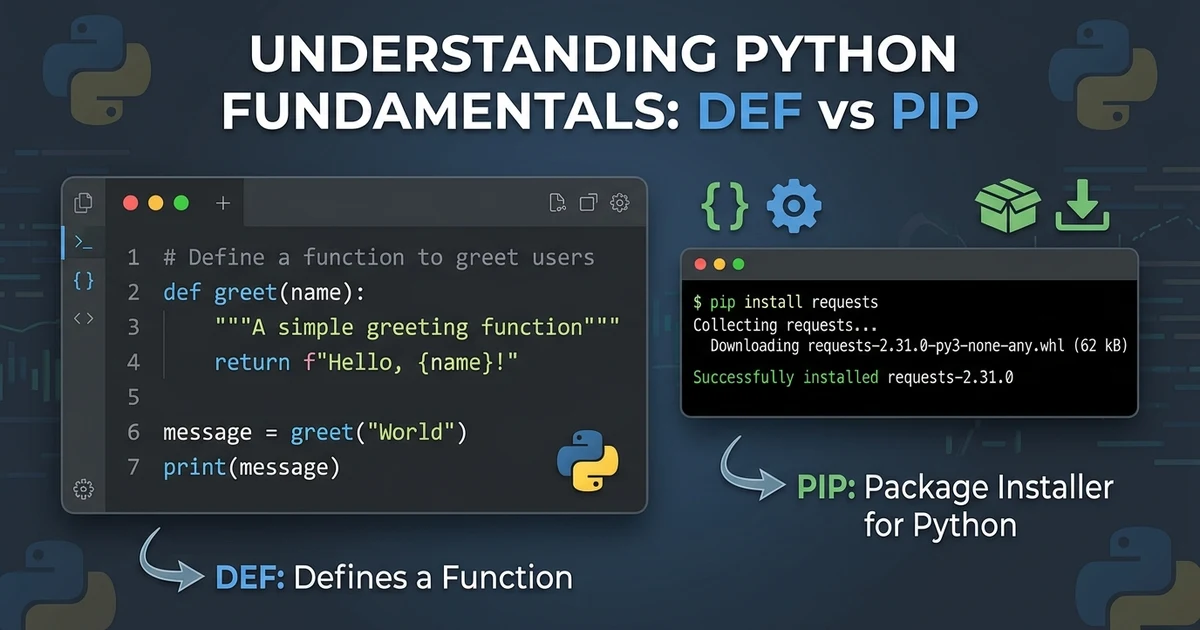
Pip def usually refers to two separate Python concepts: pip and the def keyword. Pip helps you install and manage Python packages, while def lets you create functions in Python. These terms often appear together in beginner programming searches because developers use packages installed with pip inside functions created with def. They do not form one standard Python command.
Introduction
Python beginners often search for terms such as pip, def, functions, and packages when they first start learning the language. The phrase pip def can look like one programming term, but Python actually treats pip and def as two separate things.
Pip handles Python packages. When your project needs an external library, you can use pip to install it. For example, you can install the requests package from a terminal with pip install requests.
The def keyword has a completely different job. Python uses def when you create a function. A function lets you group instructions into a reusable piece of code. You can then call that function whenever your program needs those instructions.
These concepts often work together in real projects. You might install a package with pip and then write a function with def that uses that package. Once you understand the difference, the phrase becomes much easier to understand.
What Does Pip Mean in Python?
In Python, pip is a package management tool. It helps developers install, update, remove, and inspect Python packages.
A package can provide code that saves you from building everything yourself. For example, a project might need a library for sending HTTP requests, processing data, creating web applications, or working with images.
You can install a package with a command such as:
pip install requests
After installation, your Python program can import the package when the package supports your Python environment.
You can also use commands such as:
pip list
This shows packages in the current Python environment.
To remove a package, you can use:
pip uninstall requests
You can also ask pip for information about a particular package:
pip show requests
Some systems work better with python -m pip, especially when your computer has multiple Python installations.
For example:
python -m pip install requests
This command tells the selected Python interpreter to run pip.
What Does Def Mean in Python?
Python uses def as a keyword for defining functions.
A function contains instructions that perform a particular task. You can call the function whenever you need those instructions.
Here is a simple example:
def greet():
    print("Hello!")
The word def tells Python that you are defining a function. The function name in this example is greet.
You can call the function like this:
greet()
Python then runs the instructions inside the function.
Functions can also accept information through parameters.
def greet(name):
    print("Hello, " + name)
You can call this function with:
greet("Alex")
The function receives Alex as the value for name and prints a greeting.
Pip vs Def
Pip and def have different jobs, even though both appear frequently in Python projects.
| Term | Meaning | Main Purpose | Example |
|---|---|---|---|
| pip | Python package management tool | Installs and manages packages | pip install requests |
def | Python keyword | Defines functions | def greet(): |
| Package | Collection of Python code | Adds functionality | requests |
| Function | Reusable block of code | Performs a task | def calculate(): |
The easiest way to remember the difference is simple: pip manages packages, while def creates functions.
How Pip and Def Work Together
Although pip and def do different jobs, you can use them together in the same project.
Imagine that your program needs the requests package. First, you install it with pip:
pip install requests
Then you can import the package in your Python program:
import requests
Next, you can create a function with def:
def get_status(url):
    response = requests.get(url)
    return response.status_code
The function uses the package that you installed with pip.
In this example, pip handles the package installation, while def handles the function definition. Neither replaces the other.
What Can You Do With Pip?
Pip can help you manage packages throughout a Python project.
You can use it to install a package:
pip install package_name
You can remove one:
pip uninstall package_name
You can see installed packages:
pip list
You can inspect a package:
pip show package_name
You can also request an updated package version:
pip install --upgrade package_name
These commands can help you manage the software your Python projects depend on.
What Can You Do With Def?
The def keyword lets you build reusable functions.
For example:
def add_numbers(a, b):
    return a + b
You can then call the function:
result = add_numbers(5, 3)
print(result)
Python prints:
8
Functions can perform calculations, process text, work with files, interact with APIs, control program logic, and handle many other tasks.
You can also create functions that do not return a value:
def show_message():
    print("Welcome!")
The function simply displays the message when you call it.
Understanding a Python Function
A function can contain several important parts.
Consider this example:
def calculate_total(price, tax):
    total = price + tax
    return total
Each part has a specific role.
| Part | Purpose |
|---|---|
def | Starts the function definition |
calculate_total | Names the function |
price, tax | Accepts input values |
| Function body | Contains the instructions |
return | Sends a result back |
Python uses indentation to identify the code that belongs inside the function. That makes proper spacing important when you write functions.
Common Pip Commands
If you are learning Python, these commands can help you understand how pip works.
| Command | What It Does |
|---|---|
pip install package | Installs a package |
pip uninstall package | Removes a package |
pip list | Shows installed packages |
pip show package | Displays package information |
pip install --upgrade package | Updates a package |
Your system may use python -m pip or py -m pip instead of pip directly. The correct command depends on your Python installation and operating system.
Common Uses of Python Functions
The def keyword supports almost every kind of Python project because functions help developers organize code.
For example, a student might create a function that calculates a grade:
def calculate_average(score1, score2):
    return (score1 + score2) / 2
A web developer might create a function that processes information from an API.
A data analyst might create a function that cleans a dataset.
A game developer might create a function that updates a player’s score.
The purpose changes from project to project, but the basic idea stays the same: a function groups useful instructions into reusable code.
Common Mistakes With Pip and Def
Beginners sometimes treat pip def as one Python command. Python does not use it that way.
Pip and def perform completely different tasks. Pip manages packages, while def defines functions.
Another common mistake involves running pip inside a Python file. A command such as:
pip install requests
belongs in a terminal or command prompt, not inside normal Python code.
You also need to pay attention to your Python environment. If you install a package into one environment but run your program with another, Python might not find the package.
When you use def, remember to indent the function body correctly:
def greet():
    print("Hello!")
Incorrect indentation can cause Python to raise an error.
Is Pip Part of Python?
Pip belongs to the Python ecosystem and provides package management, but pip itself does not represent a Python language keyword.
Python code uses keywords such as def, if, for, class, and return. Pip works as a package management tool that you normally run from a command line.
This distinction matters because you use pip differently from Python syntax.
For example:
pip install requests
runs as a package management command.
Meanwhile:
def greet():
    print("Hello!")
runs as Python code.
Why Do People Search for Pip Def?
Someone searching for pip def may have encountered both terms while learning Python.
They might want to understand:
- What pip does
- What
defmeans - How to install Python packages
- How to create a function
- How to use an installed package inside a function
- Why a pip command does not work
- How Python packages and functions differ
The exact search intent depends on what the person saw before searching.
If you found def inside Python code, focus on Python functions. If you found pip install in a terminal tutorial, focus on package management.
Other Meanings of DVR
The phrase pip def does not have a widely recognized alternative meaning that replaces its Python related interpretation. However, individual abbreviations can have different meanings in other industries.
If you encountered the exact phrase in a non programming document, check the surrounding text before assuming that it refers to Python.
For a Python tutorial, code editor, terminal command, or programming course, the Python interpretation makes the most sense.
FAQs
What does pip def mean?
Pip def usually refers to two separate Python concepts. Pip manages Python packages, while def defines functions. Python does not normally treat pip def as one command.
What does pip mean in Python?
Pip is a package management tool that helps you install and manage Python packages and their dependencies.
What does def mean in Python?
def is a Python keyword that starts a function definition. It lets you create reusable blocks of code.
Can pip and def work together?
Yes. You can install an external package with pip and then use that package inside a function that you create with def.
Is pip a Python keyword?
No. Pip is a package management tool. Python uses def as a language keyword, while you normally run pip through a terminal or command line.
What is a simple example of def?
def greet():
    print("Hello!")
This code defines a function named greet.
What is a simple pip command?
pip install requests
This command tells pip to install the requests package.
Why does pip say it cannot find a package?
Several issues can cause this problem, including a misspelled package name, an incompatible Python environment, network problems, or an outdated package setup. Check the exact error message before deciding what went wrong.

Alexa Xolen is a humor writer at Punjokevault.com, creating witty jokes and clever puns to make your day brighter. She loves spreading smiles, one laugh at a time.