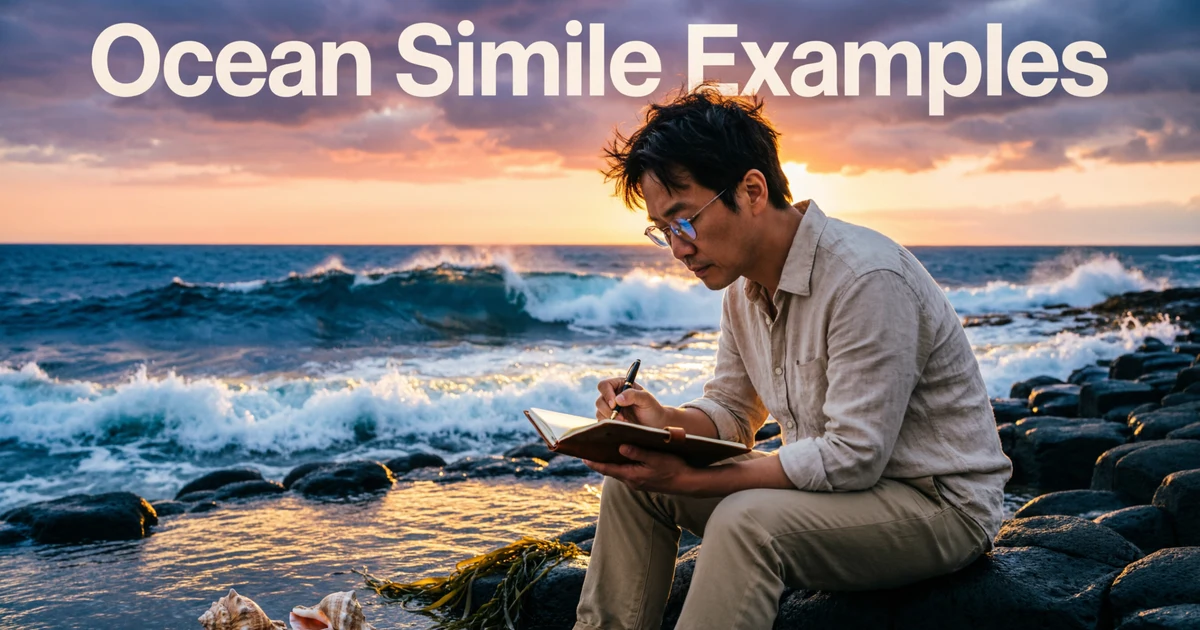
The ocean gives writers endless ways to describe emotions, beauty, danger, silence, and mystery. A strong ocean simile can turn a simple sentence into a vivid image that readers remember. Writers often compare people, feelings, and situations to the sea because the ocean changes constantly. It can look peaceful one moment and violent the next.
In this guide, you will learn how to use ocean similes in creative writing, poetry, storytelling, conversations, and descriptive scenes. You will also find practical examples that sound natural and easy to understand.
What an Ocean Simile Means in Writing
An ocean simile compares something to the ocean using words like “as” or “like.” Writers use these comparisons to create stronger imagery and emotional depth.
Examples:
- Her thoughts moved like ocean waves during a storm.
- His voice sounded as calm as the ocean at sunrise.
- The crowd roared like a crashing ocean.
Ocean similes help readers picture scenes more clearly. They also make writing feel emotional and alive.
Why Writers Use Ocean Similes for Strong Imagery
Ocean similes create movement, color, sound, and emotion in a sentence. The sea offers many moods, so writers can describe almost any feeling through ocean imagery.
Writers use ocean similes to describe:
- Peace and silence
- Fear and danger
- Love and passion
- Loneliness
- Strength and power
- Beauty and mystery
Example:
- Her anger rose like a dark ocean before a hurricane.
That sentence feels stronger than simply saying she felt angry.
Best Ocean Similes for Describing Calm Water
Calm ocean similes create peaceful and relaxing imagery. These similes work well in travel writing, romance, poetry, and nature descriptions.
Examples:
- The water looked as smooth as glass.
- His mind felt like a quiet ocean at dawn.
- The bay rested like a sleeping child.
- Her smile spread like gentle waves along the shore.
- The sea shimmered like blue silk under the sun.
These comparisons create soft and comforting visuals.
Ocean Similes That Show Power and Danger
The ocean can look wild and destructive. Writers often use stormy sea imagery to describe fear, rage, chaos, or danger.
Examples:
- His voice crashed like an angry ocean wave.
- The crowd moved like a tidal wave through the streets.
- Her emotions hit him like a violent storm at sea.
- The thunder rolled like the ocean during a hurricane.
- Fear spread through the room like dark water flooding a ship.
These similes add tension and energy to dramatic scenes.
Beautiful Ocean Similes for Poetry and Creative Writing
Poetry often depends on emotional imagery. Ocean similes bring rhythm and beauty into descriptions.
Examples:
- Her hair flowed like ocean currents.
- The moon floated above the sea like a silver lantern.
- His eyes sparkled like sunlight dancing on water.
- The shoreline curved like a painted dream.
- Her laughter drifted like waves across the sand.
Poetic similes should sound smooth and visual.
Ocean Similes for Love and Deep Emotions
Love stories often use ocean imagery because emotions can feel deep, endless, and unpredictable.
Examples:
- I fell for her like a sailor lost at sea.
- His love surrounded her like endless ocean water.
- Her heart opened like the tide at sunrise.
- Their connection ran as deep as the ocean floor.
- Missing him felt like drowning in cold water.
These comparisons create emotional intensity without sounding forced.
Dark Ocean Similes for Fear and Mystery
Writers use dark ocean similes in horror stories, thrillers, and suspense scenes.
Examples:
- The hallway looked as dark as the bottom of the ocean.
- His silence felt like deep water hiding something dangerous.
- The forest swallowed the light like the sea during a storm.
- Her stare looked cold like the ocean at midnight.
- Fear wrapped around him like icy waves.
Dark similes build suspense and uncertainty.
Ocean Similes That Describe Human Personality
Ocean imagery works well for character descriptions because personalities can shift like the sea.
Examples:
- She stayed as calm as a quiet bay.
- His temper changed like rough ocean weather.
- Her kindness spread like warm waves.
- He looked cold and distant like the winter sea.
- Her spirit moved like a free ocean current.
These similes help readers understand characters quickly.
Short Ocean Similes for Quick Descriptions
Short similes fit perfectly in dialogue, captions, and fast paced scenes.
Examples:
- Calm like the sea
- Loud like crashing waves
- Blue like the ocean
- Deep like the tide
- Wild like a stormy sea
- Smooth like still water
- Cold like ocean spray
- Fast like a tidal current
Short similes sound simple and natural.
Ocean Similes for Students and ESL Learners
Simple similes help students improve creative writing skills and vocabulary.
Easy examples:
- The water shined like a mirror.
- Her dress moved like ocean waves.
- The boat floated like a leaf on water.
- His mood changed like the tide.
- The beach sounded like music from the sea.
Students should focus on clear and easy comparisons.
Funny Ocean Similes That Sound Natural
Funny similes make writing more entertaining and memorable.
Examples:
- He danced like a fish stuck in a wave.
- My hair looked like the ocean after a storm.
- She screamed like a seagull over french fries.
- The kids ran around like crabs on the beach.
- His singing sounded like whales fighting underwater.
Funny comparisons work best when they feel playful and relatable.
Ocean Similes Inspired by Storms and Waves
Storm imagery creates movement and drama in storytelling.
Examples:
- Her thoughts crashed like giant waves.
- The argument exploded like a storm over the ocean.
- His footsteps rolled through the hall like thunder at sea.
- Panic spread like waves during a hurricane.
- The ship rocked like a toy in rough water.
These similes add excitement to action scenes.
Ocean Similes for Storytelling and Fiction Scenes
Strong storytelling depends on atmosphere and emotion. Ocean similes help writers create immersive scenes.
Examples:
- The city lights flickered like reflections on dark water.
- The soldiers moved like waves across the battlefield.
- Her memories returned like the tide every night.
- The cave echoed like the ocean inside a shell.
- The crowd flowed through the streets like a river into the sea.
These examples make scenes feel alive and cinematic.
Emotional Ocean Similes for Character Development
Characters feel more real when writers describe emotions creatively.
Examples:
- Sadness filled him like cold seawater.
- Her confidence rose like the tide.
- Grief hit her like a crashing wave.
- His hope drifted away like a boat at sea.
- Excitement rushed through him like a powerful current.
Emotional similes help readers connect with characters.
Ocean Similes for Describing Silence and Peace
The ocean also represents calmness and stillness.
Examples:
- The room felt quiet like the sea before sunrise.
- Peace settled over her like soft waves.
- The night looked still as an empty shore.
- His breathing sounded calm like distant tides.
- Silence spread like fog over the water.
These similes work well in reflective scenes.
Ocean Similes That Compare Eyes and Beauty
Writers often compare beauty to the sea because oceans contain color, depth, and movement.
Examples:
- Her eyes looked blue like tropical water.
- His smile shined like sunlight on the sea.
- Her beauty flowed like ocean waves.
- The dancer moved like water along the shore.
- Her eyes held mystery like the deep ocean.
These comparisons feel elegant and expressive.
Powerful Ocean Similes for Adventure Writing
Adventure stories often include danger, movement, and survival. Ocean similes increase intensity in those scenes.
Examples:
- The mountain stood like a giant rising from the sea.
- The explorers moved like ships through rough waves.
- Danger followed them like a storm tide.
- His courage hit like a wave against stone.
- The jungle sounded alive like the ocean during a storm.
Adventure similes should sound energetic and vivid.
Common Mistakes When Writing Ocean Similes
Many writers repeat common ocean comparisons too often.
Avoid these mistakes:
- Using clichés repeatedly
- Adding too many similes in one paragraph
- Choosing comparisons that do not fit the mood
- Writing overly complicated descriptions
- Repeating the same ocean imagery
Weak example:
- Her eyes were like the ocean.
Better example:
- Her eyes shimmered like moonlight across deep water.
Specific imagery creates stronger writing.
Tips to Create Original Ocean Similes
Fresh similes feel more personal and creative.
Helpful tips:
- Focus on movement, sound, or color
- Use real ocean experiences for inspiration
- Match the simile with the emotion of the scene
- Keep comparisons easy to picture
- Avoid overused phrases
Example process:
Instead of writing:
- Angry like the ocean
Try:
- His anger rolled forward like waves smashing against cliffs.
That image feels sharper and more memorable.
Best Ocean Similes for Writers and Bloggers
Here are some versatile ocean similes writers can use in many situations:
- Calm like a quiet tide
- Loud like crashing waves
- Deep like the ocean floor
- Cold like seawater at midnight
- Bright like sunlight on the sea
- Restless like storm waves
- Endless like the horizon
- Smooth like still water
- Wild like a hurricane tide
- Peaceful like an empty beach at dawn
These examples fit fiction, poetry, blogs, and social media captions.
Conclusion
Ocean similes add emotion, beauty, movement, and depth to writing. They help readers picture scenes clearly and connect with characters more deeply. The ocean offers endless inspiration because it can represent peace, danger, love, loneliness, strength, and mystery all at once.
Strong similes sound natural and specific. Focus on clear imagery and real emotion instead of overused phrases. With practice, you can create ocean similes that make your writing vivid and unforgettable.
FAQs
What is an ocean simile?
An ocean simile compares something to the ocean using words like “like” or “as.”
Why do writers use ocean similes?
Writers use them to create vivid imagery and emotional depth.
What are examples of ocean similes?
Examples include “calm like the sea” and “loud like crashing waves.”
Are ocean similes good for poetry?
Yes. Ocean similes create rhythm, emotion, and visual beauty in poems.
Can students use ocean similes in essays?
Yes. Simple ocean similes improve descriptive writing and creativity.
What emotions do ocean similes show?
They can show peace, fear, love, anger, loneliness, and mystery.
How do I create original ocean similes?
Focus on real ocean details like tides, storms, waves, color, and sound.
What is a dark ocean simile?
A dark ocean simile creates fear or suspense, such as “cold like the ocean at midnight.”
What is a short ocean simile?
A short ocean simile uses very few words, like “deep like the tide.”
Can ocean similes improve storytelling?
Yes. They make scenes feel more emotional, immersive, and memorable.