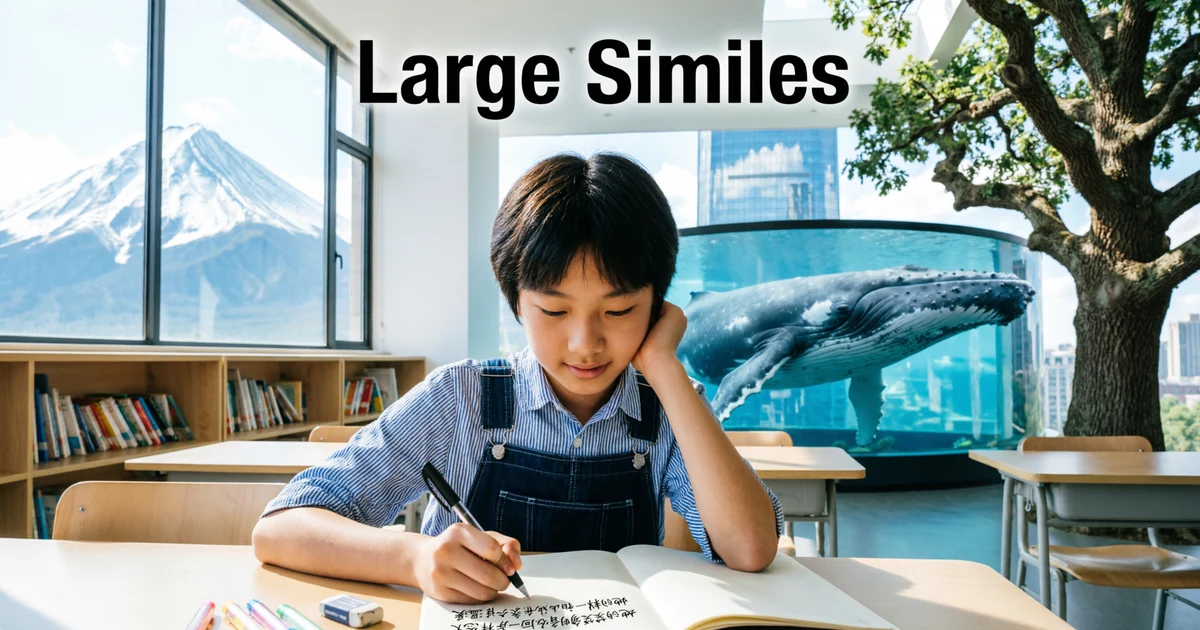
Large things can feel impressive, heavy, wide, tall, crowded, or overwhelming. A good simile helps readers picture that size without needing a long explanation. Instead of saying something was very big, you can compare it to a mountain, an ocean, a giant, a castle, or a sky full of clouds.
In this guide, you will learn what a large simile means, how to use one in writing, and which examples work best for students, kids, essays, stories, and descriptive sentences. You will also see large similes for people, animals, nature, buildings, crowds, problems, and more.
What Is a Large Simile
A large simile compares something big to another thing that readers already understand as big. It uses words such as like or as to make the comparison clear.
A large simile helps the reader imagine size, weight, height, width, or importance.
Examples:
• The building stood as tall as a mountain.
• The whale looked as large as a bus.
• His backpack was like a small house on his shoulders.
• The crowd spread across the field like an ocean of people.
Each example shows size through comparison. The reader does not just know that something is large. The reader can picture how large it feels.
A large simile works best when the comparison matches the thing you describe. A tall building can look like a mountain. A huge crowd can look like an ocean. A big problem can feel like a wall blocking your path.
What Does Large Mean in a Simile
In a simile, large can mean more than big in physical size. It can describe height, width, weight, amount, power, importance, or emotional pressure.
Large can describe:
• A big object
• A tall place
• A wide space
• A heavy load
• A huge animal
• A crowded area
• A serious problem
• A powerful feeling
• An important moment
Examples:
• The room was as large as a hall.
• Her dream felt as large as the sky.
• The problem grew like a giant in his mind.
• The suitcase was as heavy as a boulder.
The word large often gives a calm and formal feeling. Words like huge, massive, giant, enormous, and gigantic sound stronger. A good writer chooses the word that fits the tone.
Simple Large Similes With Clear Meanings
Simple large similes help students and young writers understand size quickly. These examples use familiar objects, so readers can picture the meaning right away.
• As large as an elephant
Meaning: Very big and heavy
• As tall as a tree
Meaning: Very high
• As wide as a river
Meaning: Broad from one side to the other
• As big as a house
Meaning: Extremely large
• As huge as a mountain
Meaning: Very large and impressive
• As long as a road
Meaning: Very lengthy
• As wide as the sky
Meaning: Open and endless
• As heavy as a rock
Meaning: Difficult to lift
• As crowded as a market
Meaning: Full of many people
• As deep as the ocean
Meaning: Very deep or difficult to measure
Sentence examples:
• The box was as large as a small table.
• The dog looked as big as a pony.
• The room felt as wide as a school hall.
• The tree stood as tall as a tower.
Simple similes work well when the reader needs a quick image without confusion.
Best Large Similes for Students
Students often need large similes for essays, stories, classwork, and descriptive paragraphs. The best examples sound clear, not forced.
Useful large similes for students:
• The library was as large as a palace.
• The mountain rose like a giant from the earth.
• The stadium looked as wide as a valley.
• The old tree stood as tall as a watchtower.
• The school bag felt as heavy as a sack of stones.
• The playground spread out like a field.
• The crowd moved like a sea of faces.
• The building looked as huge as a castle.
• The clouds covered the sky like a thick blanket.
• The classroom felt as crowded as a busy bus.
Students can use these similes to make writing more visual. A sentence like The stadium was big sounds plain. The stadium looked as wide as a valley gives the reader a stronger picture.
Easy Large Similes for Kids
Kids learn similes faster when the examples use animals, toys, food, nature, and familiar places. Easy large similes should sound fun and simple.
Examples for kids:
• The elephant was as big as a truck.
• The cake was as large as a wheel.
• The balloon grew like a beach ball.
• The tree was as tall as a house.
• The puddle looked as wide as a pond.
• The teddy bear was as big as a chair.
• The pumpkin was as round and large as a drum.
• The cloud looked like a giant pillow.
• The whale was as huge as a boat.
• The school hall was as large as a playground.
Easy sentence practice:
• My lunchbox felt as heavy as a brick.
• The dog was as big as a lion.
• The slide was as tall as a tree.
• The snowman looked like a giant.
These examples help kids understand that a simile compares two things using like or as.
Large Similes for Essays and Assignments
In essays and assignments, large similes should sound clear and meaningful. They should support the idea instead of making the sentence sound childish.
For academic writing, avoid silly comparisons unless the topic allows a playful tone. Choose similes that fit the subject.
Examples:
• The city expanded like a living organism.
• The problem stood before the community like a wall.
• The empire stretched across the land like a vast shadow.
• The factory rose above the town like a steel giant.
• The river moved through the valley like a wide silver road.
• The responsibility felt as heavy as a stone on his chest.
• The crowd gathered like a tide around the speaker.
• The building dominated the street like a silent monument.
Essay sentence examples:
• The new highway cut through the countryside like a long concrete river.
• The leader carried a responsibility as large as the nation’s hopes.
• The economic problem grew like a storm over the city.
A strong essay simile should add meaning, not decoration only.
Large Similes for Creative Writing
Creative writing gives you more freedom. You can use large similes to create mood, tension, wonder, or fear. The comparison can feel beautiful, strange, dramatic, or emotional.
Examples:
• The moon hung over the hills like a silver shield.
• The giant tree spread its branches like arms over the village.
• The castle rose like a dark mountain against the sky.
• The ship moved across the sea like a floating city.
• The storm clouds gathered like an army.
• The cave opened before them like the mouth of a sleeping beast.
• The dragon’s wings stretched as wide as sails.
• The silence filled the room like a heavy curtain.
• The desert spread around them like a golden ocean.
• The old house stood like a tired giant at the end of the road.
Creative writing works best when the simile matches the mood. A scary scene needs a darker comparison. A peaceful scene needs a softer one.
Large Similes About Size and Space
Large similes about size and space help describe wide rooms, open land, long roads, big objects, and huge areas.
Examples:
• The field was as wide as the sea.
• The room stretched like a hall in a palace.
• The road ran ahead like an endless ribbon.
• The lake spread out like a sheet of glass.
• The garden was as large as a small park.
• The desert opened before us like another world.
• The hall felt as wide as a stadium.
• The open sky looked like a blue ocean above us.
• The warehouse was as big as an airport terminal.
• The valley lay below like a giant bowl.
Use these similes when you want readers to feel space around them. A good space simile can make a setting feel grand, empty, peaceful, or lonely.
Large Similes About Buildings and Places
Buildings and places need similes that show height, width, strength, or importance. These comparisons work well for cities, schools, castles, malls, towers, bridges, and halls.
Examples:
• The skyscraper stood as tall as a mountain.
• The castle looked as large as a small town.
• The mall spread out like a maze.
• The bridge stretched across the river like a steel giant.
• The stadium rose like a bowl of concrete and lights.
• The old church stood like a stone guardian.
• The school looked as big as a palace to the new child.
• The hotel towered over the street like a cliff.
• The airport felt as large as a city.
• The library stood like a quiet fortress of books.
These similes help readers understand not only size but also feeling. A library like a fortress feels strong and serious. A mall like a maze feels wide and confusing.
Large Similes About Animals
Large animal similes often use elephants, whales, bears, horses, lions, hippos, and dinosaurs. These comparisons work well because many readers already connect these animals with size or strength.
Examples:
• The whale was as large as a boat.
• The elephant stood like a gray wall.
• The bear looked as big as a sofa.
• The horse moved like a powerful machine.
• The hippo was as heavy as a small car.
• The lion looked as large as a statue in the sun.
• The dinosaur in the museum stood as tall as a house.
• The bull charged like a rolling boulder.
• The camel looked as tall as a fence.
• The gorilla sat like a dark mountain of muscle.
Animal similes can describe real animals, people, machines, or objects. For example, a truck can move like a bull, and a strong man can stand like a bear.
Large Similes About People
Large similes about people can describe height, strength, presence, confidence, or influence. Use them carefully so they sound respectful and useful.
Examples:
• He stood as tall as a tree.
• She walked into the room like a queen entering a hall.
• The wrestler looked as large as a bear.
• His shadow stretched across the wall like a giant.
• The guard stood like a tower at the gate.
• The teacher’s presence filled the room like a bright light.
• The leader stood before the crowd like a mountain.
• The child’s backpack looked as big as his body.
• The basketball player seemed as tall as a streetlight.
• His voice filled the hall like a drum.
These similes can show physical size, but they can also show strong character. A person can seem large because of courage, respect, or influence.
Large Similes About Nature
Nature gives writers many strong images for large similes. Mountains, oceans, forests, storms, clouds, rivers, skies, and deserts all help describe size and scale.
Examples:
• The forest spread like a green ocean.
• The mountain rose like a giant from the earth.
• The storm covered the sky like a dark blanket.
• The river widened like a silver road.
• The clouds gathered like huge cotton hills.
• The valley opened like a deep bowl.
• The sea stretched as far as the eye could see.
• The waterfall fell like a white curtain from the cliff.
• The sky looked as wide as forever.
• The desert rolled out like a golden sea.
Nature similes often create beauty and atmosphere. They help readers feel the size of a scene instead of only reading facts about it.
Large Similes About Mountains and Oceans
Mountains and oceans make some of the strongest large similes because they suggest size, depth, height, danger, and wonder.
Examples with mountains:
• The building rose like a mountain over the street.
• The pile of books looked as high as a mountain.
• His worries stood before him like a mountain.
• The snow covered the ground like a mountain blanket.
• The stone wall looked as solid as a mountain.
Examples with oceans:
• The crowd moved like an ocean of heads.
• Her grief felt as deep as the ocean.
• The field spread out like a green ocean.
• The city lights glittered like stars over a dark sea.
• The noise rolled through the stadium like waves.
Mountains often show height, strength, and difficulty. Oceans often show depth, width, movement, and endlessness.
Large Similes About Crowds and Groups
Crowds can look wide, loud, busy, packed, or moving. Large similes help readers imagine the amount of people and the energy of the scene.
Examples:
• The crowd spread across the square like a sea.
• The students filled the hall like a river of uniforms.
• The fans roared like a storm.
• The people moved through the market like a living wave.
• The audience sat like a field of faces.
• The workers gathered like ants around the site.
• The festival crowd looked as thick as a forest.
• The children rushed out like a flood.
• The line outside the shop stretched like a long snake.
• The stadium crowd sounded like thunder.
Crowd similes work well in stories, reports, event descriptions, and personal narratives. They help the reader sense movement and sound.
Large Similes About Problems and Challenges
A large simile can describe problems that feel difficult, heavy, confusing, or impossible. These examples work well in essays, speeches, stories, and personal writing.
Examples:
• The problem stood before him like a wall.
• Her debt felt as heavy as a sack of stones.
• The exam seemed as huge as a mountain.
• The argument grew like a storm.
• The task stretched ahead like a long road.
• His fear rose like a giant in his chest.
• The mistake followed him like a dark cloud.
• The challenge felt as large as the whole world.
• The deadline came toward them like a speeding train.
• The responsibility sat on her shoulders like a heavy coat.
These similes do not describe physical size only. They describe how large something feels in the mind or heart.
Large Similes Using Like
Similes with like sound natural and flexible. They often work well in creative writing and everyday sentences.
Examples:
• The tower rose like a giant above the city.
• The crowd moved like a wave through the street.
• The clouds spread like a blanket across the sky.
• The whale floated like a dark island in the water.
• The stadium opened like a huge bowl of light.
• The mountain stood like a guard over the valley.
• The tree stretched its branches like a roof over the garden.
• The road ran like a river through the desert.
• The hall echoed like a cave.
• The storm grew like a monster in the sky.
Use like when you want the comparison to feel active, visual, and easy to read.
Large Similes Using As
Similes with as often sound neat, simple, and direct. They work well for students and clear descriptive writing.
Examples:
• The box was as large as a table.
• The building was as tall as a tower.
• The room was as wide as a hall.
• The whale was as big as a boat.
• The bag was as heavy as a stone.
• The crowd was as loud as thunder.
• The tree was as high as a house.
• The field was as wide as the sea.
• The pumpkin was as round as a drum.
• The cave was as deep as a well.
Use as when you want a clean comparison that readers can understand at once.
Strong Large Similes With Sentence Examples
Strong large similes create a clear picture and add feeling. They avoid weak words and choose a comparison that fits the scene.
Examples with full sentences:
• The skyscraper stood as tall as a mountain, blocking the morning sun from the street.
• The crowd flowed into the stadium like a river, filling every empty seat.
• The old oak tree spread its branches like a roof over the quiet yard.
• The whale rose from the water like a dark island, then slipped back into the sea.
• The problem sat in his mind like a boulder, heavy and hard to move.
• The palace stretched across the hill like a city made of stone.
• The storm clouds rolled over the village like a black blanket.
• The library felt as large as a museum, with rows of books in every direction.
• The mountain stood like a giant watching the valley.
• The line outside the station stretched like a snake along the pavement.
A strong simile does more than show size. It adds mood, movement, and meaning.
How to Use Large Similes in Better Sentences
A large simile works best when it fits the object, scene, and tone. Do not choose a comparison only because it sounds big. Choose one that helps the reader see the exact kind of size you mean.
Practical tips:
• Use a tall comparison for height
Example: The tower stood as tall as a mountain.
• Use a wide comparison for space
Example: The field spread like an ocean.
• Use a heavy comparison for weight
Example: The suitcase felt as heavy as a rock.
• Use a moving comparison for crowds
Example: The people moved like a wave.
• Use an emotional comparison for pressure
Example: The problem felt as large as a mountain.
Better sentence examples:
Plain: The room was large.
Improved: The room stretched out like a hotel ballroom.
Plain: The problem was big.
Improved: The problem stood before us like a wall.
Plain: The animal was huge.
Improved: The elephant looked as large as a truck.
A good simile makes the sentence clearer, not longer for no reason.
Common Mistakes to Avoid When Writing Large Similes
Many writers use large similes, but not all of them sound natural. Avoid these common mistakes.
• Using a comparison that does not fit
Weak: The building was as large as a spoon.
Better: The building was as tall as a tower.
• Mixing too many images
Weak: The crowd was like an ocean, a mountain, and a storm.
Better: The crowd moved like an ocean.
• Choosing a boring comparison every time
Weak: The box was as big as a big thing.
Better: The box was as large as a small table.
• Using a simile that sounds too dramatic for the topic
Weak: My pencil was as large as the universe.
Better: My pencil looked as thick as a marker.
• Repeating the same comparison
Weak: The house was like a mountain. The tree was like a mountain. The bag was like a mountain.
Better: Use different images for different objects.
• Forgetting the purpose
A simile should help the reader understand size, mood, or feeling. Do not add one just to decorate the sentence.
Conclusion
Large similes help writers describe size, height, space, weight, crowds, buildings, nature, people, animals, and problems in a vivid way. They turn plain sentences into clear pictures. Instead of writing that something is big, you can show how big it feels.
The best large similes use familiar images such as mountains, oceans, towers, elephants, whales, forests, rivers, and walls. A strong comparison fits the subject and gives the reader a sharper image. When you choose the right simile, your writing sounds clearer, stronger, and more memorable.
FAQs
What is a large simile?
A large simile compares something big to another large or familiar thing using like or as. Example: The building was as tall as a mountain.
What is a good simile for large?
A good simile for large is as big as a house. It gives readers a simple and clear image of great size.
What is a simile for a large building?
A large building can be described as standing like a mountain or rising as tall as a tower.
What is a simile for a large animal?
A large animal can look as big as a truck, as heavy as a boulder, or as huge as a whale.
What is a large simile for students?
A student friendly example is The school hall was as large as a playground. It uses familiar places and clear meaning.
What is a large simile for kids?
A simple example for kids is The elephant was as big as a truck. It helps children picture size easily.
Can large similes describe problems?
Yes. A problem can feel as large as a mountain or stand before someone like a wall.
What is a large simile using like?
An example is The crowd moved like an ocean through the street.
What is a large simile using as?
An example is The room was as wide as a hall.
Why do writers use large similes?
Writers use large similes to help readers picture size, scale, weight, space, and importance more clearly.