Introduction
People often search for idioms for peace when they want better ways to describe calm, harmony, forgiveness, or the end of conflict. The phrase can feel confusing because it mixes two different things: idioms and peace.
An idiom is a fixed expression with a meaning that you cannot always understand from the individual words. Peace is a broad idea. It can mean calm, quiet, safety, agreement, or freedom from fighting.
So, the core difference is simple: peace is the idea, while idioms are expressions that can describe that idea in a colorful way.
For example, “bury the hatchet” is an idiom. It means to stop arguing and make peace. The word “peace” names the concept directly, while the idiom gives the concept more personality and imagery.
This guide explains both terms clearly for students, writers, and ESL learners. You will learn what idioms mean, what peace means, how they overlap, and when to use each one in speaking, writing, and literature.
What Idioms Mean
An idiom is a common expression whose meaning differs from the literal meaning of its words.
For example, “keep the peace” does not mean you physically hold peace in your hand. It means you try to prevent arguments or maintain calm.
Simple definition
An idiom is a fixed phrase with a special meaning.
Purpose
Idioms make language more natural, expressive, and vivid. Native speakers use them in conversation, stories, essays, speeches, and informal writing.
How it works
An idiom works because people understand the expression as a whole. The meaning comes from common usage, not from each separate word.
Short natural example
After the argument, Maya tried to clear the air with her friend.
This means Maya tried to remove tension and restore honest communication.
Why idioms get confused with peace
Many idioms express peaceful ideas, such as ending conflict or staying calm. Because of this, learners may think an idiom and the idea it describes are the same thing. They are not. The idiom is the expression. Peace is the meaning or theme.
What Peace Means
Peace means a state of calm, safety, agreement, or freedom from conflict. It can describe a person’s mind, a relationship, a classroom, a country, or a scene in nature.
Peace can feel emotional, social, political, spiritual, or physical. A quiet room can feel peaceful. Two friends can make peace after a fight. A country can seek peace after war.
Simple definition
Peace means calm, harmony, or the absence of conflict.
Purpose
The word peace helps writers and speakers describe safety, quiet, agreement, emotional balance, or social harmony.
How it works
Peace works as a direct concept. You can name it clearly with words such as “peace,” “calm,” “harmony,” “quiet,” “truce,” or “agreement.”
Short natural example
After weeks of tension, the family finally found peace.
This sentence uses “peace” directly. It does not use an idiom.
Why peace gets confused with idioms
Peace gets confused with idioms because many idioms describe peaceful actions or feelings. For example, “make peace,” “keep the peace,” and “live and let live” all connect to peace, but they work as expressions.
Idioms vs Peace: The Core Difference
The main difference between idioms and peace is that idioms are language expressions, while peace is an idea or condition.
An idiom gives meaning through a phrase. Peace gives meaning through a concept. You can describe peace literally, or you can describe it through idioms.
For example:
Literal sentence:
The two brothers stopped fighting and became peaceful again.
Idiom sentence:
The two brothers decided to bury the hatchet.
Both sentences express a similar idea, but they do it differently. The first explains the situation directly. The second uses an idiom to make the sentence more natural and memorable.
Quick Comparison Table
| Point | Idioms | Peace |
|---|---|---|
| Definition | Fixed expressions with meanings that may not match the literal words | A state of calm, harmony, safety, or freedom from conflict |
| Scope | Narrower because an idiom is a language tool | Broader because peace can describe feelings, places, relationships, or societies |
| Purpose | To make language more expressive, natural, or colorful | To describe calm, agreement, safety, or the end of conflict |
| Length | Usually a short phrase | Usually a word or broad concept |
| Structure | Often fixed and cannot change much | Flexible and can appear as a noun, theme, goal, or description |
| Meaning | Often figurative | Often direct, but can also become symbolic |
| Use in writing | Adds style, voice, and natural expression | Builds theme, mood, message, or description |
| Example | “Bury the hatchet” | “The village lived in peace.” |
How Idioms Work
Idioms work through shared meaning. Speakers use them because a community already understands what they mean.
For example, “smooth things over” means to make a tense situation calmer. The words “smooth” and “over” create an image of making a rough surface even. But the real meaning has nothing to do with touching a surface. It means reducing tension.
Idioms often use imagery. They may involve objects, actions, animals, weather, or daily life. Over time, these phrases gain meanings that people recognize quickly.
Peace related idioms often describe:
Conflict ending
Calm returning
Forgiveness
Patience
Emotional balance
Social harmony
Avoiding arguments
Restoring trust
Here are a few examples:
Bury the hatchet means to stop fighting and forgive each other.
Clear the air means to remove tension through honest conversation.
Keep the peace means to prevent arguments.
Hold out an olive branch means to offer peace or reconciliation.
Let sleeping dogs lie means to avoid restarting an old conflict.
Idioms make writing feel more human, but they need care. Some sound informal, Some sound old fashioned, Some may confuse ESL learners if the context does not help.
How Peace Works
Peace works as a direct word, a theme, or a mood.
As a direct word, peace names a condition:
The country wanted peace after years of war.
As a mood, peace creates a feeling:
The lake looked still, bright, and peaceful in the morning light.
As a theme, peace gives a story or essay a deeper message:
The novel shows that peace requires forgiveness, courage, and patience.
Peace can also describe inner emotions. A character may feel peace after accepting the truth. A student may feel peace after finishing an exam. A family may find peace after resolving an old misunderstanding.
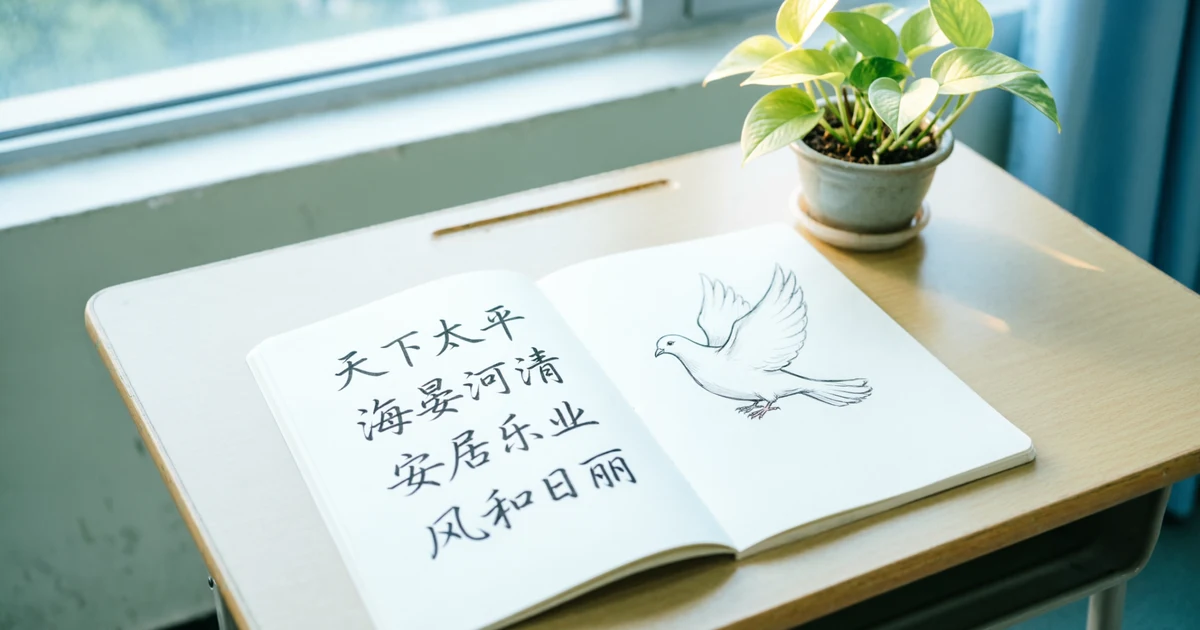
Unlike idioms, the word peace does not need figurative decoding. Most readers understand it directly. However, writers can still make peace symbolic. A white dove, a quiet garden, or a sunrise can represent peace in a poem or story.
Key Differences in Simple Language
Idioms and peace connect, but they do not play the same role.
An idiom is a phrase. Peace is an idea.
An idiom often means something indirectly. Peace usually names the meaning directly.
An idiom has a fixed form. Peace can appear in many forms, such as peace, peaceful, peacefully, peacemaker, or peacekeeping.
An idiom adds color. Peace adds meaning.
An idiom works at the sentence level. Peace can work at the sentence, scene, theme, or whole text level.
For example, “hold out an olive branch” is a specific idiom. It means someone offers peace. The broader idea behind the idiom is peace, reconciliation, or forgiveness.
Can Idioms and Peace Overlap?
Yes, idioms and peace can overlap when an idiom expresses a peaceful idea.
For example:
They decided to make peace before the wedding.
She tried to keep the peace during the meeting.
He held out an olive branch after the argument.
The neighbors finally buried the hatchet.
Each sentence uses an idiom or idiomatic expression connected to peace. The idiom gives the peaceful idea a more natural or expressive form.
The overlap happens because idioms often describe human situations. Peace is one of those situations. People argue, forgive, calm down, compromise, and rebuild trust. Language creates idioms for these common experiences.
Still, the difference remains clear. The idiom is the wording. Peace is the meaning.
Examples of Idioms
Here are common idioms for peace, calm, and ending conflict.
1. Bury the hatchet
Meaning: To stop arguing and become friendly again.
Example:
After years of rivalry, the two teams decided to bury the hatchet.
Best use:
Use it when people forgive each other after conflict.
2. Clear the air
Meaning: To talk openly and remove tension.
Example:
We need to clear the air before this misunderstanding gets worse.
Best use:
Use it when honest communication helps restore peace.
3. Keep the peace
Meaning: To prevent conflict or maintain calm.
Example:
The teacher tried to keep the peace during the group project.
Best use:
Use it when someone manages tension between others.
4. Hold out an olive branch
Meaning: To offer peace, forgiveness, or reconciliation.
Example:
Lena held out an olive branch by inviting her sister to dinner.
Best use:
Use it when someone makes the first move toward peace.
5. Let sleeping dogs lie
Meaning: To avoid bringing up an old problem because it may cause conflict again.
Example:
I wanted to ask about the argument, but I decided to let sleeping dogs lie.
Best use:
Use it when silence may protect peace.
6. Smooth things over
Meaning: To make a tense situation calmer.
Example:
His apology helped smooth things over with the client.
Best use:
Use it when someone reduces anger or awkwardness.
7. Live and let live
Meaning: To accept that others live differently and avoid unnecessary conflict.
Example:
My grandfather believes in live and let live.
Best use:
Use it when talking about tolerance and peaceful coexistence.
8. Agree to disagree
Meaning: To accept different opinions without continuing an argument.
Example:
We could not change each other’s minds, so we agreed to agree to disagree.
Best use:
Use it when people choose respect over conflict.
9. Pour oil on troubled waters
Meaning: To calm a difficult or tense situation.
Example:
Her gentle words poured oil on troubled waters.
Best use:
Use it in more formal or literary writing.
10. Make peace with something
Meaning: To accept something difficult emotionally.
Example:
He finally made peace with his past.
Best use:
Use it for inner peace, acceptance, or healing.
Examples of Peace
Peace can appear without idioms. These examples use the idea directly.
Peace as calm
The room felt full of peace after the music ended.
Peace as safety
The children slept in peace while the storm passed outside.
Peace as agreement
The two communities worked together to build peace.
Peace as inner balance
She found peace after forgiving herself.
Peace as quiet
A deep peace settled over the garden at sunset.
Peace as a theme
The story reminds readers that peace often begins with listening.
Peace as a goal
The leaders met to discuss peace after months of violence.
Peace as harmony
The family lived in peace once they learned to respect each other’s space.
These examples show that peace works as a broad idea. It can describe a feeling, a place, a relationship, a society, or a message.
Idioms vs Peace in Literature and Writing
In literature, idioms and peace serve different purposes.
Writers use idioms to create natural dialogue, character voice, cultural flavor, and emotional shorthand. A character who says “Let’s bury the hatchet” sounds different from a character who says “Let us resolve our conflict.” The idiom feels more conversational.
Writers use peace as a theme, mood, symbol, or goal. A poem may describe a peaceful river. A novel may explore the cost of peace after war. A short story may show a character seeking inner peace.
Idioms usually work in smaller parts of writing. They appear in sentences, dialogue, or short descriptions. Peace can shape an entire text.
For example:
Idiom in dialogue:
“Can we just bury the hatchet?” Tom asked.
Peace as theme:
The story explores how forgiveness can create peace after years of bitterness.
Writers can combine both:
After years of silence, the brothers buried the hatchet, and peace slowly returned to the family.
This sentence uses both an idiom and the broader idea of peace.
Idioms vs Peace for Students and ESL Learners
Students and ESL learners often struggle with idioms because idioms do not always make literal sense.
For example, “bury the hatchet” may sound strange if you imagine someone digging a hole and hiding a tool. The real meaning has to do with ending a conflict.
The word peace feels easier because it usually carries a direct meaning. Most learners can connect peace with calm, quiet, or no fighting.
A helpful way to remember the difference:
Use peace when you want clear, direct meaning.
Use a peace idiom when you want natural, expressive language.
For school writing, you can use both, but you should match the tone.
In an essay, you might write:
The two characters make peace after they understand each other’s pain.
In a story or dialogue, you might write:
They finally buried the hatchet.
Both work, but they create different effects.
Common Mistakes and Confusion
Mistake 1: Thinking every phrase about peace is an idiom
Not every phrase with “peace” is an idiom. For example, “world peace” is not an idiom. It means peace across the world. The meaning stays direct.
Mistake 2: Reading idioms literally
If someone says “hold out an olive branch,” they usually do not mean a real branch. They mean an offer of peace.
Mistake 3: Using idioms in the wrong tone
Some idioms sound casual. “Bury the hatchet” works well in conversation and informal writing. In a formal essay, “reconcile” or “resolve the conflict” may sound stronger.
Mistake 4: Overusing idioms
Too many idioms can make writing sound crowded or unnatural. Choose one strong idiom instead of adding several in the same paragraph.
Mistake 5: Confusing peace with silence
Peace does not always mean silence. A silent room can still feel tense. Real peace often includes safety, understanding, and emotional calm.
Mistake 6: Using idioms without context
Idioms need clear context. If the reader cannot tell who argued or what tension exists, the idiom may confuse them.
When to Use Idioms and When to Use Peace
Use idioms when you want your writing to sound natural, expressive, or conversational.
Good places for idioms include:
Dialogue
Personal essays
Stories
Informal explanations
Creative writing
Speech writing
Blog writing
Example:
After the argument, they decided to bury the hatchet.
Use peace when you want a clear, direct, or broad idea.
Good places for peace include:
Essays
Academic writing
Theme analysis
Descriptions
Historical writing
Emotional reflection
Formal speeches
Example:
The agreement brought peace to the region.
You can also use both when the sentence needs expression and clarity:
The two leaders held out an olive branch, hoping peace would follow.
This sentence works because the idiom shows the action, while peace names the goal.
Related Terms People Often Confuse with Them
Idiom
An idiom is a fixed expression with a special meaning. Example: “bury the hatchet.”
Phrase
A phrase is any group of words that works together. Not every phrase is an idiom. “A peaceful morning” is a phrase, but it is not an idiom.
Metaphor
A metaphor compares one thing to another without using “like” or “as.” For example, “Peace is a soft blanket over the town.” This creates an image, but it is not necessarily an idiom.
Symbol
A symbol represents a larger idea. A dove often symbolizes peace. A symbol can appear in art, literature, religion, and culture.
Theme
A theme is a main idea in a text. Peace can become a theme in a poem, novel, speech, or essay.
Cliché
A cliché is an overused expression. Some idioms can become clichés if writers use them too often or without freshness.
Proverb
A proverb gives advice or wisdom. “Live and let live” can work like a proverb because it expresses a general life lesson.
Conclusion
Idioms for peace are expressions that describe calm, forgiveness, reconciliation, or the end of conflict. The word peace names the broad idea, while idioms give that idea a more colorful and natural form.
The easiest way to remember the difference is this: peace is the meaning, and an idiom is one way to express that meaning.
Use peace when you need clarity. Use idioms when you want a sentence to sound more vivid, conversational, or memorable. Strong writers know how to use both. They choose the direct word when the reader needs simplicity, and they choose the idiom when the sentence needs life.
FAQs
What are idioms for peace?
Idioms for peace are fixed expressions that describe ending conflict, staying calm, forgiving someone, or restoring harmony. Examples include “bury the hatchet,” “keep the peace,” “clear the air,” and “hold out an olive branch.”
Is “make peace” an idiom?
“Make peace” can work as an idiomatic expression because it means to stop fighting or accept something emotionally. However, it stays easier to understand than many idioms because the word “peace” still points clearly to the meaning.
What is the difference between peace and an idiom?
Peace is an idea or state of calm, harmony, or freedom from conflict. An idiom is a fixed phrase with a special meaning. An idiom can describe peace, but it is not the same thing as peace.
What is a good idiom for ending an argument?
“Bury the hatchet” is a common idiom for ending an argument and becoming friendly again. “Clear the air” also works when people talk honestly to remove tension.
Which peace idiom works best in formal writing?
“Hold out an olive branch” works well in formal or semi formal writing because it has a strong symbolic meaning. “Reconcile,” “resolve the conflict,” or “restore harmony” may sound even better in academic writing.
Why do ESL learners find peace idioms difficult?
ESL learners often find idioms difficult because the literal words do not always explain the real meaning. For example, “bury the hatchet” means to stop fighting, not to bury an actual tool.
Can idioms make writing better?
Yes, idioms can make writing sound more natural and expressive when you use them carefully. Too many idioms can make writing feel forced, so choose the one that fits the tone and context.