Introduction
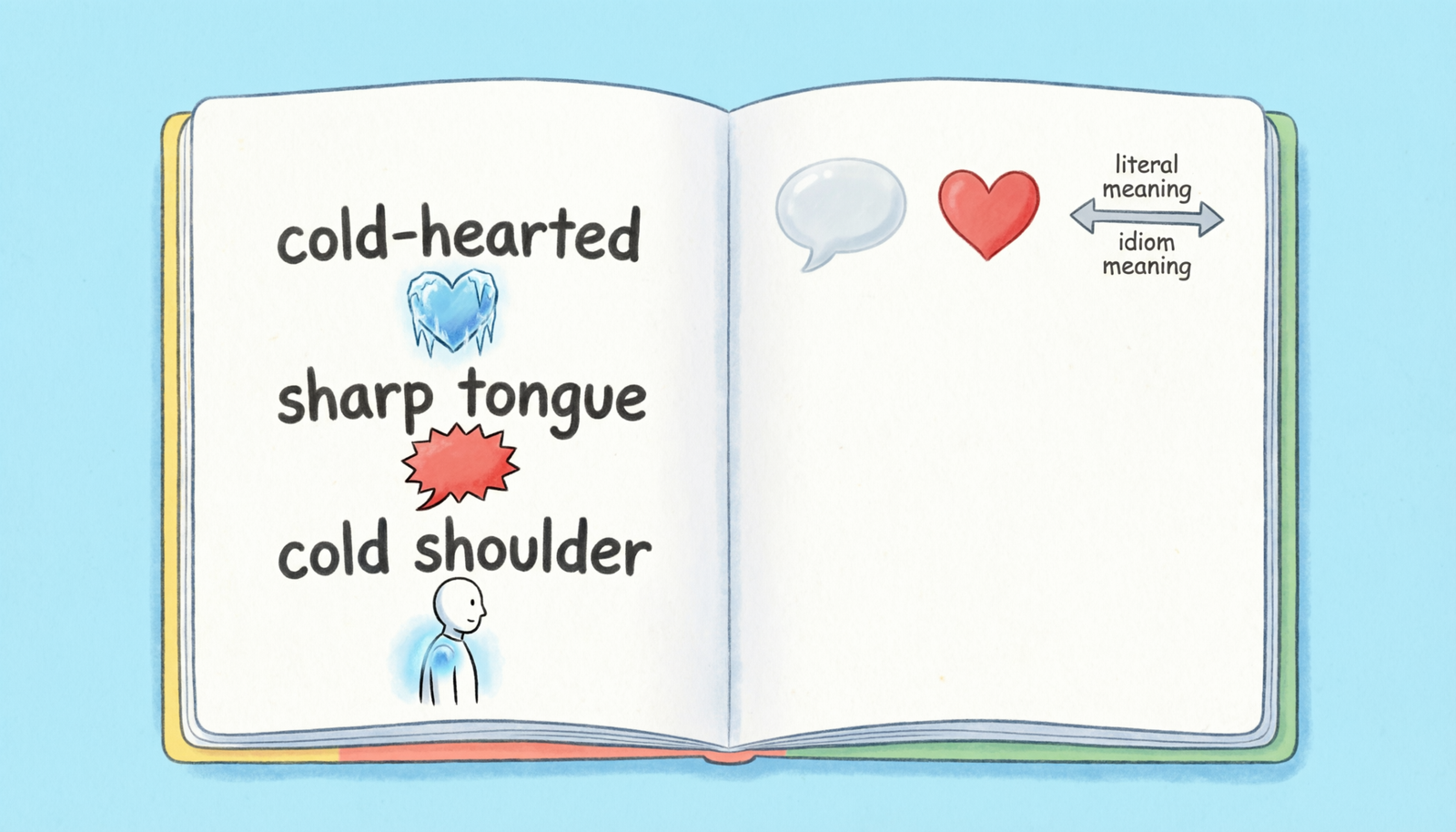
When people search for idioms for mean, they usually want better ways to describe someone who acts unkind, cruel, rude, selfish, or stingy. They may also wonder whether phrases like “cold-hearted”, “a snake in the grass”, or “mean as a snake” count as idioms, metaphors, or both.
Here is the simple answer: an idiom is a fixed expression whose meaning is not always clear from the individual words, while a metaphor directly compares one thing to another without using “like” or “as.”
These two terms overlap because many idioms use metaphorical images. For example, “cold-hearted” is an idiom because English speakers understand it as a set phrase meaning emotionally cruel or unkind. It also works metaphorically because it describes a person’s emotions as if their heart were physically cold.
This guide explains idioms and metaphors in simple language, shows how they differ, and gives practical examples of phrases you can use to describe a mean person naturally.
What Idioms Mean
An idiom is a common phrase with a meaning that goes beyond the literal words.
For example, “give someone the cold shoulder” does not mean you hand someone a cold body part. It means you ignore someone or treat them in an unfriendly way.
Purpose: Idioms help people express ideas in a natural, familiar, and colorful way.
How it works: An idiom works because speakers of the language recognize the phrase as a unit. You usually cannot understand it by translating each word separately.
Short example:
“She gave me the cold shoulder after the meeting.”
Why it gets confused with a metaphor: Many idioms create pictures in the mind, so they can feel metaphorical. However, an idiom depends on a shared, fixed meaning in the language.
What Metaphors Mean
A metaphor is a figure of speech that describes one thing as another thing to show a similarity.
For example, “His words were knives” does not mean his words turned into real knives. It means his words hurt deeply.
Purpose: Metaphors help writers and speakers make ideas vivid, emotional, and memorable.
How it works: A metaphor transfers meaning from one idea to another. It says that one thing is another thing in a symbolic way.
Short example:
“Her kindness was a shield against his cruelty.”
Why it gets confused with an idiom: Some metaphors become so common that people use them as fixed expressions. When that happens, they may also become idioms.
Idioms vs Metaphors: The Core Difference
The core difference is simple: an idiom is a recognized expression, while a metaphor is a comparison.
An idiom may not make sense if you read it literally. A metaphor usually makes sense through symbolic comparison. For example, “give someone the cold shoulder” is an idiom because English speakers know the phrase means to ignore someone. “His voice was ice” is a metaphor because it compares his voice to ice to show coldness or cruelty.
Idioms are often fixed. You usually cannot change their wording too much. Metaphors are more flexible. Writers can create new metaphors whenever they want.
Quick Comparison Table
| Point | Idiom | Metaphor |
|---|---|---|
| Definition | A common phrase with a meaning beyond the literal words | A direct comparison between two unlike things |
| Scope | Narrower because it refers to set expressions | Broader because it includes many creative comparisons |
| Purpose | To sound natural, expressive, and familiar | To create strong imagery or deeper meaning |
| Length | Often a short phrase | Can be short, extended, or part of a whole passage |
| Structure | Usually fixed or semi-fixed | Flexible and creative |
| Meaning | Often understood through common usage | Understood through comparison |
| Use in writing | Useful in dialogue, informal writing, and explanation | Useful in stories, poems, essays, and descriptive writing |
| Example | “She has a sharp tongue.” | “Her words were poison.” |
How Idioms Work
Idioms work through shared meaning. A phrase becomes an idiom when people use it often enough with a special meaning.
For example, “a sharp tongue” means someone speaks in a harsh, critical, or mean way. The phrase does not focus on the literal shape of the tongue. It describes the effect of someone’s speech.
Common idioms for mean behavior include:
- A sharp tongue: a habit of saying hurtful or critical things
- Cold-hearted: lacking kindness or sympathy
- Give someone the cold shoulder: ignore or reject someone in an unfriendly way
- Treat someone like dirt: treat someone with disrespect
- Rub salt in the wound: make someone feel worse after they are already hurt
- Kick someone when they’re down: treat someone badly when they are already struggling
- A snake in the grass: a hidden, dishonest, or treacherous person
Idioms help ESL learners sound more fluent, but they require care. Some idioms sound informal, dramatic, or old-fashioned depending on the context.
How Metaphors Work
Metaphors work by creating a direct symbolic link. They say one thing is another thing, not because it is literally true, but because the comparison reveals meaning.
For example:
“His cruelty was a storm in the room.”
This metaphor suggests that his mean behavior felt powerful, destructive, and hard to escape. The sentence does not use a fixed idiom. The writer creates a fresh comparison.
Metaphors can describe mean behavior in many ways:
- Her words were knives.
- His smile was a mask.
- Their gossip was poison.
- He was a storm of anger.
- Her silence was a wall.
These examples do not depend on fixed phrases in the same way idioms do. They depend on imagery and comparison.
Key Differences in Simple Language
Idioms and metaphors both use figurative language, but they do not work in the same way.
An idiom belongs to common language. People understand it because they have heard it before. For example, “cold-hearted” already has an accepted meaning.
A metaphor belongs more to comparison and creativity. A writer can invent one. For example, “his kindness had frozen years ago” is metaphorical because it connects emotional coldness with physical freezing.
Idioms are usually easier to use in conversation once you learn them. Metaphors give writers more freedom, but they can sound confusing if the comparison feels forced.
Can Idioms and Metaphors Overlap?
Yes, idioms and metaphors can overlap.
Many idioms began as metaphors. Over time, people repeated them so often that they became fixed expressions. “Cold-hearted” is a good example. It compares lack of compassion to physical coldness, so it has a metaphorical base. But it is also an idiom because English speakers use it as a standard phrase.
Another example is “a sharp tongue.” No one means the person’s tongue has a blade. The phrase uses a metaphorical idea: sharpness equals hurtful speech. Since it is a common expression, it also works as an idiom.
So the overlap looks like this:
All idioms are not metaphors, and all metaphors are not idioms. But some idioms use metaphorical language.
Examples of Idioms for Mean
Here are practical idioms for describing a mean person or mean behavior.
1. A sharp tongue
Meaning: Someone speaks in a harsh, cutting, or hurtful way.
Example: “She has a sharp tongue, especially when she is angry.”
Best use: Describing rude or critical speech.
2. Cold-hearted
Meaning: Unkind, unsympathetic, or emotionally cruel.
Example: “It was cold-hearted of him to laugh at her mistake.”
Best use: Describing a lack of compassion.
3. Mean as a snake
Meaning: Very mean, cruel, or nasty.
Example: “The old landlord was mean as a snake.”
Best use: Informal or storytelling contexts.
4. Give someone the cold shoulder
Meaning: Ignore someone in an unfriendly way.
Example: “After the argument, he gave her the cold shoulder.”
Best use: Describing social rejection.
5. Treat someone like dirt
Meaning: Treat someone with disrespect or cruelty.
Example: “No one deserves to be treated like dirt.”
Best use: Everyday speech and emotional writing.
6. Kick someone when they’re down
Meaning: Be cruel to someone who is already in a bad situation.
Example: “Mocking him after he lost his job was kicking him when he was down.”
Best use: Describing unfair or heartless behavior.
7. Rub salt in the wound
Meaning: Make someone’s pain, embarrassment, or disappointment worse.
Example: “She failed the test, and his joke only rubbed salt in the wound.”
Best use: Describing extra emotional harm.
8. A snake in the grass
Meaning: A secretly dishonest or harmful person.
Example: “He acted friendly, but he was a snake in the grass.”
Best use: Describing betrayal or hidden meanness.
9. Have a heart of stone
Meaning: Show no pity, warmth, or kindness.
Example: “You would need a heart of stone not to feel sorry for them.”
Best use: Describing emotional hardness.
10. Bite someone’s head off
Meaning: Reply angrily or rudely.
Example: “I only asked a question, but she bit my head off.”
Best use: Informal speech about sudden anger.
Examples of Metaphors for Mean
Metaphors for mean behavior often focus on coldness, sharpness, poison, darkness, or danger.
1. “His words were knives.”
This metaphor shows that his words hurt deeply.
2. “Her kindness had turned to ice.”
This suggests that she became emotionally cold or unsympathetic.
3. “Their gossip was poison.”
This means the gossip harmed people, relationships, or reputations.
4. “He was a storm in every room he entered.”
This describes someone whose anger or cruelty disrupts everything around him.
5. “Her smile was a mask.”
This suggests that she hid her real feelings or bad intentions behind a pleasant expression.
6. “His silence was a wall.”
This means his silence blocked connection, warmth, or understanding.
7. “The insult landed like a stone in her chest.”
This example uses “like,” so it is technically a simile, not a metaphor. It still helps show the difference: metaphors say one thing is another thing, while similes use like or as.
Idioms vs Metaphors in Literature and Writing
Writers use idioms and metaphors for different effects.
Idioms make dialogue sound natural. A character might say, “Don’t kick him when he’s down.” That sounds like real speech. It quickly shows the speaker’s attitude without needing a long explanation.
Metaphors create stronger imagery. A narrator might write, “His apology was a locked door.” That line feels more literary because it invites the reader to think about what the comparison means.
In fiction, idioms often reveal voice, culture, age, and personality. A character who uses many idioms may sound informal, humorous, wise, or old-fashioned. Metaphors can reveal mood, theme, and emotional depth.
In essays, idioms can help when the tone allows natural expression. Metaphors work well when you want to explain an abstract idea clearly. Still, students should avoid overusing both. Too many idioms can make writing sound casual. Too many metaphors can make writing feel heavy or unclear.
Idioms vs Metaphors for Students and ESL Learners
For students and ESL learners, idioms can be tricky because their meanings are not always logical. If someone says “She gave me the cold shoulder,” a beginner may imagine an actual shoulder. The phrase only makes sense when you learn it as a complete expression.
Metaphors can also confuse learners, but they usually allow more room for interpretation. If a writer says “his words were poison,” you can guess that the words caused harm.
Here is a helpful learning rule:
Learn idioms as complete phrases. Understand metaphors as comparisons.
When you study idioms for mean behavior, pay attention to tone. Some phrases sound strong, such as “heart of stone” or “snake in the grass.” Others sound more everyday, such as “sharp tongue” or “cold shoulder.”
For school writing, use idioms only when they fit the tone. For creative writing, metaphors often give you more power and originality.
Common Mistakes and Confusion
Mistake 1: Calling every figurative phrase a metaphor
Not every figurative phrase is a metaphor. “Bite someone’s head off” is an idiom. It does not mainly work as a direct comparison. It works as a fixed expression meaning to respond angrily.
Mistake 2: Taking idioms literally
Idioms often sound strange when translated word for word. “Treat someone like dirt” does not mean the person is dirt. It means someone treats another person as worthless.
Mistake 3: Using idioms in formal writing without checking tone
Some idioms sound too casual for academic writing. In an essay, “The manager treated workers unfairly” may work better than “The manager treated workers like dirt.”
Mistake 4: Mixing too many images
Writers sometimes combine several metaphors in one sentence. For example:
“His words were knives that froze the room and poisoned the air.”
This sentence has too many images at once. Choose one strong image and let it work.
Mistake 5: Confusing idioms with similes
“Mean as a snake” uses “as,” so it has a simile-like structure. However, it also works as an idiomatic expression because people use it as a familiar phrase.
When to Use Idioms and When to Use Metaphors
Use idioms when you want your language to sound natural, conversational, and familiar.
Good situations for idioms:
- Dialogue
- Informal essays
- Blog posts
- Personal stories
- ESL vocabulary practice
- Everyday descriptions of behavior
Example:
“Don’t rub salt in the wound. She already feels bad.”
Use metaphors when you want stronger imagery, originality, or emotional depth.
Good situations for metaphors:
- Poetry
- Fiction
- Speeches
- Literary analysis
- Descriptive writing
- Creative essays
Example:
“His apology was a thin curtain over years of cruelty.”
For clear student writing, start simple. Use an idiom when the phrase is common and fits the tone. Use a metaphor when you want readers to feel or imagine the idea more deeply.
Related Terms People Often Confuse with Idioms and Metaphors
Simile
A simile compares two things using like or as.
Example:
“He was as mean as a snake.”
A metaphor would say:
“He was a snake.”
Hyperbole
Hyperbole means exaggeration for effect.
Example:
“She has told me a million cruel things.”
The speaker does not mean exactly one million. The exaggeration shows strong emotion.
Personification
Personification gives human qualities to non-human things.
Example:
“Cruelty knocked on the door again.”
Cruelty cannot literally knock, but the sentence gives it human action.
Cliché
A cliché is an overused phrase or idea.
Some idioms can become clichés if writers use them too often. For example, “heart of stone” is clear, but it may feel predictable in creative writing.
Proverb
A proverb is a short traditional saying that gives advice or wisdom.
Example:
“Actions speak louder than words.”
A proverb may contain metaphorical language, but its main purpose is to teach a lesson.
Conclusion
Idioms and metaphors both make language more expressive, but they work differently. An idiom is a familiar phrase with a special meaning, while a metaphor is a direct comparison that creates imagery or deeper meaning.
When learning idioms for mean, remember that phrases like “cold-hearted,” “a sharp tongue,” “give someone the cold shoulder,” and “kick someone when they’re down” describe unkind behavior in natural English. Some of these idioms also use metaphorical ideas, which is why people often confuse the two terms.
For students and ESL learners, the best approach is simple: learn idioms as fixed expressions and read metaphors as comparisons. For writers, idioms can make language sound natural, while metaphors can make writing feel vivid, original, and emotionally strong.
FAQs
1. What are idioms for mean?
Idioms for mean are common expressions that describe rude, cruel, unkind, selfish, or harsh behavior. Examples include “cold-hearted,” “a sharp tongue,” “treat someone like dirt,” and “kick someone when they’re down.”
2. Is “cold-hearted” an idiom or a metaphor?
“Cold-hearted” can be both. It is an idiom because English speakers use it as a fixed phrase meaning unkind or unsympathetic. It is also metaphorical because it connects emotional cruelty with physical coldness.
3. What is the difference between an idiom and a metaphor?
An idiom is a common expression with a special meaning. A metaphor is a direct comparison between two unlike things. Idioms depend on common usage, while metaphors depend on symbolic comparison.
4. Is “mean as a snake” an idiom?
Yes, “mean as a snake” works as an idiomatic expression. It also has a simile-like structure because it uses “as.” It means very mean, nasty, or cruel.
5. Are idioms good for ESL learners?
Yes, idioms help ESL learners understand natural English. However, learners should study idioms with examples because the meanings are often not clear from the individual words.
6. Should I use idioms in formal writing?
Use idioms carefully in formal writing. Some idioms sound too casual. In academic writing, a direct phrase like “unkind behavior” may work better than “mean as a snake.”
7. Can a metaphor become an idiom?
Yes. Some metaphors become idioms when people repeat them often and the phrase gains a fixed meaning. “A sharp tongue” and “heart of stone” are good examples.