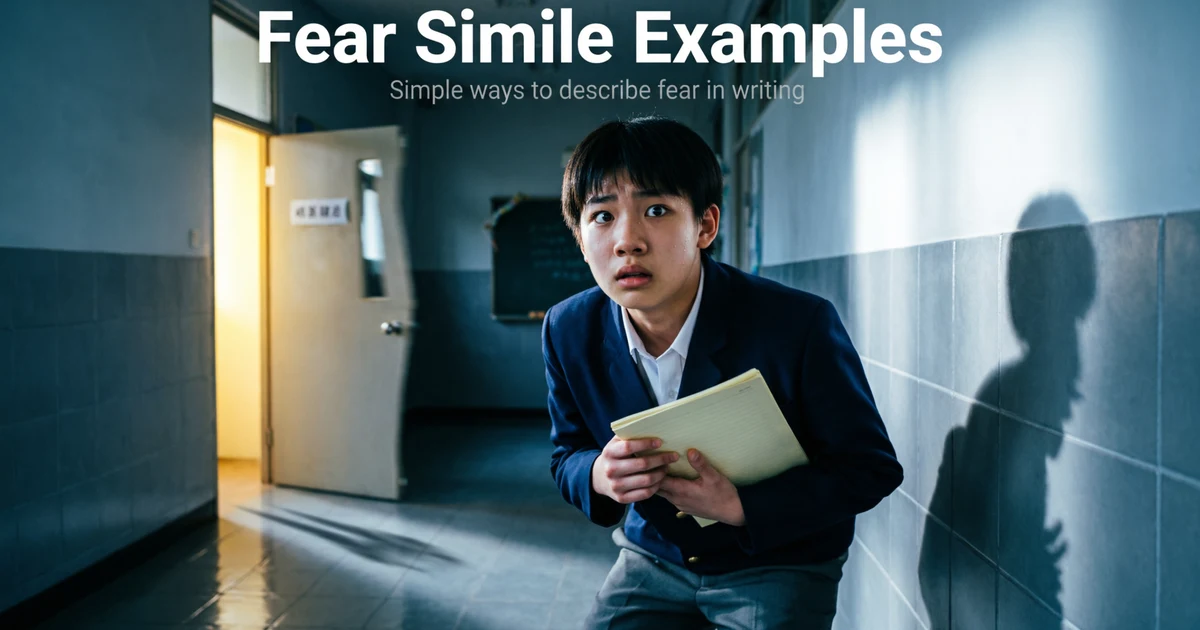
Fear can feel hard to explain. Sometimes a simple word like scared does not show the full feeling. A good fear simile can make that emotion clearer, stronger, and more vivid.
A fear simile compares fear to something familiar using like or as. It helps readers picture panic, nervousness, shock, danger, or deep worry in a more powerful way. In this guide, you will learn what a fear simile means, how to use one, and which examples work best for school writing, stories, poems, horror scenes, and everyday sentences.
What Is a Fear Simile
A fear simile describes fear by comparing it to something else. It uses words such as like or as to create a clear image in the reader’s mind.
Example:
Her fear spread through her like cold water.
This sentence does more than say she felt afraid. It shows how fear moved through her body. The reader can imagine the sudden chill and discomfort.
A fear simile can describe:
• A scared face
• A shaking voice
• A nervous body
• A sudden shock
• A dark or dangerous place
• A frightening moment in a story
Good fear similes help writers show fear instead of only naming it.
Fear Simile Meaning in Simple Words
A fear simile means a comparison that explains how fear feels, looks, or acts.
Simple meaning:
A fear simile compares fear to something that helps readers understand the feeling better.
Examples:
• As scared as a mouse near a cat
• Like a leaf trembling in the wind
• As nervous as a child in the dark
• Like ice running through his veins
• As frightened as a bird trapped in a room
Each example gives fear a shape. The reader can see or feel the emotion more clearly.
A fear simile works well because fear often affects the body. People may shake, freeze, sweat, hide, gasp, or run. A simile turns those reactions into strong images.
Why Writers Use Similes to Describe Fear
Writers use fear similes because fear needs emotion, not just explanation. A plain sentence can tell the reader what happens, but a simile helps the reader feel it.
Plain sentence:
He felt afraid.
Stronger sentence:
He felt as afraid as a deer caught in headlights.
The second sentence gives the reader a sharper image. It shows helplessness, surprise, and danger.
Writers use fear similes to:
• Create mood
• Build tension
• Show character emotion
• Make scenes more dramatic
• Help readers connect with the moment
• Avoid dull or flat descriptions
Fear also changes from scene to scene. A child afraid of thunder feels different from a person facing danger in a dark street. Similes help writers match the exact kind of fear.
Common Fear Similes for Everyday Writing
Everyday writing needs simple fear similes that readers understand quickly. These similes work well in school essays, personal writing, short stories, and basic descriptions.
Common fear simile examples:
• As scared as a rabbit in a fox den
• As frightened as a child during a storm
• Like a leaf shaking in the wind
• As nervous as a student before a test
• Like a mouse hiding from a cat
• As pale as a ghost
• Like a bird trapped in a cage
• As tense as a rope pulled tight
• Like cold fingers touched his spine
• As quiet as someone hiding in the dark
Example sentences:
She stood at the door, as scared as a rabbit in a fox den.
His hands shook like leaves in the wind.
Before the speech, I felt as nervous as a student walking into a surprise test.
These examples suit normal situations because they sound clear and natural.
Fear Similes With Clear Meanings
A strong fear simile should not confuse the reader. The comparison should make sense right away.
Here are fear similes with clear meanings:
• As scared as a rabbit in tall grass
Meaning: Very frightened and ready to run
• Like ice in the blood
Meaning: A sudden cold feeling caused by fear
• As nervous as a cat near water
Meaning: Restless and uncomfortable
• Like a trapped bird beating its wings
Meaning: Panicked and desperate
• As pale as moonlight
Meaning: A face that loses color because of fear
• Like thunder inside the chest
Meaning: A fast heartbeat caused by fear
• As tense as a wire about to snap
Meaning: Extremely nervous and close to panic
• Like a shadow following him
Meaning: Fear that stays with someone
• As still as a statue
Meaning: Frozen with fear
• Like smoke filling a room
Meaning: Fear slowly spreading everywhere
A clear meaning matters because readers should never stop to decode the sentence. The simile should make the feeling stronger, not harder to understand.
Fear Similes With Example Sentences
Fear similes work best when they fit naturally inside a full sentence. Here are practical examples you can use for writing practice.
• Her hands trembled like leaves in a storm.
• He stood as still as a statue when he heard the noise.
• Fear crawled over me like a cold spider.
• She felt as helpless as a bird with a broken wing.
• His heart beat like a drum in a silent room.
• The boy looked as pale as moonlight.
• Panic rose inside her like water in a sinking boat.
• He moved through the hallway like a mouse hiding from a cat.
• Her voice shook like glass on the edge of a table.
• The dark room felt as frightening as a cave without an exit.
You can also change the sentence to match your scene.
Basic version:
He felt as scared as a mouse.
Better version:
He felt as scared as a mouse hiding beneath the kitchen cupboard while the cat waited outside.
The second version gives more detail and creates a stronger image.
Fear Similes for Students
Students often need fear similes for essays, creative writing, poems, and classroom assignments. The best student examples stay simple but expressive.
Useful fear similes for students:
• As scared as a child lost in a crowd
• As nervous as a student before an exam
• Like a leaf in a strong wind
• As frightened as a puppy during thunder
• Like a candle shaking in the dark
• As pale as chalk
• Like a bird trapped inside a classroom
• As quiet as someone hiding from danger
• Like a heart racing down a hill
• As tense as a string pulled too far
Example paragraph for students:
When I walked onto the stage, my legs shook like leaves in the wind. My throat felt dry, and my heart beat like a drum. I felt as nervous as a student who forgot every answer before a test.
This paragraph shows fear through body reactions. Students can use this style to make writing more vivid.
Fear Similes for Kids
Kids need fear similes that feel easy, safe, and familiar. These examples avoid very dark or violent images.
Simple fear similes for kids:
• As scared as a kitten in the rain
• As nervous as a puppy during fireworks
• Like a bunny hiding in the grass
• As quiet as a mouse
• Like a leaf shaking on a tree
• As jumpy as a frog near a pond
• Like a little bird hearing thunder
• As frightened as a child in a dark room
• Like a teddy bear left alone at night
• As small as an ant in a big world
Example sentences for kids:
I felt as scared as a kitten in the rain.
My little brother hid under the blanket like a bunny in the grass.
Her voice sounded as tiny as a mouse.
These similes help children understand fear without making the writing too heavy.
Fear Similes for Creative Writing
Creative writing needs fresh and vivid fear similes. A good simile can turn a normal scene into a memorable one.
Creative fear simile examples:
• Fear slipped into the room like fog under a door.
• His courage cracked like thin ice.
• Her thoughts scattered like birds from a tree.
• Panic bloomed in her chest like a dark flower.
• The silence pressed against him like a heavy hand.
• His fear followed him like a shadow with teeth.
• Her breath came like broken glass.
• The warning rang in his mind like a bell in an empty church.
• Fear wrapped around her ribs like a cold chain.
• The hallway stretched before him like the throat of a monster.
Creative similes work best when they match the mood. A quiet fear scene may need soft images like fog, silence, or shadows. A fast panic scene may need sharp images like glass, thunder, or fire.
Fear Similes for Stories and Poems
Stories and poems use fear similes in different ways. A story needs movement and scene detail. A poem often needs rhythm, image, and emotion.
Fear similes for stories:
• The girl froze like a deer in headlights.
• His fear rose like smoke from a fire.
• The old house groaned like something waking up.
• She ran like a rabbit chased through tall grass.
• His heartbeat sounded like footsteps behind him.
Fear similes for poems:
• Fear fell like night upon my skin.
• My heart shook like rain on glass.
• The dark opened like a hungry mouth.
• Silence grew like weeds around me.
• My courage faded like a candle in wind.
In stories, place the simile near action. In poems, place it where the image carries emotion.
Story example:
Maya heard the floor creak behind her. She froze like a deer in headlights, too afraid to breathe.
Poem example:
My courage faded like a candle in wind,
while shadows gathered at my feet.
Fear Similes That Describe Panic
Panic feels faster and stronger than ordinary fear. It often brings racing thoughts, shaking hands, quick breathing, and a strong urge to escape.
Fear similes for panic:
• Panic hit him like a wave.
• Her thoughts scattered like papers in a storm.
• His heart raced like a horse at full speed.
• She gasped like a fish out of water.
• Fear rushed through him like fire through dry grass.
• His body shook like a bridge in heavy wind.
• Panic rose like floodwater.
• Her breath broke like waves against rocks.
• He moved like a trapped animal.
• Her mind spun like a wheel out of control.
Example sentences:
Panic rose inside her like floodwater, filling every part of her chest.
His thoughts scattered like papers in a storm when he heard the alarm.
Use panic similes when the character cannot think clearly or stay calm.
Fear Similes That Describe Nervousness
Nervousness feels lighter than panic but still uncomfortable. It often appears before exams, speeches, interviews, first meetings, or uncertain moments.
Fear similes for nervousness:
• As nervous as a student before a test
• Like a cat in a room full of rocking chairs
• As jumpy as popcorn in a hot pan
• Like a wire buzzing with electricity
• As restless as a bird in a small cage
• Like butterflies fighting in the stomach
• As tense as a string on a violin
• Like a candle flame in a draft
• As uneasy as a dog before a storm
• Like a foot tapping under a desk
Example sentences:
Before the interview, she felt as nervous as a student waiting for exam results.
His stomach fluttered like butterflies fighting for space.
Nervous similes suit real life situations. They can sound serious, funny, or gentle depending on the scene.
Fear Similes That Describe Shock
Shock happens when fear arrives suddenly. A person may freeze, stare, gasp, or lose words for a moment.
Fear similes for shock:
• As still as stone
• Like lightning struck his mind
• As pale as chalk
• Like the floor dropped beneath her
• As silent as a locked room
• Like a statue in a storm
• As frozen as ice
• Like a bell ringing inside his head
• As stiff as a board
• Like breath stolen from her chest
Example sentences:
When the door slammed open, he stood as still as stone.
The news hit her like lightning inside her mind.
Shock similes work best when the fear feels sudden. Keep the sentence sharp and direct.
Fear Similes That Describe Darkness and Danger
Darkness often makes fear feel deeper because it hides what may happen next. Danger similes should create tension without sounding too dramatic.
Fear similes for darkness and danger:
• The dark felt like a blanket over her eyes.
• The alley stretched like a tunnel into nowhere.
• Shadows moved like silent animals.
• The room felt as cold as a grave.
• The forest watched them like a crowd of strangers.
• The night closed around him like a fist.
• The silence hung like a warning.
• The basement smelled like secrets and dust.
• The doorway looked like the mouth of a cave.
• The road ahead vanished like a path into a dream.
Example sentences:
The night closed around him like a fist, and every sound felt too close.
Shadows moved like silent animals along the wall.
Use these similes when the setting itself creates fear.
Fear Similes for Horror Writing
Horror writing needs fear similes that create dread, suspense, and unease. The goal does not always involve loud terror. Sometimes quiet fear feels stronger.
Horror fear simile examples:
• Fear crawled across her skin like ants.
• The house breathed like something alive.
• His scream died like a match in rain.
• The mirror stared back like an open eye.
• The hallway bent ahead like a spine.
• The silence pressed down like wet soil.
• Her fear tasted like metal.
• The door opened like a wound.
• His shadow moved like it had its own mind.
• The dark swallowed the room like black water.
Example horror sentence:
The house breathed like something alive, and every floorboard groaned beneath her feet.
A horror simile should match the scene’s fear level. Do not use too many at once. One strong image can create more fear than five weak ones.
Fear Similes for Emotional Scenes
Not every fear scene involves monsters, darkness, or danger. Some fear comes from love, loss, shame, failure, or uncertainty.
Emotional fear simile examples:
• Her fear sat in her chest like a stone.
• His worry grew like a storm over water.
• She held her breath like hope might break.
• Fear clung to him like wet clothes.
• Her heart felt as fragile as glass.
• The thought of losing him cut through her like winter wind.
• His silence scared her like an unanswered phone at midnight.
• She felt as small as a child in a crowded station.
• Worry spread through her like ink in water.
• His fear stayed with him like a bruise.
Example sentences:
Her fear sat in her chest like a stone as she waited for the call.
Worry spread through him like ink in water.
These similes suit serious scenes where fear connects to emotional pain.
Funny Fear Similes That Sound Natural
Funny fear similes can make writing lighter. They work well in casual stories, dialogue, comics, and student writing.
Funny fear simile examples:
• As scared as a cat near a vacuum cleaner
• As nervous as a kid who broke a window
• Like a chicken hearing dinner plans
• As jumpy as toast popping from a toaster
• Like a squirrel that forgot where it hid its nuts
• As scared as a phone at one percent battery
• Like a dog hearing bath water
• As shaky as jelly on a plate
• Like a student who forgot homework on presentation day
• As worried as a cookie near a hungry child
Example sentences:
When the teacher called my name, I became as shaky as jelly on a plate.
He looked as scared as a cat near a vacuum cleaner.
Funny similes should still make sense. Avoid jokes that distract from the sentence.
Powerful Fear Similes for Serious Writing
Serious writing needs fear similes with weight and emotional depth. These examples suit essays, novels, memoirs, dramatic scenes, and intense descriptions.
Powerful fear simile examples:
• Fear settled over the town like ash.
• His dread grew like a storm without thunder.
• She carried fear like a stone in her stomach.
• The silence cut through him like a blade.
• Her courage broke like glass under pressure.
• Fear moved through the crowd like a sickness.
• His guilt and fear twisted together like vines.
• The warning echoed in her mind like a funeral bell.
• Fear closed around him like a locked room.
• The truth stood before her like a cliff edge.
Example sentences:
Fear moved through the crowd like a sickness, touching every face in the room.
The truth stood before her like a cliff edge, and she knew she could not step back.
Serious similes need control. Choose images that fit the mood and avoid anything too playful.
How to Use a Fear Simile in a Sentence
A fear simile works best when it fits the character, setting, and emotion. Do not add a simile just to make a sentence sound fancy.
Simple pattern:
Subject plus fear action plus like or as plus comparison
Examples:
• Her hands shook like leaves.
• He felt as scared as a trapped rabbit.
• Fear spread through the room like smoke.
• His heart beat like a drum.
• She froze as still as stone.
You can improve a basic fear simile by adding context.
Basic:
She was as scared as a bird.
Better:
She stood near the locked gate, as scared as a bird trapped inside a dark room.
Basic:
His heart beat like a drum.
Better:
His heart beat like a drum in the silence after the door opened.
A good fear simile should answer one question:
What kind of fear does this moment need?
Common Mistakes to Avoid When Writing Fear Similes
Fear similes can lose power when writers use them carelessly. Avoid these common mistakes.
• Using too many similes in one paragraph
One strong simile works better than several crowded ones.
Weak example:
He shook like a leaf, froze like ice, gasped like a fish, and ran like a rabbit.
Better example:
He froze like ice when the footsteps stopped behind him.
• Choosing unclear comparisons
A simile should make fear easier to imagine.
Unclear:
Fear felt like a purple clock.
Clear:
Fear felt like ice sliding down her spine.
• Using the wrong tone
Funny similes do not suit serious horror scenes.
Wrong tone:
The ghost appeared, and he jumped like popcorn.
Better tone:
The ghost appeared, and his breath vanished like smoke in cold air.
• Repeating common phrases too often
Phrases like scared as a mouse can work, but fresh details make them stronger.
Common:
She felt as scared as a mouse.
Fresh:
She felt as scared as a mouse hiding under a cupboard while the cat waited outside.
• Telling and showing at the same time
Avoid explaining too much after the simile.
Weak:
He was scared like a deer in headlights because he felt very afraid.
Better:
He stood like a deer in headlights.
Conclusion
A fear simile helps readers understand fear through a clear comparison. It can show panic, nervousness, shock, darkness, danger, horror, or emotional pain. The best similes match the exact feeling in the scene.
Use simple similes for school writing, gentle ones for kids, vivid ones for creative work, and darker ones for horror or serious scenes. A strong fear simile does not just tell readers that someone feels afraid. It lets them see the shaking hands, hear the racing heart, and feel the fear inside the moment.
FAQs
What is a fear simile
A fear simile compares fear to something familiar using like or as. It helps readers understand how fear feels or looks.
What is an example of a fear simile
An example of a fear simile is her hands shook like leaves in the wind. It shows fear through movement.
What is a good simile for being scared
A good simile for being scared is as scared as a rabbit hearing a fox nearby. It shows fear and the urge to escape.
What is a fear simile for students
A simple fear simile for students is as nervous as a student before a test. It feels familiar and easy to understand.
What is a fear simile for kids
A good fear simile for kids is as scared as a kitten in the rain. It sounds gentle and clear.
How do you describe panic with a simile
You can describe panic with a simile like panic rose inside her like floodwater. This shows fear growing quickly.
How do you describe nervousness with a simile
You can say he felt as nervous as a cat near water. This shows discomfort and unease.
Can fear similes help in creative writing
Yes, fear similes make creative writing more vivid. They help readers picture fear through strong images and body reactions.
What makes a fear simile powerful
A powerful fear simile matches the mood, feels clear, and creates a strong image. It should not confuse the reader.
Should I use many fear similes in one paragraph
No. Use one or two strong fear similes. Too many comparisons can make the writing feel crowded.