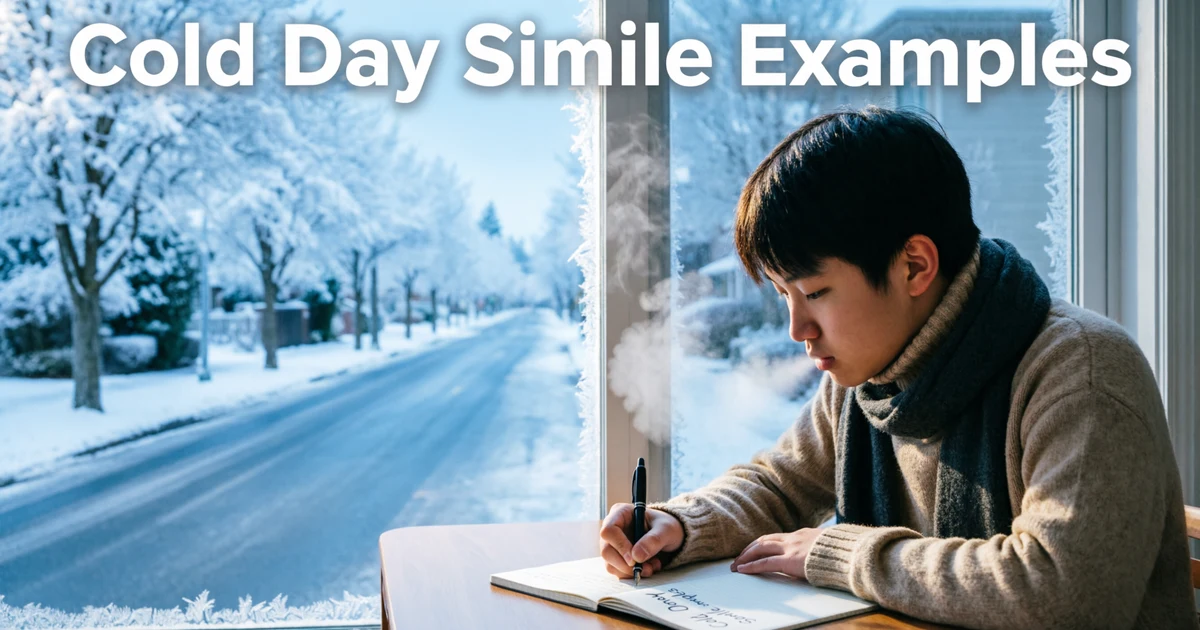
A cold day can feel sharp, quiet, heavy, or even beautiful. Good writers do not simply say, “It was cold.” They help readers feel the chill through clear images. That is where a cold day simile example becomes useful.
In this article, you will learn what cold day similes mean, how to use them in sentences, and which examples work best for school essays, stories, poems, and everyday writing. You will also see simple, funny, creative, and strong similes that make cold weather easier to describe.
What Does Cold Day Simile Example Mean
A cold day simile example compares a cold day to something else using words such as “like” or “as.” The comparison helps readers understand the feeling of cold weather more clearly.
A simple example is:
The day felt as cold as ice.
This sentence compares the cold day to ice. The reader instantly understands that the weather feels freezing.
A cold day simile can describe many things, such as:
- The temperature
- The wind
- The sky
- A person’s hands or face
- A winter morning
- Snowy streets
- The mood of a scene
A strong simile does more than describe cold. It creates a picture in the reader’s mind.
Best Cold Day Simile Examples for Students
Students often need simple and clear similes for essays, stories, and classroom writing. The best examples should make sense quickly and sound natural.
Here are some useful cold day simile examples for students:
- The day was as cold as ice.
- The morning felt like a freezer.
- The wind cut through me like a sharp knife.
- The air felt as cold as a snowball in my hand.
- The playground felt like a giant icebox.
- The street was as cold as a frozen lake.
- The classroom windows felt like blocks of ice.
- The winter air touched my face like cold water.
- The cold day wrapped around us like a thick blanket of snow.
- The weather felt as cold as the inside of a refrigerator.
These examples work well because they use familiar images. Ice, snow, freezers, and refrigerators help readers understand cold weather without confusion.
Simple Cold Day Similes for Everyday Writing
Everyday writing needs clear language. You do not always need dramatic or poetic comparisons. A simple simile can make your sentence stronger without making it sound forced.
Examples:
The day felt as cold as ice.
The air felt like it came from a freezer.
The wind felt as cold as frozen water.
The morning felt like a winter cave.
My hands felt as cold as snow.
These similes work well in journals, short stories, school paragraphs, and simple descriptions. They give the reader a quick feeling of the weather.
Here is a plain sentence:
It was a cold day.
Now compare it with a simile:
The day felt as cold as ice against my skin.
The second sentence feels more vivid because it gives the reader a physical image.
Cold Day Simile Examples With Meanings
A simile becomes easier to use when you understand its meaning. Here are cold day simile examples with clear explanations.
The day was as cold as ice.
Meaning: The weather felt extremely cold.
The wind felt like a blade.
Meaning: The wind felt sharp and painful.
The morning felt like the inside of a freezer.
Meaning: The morning felt frozen and uncomfortable.
The air was as cold as a snow covered mountain.
Meaning: The air felt fresh, freezing, and intense.
The street felt like a frozen river.
Meaning: The street looked or felt icy and very cold.
The cold wrapped around me like a winter coat.
Meaning: The cold surrounded the person completely.
My fingers felt as cold as icicles.
Meaning: The person’s fingers felt stiff and freezing.
The sky looked as cold as steel.
Meaning: The sky looked grey, hard, and unfriendly.
Each example gives cold weather a different feeling. Some show pain. Some show beauty. Some show discomfort. Choose the one that fits your scene.
Cold Day Simile Examples in Sentences
A simile works best when it fits naturally into a full sentence. Here are practical sentence examples.
The cold day felt as sharp as broken glass against my cheeks.
The morning air felt like it had slept inside a freezer all night.
The wind rushed through the street like icy water.
The snow covered field looked as cold as a frozen sea.
My hands turned as cold as icicles after five minutes outside.
The winter sky hung above us like a sheet of cold metal.
The day felt like a refrigerator with the door left open.
The cold air touched my face like a splash of ice water.
The empty road looked as cold as a moonlit lake.
The wind moved through the trees like a frozen whisper.
These sentences show how similes can make writing more specific. They do not only tell the reader that the day feels cold. They show how the cold feels.
Common Similes for a Very Cold Day
Some cold day similes appear often because they are easy to understand. They may not sound highly original, but they work well in clear writing.
Common examples include:
As cold as ice
As cold as snow
As cold as a freezer
As cold as an icicle
As cold as winter
As cold as frozen water
As cold as a refrigerator
As cold as a snowstorm
Like walking inside a freezer
Like standing in an icebox
These similes suit students and beginner writers because they communicate the meaning quickly. To make them stronger, add detail.
Basic:
The day was as cold as ice.
Stronger:
The day was as cold as ice, and every breath felt sharp in my throat.
The extra detail makes the sentence more vivid.
Creative Similes for Describing Freezing Weather
Creative similes help your writing feel fresh. They avoid the most common comparisons and create a stronger mood.
Examples:
The cold moved through the town like a silent thief.
The air felt like tiny needles against my skin.
The wind snapped at my coat like an angry dog.
The morning sat over the city like a frozen lid.
The cold settled in my bones like heavy stone.
The sky looked as cold as polished steel.
The snow glowed like powdered glass under the pale sun.
The wind curled around my neck like icy fingers.
The street shone like a frozen mirror.
The cold pressed against the windows like an invisible hand.
These examples work well in creative writing because they give the cold weather personality. The cold does not just exist. It moves, presses, bites, and surrounds.
Cold Day Similes for School Essays
School essays need clear, correct, and meaningful language. A simile should support the idea instead of making the writing sound too dramatic.
Good examples for school essays:
The winter morning felt as cold as ice.
The wind felt like cold water against my face.
The playground looked as quiet as a frozen pond.
The cold air made the street feel like an empty freezer.
The snow covered ground looked as white and cold as a sheet of ice.
Example paragraph:
The winter morning felt as cold as ice when I stepped outside. My breath formed small clouds in front of my face, and the wind touched my cheeks like cold water. The street looked quiet, and the snow made everything seem still.
This paragraph works because the similes support the scene. They do not distract the reader.
Cold Day Similes for Stories and Poems
Stories and poems often need more emotion and imagery. A cold day can show sadness, loneliness, fear, peace, or beauty.
Examples for stories:
The cold day followed him like a shadow.
The wind scratched at the door like a restless animal.
The air felt as cold as a secret kept too long.
The street lay silent like a frozen dream.
The cold wrapped around her like a memory she could not shake.
Examples for poems:
The morning breathed like silver frost.
The wind sang like ice through empty trees.
The sky looked as cold as forgotten glass.
The snow fell like soft ashes from a pale sky.
The cold held the world like a quiet spell.
In stories and poems, cold weather often reflects mood. A lonely character may notice empty streets and sharp wind. A peaceful scene may focus on snow, silence, and soft light.
Cold Day Similes for Describing Winter Mornings
Winter mornings often feel still, pale, and fresh. A good simile should capture the quiet chill that comes before the day fully begins.
Examples:
The winter morning felt as cold as a bowl of ice.
The sunrise looked like a pale flame behind frozen glass.
The air felt like cold milk on my skin.
The grass glittered like crushed diamonds in the frost.
The morning silence lay over the street like snow.
The cold touched the windows like icy breath.
The sky looked as pale as frozen silver.
The first step outside felt like stepping into a freezer.
The rooftops looked like they wore white winter caps.
The morning air felt as sharp as a clean glass edge.
These similes suit descriptive paragraphs because they focus on sights, sounds, and physical feeling.
Cold Day Similes for Describing Wind
Cold wind can feel sharper than still cold air. It moves, pushes, bites, and cuts. That makes wind easy to describe with strong similes.
Examples:
The wind cut through my coat like a knife.
The wind hit my face like ice water.
The wind moved through the trees like a frozen song.
The wind snapped at my ears like tiny whips.
The wind rushed down the street like a cold river.
The wind pushed against us like an invisible wall.
The wind slipped through my sleeves like icy fingers.
The wind howled like a hungry wolf.
The wind stung my cheeks like frozen needles.
The wind wrapped around the house like a cold snake.
Use these similes when the wind plays an active role in the scene. They help the reader feel movement and discomfort.
Cold Day Similes for Describing Snowy Weather
Snow can make a cold day feel soft, bright, quiet, or magical. It can also make the weather feel harsh and dangerous.
Examples:
The snow fell like white feathers from the sky.
The road looked as cold as a frozen river.
The trees stood like statues covered in sugar.
The field stretched ahead like a white blanket.
The snow glittered like tiny crystals under the sun.
The rooftops looked like cakes covered in icing.
The snowstorm moved in like a wall of white.
The ground felt as cold as stone under the snow.
The snow covered the town like a quiet sheet.
The flakes touched my face like cold kisses.
These examples work best when you want to describe the look and mood of a snowy day, not only the temperature.
Cold Day Similes for Describing How a Person Feels
Cold weather affects the body. A person may shake, shiver, feel stiff, or struggle to move. Similes can show that physical reaction clearly.
Examples:
My hands felt as cold as icicles.
My feet felt like blocks of ice.
I shivered like a leaf in the wind.
My nose felt as cold as a snowball.
My fingers felt like frozen sticks.
My cheeks burned like ice against my skin.
I stood there like a statue in the snow.
My body shook like a small tree in a storm.
My breath came out like smoke.
My bones felt as cold as stone.
These similes help readers connect with the person in the scene. They show how cold weather feels from the inside.
Funny Cold Day Similes That Still Make Sense
Funny similes can make writing more lively. They work well in casual writing, dialogue, school activities, and humorous stories.
Examples:
It was so cold, I felt like a popsicle with shoes.
The day felt like a freezer forgot to shut itself.
My nose felt like it had moved to Antarctica.
The wind hit me like a snowman with an attitude.
I walked outside and felt like a frozen sandwich.
My fingers felt like ten tiny ice cubes.
The air felt like a refrigerator having a bad day.
I shivered like a phone on silent mode.
The cold chased me like it wanted rent money.
The morning felt like winter had turned the volume up.
Funny similes should still make sense. They can sound playful, but the comparison must connect clearly to cold weather.
Short Cold Day Similes for Quick Writing
Short similes help when you need quick, clear descriptions. They work well in captions, short paragraphs, worksheets, and simple stories.
Examples:
Cold as ice
Cold as snow
Cold as frost
Cold as stone
Cold as steel
Cold as an icicle
Like a freezer
Like ice water
Like frozen air
Like winter glass
Here are short sentence examples:
The air felt cold as ice.
The road looked cold as steel.
The wind felt like ice water.
My hands felt cold as snow.
The morning felt like a freezer.
Short similes can still feel strong when you place them well.
Strong Cold Day Similes for Creative Writers
Creative writers often need similes with deeper feeling. A strong simile can shape the mood of the entire scene.
Examples:
The cold entered the room like an unwanted guest.
The day felt as cold as a promise no one meant to keep.
The wind moved through the alley like a blade in the dark.
The sky hung over the town like cold iron.
The air pressed against my lungs like frozen glass.
The cold settled over the house like silence after bad news.
The winter road stretched ahead like a sheet of dead silver.
The frost climbed the window like white fingers.
The cold followed us like a patient enemy.
The morning opened like a door into ice.
These similes work best in stories, poems, and descriptive writing. They bring mood, image, and emotion together.
Cold Day Similes Compared With Plain Descriptions
A plain description tells the reader what happens. A simile helps the reader feel it.
Plain description:
It was very cold outside.
Simile version:
The air felt like ice water against my face.
Plain description:
The wind was strong and cold.
Simile version:
The wind cut through my coat like a knife.
Plain description:
My hands were cold.
Simile version:
My hands felt as cold as icicles.
Plain description:
The snow covered the road.
Simile version:
The snow covered the road like a white blanket.
Plain description:
The morning was quiet and cold.
Simile version:
The morning lay over the town like a frozen dream.
Similes add texture. They turn simple facts into images. That makes the writing more memorable.
How to Use Cold Day Similes Naturally
A cold day simile should fit the sentence, the scene, and the tone. Do not add a simile only to decorate the writing.
Use these tips:
- Choose a familiar comparison
Readers understand ice, snow, freezers, wind, glass, and stone quickly. - Match the mood
Use soft similes for peaceful scenes. Use sharp similes for harsh weather. - Avoid too many similes in one paragraph
One strong simile often works better than five weak ones. - Add sensory detail
Mention skin, breath, hands, sound, or sight. - Keep the comparison clear
The reader should understand the image right away.
Example:
Weak sentence:
The day was cold like a strange idea.
Better sentence:
The day was cold like ice water against my skin.
The second sentence works because the comparison feels clear and physical.
Common Mistakes When Writing Cold Day Similes
Many writers use similes too quickly and repeat the same images. A good simile should sound natural and useful.
Common mistakes include:
- Using a comparison that does not match cold weather
Example: The day was as cold as a bright song.
This feels confusing because a song does not suggest cold. - Overusing “as cold as ice”
This simile works, but too much repetition makes writing dull. - Mixing too many images
Example: The cold was like a knife, a freezer, a river, and a wolf.
This sentence feels crowded. - Making the simile too dramatic for a simple scene
A school paragraph may not need dark or heavy imagery. - Forgetting the feeling
A simile should show what the cold feels like, not just name something cold.
Better writing comes from choosing one clear comparison and using it with purpose.
Practice Exercises for Writing Cold Day Similes
Practice helps students and writers create better similes. Try these simple exercises.
Exercise 1: Complete the sentence
The cold day felt like
The wind was as cold as
My hands felt like
The snow looked like
The morning felt as cold as
Exercise 2: Improve the plain sentence
Plain sentence: It was cold outside.
Better sentence: The air felt like ice water on my face.
Plain sentence: The wind was freezing.
Better sentence: The wind cut through my coat like a sharp blade.
Plain sentence: My feet were cold.
Better sentence: My feet felt like blocks of ice.
Exercise 3: Write three moods
Peaceful cold day:
The snow fell like white feathers.
Harsh cold day:
The wind hit my face like frozen needles.
Lonely cold day:
The street lay silent like a frozen river.
These exercises help you move from basic description to stronger imagery.
Conclusion
A cold day simile example helps readers feel winter instead of only reading about it. Simple similes such as “as cold as ice” work well for clear writing, while creative similes can add mood, emotion, and beauty.
The best cold day similes use familiar images, match the tone of the scene, and show physical feeling. Whether you write a school essay, a poem, a story, or a short paragraph, a clear simile can turn a plain cold day into a scene your reader can imagine.
FAQs
What is a cold day simile example
A cold day simile example compares a cold day to something cold or sharp using “like” or “as.” Example: The day felt as cold as ice.
What is a simple simile for a cold day
A simple simile for a cold day is: The day felt like a freezer.
What is the best simile for very cold weather
A strong simile for very cold weather is: The wind cut through me like a knife.
Can I use cold day similes in school essays
Yes. Cold day similes work well in school essays when they stay clear, simple, and relevant to the scene.
What is a creative simile for freezing weather
A creative simile for freezing weather is: The cold settled in my bones like heavy stone.
What is a funny simile for a cold day
A funny simile for a cold day is: I felt like a popsicle with shoes.
What is a simile for cold wind
A good simile for cold wind is: The wind hit my face like ice water.
What is a simile for a snowy cold day
A good simile for a snowy cold day is: The snow covered the town like a quiet white blanket.
How do I write my own cold day simile
Think of something cold, sharp, frozen, or winter related. Then compare the cold day to it using “like” or “as.”
Are cold day similes useful for creative writing
Yes. Cold day similes help creative writers build mood, describe setting, and show how characters feel in winter scenes.