Quick Answer
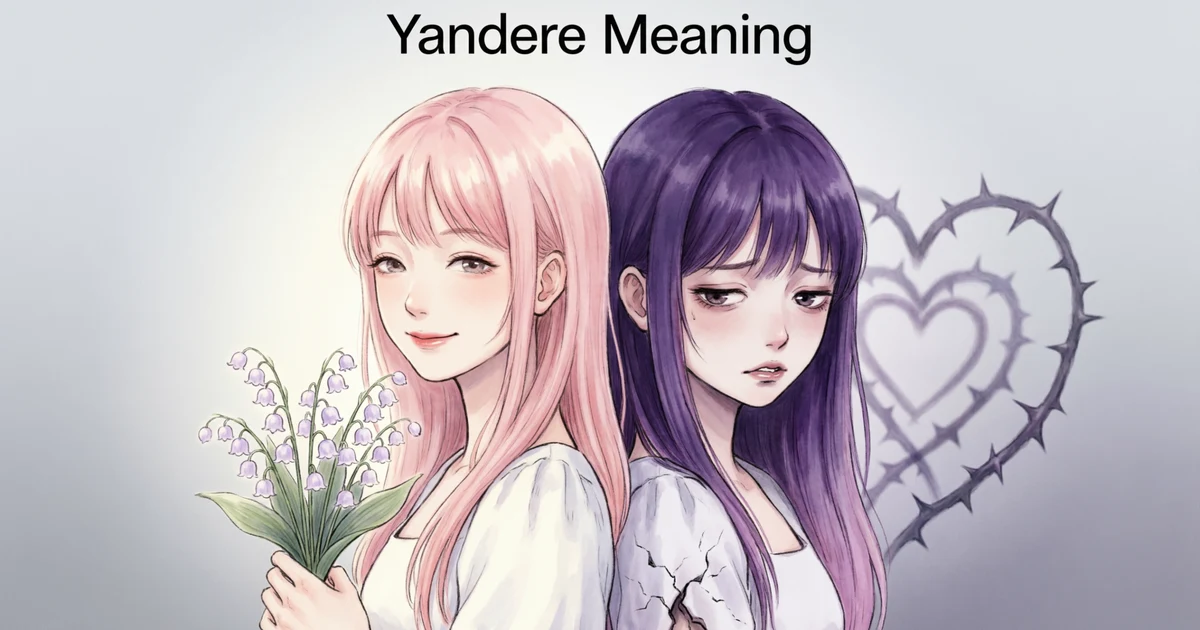
Yandere is a Japanese character archetype most commonly found in anime, manga, games, and online fandoms. A yandere character is intensely affectionate toward someone but becomes dangerously obsessive, possessive, jealous, controlling, or sometimes violent because of that love.
The word combines ideas associated with being emotionally or mentally unwell and being deeply lovestruck. In simple terms, a yandere character represents love taken to an unhealthy and extreme level. The term mainly describes fictional characters, not a medical condition or professional psychological diagnosis.
Introduction
If you have spent time watching anime, reading manga, playing Japanese inspired games, or browsing fandom communities, you may have seen someone describe a character as yandere. The word often appears alongside terms such as tsundere, kuudere, and dandere, but it describes a very different personality pattern.
At its core, yandere refers to a fictional character whose intense affection turns into unhealthy obsession. The character may begin as kind, caring, loyal, or romantic. As the story develops, however, jealousy and possessiveness can reveal a darker side. Depending on the story, this behavior can range from excessive monitoring and manipulation to stalking or extreme violence.
The term has also spread beyond anime communities. People sometimes use yandere casually in memes, social media posts, gaming communities, and conversations about fictional relationships. Understanding the original meaning helps prevent confusion, especially because calling a real person yandere can make serious controlling or abusive behavior sound cute or romantic.
This guide explains the yandere meaning, where the word comes from, how the archetype works, how it compares with other dere types, and how people use the term online.
What Does Yandere Mean?
A yandere is a fictional character who experiences romantic affection so intensely that it develops into obsession, possessiveness, jealousy, or destructive behavior.
The character often has two noticeable sides.
One side may appear sweet, affectionate, gentle, protective, and devoted.
The other side appears when something threatens the relationship. A romantic rival, rejection, separation, or even ordinary interaction with another person may trigger extreme jealousy or controlling behavior.
Not every yandere character behaves exactly the same way. Some characters are openly obsessive from the beginning. Others appear completely normal until their fear of losing a romantic interest becomes stronger.
Violence is strongly associated with the archetype, especially in horror and psychological anime, but a character does not necessarily need to commit murder to fit the broader concept. Obsession, possessiveness, manipulation, stalking, isolation, and extreme emotional dependence may also form part of the characterization.
The key idea is that affection has crossed the line into unhealthy fixation.
Where Does the Word Yandere Come From?
Yandere comes from Japanese internet and popular culture terminology.
The word combines yanderu, associated with being sick or unwell, with deredere, which describes being deeply affectionate, lovestruck, or emotionally attached to someone.
Together, these ideas create the basic concept of someone whose romantic affection has become emotionally unhealthy or unstable.
Yandere also belongs to a larger group of character labels commonly called dere types. The word dere is connected with affectionate or lovestruck behavior.
Different prefixes describe how a character behaves around the person they like.
For example, a tsundere combines affection with a cold, irritated, or hostile exterior. A dandere tends to be quiet or shy. A kuudere usually appears calm and emotionally reserved.
Yandere stands apart because the defining conflict involves affection becoming obsessive or destructive.
Yandere Characters and the Obsessive Love Archetype
The most recognizable feature of a yandere character is obsessive love.
Normal romantic affection allows both people to have independence, friendships, privacy, and personal boundaries. Fictional yandere behavior often rejects those boundaries.
A yandere character may believe that protecting the relationship justifies extreme actions.
Common fictional characteristics include excessive jealousy, constant monitoring, fear of abandonment, hostility toward romantic rivals, manipulation, emotional dependence, possessiveness, and attempts to isolate a love interest from other people.
Some stories exaggerate these characteristics for dark comedy. Others use them for horror, psychological drama, romance, suspense, or tragedy.
This variation explains why two characters described as yandere may look very different on screen.
What Is a Yandere Girl?
The phrase yandere girl usually refers to a female character who becomes intensely obsessed with someone she loves.
This version of the archetype became especially recognizable in anime and manga fandoms. A yandere girl may initially seem friendly, caring, innocent, supportive, or extremely loyal.
Her behavior changes when she feels that someone threatens her relationship.
For example, she might become suspicious of another girl speaking to her crush. In a darker story, that jealousy could develop into stalking, threats, manipulation, or violence.
However, yandere is not exclusively a female character type.
Male yandere characters also appear in anime, manga, visual novels, games, and other fiction. The underlying concept depends on obsessive romantic behavior rather than gender.
What Does Yandere Mean in Anime?
In anime, yandere describes a recognizable romantic character archetype rather than one specific personality.
Imagine a character who appears extremely devoted to another person. She remembers everything about him, helps him constantly, and wants to spend every possible moment with him.
At first, her behavior might look like ordinary affection.
Then another character shows romantic interest in him.
Instead of simply feeling jealous, the yandere character becomes consumed by the possibility of losing him. She begins monitoring conversations, interfering with friendships, threatening rivals, or trying to control who he sees.
In an extreme psychological or horror series, that obsession may become violent.
The contrast between tenderness and danger is one reason the archetype became memorable within anime culture.
Common Signs of a Yandere Character
Writers portray the archetype in many different ways, but several traits appear frequently.
Extreme romantic fixation
The character may organize much of their life around one person. Their feelings go beyond an ordinary crush or strong relationship.
Intense jealousy
Small interactions can feel like serious threats. A conversation, friendship, or message from another person may trigger an exaggerated reaction.
Possessiveness
The character may think of their romantic interest as someone who belongs exclusively to them.
Fear of losing the person
Rejection, abandonment, or competition often motivates the character’s most extreme actions.
Controlling behavior
A yandere may attempt to decide who the love interest talks to, where they go, or how they spend their time.
Different public and private behavior
Some characters appear polite and harmless around most people while secretly acting very differently toward rivals.
Willingness to cross boundaries
The character may invade privacy, manipulate situations, stalk someone, make threats, or commit other harmful acts.
Exactly which traits appear depends on the genre and story.
Yandere vs Tsundere
Yandere and tsundere are sometimes confused because both are popular anime character labels involving romance.
Their defining traits are very different.
A tsundere character often hides affection behind irritation, embarrassment, coldness, or hostility. The tension usually comes from difficulty admitting romantic feelings.
A yandere character usually has no problem feeling or expressing intense affection. The problem is that the affection becomes obsessive, possessive, or dangerous.
Think of the distinction this way.
A tsundere might say they do not care about someone even though they secretly do.
A yandere might openly care about someone so much that they cannot tolerate anyone else getting close to that person.
The emotional conflict is different even though both archetypes revolve around romance.
Yandere vs Dandere and Kuudere
Other dere terms can create similar confusion for new anime fans.
Dandere
A dandere character tends to be quiet, shy, or socially withdrawn. They may become much more affectionate when they feel comfortable around someone.
Their defining feature is shyness, not obsession.
Kuudere
A kuudere usually appears calm, composed, emotionally distant, or difficult to read. Their affectionate side becomes visible gradually.
Their defining feature is emotional restraint.
Yandere
A yandere centers on intense affection combined with unhealthy obsession, possessiveness, or instability.
A quiet character is therefore not automatically dandere, just as a jealous character is not automatically yandere. These labels describe broader patterns rather than individual moments.
Yandere Examples in Everyday Fictional Situations
Understanding the term becomes easier through simple fictional examples.
Example 1: Excessive jealousy
A character sees her crush talking to a classmate.
Normal jealousy might make someone uncomfortable or insecure.
A yandere response might involve secretly following the classmate, interfering with their friendship, or demanding that the crush stop speaking to them.
Example 2: Constant monitoring
A character wants to know where their romantic interest is at all times.
They repeatedly check messages, follow the person, or secretly collect information about their activities.
The behavior is presented as obsessive rather than simply caring.
Example 3: Removing romantic competition
A rival shows interest in the same person.
Instead of accepting the competition, the yandere character attempts to frighten, manipulate, blackmail, or otherwise remove the rival from the situation.
Stories with darker themes may take this much further.
Example 4: Fear of abandonment
The romantic interest attempts to end the relationship.
The yandere character cannot accept the decision and desperately tries to prevent the person from leaving.
Again, the defining feature is not ordinary heartbreak. It is the extreme and unhealthy reaction to losing the relationship.
How Yandere Is Used on Social Media
Yandere has moved beyond traditional anime discussions.
You may encounter phrases such as yandere character, yandere girl, yandere boyfriend, yandere girlfriend, yandere personality, or yandere vibes on social platforms.
Sometimes people use the word seriously when discussing fictional character development.
Other times, they use it jokingly.
Someone might describe a fictional character as yandere because she becomes unusually jealous whenever another character approaches her crush.
Memes may exaggerate ordinary jealousy and label it yandere behavior even when the character would not fit the traditional archetype.
Context therefore matters.
In anime discussion, the term usually refers to a recognizable character trope. In memes and casual internet slang, people may use it much more loosely.
Is Yandere a Real Personality Type?
No. Yandere is primarily a fictional character archetype and popular culture term.
It is not an official personality category, psychological diagnosis, or medical condition.
This distinction matters because fictional stories intentionally exaggerate personality traits for entertainment. A dramatic anime character may behave in ways designed to create horror, suspense, comedy, or emotional tension.
Real people are far more complicated than fictional character labels.
Calling someone yandere because they become jealous occasionally can therefore be misleading.
More importantly, real behaviors such as stalking, threats, coercion, extreme control, and violence should not be dismissed as cute yandere behavior. In real relationships, those behaviors can indicate serious boundary and safety problems regardless of what fictional trope they resemble.
Can a Guy Be Yandere?
Yes. A yandere character can be male.
The archetype became strongly associated with female anime characters, but gender is not part of the essential definition.
A male character who becomes dangerously possessive or obsessive toward a romantic interest can fit the same archetype.
Male yandere characters appear particularly often in romance games, visual novels, manga, anime, fan fiction, and online storytelling communities.
The important characteristic is obsessive affection, not whether the character is male or female.
Does Yandere Always Mean Violent?
Not necessarily, although violence is one of the most recognizable versions of the trope.
A character may show yandere traits through manipulation, stalking, possessiveness, emotional control, surveillance, isolation, or extreme jealousy without physically attacking anyone.
At the darker end of the archetype, fictional characters may threaten or seriously harm romantic rivals.
Because anime and manga cover many genres, the intensity varies considerably.
A comedy may exaggerate jealous behavior for humor, while a psychological thriller may portray the same basic archetype as frightening and dangerous.
This is why context matters when someone describes a fictional character as yandere.
Why Are Yandere Characters Popular?
Yandere characters create immediate dramatic tension.
Romantic devotion usually feels positive in fiction. The yandere archetype turns that familiar idea into something unpredictable.
A viewer may initially interpret a character’s loyalty as sweet before gradually realizing that the devotion has become unhealthy.
That contrast can work particularly well in psychological stories because readers do not always know how far the character will go.
The archetype can also explore themes such as jealousy, obsession, fear of abandonment, control, trust, and the difference between genuine love and possession.
Some fans simply enjoy the dramatic intensity or unpredictability of these characters.
Enjoying the fictional trope does not mean someone approves of comparable behavior in real relationships.
Common Mistakes About the Meaning of Yandere
Several misunderstandings appear frequently when people first encounter the term.
Assuming yandere simply means jealous
Jealousy alone does not usually make a character yandere.
The archetype involves a much stronger pattern of romantic obsession, possessiveness, instability, or destructive behavior.
Assuming every yandere character must kill someone
Violent characters are common examples, but murder is not a strict requirement.
The broader concept centers on unhealthy romantic fixation.
Assuming yandere only describes women
Female characters are strongly associated with the trope, but male characters can also be yandere.
Treating yandere as a medical diagnosis
It is a fictional and fandom term, not a recognized psychological diagnosis.
Romanticizing harmful real life behavior
Fiction can make obsessive devotion entertaining or dramatic.
In real life, stalking, threats, isolation, coercion, and controlling behavior should be treated seriously rather than interpreted as evidence that someone simply loves another person deeply.
Related Anime Terms to Know
Yandere makes more sense when viewed as part of the larger dere vocabulary used by anime and manga fans.
Tsundere describes someone who often acts cold, irritated, or hostile while hiding genuine affection.
Dandere generally refers to someone quiet or shy who becomes more expressive around a trusted person.
Kuudere describes a calm, emotionally controlled character whose affectionate side is less obvious.
Deredere usually describes an openly cheerful and affectionate character.
These terms are informal character archetypes rather than scientific personality categories. A fictional character can also show traits associated with more than one archetype.
Conclusion
Yandere describes a fictional character whose romantic affection becomes intensely obsessive, possessive, controlling, or potentially destructive. The term developed within Japanese popular culture and became especially familiar through anime, manga, games, and internet fandoms.
The easiest way to remember the yandere meaning is to think of extreme love turning into unhealthy obsession.
The word works well when discussing fictional character archetypes, but it should not be treated as a psychological diagnosis. In real relationships, behaviors such as stalking, threats, violence, or extreme control are serious issues rather than romantic personality traits.
FAQs
What does yandere mean in simple words?
Yandere describes a fictional character who loves someone so intensely that their affection becomes obsessive, possessive, controlling, or potentially dangerous.
What does yandere mean in anime?
In anime, yandere is a character archetype involving extreme romantic devotion combined with unhealthy jealousy or obsession. Some characters become manipulative or violent when they fear losing their love interest.
Is yandere a Japanese word?
Yes. Yandere comes from Japanese popular culture terminology and combines language associated with being unwell and being deeply lovestruck or affectionate.
What is a yandere girl?
A yandere girl is a female fictional character whose strong romantic affection develops into unhealthy obsession or possessiveness. Depending on the story, she may become controlling, manipulative, threatening, or violent.
Can a boy be yandere?
Yes. Male characters can also fit the yandere archetype. The definition depends on obsessive romantic behavior rather than gender.
Is yandere the same as tsundere?
No. A tsundere usually hides affection behind coldness, anger, or embarrassment. A yandere expresses intense affection that becomes obsessive, possessive, or destructive.
Does yandere mean impulsive?
Using impulsive as the definition is overly simplistic. Yandere specifically refers to a fictional romantic archetype involving unhealthy obsession or emotional instability. It is not a medical term or mental health diagnosis.
Are yandere relationships healthy?
The fictional archetype commonly involves behaviors that would be unhealthy in a real relationship, including extreme jealousy, control, stalking, manipulation, or threats. Fiction may exaggerate these behaviors for drama, but they should not be treated as signs of healthy romantic devotion.