Quick Answer
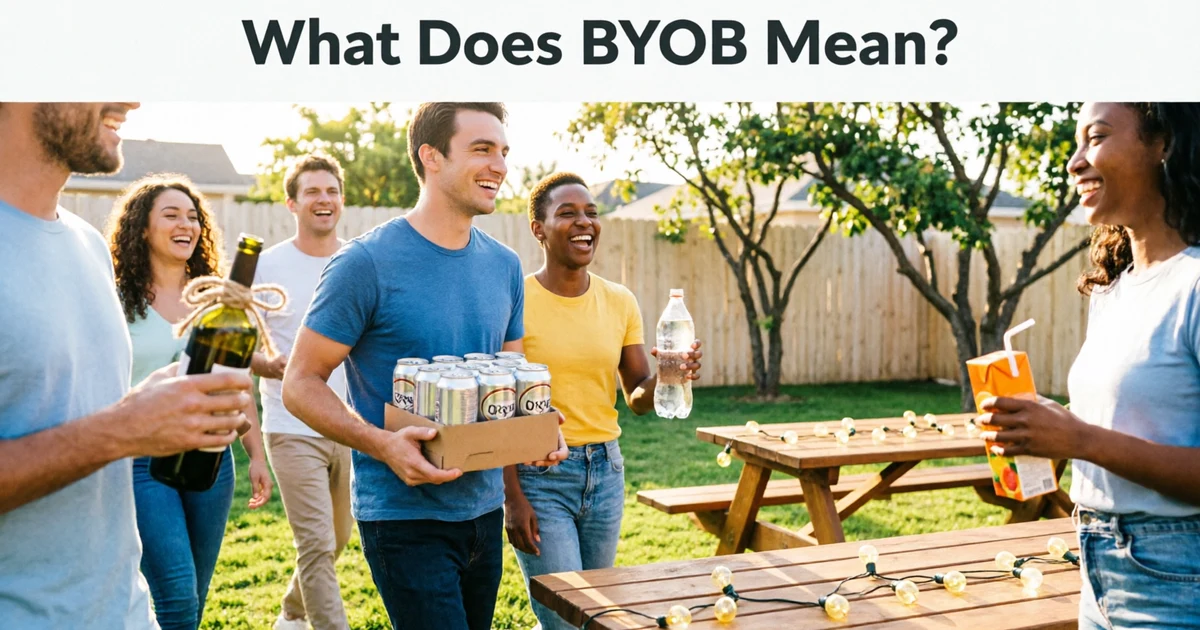
BYOB stands for Bring Your Own Bottle or Bring Your Own Booze. It is commonly used in invitations, restaurants, parties, and social events to let guests know they should bring their own alcoholic or nonalcoholic drinks. In some situations, BYOB can also mean Bring Your Own Beverage, making it suitable for family-friendly gatherings where alcohol is not involved. The intended meaning depends on the event and its context.
Introduction
If you’ve received an invitation that says BYOB, you might wonder whether you need to bring drinks, what type of drinks are expected, or if the event provides anything at all. The abbreviation appears frequently on party invitations, restaurant signs, wedding celebrations, barbecues, and casual get-togethers, but many people are unfamiliar with what it actually means.
Although BYOB is simple once you know it, the meaning can vary slightly depending on the occasion. Some hosts expect guests to bring alcoholic beverages, while others simply want everyone to bring their favorite soft drink, juice, or bottled water. Understanding the context helps avoid awkward situations and ensures you arrive prepared.
This guide explains the meaning of BYOB, where it is commonly used, examples of how people use it, proper etiquette, related terms, and common misconceptions.
| Meaning | Where It Is Used | Simple Explanation | Example |
|---|---|---|---|
| Bring Your Own Bottle | Parties | Guests bring their own drinks | BYOB birthday party |
| Bring Your Own Booze | Restaurants and events | Bring alcoholic beverages | BYOB restaurant |
| Bring Your Own Beverage | Family gatherings | Bring any preferred drink | Community picnic |
What Does BYOB Mean?
BYOB is an abbreviation that tells guests they should bring their own drinks instead of expecting the host or venue to provide them.
In many countries, BYOB traditionally means Bring Your Own Bottle or Bring Your Own Booze, especially when alcohol is involved. However, many people now use it more broadly to mean Bring Your Own Beverage, making the phrase appropriate for all ages and different types of events.
The exact meaning usually becomes clear from the invitation or the type of gathering.
Where Is BYOB Commonly Used?
BYOB appears in many social situations where providing drinks for every guest may not be practical.
Some common examples include:
Private Parties
Birthday parties, housewarming celebrations, and backyard gatherings often use BYOB so everyone can bring the drinks they prefer.
Restaurants
Some restaurants allow customers to bring their own wine or other alcoholic beverages instead of purchasing drinks from the establishment. Local laws and restaurant policies determine whether this is allowed.
Barbecues and Picnics
Outdoor events frequently encourage guests to bring their own beverages to ensure there are enough drinks for everyone.
Community Events
Neighborhood gatherings, club meetings, and casual social events may use BYOB to reduce costs while giving guests more choices.
BYOB Etiquette
Knowing proper BYOB etiquette helps you be a thoughtful guest.
Here are a few simple guidelines:
- Bring enough drinks for yourself and, if possible, a little extra to share.
- Check whether the event allows alcoholic beverages.
- Respect the venue’s rules and local regulations.
- If you’re unsure what to bring, ask the host in advance.
- Avoid assuming the host will provide ice, cups, or mixers unless mentioned.
Following these basic practices shows consideration for both the host and other guests.
BYOB vs Similar Terms
Several abbreviations have meanings similar to BYOB but are used in different situations.
| Term | Meaning | Typical Use |
|---|---|---|
| BYOB | Bring Your Own Bottle, Booze, or Beverage | Parties and restaurants |
| BYOF | Bring Your Own Food | Potlucks and picnics |
| BYOD | Bring Your Own Device | Schools and workplaces |
| Potluck | Everyone brings a dish | Community meals |
Although these expressions all begin with “Bring Your Own,” they refer to different items.
Practical Examples
Understanding BYOB is easier with real-life examples.
- The invitation says BYOB, so I’ll bring my favorite soda.
- Our neighborhood barbecue is BYOB this weekend.
- The restaurant is BYOB, so guests may bring a bottle of wine if local laws allow.
- We packed juice and bottled water because the family picnic is BYOB.
Common Mistakes
People sometimes misunderstand what BYOB means.
Some common mistakes include:
- Assuming BYOB always refers to alcohol.
- Arriving without any drinks after receiving a BYOB invitation.
- Bringing drinks that are not permitted by the venue.
- Expecting the host to provide beverages despite the BYOB notice.
- Forgetting to check whether glasses, ice, or mixers will be available.
Paying attention to the invitation and asking questions when necessary helps avoid confusion.
Related Terms
Depending on the event, you may also encounter similar expressions.
- BYOF for bringing your own food.
- BYOD for bringing your own electronic device.
- Potluck for gatherings where everyone contributes food.
- Catered event where food and drinks are supplied by the organizer.
These abbreviations are not interchangeable, so it is important to read the invitation carefully.
Conclusion
BYOB is a simple abbreviation that lets guests know they should bring their own drinks to an event. While it traditionally means Bring Your Own Bottle or Bring Your Own Booze, many people also use it to mean Bring Your Own Beverage for family-friendly occasions. Understanding the context, following basic etiquette, and checking the invitation carefully will help you arrive prepared and enjoy the event without confusion.
Frequently Asked Questions
What does BYOB stand for?
BYOB usually stands for Bring Your Own Bottle, Bring Your Own Booze, or Bring Your Own Beverage, depending on the event.
Does BYOB always mean alcohol?
No. While it often refers to alcoholic drinks, many hosts use BYOB to mean guests should bring any beverage they would like to drink.
What should I bring to a BYOB party?
Bring enough drinks for yourself and consider bringing extra if you would like to share with others. If you’re unsure what is appropriate, ask the host.
Can restaurants be BYOB?
Yes. Some restaurants allow customers to bring their own beverages, particularly wine. Whether this is permitted depends on local laws and the restaurant’s policy.
Is BYOB the same as BYOF?
No. BYOB refers to bringing your own drinks, while BYOF means bringing your own food.
What if I don’t drink alcohol?
You can usually bring water, juice, soda, sparkling water, or another nonalcoholic beverage unless the invitation specifies otherwise.