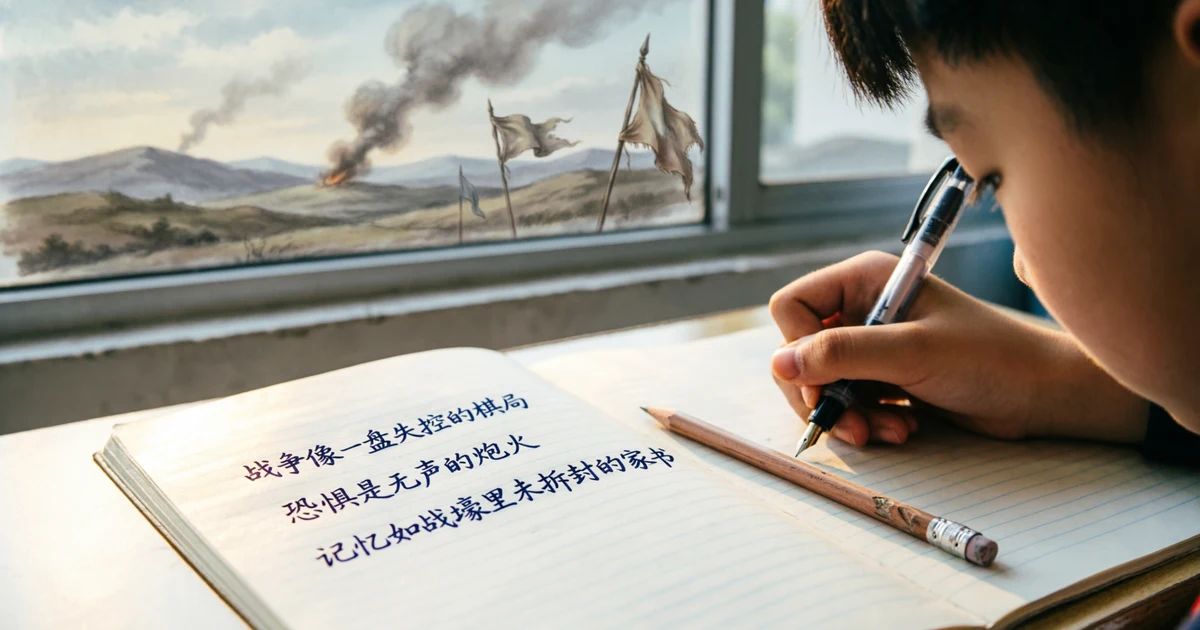
War creates strong images in the mind. It can show fear, courage, pain, chaos, anger, loss, and survival. Writers often use similes to make those feelings easier to understand.
A war simile compares something related to war with another thing using like or as. It helps a reader picture a battle scene, a conflict, a loud moment, or an emotional struggle more clearly.
In this article, you will learn what a war simile means, how writers use it, and how to write your own. You will also find many clear examples for stories, poems, essays, and school writing.
What a War Simile Means in Simple Words
A war simile compares war, battle, conflict, or fighting to something else. It always uses the word like or as.
Simple examples include:
- The battlefield sounded like thunder.
- The soldiers moved as quickly as wolves.
- His anger spread like fire across a dry field.
- The city shook like a drum under heavy strikes.
Each example helps the reader imagine a scene or feeling. Instead of saying, “The battle sounded loud,” you can say, “The battle sounded like thunder.” That gives the sentence more power.
A war simile can describe real battle, but it can also describe smaller conflicts. Writers may use war similes for arguments, sports, fear, pressure, competition, or emotional struggles.
For example:
- Their argument felt like a war in a quiet room.
- The debate turned as fierce as a battlefield.
- Her mind fought like an army under attack.
These examples do not describe real war. They use war as an image to show tension and struggle.
Why Writers Use Similes to Describe War
Writers use war similes because war carries strong emotions. It can show danger, fear, pressure, bravery, confusion, and loss in a clear way.
A plain sentence tells the reader what happens.
Example:
The soldiers ran across the field.
A stronger sentence shows the reader how it felt.
Example:
The soldiers ran across the field like shadows escaping the fire.
The second sentence gives movement, danger, and mood. It helps the reader see and feel the scene.
Writers use war similes to:
- Make battle scenes more vivid
- Show fear without long explanation
- Describe loud sounds and sudden action
- Create emotional depth
- Help readers understand conflict
- Make essays and stories more expressive
War similes can also make nonviolent writing stronger. A student might write, “The exam week felt like a war against time.” That sentence shows stress in a simple way.
A good war simile does not need graphic detail. It only needs a clear comparison that fits the mood.
Best War Simile Examples With Clear Meanings
Here are strong war simile examples with simple meanings.
- The battle roared like a storm over the hills.
Meaning: The battle sounded loud, wild, and powerful.
- The soldiers stood as firm as stone walls.
Meaning: The soldiers showed courage and refused to move back.
- Fear moved through the camp like cold wind.
Its Mean: Everyone felt fear quietly and deeply.
- The cannons sounded like angry giants.
Meaning: The weapons made huge and frightening sounds.
- The sky flashed like broken glass.
Meaning: Explosions or lights made the sky look sharp and dangerous.
- The army advanced like a dark wave.
Its Mean: The soldiers moved forward in a large, unstoppable group.
- His courage burned like a small flame in the dark.
Meaning: His bravery stayed alive even during fear.
- The battlefield looked as empty as a forgotten graveyard.
Meaning: The scene felt silent, lonely, and sad after the fighting.
- The commander’s voice cut through the noise like a sharp bell.
Its Mean: The commander spoke clearly above all the chaos.
- The enemy line broke like thin ice.
Meaning: The enemy lost strength quickly.
These examples work because each one creates a clear picture. The comparison matches the feeling of war without confusing the reader.
Easy War Similes for Students and Beginners
Students often need simple war similes for assignments, poems, and creative writing. A good beginner simile should stay clear and easy to understand.
Here are easy examples:
- The battle was as loud as thunder.
- The soldiers ran like the wind.
- The camp was as quiet as night.
- The army moved like a giant wave.
- The fear spread like smoke.
- The shields shone like mirrors.
- The general shouted like a lion.
- The ground shook like a drum.
- The warriors fought like wolves.
- The night felt as tense as a held breath.
These similes help students describe sound, movement, mood, and emotion.
Here is a simple paragraph using war similes:
The battlefield was as loud as thunder. Soldiers ran like the wind across the open ground. Smoke spread like a gray blanket over the field, and the ground shook like a drum beneath their feet.
This paragraph uses simple comparisons, but it still creates a strong image.
Students should choose similes that fit the scene. A loud battle needs sound similes. A sad scene after battle needs quiet and emotional similes.
War Simile Examples Using Like
Similes with like often feel direct and natural. They work well in stories, poems, and descriptive paragraphs.
Examples using like:
- The arrows flew like angry birds.
- The soldiers marched like one moving wall.
- Smoke curled over the field like dark fingers.
- The battle cries rose like wolves howling at night.
- The city trembled like a frightened child.
- The flag waved like a stubborn flame.
- Fear followed him like a shadow.
- The wounded land looked like a broken painting.
- The army rushed forward like a river after rain.
- The silence after battle fell like heavy snow.
Each example creates a different effect.
“The arrows flew like angry birds” shows speed and danger.
“The silence after battle fell like heavy snow” shows heaviness and sadness.
“The flag waved like a stubborn flame” shows hope and resistance.
When you use like, keep the comparison fresh but clear. A strange comparison can confuse the reader. A clear comparison makes the sentence stronger.
War Simile Examples Using As
Similes with as often sound neat and balanced. They work well when you want a direct description.
Examples using as:
- The battlefield was as loud as thunder.
- The soldier stood as brave as a lion.
- The camp grew as silent as a grave.
- The commander stayed as calm as a still lake.
- The smoke hung as thick as a winter fog.
- The night felt as heavy as iron.
- The enemy charge came as fast as lightning.
- The shield felt as cold as stone.
- The army looked as endless as the sea.
- The moment before battle felt as sharp as a blade.
These similes help describe qualities such as sound, speed, courage, silence, and weight.
A sentence with as can sound strong and simple:
The soldiers stood as firm as oak trees while fear moved around them.
This sentence shows courage through a natural image. The comparison feels steady because oak trees suggest strength.
War Similes That Describe Battle Scenes
Battle scenes need movement, sound, pressure, and detail. A strong simile can help the reader enter the scene without long explanation.
Examples:
- The army charged like a wave crashing against rocks.
- Swords flashed like sunlight on broken water.
- Dust rose like a curtain over the battlefield.
- The horses thundered forward like a storm on legs.
- The soldiers scattered like leaves in a hard wind.
- The shield wall held as firm as a cliff.
- The battlefield shook like the earth had a heartbeat.
- The clash of weapons rang like bells struck in anger.
- The smoke rolled across the ground like a dark sea.
- The enemy rushed in like wolves from the tree line.
A battle scene should not only show fighting. It should show what the moment feels like. The reader needs sound, sight, speed, and emotion.
Example paragraph:
Dust rose like a curtain as the soldiers charged across the field. Their shields held as firm as a cliff, but the enemy rushed in like wolves from the tree line. Every clash of steel rang like bells struck in anger.
This paragraph gives the reader a clear scene with sound and movement.
War Similes That Show Fear and Danger
Fear plays a major role in war writing. A good simile can show fear in the body, the mind, or the setting.
Examples:
- Fear crawled through the camp like a snake.
- His heart beat like a drum before battle.
- The dark field felt as dangerous as a trap.
- Every sound struck him like a warning bell.
- The night pressed against them like a closed fist.
- Panic spread like sparks in dry grass.
- The silence felt as sharp as a knife.
- His hands shook like leaves in winter wind.
- The enemy flags rose like storm clouds.
- Danger waited like a wolf beyond the firelight.
These similes work because they connect fear with things readers understand. Snakes, storms, traps, knives, and wolves all suggest danger.
A strong fear simile should not only say that someone feels scared. It should show how fear moves, sounds, or affects the body.
Weak example:
He was very scared.
Stronger example:
Fear crawled up his back like a cold spider.
The stronger example gives a physical feeling. Readers can imagine it.
War Similes That Describe Soldiers
Soldiers in writing may show courage, fear, exhaustion, discipline, or sacrifice. War similes can help describe their actions and emotions.
Examples:
- The soldiers marched like a single machine.
- They stood as still as statues before the charge.
- The young soldier shook like a branch in a storm.
- The captain moved like a hawk watching the field.
- The tired troops dragged their feet like stones.
- The guard listened like a fox in the dark.
- The army stood as firm as a wall.
- The wounded soldier smiled like a candle in the wind.
- The scouts slipped through the trees like shadows.
- The veterans watched the field like men who had seen too much.
These similes can show personality.
1-A soldier who moves like a hawk seems sharp and alert.
2-A soldier who shakes like a branch seems afraid and vulnerable.
3-A soldier who stands as firm as a wall seems brave and steady.
When you write about soldiers, think about their role in the scene. Do they show courage, fear, leadership, exhaustion, or grief? Then choose a comparison that matches that emotion.
War Similes About Noise, Smoke, and Chaos
War often brings noise and confusion. Similes help writers describe chaos without repeating words like loud, smoky, or messy.
Examples:
- The explosions sounded like mountains cracking.
- Smoke spread like ink through water.
- The shouting rose like a flock of startled birds.
- Dust filled the air like brown fog.
- The ground shook like a giant drum.
- The alarms screamed like wounded animals.
- The noise crashed over them like ocean waves.
- The battlefield spun around him like a broken wheel.
- Sparks flew like fireflies in a storm.
- The smoke covered the sun like a dirty curtain.
These similes help readers sense the scene.
Noise can crash, scream, roar, or ring.
Smoke can spread, crawl, cover, or hang.
Chaos can spin, rush, scatter, or swallow.
A strong description often combines more than one sense.
Example:
Smoke spread like ink through water, and the noise crashed over the soldiers like ocean waves.
This sentence gives both sight and sound. It helps the reader feel trapped inside the moment.
War Similes That Show Pain and Loss
War writing often needs a serious tone. Similes about pain and loss should feel respectful and thoughtful. Avoid making suffering sound exciting.
Examples:
- Grief settled over the town like a heavy blanket.
- The empty street felt as lonely as a forgotten grave.
- His loss stayed with him like a shadow.
- The broken homes stood like silent witnesses.
- Her tears fell like rain after a long drought.
- The field lay as still as a sleeping giant.
- The names of the lost echoed like bells in his memory.
- The ruined village looked like a heart torn open.
- The silence after the battle felt as deep as the sea.
- Sorrow moved through the families like winter through bare trees.
These similes focus on emotion, memory, and emptiness. They help the reader understand the cost of conflict.
A good pain or loss simile should not sound dramatic only for effect. It should give the feeling more honesty.
Weak example:
Everyone was sad.
Stronger example:
Grief settled over the town like a heavy blanket.
The stronger sentence shows sadness as something that covers everyone.
War Similes for Courage and Bravery
War similes can show courage without making the writing sound too simple. Bravery does not always mean fear disappears. Sometimes courage means someone acts even while fear remains.
Examples:
- His courage burned like a lantern in the dark.
- She stood as strong as an oak in a storm.
- The soldiers held their ground like cliffs against the sea.
- Hope rose in them like dawn after a long night.
- The young fighter faced danger like a flame facing wind.
- The captain’s voice stayed as steady as a heartbeat.
- Their bravery spread like light through a dark room.
- He walked forward like a man carrying fire.
- The small group stood like a wall before the storm.
- Her resolve shone like steel in sunlight.
These similes show strength, hope, and discipline.
For courage, use images that suggest endurance and light:
- Fire
- Lanterns
- Oak trees
- Cliffs
- Steel
- Dawn
- Walls
These images help readers feel that courage can survive pressure.
War Similes for Anger and Conflict
War similes can also describe arguments, rivalries, and emotional conflict. Writers often use war imagery when people clash with words or feelings.
Examples:
- Their argument exploded like a battlefield at dawn.
- His anger spread like fire through dry grass.
- Her words hit like arrows.
- The room felt as tense as a camp before battle.
- The two brothers faced each other like rival armies.
- The debate turned as fierce as a siege.
- His silence stood between them like a wall.
- Their friendship cracked like a shield under pressure.
- The office meeting felt like a war of quiet smiles.
- Every insult landed like a stone from a sling.
These similes work well for stories and essays because they show conflict without needing real fighting.
For example:
The family dinner turned into a battlefield of sharp words and cold stares.
This sentence uses war imagery to describe emotional tension. It helps readers understand the mood quickly.
Use war similes carefully in everyday conflict. A small disagreement should not sound bigger than it really feels unless the character sees it that way.
War Similes for Peace After Fighting
War writing does not always end with battle. Peace, relief, healing, and silence also need strong images.
Examples:
- Peace settled over the town like morning light.
- The battlefield grew quiet as a sleeping lake.
- The soldiers rested like birds after a storm.
- Hope returned like spring after a hard winter.
- The silence felt as gentle as falling snow.
- The village breathed again like a person waking from fear.
- The flags hung still like tired hands.
- The sun rose over the field like a promise.
- The quiet streets felt as soft as prayer.
- The families came together like broken threads tied again.
These similes help show recovery. They give the reader a sense of calm after fear and noise.
Peace similes often use soft images:
- Morning light
- Spring
- Snow
- Still water
- Birds
- Waking
- Prayer
These comparisons bring a gentle tone. They help balance heavy war scenes.
War Similes for Stories and Creative Writing
Stories need similes that fit character, setting, and mood. A war simile in a fantasy story may sound different from one in a realistic story. A child narrator may use simpler comparisons than an old soldier.
Examples for stories:
- The army moved like a dark river through the valley.
- The castle walls stood as proud as old kings.
- The battle cries rose like smoke into the red sky.
- The hero’s fear followed him like a second shadow.
- The enemy waited like wolves beyond the hills.
- The queen’s command struck the room like a sword on stone.
- The village after the attack looked like a song with no voice.
- The prince held his sword like a promise.
- The scouts vanished like mist between the trees.
- The final charge came like thunder down the mountain.
A story simile should do more than decorate a sentence. It should reveal mood or character.
Example:
The prince held his sword like a promise.
This sentence suggests duty, courage, and purpose. It tells the reader something about the character.
Before you add a simile, ask yourself:
- Does this comparison match the scene?
- Does it help the reader feel something?
- Does it sound natural for this character?
- Does it add new meaning?
If the answer feels yes, the simile likely works.
War Similes for Poems and Emotional Writing
Poems often use war similes to express inner struggle, grief, memory, or conflict. A poem does not need a full battle scene. One strong comparison can carry the emotion.
Examples:
- My thoughts fought like soldiers in a dark field.
- Her heart carried grief like a flag after battle.
- His memory returned like smoke from an old fire.
- The silence between us stood like a ruined wall.
- Hope trembled like a candle in a war room.
- My anger marched like drums inside my chest.
- Your goodbye struck like a cannon in the quiet.
- The past followed me like an army without rest.
- Our love broke like a treaty no one kept.
- Peace came slowly, like dawn through smoke.
These examples work because they connect war with personal feeling. The poem turns conflict into an image the reader can feel.
A poetic war simile should sound natural, not forced. Choose one clear image and let it breathe.
Simple poetic line:
My thoughts fought like soldiers in a dark field.
This line shows mental struggle without explaining too much.
War Similes for Essays and School Assignments
Students often need war similes for essays, paragraphs, and literature tasks. In school writing, clarity matters more than fancy language.
Use simple and accurate examples.
Examples for school writing:
- The battle sounded like thunder across the valley.
- The soldiers stood as brave as lions.
- The smoke spread like fog over the field.
- The army moved like a giant wave.
- The silence after the war felt as heavy as stone.
- The general’s voice rang like a bell.
- The battlefield looked like a broken world.
- Fear spread through the soldiers like cold wind.
- The enemy charge came as fast as lightning.
- Peace returned like sunlight after a storm.
Here is a school friendly paragraph:
The army moved like a giant wave across the field. Smoke spread like fog, and fear moved through the soldiers like cold wind. When the fighting ended, the silence felt as heavy as stone.
This paragraph uses clear similes. Each one supports the scene.
For essays, explain the effect of the simile.
Example:
The simile “fear moved through the soldiers like cold wind” shows that fear reached everyone in a quiet but powerful way.
This kind of explanation helps teachers see that you understand the comparison.
Powerful War Similes From Everyday Life
People often use war similes to describe daily struggles. These examples do not describe real war. They use war as a metaphorical image for stress, pressure, and conflict.
Examples:
- Monday morning hit me like the first shot in a battle.
- The exam week felt like a war against time.
- Their divorce turned the house into a battlefield.
- The business meeting felt like a silent war.
- His inbox looked like a battlefield after a storm.
- The football match felt as intense as a final stand.
- The kitchen during dinner rush looked like a war zone.
- My thoughts fought like rival armies.
- The election debate felt like a battle of words.
- The deadline chased us like an army at our backs.
Everyday war similes help writers show pressure quickly. They can sound dramatic, serious, or even humorous depending on the context.
Use them with care. Real war brings real suffering, so avoid using war language for tiny problems in a way that feels careless. A tough exam can feel like a battle, but a missing pencil does not need war imagery.
Common Mistakes When Writing War Similes
War similes can strengthen writing, but weak ones can make a sentence sound forced.
Common mistakes include:
- Using a comparison that feels too obvious
Example:
The battle was like a battle.
This does not help the reader. It repeats the same idea.
Better:
The battle roared like a storm trapped between the hills.
- Making the simile too long
Example:
The soldiers ran like a group of people who had seen danger coming from far away and wanted to escape before anything worse happened.
This sentence feels heavy.
Better:
The soldiers ran like deer fleeing a fire.
- Choosing a comparison that does not match the mood
A funny simile can ruin a serious scene.
Weak example:
The battlefield looked like a messy bedroom.
Better:
The battlefield looked like a broken world.
- Using too many similes in one paragraph
Too many comparisons can distract the reader.
Weak example:
The army moved like a wave, the smoke rose like soup, the arrows flew like birds, and the swords flashed like stars.
Better:
The army moved like a wave, and smoke rose behind it in dark folds.
- Making violence sound exciting without purpose
War writing needs care. Focus on emotion, cost, courage, fear, and human experience. Do not add harsh detail only for shock.
A good war simile should feel clear, fitting, and meaningful.
How to Write Your Own War Simile
You can write your own war simile by following a simple process.
Step 1: Choose what you want to describe.
Examples:
- Battle noise
- Fear
- Courage
- Smoke
- Soldiers
- Loss
- Peace
- Anger
Step 2: Choose the feeling you want.
Ask yourself:
- Does the scene feel loud?
- Does it feel tense?
- Does it feel sad?
- Does it feel brave?
- Does it feel chaotic?
- Does it feel quiet after danger?
Step 3: Choose a comparison.
Examples:
- Thunder for loud noise
- Fire for anger
- Stone for strength
- Smoke for confusion
- Winter for sadness
- Dawn for hope
Step 4: Use like or as.
Examples:
- The battle sounded like thunder.
- Fear moved like smoke through the camp.
- The soldiers stood as firm as stone.
- Hope returned like dawn after a long night.
Step 5: Check if the simile adds meaning.
A strong simile helps the reader see, hear, or feel the moment. If it does not add anything, remove it.
Final examples:
- The battlefield shook like a drum beneath their feet.
- His courage stood as firm as a wall.
- Smoke swallowed the road like a gray sea.
- The silence after battle felt as deep as the ocean.
- Peace returned like sunlight through broken clouds.
Conclusion
A war simile helps writers describe conflict, fear, courage, chaos, pain, and peace with clear images. It compares a war related idea to something familiar using like or as.
The best war similes do more than sound dramatic. They help the reader feel the scene. A strong simile can show a loud battle, a brave soldier, a tense argument, or a quiet moment after danger.
Use war similes with care. Choose comparisons that match the mood, respect the seriousness of conflict, and make your writing easier to picture. When you write with clear images and honest feeling, your similes will feel powerful and natural.
FAQs About War Similes
What is a war simile?
A war simile compares war, battle, or conflict to something else using like or as. Example: The battle sounded like thunder.
What is an example of a war simile?
One example is: The soldiers marched like a single moving wall. This shows discipline and unity.
Can a war simile describe an argument?
Yes. You can use a war simile to describe an argument. Example: Their argument felt like a battle of sharp words.
What is a good war simile for fear?
A good example is: Fear crawled through the camp like a snake. It shows quiet and dangerous fear.
What is a war simile using like?
Example: The army moved like a dark wave across the field. This uses like to compare the army to a wave.
What is a war simile using as?
Example: The battlefield was as loud as thunder. This uses as to describe the sound.
Why do writers use war similes?
Writers use war similes to make conflict, danger, courage, and emotion easier to imagine.
Can students use war similes in essays?
Yes. Students can use war similes in essays, stories, and poems when the comparison fits the topic and meaning.
What makes a war simile strong?
A strong war simile gives a clear image, matches the mood, and helps the reader understand the feeling.
How do I write my own war simile?
Choose what you want to describe, pick a matching image, then connect them with like or as. Example: Hope returned like dawn after a long night.