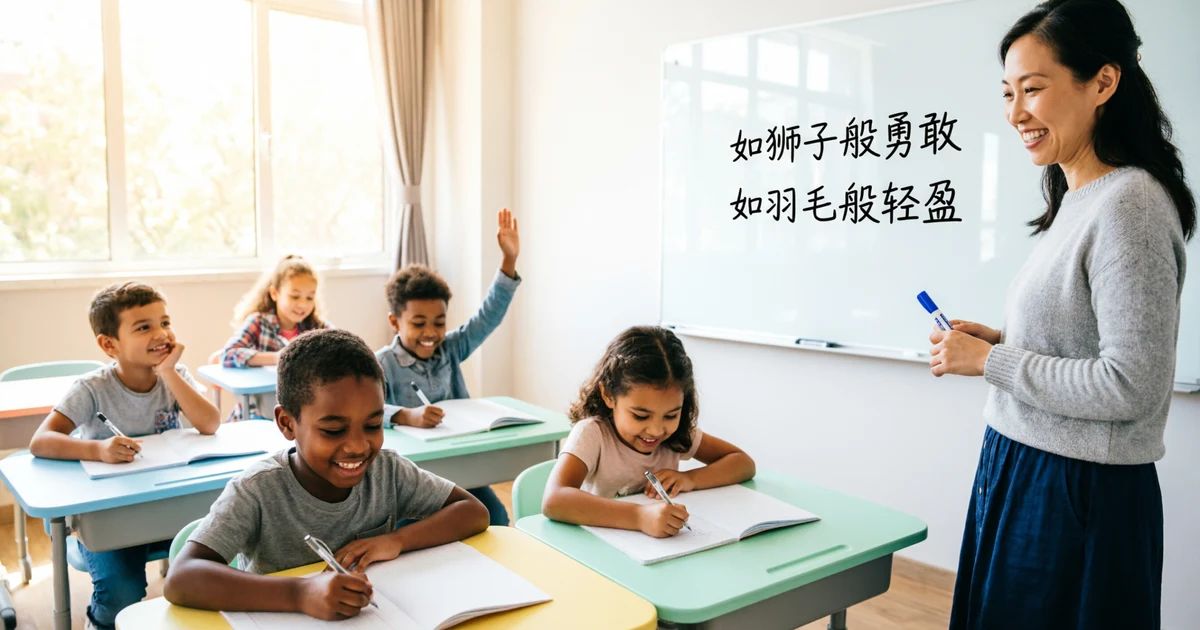
Similes help kids make writing bright, clear, and fun. A child can say the dog ran fast, but the sentence feels stronger when they write, The dog ran as fast as a rocket. That small comparison helps the reader see the action.
In this guide, kids will learn what a simile means, how to spot one, and how to write simple similes for school, stories, poems, and homework. Parents and teachers can also use these examples to explain similes in a clear way.
What a Simile Means for Kids
A simile compares two different things using like or as. Writers use similes to help readers picture something in their minds.
A simple way to explain it:
A simile says one thing feels, looks, sounds, or acts like another thing.
Examples:
as brave as a lion
as busy as a bee
as cold as ice
runs like the wind
shines like the sun
In the sentence, She was as brave as a lion, the girl does not become a lion. The sentence means she showed courage.
Kids often understand similes quickly because they already compare things in daily life. They may say a blanket feels like a cloud or a puppy runs like a tiny race car. Those natural comparisons can become strong similes.
How to Explain Similes to Children in Simple Words
Children learn similes best when adults use familiar things. Start with objects, animals, food, and feelings they already know.
You can say:
A simile helps us describe something by comparing it to something else.
Then give a quick example:
The pillow feels soft.
The pillow feels as soft as cotton.
The second sentence gives a clearer picture.
Try this simple teaching method:
Ask what they want to describe
Ask what it reminds them of
Add like or as
Turn it into a sentence
Example:
What do you want to describe? The kitten.
What does it remind you of? A ball of fluff.
Sentence: The kitten was as soft as a ball of fluff.
This method helps kids create their own similes instead of only memorizing examples.
Best Simile Examples for Kids
The best similes for kids feel simple, clear, and easy to imagine. They should use things children know from home, school, nature, animals, and play.
Strong examples include:
as light as a feather
as quick as a rabbit
as bright as the sun
as quiet as a mouse
as sweet as candy
as tall as a tree
as slow as a turtle
as shiny as a star
as gentle as a lamb
as loud as thunder
Sentence examples:
My backpack felt as heavy as a rock.
The baby smiled like sunshine.
The room looked as clean as a new notebook.
The boy jumped like a frog.
The stars sparkled like tiny diamonds.
These examples work well because each one creates a clear picture.
Easy Similes for Young Students
Young students need similes with simple words and clear meanings. They should not struggle with the comparison.
Easy similes include:
as red as an apple
as blue as the sky
as white as snow
as soft as a pillow
as hot as soup
as cold as ice
as small as an ant
as big as an elephant
as fast as a car
as happy as a child at play
Sentence examples:
My cheeks turned as red as an apple.
The snow felt as cold as ice.
The baby bird looked as small as an ant.
Her blanket felt as soft as a pillow.
The playground was as noisy as a party.
These similes suit early learners because they connect with colors, sizes, sounds, and feelings.
Funny Similes Kids Can Understand Quickly
Funny similes make kids laugh and help them enjoy writing. They work well in stories, classroom activities, and creative sentences.
Examples:
as wiggly as a worm
as silly as a dancing duck
as loud as a monkey with a drum
as messy as a puppy in mud
as sleepy as a bear after lunch
as confused as a cat in a bathtub
as excited as a dog with a new toy
as bouncy as a rubber ball
as sneaky as a cookie thief
as grumpy as a tired crab
Sentence examples:
My little brother danced like a chicken in socks.
The puppy looked as messy as a mop after rain.
Dad snored like a sleepy bear.
The class laughed like a group of happy parrots.
My hair stood up like a surprised hedgehog.
Funny similes should still make sense. A silly comparison works best when readers can picture it.
Animal Similes for Kids
Animal similes help children describe actions, feelings, and character traits. Kids know many animals, so these comparisons feel natural.
Examples:
as brave as a lion
as slow as a turtle
as busy as a bee
as quiet as a mouse
as playful as a puppy
as wise as an owl
as proud as a peacock
as gentle as a lamb
as fast as a cheetah
as stubborn as a mule
Sentence examples:
Lily stood as brave as a lion on the stage.
My grandfather speaks as wise as an owl.
The toddler crawled like a little turtle.
The puppy ran around the yard like a ball of energy.
My sister stayed as quiet as a mouse during the movie.
Animal similes give kids an easy way to describe people without using plain words.
Nature Similes for Kids
Nature gives children many beautiful simile ideas. They can compare people, places, colors, sounds, and movements to things they see outside.
Examples:
as bright as the sun
as calm as a lake
as fresh as morning air
as green as grass
as strong as a tree
as gentle as rain
as deep as the ocean
as loud as thunder
as soft as a cloud
as colorful as a rainbow
Sentence examples:
Her smile shone as bright as the sun.
The garden looked as colorful as a rainbow.
His voice sounded as calm as a lake.
The wind moved through the trees like a whisper.
The sky glowed like warm gold at sunset.
Nature similes work well in poems and descriptive writing because they add color and feeling.
Food Similes for Kids
Food similes feel fun because children can connect them with taste, smell, shape, and texture. These similes help describe people, moods, and objects.
Examples:
as sweet as honey
as sour as a lemon
as round as a cookie
as warm as soup
as soft as bread
as sticky as syrup
as smooth as butter
as cool as ice cream
as crunchy as chips
as bright as a cherry
Sentence examples:
Her voice sounded as sweet as honey.
The baby cheeks looked as round as cookies.
My hands felt as sticky as syrup after lunch.
The chair felt as hard as a stale biscuit.
His joke made the room feel as warm as soup.
Food similes add playful detail, especially in stories for younger readers.
School Similes for Kids
School similes help students write about classrooms, homework, tests, teachers, friends, and school days.
Examples:
as sharp as a pencil
as neat as a clean notebook
as quiet as a library
as busy as a classroom before lunch
as bright as a new crayon
as full as a school bag
as nervous as a student before a test
as proud as a child with a gold star
as loud as the bell
as ready as a sharpened pencil
Sentence examples:
My desk looked as neat as a clean notebook.
The hallway sounded as loud as the school bell.
I felt as nervous as a student before a spelling test.
Her idea looked as bright as a new crayon.
The library stayed as quiet as a sleeping cat.
These similes help kids write about their own school life in a clear and relatable way.
Emotion Similes for Kids
Similes help children describe feelings in a stronger way. Instead of saying happy, sad, scared, or angry, they can show the feeling through a comparison.
Examples:
as happy as a child at a fair
as sad as a rainy day
as scared as a mouse near a cat
as angry as a storm
as calm as a sleeping baby
as excited as a puppy with a ball
as proud as a winner
as shy as a hidden flower
as lonely as a cloud in the sky
as peaceful as a quiet pond
Sentence examples:
I felt as happy as a bird in spring.
He looked as sad as a rainy afternoon.
My hands shook like leaves in the wind.
She smiled like she had won a prize.
His anger rose like a storm in the sky.
Emotion similes help young writers show feelings instead of just naming them.
Similes About Family and Friends
Kids often write about family members and friends. Similes can make those descriptions warmer and more personal.
Examples:
Mom is as gentle as a soft blanket.
Dad is as strong as a tree.
My sister laughs like a ringing bell.
My brother runs like a racing puppy.
My friend shines like a star.
Grandma gives hugs as warm as sunshine.
Grandpa tells stories as deep as the ocean.
My cousin eats like a hungry bear.
My best friend sticks with me like glue.
My baby brother smiles like morning light.
These similes help children write kind, funny, and loving descriptions. They also work well in cards, poems, and classroom writing.
Similes for Describing People
When kids describe people, similes can show appearance, personality, habits, and actions.
Examples:
as tall as a tree
as kind as a nurse
as cheerful as a sunny day
as strong as an ox
as graceful as a dancer
as funny as a clown
as quick as lightning
as patient as a teacher
as neat as a new book
as friendly as a puppy
Sentence examples:
My teacher speaks as kindly as a caring friend.
The runner moved as quick as lightning.
My uncle laughs like a cheerful drum.
The dancer moved like a feather in the air.
The little girl looked as bright as a spring flower.
Good people similes should match the person. A kind person can feel like sunshine, while a fast runner can move like the wind.
Similes for Describing Places
Similes help kids make places easier to imagine. They can describe a bedroom, classroom, park, beach, forest, or city.
Examples:
The room looked as clean as a new page.
The park felt as peaceful as a quiet garden.
The city sounded like a giant drum.
The beach sparkled like a tray of diamonds.
The forest stood as still as a sleeping giant.
The classroom buzzed like a beehive.
The kitchen smelled as sweet as fresh cake.
The playground felt as busy as a fair.
The hallway stretched like a long tunnel.
The lake shone like glass.
These comparisons help readers feel present in the place.
Similes for Describing Feelings
Feelings can feel hard for kids to explain. Similes give them a simple way to show what happens inside the body and mind.
Examples:
My joy bounced like a ball.
My fear crept in like a shadow.
My sadness felt as heavy as a stone.
My excitement popped like popcorn.
My worry twisted like a knot.
My anger burned like hot coal.
My calm felt as soft as a blanket.
My hope rose like the morning sun.
My surprise jumped like a frog.
My love felt as warm as a hug.
Sentence examples:
I felt as light as a feather after I finished my homework.
My worry grew like a dark cloud.
Her happiness spread like sunshine through the room.
His fear hid inside him like a mouse in a corner.
These similes help kids write with more emotion and detail.
Similes Kids Can Use in Stories
Stories need strong pictures. Similes help kids describe characters, action, settings, and emotions.
Examples for story writing:
The dragon roared like thunder.
The princess ran as fast as a deer.
The old house creaked like a tired chair.
The pirate smiled like a sneaky fox.
The forest whispered like a secret.
The hero stood as brave as a lion.
The magic stone glowed like a tiny moon.
The river twisted like a silver snake.
The cave felt as cold as ice.
The giant footsteps shook the ground like drums.
Story similes should help the scene. A scary scene needs dark or strong comparisons. A happy scene needs warm and bright comparisons.
Similes Kids Can Use in Poems
Poems often use similes because they create rhythm, beauty, and feeling. Kids can use similes to describe nature, family, dreams, animals, and seasons.
Examples:
The moon is like a silver smile.
The rain falls like tiny fingers tapping glass.
My heart feels as light as a kite.
The stars shine like little candles.
The morning opens like a flower.
The river sings like a soft song.
The clouds float like cotton boats.
The wind dances like a playful child.
The leaves fall like golden coins.
The sun rests like a sleepy orange.
Poem similes do not need to sound fancy. They need to feel clear and honest.
Simple Simile Sentences for Homework
Students often need ready examples for homework. These simple sentences show how similes work in complete writing.
Examples:
The dog barked as loud as thunder.
My hands felt as cold as ice.
The baby slept like an angel.
The boy ran as fast as a cheetah.
The room smelled as sweet as flowers.
The little girl was as quiet as a mouse.
The cake tasted as sweet as honey.
The clouds looked like cotton balls.
The tree stood as tall as a tower.
The river moved like a shiny ribbon.
The kitten felt as soft as a pillow.
The children laughed like bells.
The night was as dark as ink.
The sun shone like gold.
The old man walked as slow as a turtle.
Kids can use these examples as models, but they should try to write their own sentences too.
How Kids Can Write Their Own Similes
Kids can write better similes when they follow a simple pattern.
Step 1: Pick something to describe.
Example: My backpack
Step 2: Choose a quality.
Example: heavy
Step 3: Think of something with the same quality.
Example: a rock
Step 4: Add like or as.
Final sentence: My backpack felt as heavy as a rock.
More examples:
Subject: Her smile
Quality: bright
Comparison: the sun
Sentence: Her smile was as bright as the sun.
Subject: The cat
Quality: quiet
Comparison: a mouse
Sentence: The cat walked as quietly as a mouse.
Subject: My excitement
Quality: jumpy
Comparison: popcorn
Sentence: My excitement popped like popcorn.
This method helps kids build similes from their own ideas.
Common Simile Mistakes Kids Should Avoid
Kids can write better similes when they avoid a few common mistakes.
Do not compare things that feel confusing.
Weak example: The pencil was as loud as a cloud.
Better example: The pencil was as sharp as a needle.
Do not forget like or as.
Incorrect: The boy a rocket.
Correct: The boy ran like a rocket.
Do not use a simile that does not match the sentence.
Weak example: She whispered as loud as thunder.
Better example: She whispered as softly as a feather falling.
Do not use too many similes in one paragraph.
Too many comparisons can make writing hard to read. One strong simile often works better than five weak ones.
Do not copy every example.
Teachers want students to understand similes, not only repeat common ones.
Fun Simile Practice Activities for Kids
Practice helps kids enjoy similes and use them with confidence. These activities work well at home or in class.
Try a comparison game.
Say a word like fast, soft, loud, or happy. Ask the child to name something that matches it.
Example:
Fast: cheetah, rocket, race car
Soft: pillow, cloud, cotton
Loud: thunder, drum, bell
Try a simile sentence challenge.
Give kids a starter sentence:
The cat moved like…
The moon looked like…
My lunch tasted as…
The classroom sounded like…
Ask them to complete each sentence with a creative comparison.
Try a draw and write activity.
Ask kids to draw a picture, then write three similes about it.
Example for a beach picture:
The sand felt as warm as toast.
The waves rolled like blue blankets.
The sun shone like a golden coin.
Try a simile hunt.
Ask children to find similes in books, poems, songs, or classroom posters. This helps them notice how real writers use comparisons.
Conclusion
A simile helps kids compare two things using like or as. It makes writing clearer, more colorful, and more fun to read. Kids can use similes to describe animals, people, places, feelings, school life, stories, and poems.
The best similes for kids use simple words and familiar ideas. A strong simile helps the reader picture something right away. When children practice with real examples, they learn how to turn plain sentences into lively writing.
FAQs
What is a simile for kids?
A simile compares two different things using like or as. For example, The kitten was as soft as cotton.
What are 5 examples of similes for kids?
Five easy examples include as brave as a lion, as light as a feather, as cold as ice, runs like the wind, and as sweet as honey.
How do you teach similes to kids?
Start with simple comparisons from daily life. Ask kids what something looks, feels, sounds, or acts like, then help them add like or as.
What is an easy simile sentence?
An easy simile sentence is The puppy ran like the wind. It compares the puppy speed to the wind.
What words do similes use?
Similes usually use like or as. These words help connect the two things in the comparison.
Why do kids learn similes?
Kids learn similes because they help improve writing, reading, imagination, and description skills.
What is a funny simile for kids?
A funny simile for kids could be My brother danced like a chicken in socks. It creates a silly picture.
What is a good animal simile for kids?
A good animal simile is as busy as a bee. It describes someone who works or moves around a lot.
Can kids use similes in stories?
Yes, kids can use similes in stories to describe characters, places, action, and feelings in a more exciting way.
What makes a good simile?
A good simile feels clear, easy to picture, and connected to the thing it describes.