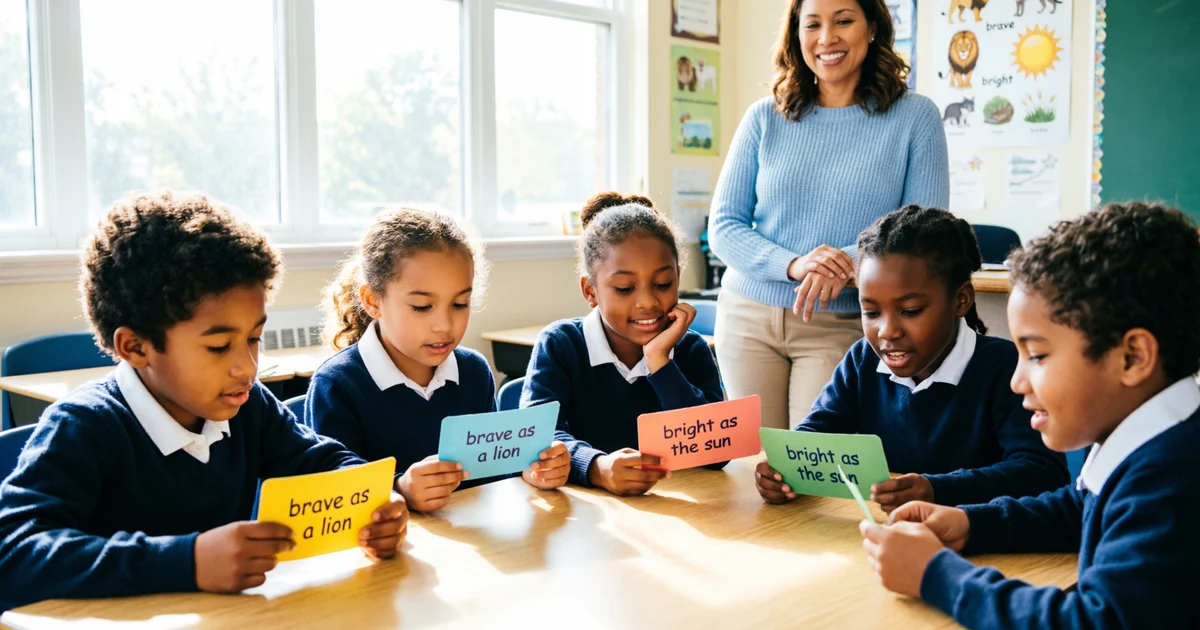
Similes make writing brighter, clearer, and more fun. Third grade students often understand simple comparisons quickly, but they need clear examples and regular practice to use similes well in their own sentences.
A simile helps a child compare one thing with another using words such as like or as. For example, a student can write, “The kitten was as soft as cotton.” This sentence helps the reader imagine the kitten more clearly.
In this article, you will learn what a simile means for grade 3 students, how to explain it in a simple way, and how children can use similes in stories, poems, worksheets, and classroom writing activities.
What a Simile Means for Grade 3 Students
A simile compares two different things using like or as. It helps a reader picture something in the mind.
For grade 3 students, the easiest way to understand a simile looks like this:
The thing we describe plus like or as plus the thing we compare it to.
Examples:
- The boy ran like the wind.
- Her smile was as bright as the sun.
- The puppy was as playful as a monkey.
- The blanket felt like a warm cloud.
Each sentence compares one thing to another. The boy does not become the wind. His running only feels very fast. The smile does not become the sun. It only looks bright and cheerful.
A simile adds color to plain writing. Instead of writing, “The dog was loud,” a student can write, “The dog barked like a drum.” The second sentence gives the reader a stronger picture.
How to Explain Similes to Third Graders
Third graders learn similes best when they connect them with things they already know. Start with familiar objects, animals, food, colors, and classroom items.
A simple explanation can sound like this:
A simile compares two things. It uses like or as. It helps your sentence show a clearer picture.
Use this simple method:
- Pick something to describe.
- Think about its quality.
- Compare it with something that has the same quality.
- Add like or as.
Example:
Thing: Ice
Quality: Cold
Comparison: Snow
Simile: The ice was as cold as snow.
Another example:
Thing: Girl
Quality: Fast
Comparison: Cheetah
Simile: The girl ran like a cheetah.
This method helps students avoid random comparisons. A good simile needs a clear reason. “The pencil was like a sandwich” sounds confusing because the two things do not share a clear quality. “The pencil was as sharp as a needle” works better because both things can feel sharp.
Easy Simile Examples for Grade 3
Grade 3 students need simple similes before they try creative ones. Easy examples help them notice the pattern and build confidence.
Here are clear simile examples for third graders:
- The baby slept like an angel.
- The stars shone like tiny diamonds.
- The soup was as hot as fire.
- The girl laughed like a bubbling stream.
- The boy was as brave as a lion.
- The room was as quiet as a library.
- The apple was as red as a rose.
- The pillow felt like a soft cloud.
- The leaves danced like butterflies.
- The child jumped like a frog.
Students can read each sentence and answer two questions:
- What two things does the sentence compare?
- Which word does the sentence use, like or as?
For example, in “The stars shone like tiny diamonds,” the sentence compares stars with diamonds. It uses like. The comparison works because stars and diamonds both shine.
Similes Using Like for Grade 3 Writing
Similes with like often compare actions, movement, sounds, and feelings. These similes fit well in stories because they help students describe what someone does.
Examples:
- She sang like a bird.
- He ran like a deer.
- The baby crawled like a turtle.
- The leaves floated like boats.
- The dog jumped like a kangaroo.
- The rain fell like tiny beads.
- The children shouted like a crowd at a game.
- The kite flew like a colorful bird.
- The river moved like a silver ribbon.
- The cat crept like a shadow.
Students can use this sentence frame:
The noun plus verb plus like plus comparison.
Examples:
- The boy swam like a fish.
- The teacher smiled like sunshine.
- The wind howled like a wolf.
Like similes help children describe action in a lively way. They also encourage better verbs. Instead of writing “The girl went fast,” a student can write, “The girl raced like a cheetah.”
Similes Using As for Grade 3 Students
Similes with as often describe qualities such as color, size, speed, softness, strength, and feelings. They follow a common pattern that third graders can practice easily.
The pattern looks like this:
As plus describing word plus as plus comparison.
Examples:
- As light as a feather
- As cold as ice
- As sweet as honey
- As busy as a bee
- As strong as an ox
- As quiet as a mouse
- As bright as the sun
- As soft as cotton
- As tall as a tree
- As quick as lightning
Now turn them into full sentences:
- The bag felt as light as a feather.
- The water was as cold as ice.
- Her voice sounded as sweet as honey.
- My mother stayed as busy as a bee.
- The athlete looked as strong as an ox.
Students should choose the describing word first. Then they can find a comparison that matches it. If the word means soft, compare it with cotton, a pillow, or a cloud. If the word means fast, compare it with lightning, a race car, or a cheetah.
Simple Animal Similes for Third Grade
Animal similes work well for grade 3 because children already know many animal qualities. Lions seem brave, turtles move slowly, and monkeys act playful.
Examples:
- As brave as a lion
- As slow as a turtle
- As busy as a bee
- As quiet as a mouse
- As playful as a puppy
- As wise as an owl
- As slippery as a fish
- As proud as a peacock
- As gentle as a lamb
- As quick as a rabbit
Full sentence examples:
- The little girl stood as brave as a lion.
- My brother walked as slow as a turtle.
- The classroom buzzed like a hive of bees.
- The puppy chased the ball like a happy rabbit.
- The dancer moved like a swan.
Animal similes help students describe people without using boring words again and again. Instead of writing, “Ali was brave,” a student can write, “Ali was as brave as a lion when he spoke on stage.”
Funny Similes That Grade 3 Students Enjoy
Funny similes make children laugh and help them enjoy writing. They also show students that figurative language can sound playful.
Examples:
- My hair looked like a bird’s nest.
- The baby laughed like a squeaky toy.
- My brother ate like a hungry dinosaur.
- The old chair groaned like a tired grandpa.
- The dog snored like a tiny engine.
- The soup smelled like a muddy shoe.
- My school bag felt as heavy as an elephant.
- The alarm rang like an angry robot.
- His dance looked like a jumping noodle.
- The cat stared at me like a tiny boss.
Funny similes still need sense. A silly comparison should match the idea. “My bag felt as heavy as an elephant” works because both suggest heaviness. “My bag felt as heavy as a rainbow” does not work because a rainbow does not feel heavy.
Encourage students to use funny similes in stories, comic strips, journal writing, and character descriptions.
Nature Similes for Grade 3 Descriptive Writing
Nature gives students many strong images. They can compare people, places, and actions with the sun, moon, trees, rain, wind, flowers, rivers, and clouds.
Examples:
- Her face glowed like the morning sun.
- The clouds floated like white pillows.
- The river sparkled like glass.
- The flowers opened like little umbrellas.
- The wind whispered like a soft voice.
- The tree stood as tall as a tower.
- The rain tapped like tiny fingers.
- The moon shone like a silver coin.
- The grass felt as soft as a carpet.
- The snow covered the ground like a white blanket.
Nature similes help students improve descriptive writing. They can use them in stories about parks, gardens, weather, seasons, and outdoor adventures.
A plain sentence says:
The garden was pretty.
A stronger sentence says:
The garden looked like a rainbow spread across the ground.
The second sentence gives the reader color, beauty, and a clear picture.
Food Similes That Make Writing More Creative
Food similes feel easy and familiar for children. Students can use them to describe taste, color, shape, smell, and texture.
Examples:
- The cake was as sweet as honey.
- The lemon tasted as sour as vinegar.
- Her cheeks were as red as cherries.
- The bread felt as soft as a sponge.
- The cookies smelled like a warm bakery.
- The soup burned like fire on my tongue.
- The candy shone like tiny jewels.
- The pancake looked as round as the moon.
- The ice cream melted like snow in the sun.
- The popcorn jumped like little white frogs.
Food similes also help students write sensory details. They can describe what something looks like, smells like, tastes like, sounds like, or feels like.
Example paragraph:
The kitchen smelled like fresh cookies. The butter melted like sunshine in the pan. My pancake looked as round as the moon, and the syrup flowed like a golden river.
This kind of writing helps grade 3 students add detail without making the sentence hard to understand.
Color Similes for Third Grade Sentences
Color similes help children describe objects more clearly. Instead of writing only “red,” “blue,” or “green,” students can compare colors with familiar things.
Examples:
- As red as a rose
- As blue as the sky
- As green as grass
- As white as snow
- As black as coal
- As yellow as a lemon
- As pink as cotton candy
- As orange as a pumpkin
- As brown as chocolate
- As silver as the moon
Full sentence examples:
- The apple was as red as a rose.
- The lake looked as blue as the sky.
- The frog was as green as grass.
- Her dress looked as white as snow.
- The cat’s fur was as black as coal.
Color similes make student writing more vivid. They work well in descriptions of clothes, animals, food, nature, art, and story settings.
Similes That Describe People and Feelings
Similes help third graders describe emotions in a clear and creative way. Children often write “happy,” “sad,” “angry,” or “scared.” Similes help them show the feeling better.
Examples:
- She was as happy as a child at a fair.
- He felt as nervous as a mouse near a cat.
- My friend smiled like sunshine.
- The boy cried like a rainy cloud.
- She stood as proud as a queen.
- He felt as lonely as a lost puppy.
- The team cheered like fireworks.
- My sister looked as calm as a still lake.
- The child shook like a leaf.
- He laughed like a bubbling fountain.
These similes help students show emotion instead of naming it only.
Plain sentence:
Sara was scared.
Better sentence:
Sara shook like a leaf when the thunder crashed.
The second sentence helps the reader feel the fear.
Similes That Describe Classroom Objects
Classroom objects give students a simple way to practice similes during lessons. They can look around the room and create comparisons from real things.
Examples:
- The pencil was as sharp as a needle.
- The eraser felt as soft as rubber.
- The board was as clean as a new page.
- The book was as heavy as a brick.
- The clock ticked like a tiny drum.
- The crayons looked like a rainbow in a box.
- The desk was as smooth as glass.
- The paper was as white as snow.
- The ruler lay straight like a road.
- The bell rang like a loud alarm.
A teacher can ask students to choose one classroom object and write three similes about it.
Example with pencil:
- The pencil was as yellow as a lemon.
- The pencil point was as sharp as a thorn.
- The pencil rolled like a tiny log.
This activity helps students practice observation and comparison at the same time.
Short Simile Sentences for Grade 3 Practice
Short simile sentences work well for early practice. Students can read them, copy them, and then create their own.
Examples:
- The sun was like gold.
- The cat was as quiet as a mouse.
- The girl ran like a deer.
- The snow was as white as milk.
- The boy smiled like sunshine.
- The cake was as sweet as honey.
- The wind sounded like a whistle.
- The baby slept like a lamb.
- The ball bounced like a kangaroo.
- The night was as dark as ink.
Students can also complete simple sentence starters:
- The dog ran like blank.
- The flower was as red as blank.
- The pillow felt like blank.
- The classroom was as quiet as blank.
- The rain sounded like blank.
Short practice builds confidence before children write longer descriptions.
Picture Based Simile Activities for Grade 3
Pictures help students create similes because they can see details before they write. This activity works well for visual learners.
Use pictures of animals, weather, food, sports, nature, and classroom scenes. Ask students to look closely and answer these questions:
- What do you see?
- What color is it?
- How does it move?
- How might it feel?
- What can you compare it to?
Example picture: A lion
Possible similes:
- The lion roared like thunder.
- The lion stood as proud as a king.
- The lion’s mane looked like a golden crown.
Example picture: A rainy day
Possible similes:
- The rain fell like tiny beads.
- The clouds were as dark as smoke.
- The puddles shone like mirrors.
Picture based simile practice helps students connect observation with writing. It also gives them ideas when they do not know what to write.
Fill in the Blank Simile Practice
Fill in the blank practice helps grade 3 students learn simile patterns. It also checks whether they understand meaningful comparisons.
Examples:
- The ice was as cold as blank.
- The child ran like blank.
- The pillow was as soft as blank.
- The stars twinkled like blank.
- The bag felt as heavy as blank.
- The baby slept like blank.
- The lemon tasted as sour as blank.
- The flowers smelled as sweet as blank.
- The night was as dark as blank.
- The classroom was as quiet as blank.
Possible answers:
- snow
- a cheetah
- cotton
- diamonds
- a rock
- an angel
- vinegar
- perfume
- ink
- a library
Students should learn that many answers can work if the comparison makes sense. For example, “The pillow was as soft as cotton” and “The pillow was as soft as a cloud” both work.
Simile Worksheet Ideas for Third Grade
A good simile worksheet should give students clear practice without making the lesson boring. Third graders need variety, not only long lists of sentences.
Useful worksheet ideas include:
- Circle the simile in each sentence.
- Underline the words like or as.
- Match the first half of a simile with the best ending.
- Complete the simile with a meaningful comparison.
- Rewrite plain sentences using similes.
- Choose the best simile for a picture.
- Write three similes about one object.
- Sort similes with like and similes with as.
- Find the silly simile and fix it.
- Write a short paragraph with two similes.
Example worksheet question:
Rewrite this sentence with a simile.
The rabbit was fast.
Possible answer:
The rabbit ran like the wind.
Worksheets should move from recognition to creation. First, students identify similes. Then they complete similes. Finally, they write their own.
How Teachers Can Teach Similes in Grade 3
Teachers can make similes easier by turning the lesson into a simple writing routine.
A strong classroom plan can follow this order:
- Explain the meaning of simile.
- Show examples with like and as.
- Read sentences aloud.
- Ask students what two things each sentence compares.
- Let students complete sentence frames.
- Move students toward original writing.
A teacher can also use a comparison chart:
Object: Cloud
Quality: Soft
Comparison: Cotton
Simile: The cloud looked as soft as cotton.
Object: Runner
Quality: Fast
Comparison: Cheetah
Simile: The runner moved like a cheetah.
Classroom activities that work well:
- Simile card matching
- Picture based writing
- Group simile race
- Simile sentence wall
- Short poem writing
- Story paragraph practice
Teachers should correct unclear comparisons gently. Ask, “What quality do these two things share?” This question helps students think instead of guessing.
How Parents Can Practice Similes at Home
Parents can help children practice similes during normal daily activities. They do not need a long lesson.
Simple home practice ideas:
- Ask your child to describe food at dinner.
- Compare the weather with something familiar.
- Create funny similes during a walk.
- Read storybooks and look for like or as.
- Ask your child to describe a pet, toy, or family member.
- Play a quick simile game in the car.
- Use drawings to inspire sentences.
Examples at home:
- This blanket feels as soft as a cloud.
- The soup is as hot as fire.
- Your toy car moves like lightning.
- The moon looks like a silver plate.
- The puppy sleeps like a baby.
Parents should praise effort first. If a child writes a confusing simile, ask them to explain it. Sometimes children have a creative reason. If the reason does not make sense, help them choose a clearer comparison.
Common Simile Mistakes Third Graders Make
Third graders often understand the basic idea of similes, but they still make common mistakes.
Mistake 1: Forgetting like or as
Incorrect: The boy was a lion.
Correct: The boy was as brave as a lion.
The incorrect sentence sounds like a metaphor. A simile needs like or as.
Mistake 2: Comparing things with no shared quality
Confusing: The pencil was like a sandwich.
Clear: The pencil was as sharp as a needle.
A good comparison needs a reason.
Mistake 3: Using boring comparisons too often
Common: As nice as a flower
Stronger: As gentle as a soft breeze
Students can improve by thinking about sound, smell, color, movement, and feeling.
Mistake 4: Writing incomplete similes
Incomplete: The dog was as loud as.
Complete: The dog was as loud as a drum.
Mistake 5: Mixing too many ideas
Weak: The cat was like a shadow and a rocket and a pillow.
Better: The cat moved like a shadow.
One clear simile works better than several confusing ones.
Quick Simile Quiz for Grade 3 Students
This quick quiz helps students review similes in a simple way.
Question 1: Which sentence has a simile?
A. The sun is hot.
B. The sun was like a golden ball.
C. The sun came up.
Answer: B
Question 2: Which word often appears in a simile?
A. because
B. like
C. under
Answer: B
Question 3: Complete the simile.
The rabbit ran like a blank.
Good answer: cheetah
Question 4: What two things does this simile compare?
The pillow was as soft as cotton.
Answer: pillow and cotton
Question 5: Fix this sentence.
The baby slept a lamb.
Correct answer: The baby slept like a lamb.
Question 6: Choose the best simile.
The ice was as cold as blank.
A. fire
B. snow
C. soup
Answer: B
Question 7: Write one simile using as.
Example answer: The flower was as yellow as the sun.
Question 8: Write one simile using like.
Example answer: The kite flew like a bird.
A short quiz helps students check their understanding before they move to longer writing tasks.
Conclusion
A simile for grade 3 should stay simple, clear, and easy to picture. Students can use like or as to compare two different things and make their writing more interesting.
The best similes come from things children already know, such as animals, food, colors, nature, feelings, and classroom objects. With regular practice, third graders can move from basic examples like “as cold as ice” to more creative sentences like “The rain tapped the window like tiny fingers.”
Similes help young writers show details instead of only telling them. When students choose clear comparisons, their sentences become more lively, thoughtful, and fun to read.
FAQs
What is a simile for grade 3?
A simile compares two different things using like or as. Example: The boy ran like the wind.
What are easy simile examples for grade 3?
Easy examples include as cold as ice, as brave as a lion, as soft as cotton, and shines like a diamond.
How do you teach similes to third graders?
Teach similes with familiar examples, picture prompts, sentence frames, and simple questions about what two things the sentence compares.
What is a simile using like?
A simile using like compares two things with the word like. Example: The girl sang like a bird.
What is a simile using as?
A simile using as follows a pattern such as as soft as cotton or as bright as the sun.
Why do grade 3 students learn similes?
Grade 3 students learn similes because similes help them write better descriptions and create clearer pictures for readers.
What is a funny simile for grade 3?
A funny simile could be, “My brother ate like a hungry dinosaur.” It sounds playful and easy to understand.
What is a good animal simile for third grade?
A good animal simile is, “The child was as brave as a lion.” It compares courage with a lion.
How can parents practice similes at home?
Parents can ask children to describe food, toys, pets, weather, and family activities using like or as.
What common mistake do students make with similes?
Many students forget to use like or as, or they compare two things that do not share a clear quality.

Alexa Xolen is a humor writer at Punjokevault.com, creating witty jokes and clever puns to make your day brighter. She loves spreading smiles, one laugh at a time.