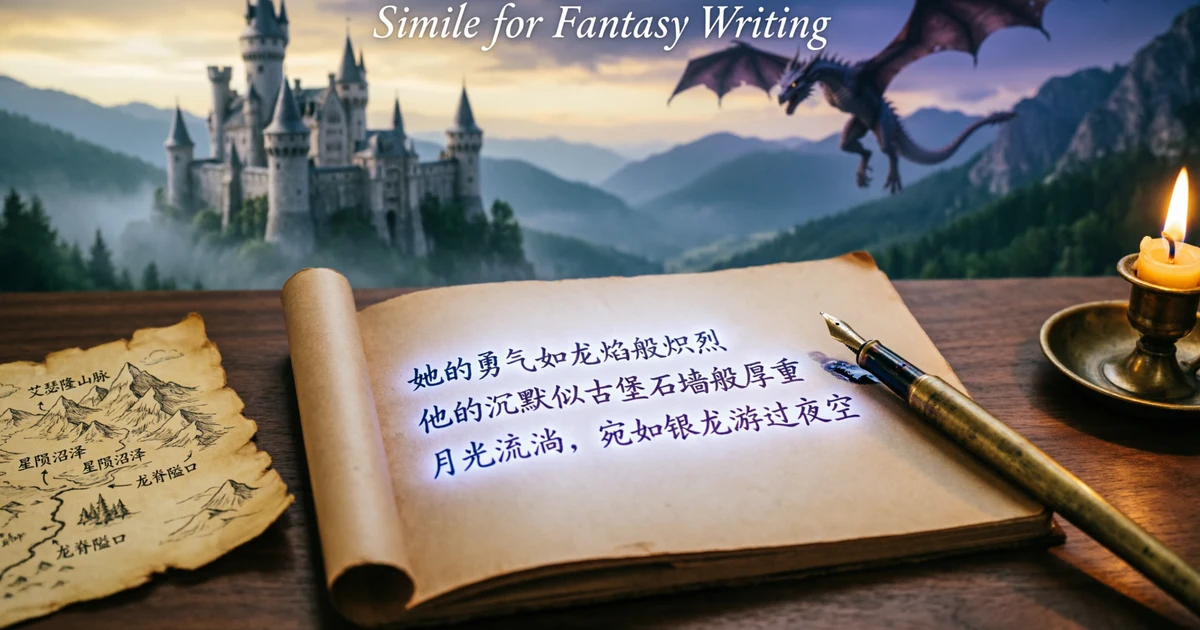
Fantasy writing asks readers to believe in worlds they have never seen. A dragon may cross the sky. A spell may split the dark. A hidden forest may breathe like a living thing. Similes help writers make these strange moments feel clear, vivid, and emotional.
A strong simile can turn magic into something the reader can picture. It can make a villain feel colder, a hero feel braver, or a kingdom feel older than memory. In this guide, you will learn what a simile for fantasy writing means, how to use fantasy similes naturally, and how to create original examples for spells, monsters, battles, castles, heroes, villains, dreams, romance, and suspense.
What Simile for Fantasy Writing Means in Simple Words
A simile compares one thing to another using words like like or as. In fantasy writing, a simile helps readers understand magical, strange, or impossible things through familiar images.
For example:
The dragon moved like a storm with wings.
This sentence compares the dragon to a storm. The reader feels its size, force, and danger right away.
Another example:
The spell glowed as bright as moonlight on silver.
This simile gives the spell a soft, magical shine. It also fits the fantasy mood because moonlight and silver often create mystery and beauty.
A simile for fantasy writing should do more than decorate a sentence. It should help the reader see, feel, or understand the scene better. Good fantasy similes often draw from nature, myth, ancient objects, weapons, fire, shadows, stars, dreams, animals, and weather.
Weak simile:
The wizard was as cool as a phone screen.
This breaks the fantasy mood because the image feels modern.
Better simile:
The wizard stood as calm as a lake under winter stars.
This image suits a magical world and keeps the reader inside the story.
Why Similes Matter in Fantasy Stories
Fantasy stories need clear images because readers enter unfamiliar worlds. They may meet new creatures, unknown lands, invented magic systems, and strange powers. Similes help readers connect with those things.
A good simile can:
- Make magic easier to imagine
- Show emotion without long explanation
- Build atmosphere
- Reveal character personality
- Make action scenes more powerful
- Add beauty to worldbuilding
- Give ordinary scenes a mythical feeling
For example:
The city rose from the desert like a crown carved from sunlight.
This simile tells us more than the shape of the city. It suggests wealth, power, heat, and wonder.
Fantasy similes also shape tone. A light fantasy story might use playful comparisons. A dark fantasy story may use bones, ash, blood, ravens, ruins, and cold stars. Epic fantasy often uses mountains, storms, blades, banners, fire, and ancient songs.
Compare these two lines:
The fairy laughed like bells in a spring garden.
The witch laughed like bones rattling in a locked chest.
Both lines describe laughter, but each creates a different mood.
Best Similes for Fantasy Writing With Clear Meanings
Here are strong fantasy similes with meanings and sample uses.
- Like a dragon waking under the earth
Meaning: Something powerful begins to rise
Example: The mountain shook like a dragon waking under the earth. - As silent as a spell before it breaks
Meaning: Deep, tense silence
Example: The hall grew as silent as a spell before it breaks. - Like moonlight trapped in glass
Meaning: Soft magical beauty
Example: Her necklace shone like moonlight trapped in glass. - As fierce as a griffin guarding its nest
Meaning: Protective and dangerous
Example: The queen stood as fierce as a griffin guarding its nest. - Like fire crawling across old parchment
Meaning: Slow, spreading danger
Example: The curse moved through the map like fire crawling across old parchment. - As cold as a blade left under winter stars
Meaning: Emotionless or deadly
Example: His voice sounded as cold as a blade left under winter stars. - Like a forest holding its breath
Meaning: Suspense before danger
Example: The trees stood around them like a forest holding its breath. - As bright as a phoenix at dawn
Meaning: Brilliant, hopeful, reborn
Example: Her courage burned as bright as a phoenix at dawn.
These similes work because they match fantasy themes. They use images that feel old, magical, natural, or mythical.
Magical Similes for Spells and Enchantments
Spells need strong visual language. A spell may glow, crackle, whisper, burn, freeze, twist, or bloom. Similes help readers sense the type of magic without stopping the story for a long explanation.
Examples:
The spell opened like a flower made of blue flame.
The charm hummed like a bee trapped inside a crystal.
The curse spread across his skin like ink dropped into water.
The healing light moved over the wound like warm honey.
The portal shimmered like heat above a summer road.
Each simile shows a different kind of magic. Blue flame feels strange and beautiful. A trapped bee suggests nervous energy. Ink in water suggests dark spread. Warm honey suggests comfort and healing.
For spell writing, choose similes that match the magic type:
- Fire magic can move like sparks, lava, sunrise, candles, or wildfire
- Ice magic can feel like frost, glass, winter breath, or frozen rivers
- Dark magic can spread like smoke, oil, shadow, or black rain
- Healing magic can glow like dawn, warm milk, sunlight, or gold dust
- Mind magic can twist like mist, echo like bells, or crawl like spiders
A spell should not always look beautiful. Some magic should feel ugly, wild, painful, or unstable. Let the simile reflect the danger.
Dark Fantasy Similes for Fear and Mystery
Dark fantasy needs similes that create dread. The best dark fantasy similes suggest something wrong before the danger fully appears.
Examples:
The corridor stretched ahead like a throat waiting to swallow them.
The moon hung above the tower like a dead eye.
The shadows moved like wolves with no bodies.
Her smile spread like a crack in old bone.
The silence clung to the room like grave dust.
These similes work because they touch fear through body, death, darkness, and decay. They make the scene feel unsafe.
Dark fantasy similes often use:
- Graves
- Ash
- Rot
- Bones
- Blood
- Crows
- Wolves
- Black water
- Cold iron
- Empty houses
- Dead stars
- Broken mirrors
Avoid making every line heavy. If every sentence sounds dark, the writing can feel forced. Use a strong simile at the moment when fear grows.
Plain sentence:
The door opened slowly.
Dark fantasy version:
The door opened like a coffin lid in the dark.
This creates instant tension.
Epic Fantasy Similes for Battles and Heroes
Epic fantasy often deals with armies, quests, kingdoms, prophecies, and great danger. Similes in this style need scale, movement, and force.
Examples:
The army advanced like thunder rolling across the plain.
His sword flashed like lightning caught in steel.
The hero rose from the dust like a banner after battle.
The horses charged like waves breaking against black rocks.
The shield wall stood as firm as a mountain ridge.
Epic similes often use nature at its largest. Storms, seas, mountains, fire, sunrise, eagles, and thunder fit battle scenes well.
To write better battle similes, focus on motion and impact:
Weak:
The knight fought like a strong man.
Better:
The knight fought like a storm trapped inside armor.
The second line gives power and movement. It also keeps the fantasy tone.
For heroes, similes can show courage without sounding childish:
She stood before the monster like a candle refusing the wind.
This image gives bravery a fragile but powerful shape.
Similes for Fantasy Worlds and Strange Landscapes
Fantasy worlds need images that feel fresh but clear. A landscape should not read like a travel brochure. It should reveal the mood, history, and magic of the world.
Examples:
The valley opened below them like a green secret between mountains.
The desert glittered like a sea of broken gold.
The floating islands drifted like sleeping whales in the sky.
The black river curled through the land like a snake made of night.
The crystal fields shone like stars fallen into the grass.
These similes help readers picture places that do not exist. They also make the setting feel alive.
When you describe a fantasy world, ask yourself:
- Does this place feel safe or dangerous?
- Does it feel ancient or new?
- Does magic shape the landscape?
- What emotion should the reader feel here?
- Would a character from this world use this comparison?
A peasant from a farming village might compare a magical mountain to a haystack, a plow blade, or a sleeping ox. A royal scholar might compare it to a crown, a temple, or a line from an old prophecy.
Similes can also reveal culture.
Example:
To the desert crews, the city looked like a jewel hidden in a lion’s mouth.
This line suggests beauty and danger together.
Similes for Dragons, Monsters, and Mythical Creatures
Fantasy creatures need vivid description because readers want wonder and fear. A dragon, monster, or griffin should not feel like a plain animal with extra parts.
Examples:
The dragon’s scales shone like coins from a cursed treasure.
The beast breathed like a furnace under the earth.
Its claws curved like black moons.
The griffin dived like an arrow sent by the gods.
The serpent moved like silk sliding over stone.
The monster’s eyes glowed like lanterns in a drowned cave.
Good creature similes focus on texture, sound, movement, and threat.
For dragons, use images of fire, gold, storms, mountains, smoke, iron, and ancient power.
For monsters, use images of hunger, rot, broken things, deep water, caves, and nightmares.
Or, For graceful creatures, use images of silk, wind, feathers, moonlight, and flowing water.
A strong monster simile should make the reader feel something before the monster attacks.
Example:
It waited in the tunnel like a nightmare that had learned patience.
This gives the creature intelligence and menace.
Similes for Wizards, Witches, and Magical Beings
Magical beings often carry mystery. Their descriptions should show power, age, wisdom, danger, or charm.
Examples:
The wizard’s eyes shone like stars seen through deep water.
The witch bent over the fire like a crow guarding a secret.
The sorcerer’s voice flowed like dark wine.
The fairy moved like a spark escaping a candle.
The old mage stood as still as a statue listening to time.
A simile can also reveal whether a magical being feels trustworthy.
Friendly magical being:
Her laughter floated through the room like warm light.
Dangerous magical being:
Her laughter slid through the room like a knife under silk.
Both lines describe laughter, but the mood changes completely.
Use similes to show hidden traits. A wizard who smiles like a locked door feels secretive. A witch who watches like a cat near a mouse feels dangerous. A fairy who speaks like rain on leaves feels gentle and natural.
Similes for Castles, Kingdoms, and Ancient Cities
Fantasy architecture can carry history. Castles, kingdoms, ruins, and ancient cities should feel more than decorative. Similes can show power, decay, wealth, fear, or beauty.
Examples:
The castle rose from the cliff like a crown of black stone.
The kingdom spread across the valley like a quilt stitched with rivers.
The old city slept under the snow like a giant wrapped in white fur.
The ruined towers leaned like old kings too tired to stand.
The palace gates gleamed like sunrise on polished armor.
A castle can feel safe or threatening depending on the comparison.
Safe:
The castle stood above the village like a mother watching her children.
Threatening:
The castle crouched above the village like a wolf over a wounded deer.
Same structure, different feeling.
For ancient cities, choose images that suggest memory:
The city walls carried cracks like wrinkles on an old face.
This gives the city age and character.
Similes for Magic Powers and Supernatural Energy
Magic powers need clear physical feeling. Readers want to know how magic looks, sounds, moves, and affects the body.
Examples:
Power rushed through her like a river after snowmelt.
The magic snapped between his fingers like tiny blue whips.
Her anger burned like a coal inside her chest.
The spell gathered around him like storm clouds around a peak.
The curse tightened like a chain around his heart.
Supernatural energy can feel soft, sharp, hot, cold, heavy, wild, or controlled. Choose the comparison based on the power.
For raw power:
Magic crashed through him like a flood through broken gates.
For controlled power:
Magic settled in her palm like a bird trained to return.
For dangerous power:
Magic crawled under his skin like ants made of fire.
A good simile helps the reader understand the cost of magic too. Power should not always feel easy. It can hurt, tempt, drain, or change the person who uses it.
Similes for Fantasy Villains and Evil Forces
Villains need memorable language. A strong simile can make a villain feel cruel, charming, ancient, or terrifying.
Examples:
The king smiled like a wolf at the edge of a sheepfold.
Her voice slipped into his mind like poison into wine.
The dark lord watched them like a spider at the center of its web.
His kindness felt like velvet wrapped around a blade.
The demon’s shadow spread like spilled ink across the floor.
Fantasy villains often hide danger under beauty. That contrast creates tension.
Example:
She looked as lovely as a rose growing from a grave.
This simile suggests beauty, death, and unease at once.
For evil forces, use similes that show spread and corruption:
The curse moved through the kingdom like rot through an apple.
This line gives readers a clear image of slow damage.
Avoid cartoon evil. Give the villain a comparison that reveals personality. A proud villain may resemble a hawk. A patient villain may resemble a spider. A brutal villain may resemble a winter storm.
Similes for Brave Heroes and Chosen Ones
Heroes need more than strength. They need fear, doubt, hope, and choice. Similes can show courage in a human way.
Examples:
He stood before the dragon like a match before a wildfire.
She held her ground like a tree gripping a cliffside.
His hope burned like a lamp in a storm.
The young warrior rose like dawn over a battlefield.
She moved through fear like a swimmer through cold water.
The best hero similes often show struggle. A hero who feels no fear can seem flat. A hero who feels fear and still acts feels real.
Weak:
He was as brave as a lion.
Better:
He faced the army like a lone drumbeat against thunder.
The second line feels more original and shows the odds against him.
For chosen ones, avoid making every comparison grand. Sometimes a small image carries more emotion.
Example:
The mark on her hand glowed like a candle someone had lit in a forgotten room.
This suggests destiny, loneliness, and awakening.
Similes for Forests, Mountains, and Hidden Realms
Forests, mountains, and hidden realms often carry mystery in fantasy writing. They can feel protective, sacred, cursed, or alive.
Examples:
The forest closed around them like a hand.
The mountain rose like a sleeping god beneath a blanket of snow.
The hidden realm shimmered like a dream behind glass.
The vines twisted around the gate like green fingers.
The cave mouth opened like a wound in the hillside.
Forests can act like characters. A friendly forest may whisper like a grandmother telling stories. A cursed forest may watch like a beast in the dark.
Mountain similes often suggest power, age, silence, and distance.
Example:
The peak stood above the clouds like a judge above the world.
Hidden realms need wonder:
The secret valley glowed like a lantern under the earth.
This line shows beauty and surprise.
When you write natural settings in fantasy, let the simile match the story’s emotional moment. A forest during a romantic scene should not feel like a monster unless danger hides nearby.
Similes for Dreams, Prophecies, and Visions
Dreams and prophecies need strange but understandable language. They should feel unclear, symbolic, and important.
Examples:
The vision came to her like smoke forming a face.
The prophecy rang in his mind like a bell under water.
The dream broke apart like a mirror dropped on stone.
The future flickered before him like candlelight in a draft.
The old words clung to her thoughts like burrs on a cloak.
Prophecy similes can show confusion:
The meaning hid from him like a fish beneath dark ice.
They can also show destiny:
The words settled over her like a crown she had never asked to wear.
Dream scenes can become vague if the writer only uses mist, shadows, and whispers. Add one sharp image to ground the moment.
Example:
In the dream, the red door stood in the field like a fresh wound.
This gives the reader something clear to remember.
Similes for Fantasy Romance and Emotional Scenes
Fantasy romance needs feeling, not just beauty. Similes can show longing, tenderness, fear, desire, or heartbreak in a magical world.
Examples:
Her smile warmed him like sunlight through castle glass.
His hand in hers felt like a promise made beside a sacred fire.
She missed him like the moon misses the sea at dawn.
Their love grew like ivy over a ruined wall.
His silence cut deeper than a sword in winter.
Fantasy romance works well when emotion connects to the world around the characters. A knight may think in terms of swords, vows, horses, and banners. A healer may think in terms of herbs, wounds, warmth, and breath. A sea witch may think in terms of tides, pearls, salt, and storms.
Romantic simile:
He looked at her like she was the first star after years of cloud.
Heartbreak simile:
Her hope fell like a crown slipping into deep water.
These lines keep romance inside the fantasy mood.
Similes for Suspense, Danger, and Dark Secrets
Suspense grows when readers sense danger before they fully understand it. Similes can hint at threat without explaining everything.
Examples:
The secret sat between them like a knife under the table.
The footsteps followed like a second heartbeat.
The locked door waited like a mouth that knew their names.
The warning mark glowed like an eye opening in the dark.
The truth moved closer like a shadow at sunset.
Suspense similes should feel tense and precise. They should not slow the scene too much. In a chase, use short, sharp comparisons.
Example:
The creature came after them like hunger on legs.
For hidden secrets, use similes that suggest pressure:
The lie pressed against his chest like a stone under his ribs.
This makes the secret feel physical.
A good suspense simile should raise a question. Why does the door feel alive? Why does the mark seem to watch?, Why does the silence feel heavy?
How to Use Fantasy Similes Without Sounding Forced
A fantasy simile sounds forced when it tries too hard to feel magical. The best similes feel natural inside the sentence and the story world.
Use these practical rules:
- Match the simile to the character’s world
- Keep the image clear
- Use one strong comparison instead of three weak ones
- Avoid modern objects unless your fantasy world includes them
- Let the simile reveal mood or meaning
- Cut any simile that only sounds pretty
Forced simile:
The elf’s hair shone like a river of starlight blessed by seven moons and sung over by angels.
This feels crowded.
Better:
The elf’s hair shone like starlight on running water.
The cleaner version gives the reader a clear image.
Also, do not place a simile in every paragraph. Too many comparisons can weaken the writing. Use them where they add emotion, beauty, fear, or clarity.
Ask yourself:
Does this simile help the reader see the moment better?
Does it match the tone?
Would this character think this way?
If the answer feels weak, revise the line.
Common Mistakes Writers Make With Fantasy Similes
Fantasy writers often love rich language, but too much ornament can hurt the story. Here are common mistakes to avoid.
Using clichés:
As brave as a lion
As cold as ice
As fast as lightning
These can work in simple writing, but fantasy readers often expect fresher images.
Better:
As brave as a candle in a crypt
As cold as a crown on a dead king
As fast as a hawk dropping from a white sky
Mixing modern and fantasy images:
The spell loaded like a computer screen.
This only works in comic fantasy or modern fantasy. In traditional fantasy, it breaks the mood.
Overwriting:
The dragon roared like thunder, fire, a broken mountain, a dying star, and a god in chains.
Too many images fight each other.
Better:
The dragon roared like a mountain splitting open.
Repeating the same image field:
If every simile uses stars, moonlight, and shadows, the writing can feel narrow. Use a wider range of images such as iron, moss, salt, feathers, smoke, honey, glass, bone, rivers, bells, and old wood.
Ignoring character voice:
A village blacksmith may compare magic to sparks, iron, bellows, and heat. A princess may compare it to jewels, silk, music, and court masks. Let each character’s background shape the comparison.
Original Fantasy Simile Examples for Better Storytelling
Here are original fantasy simile examples you can adapt for different scenes.
Magic and spells:
The spell twisted in the air like a silver snake.
The runes burned like tiny suns trapped in stone.
The curse clung to him like wet cloth in winter.
The portal opened like an eye made of blue fire.
Fantasy creatures:
The dragon slept like a mountain that dreamed of flame.
The wolf’s eyes shone like coins at the bottom of a well.
The giant moved like a storm learning to walk.
The raven watched like a priest who knew every sin.
Fantasy settings:
The city glittered like a necklace laid across the hills.
The forest breathed like an old beast in its sleep.
The castle stood like a black tooth against the moon.
The road curled through the valley like a ribbon dropped by a fleeing queen.
Heroes and villains:
The hero’s courage flickered like a lamp in a wind torn tower.
The queen’s anger rose like fire behind stained glass.
The villain’s smile opened like a trap.
The old king sat on his throne like a statue waiting for grief.
Emotion and suspense:
Fear crawled up his spine like a spider made of ice.
Her hope returned like spring through a cracked door.
The secret spread through the court like smoke under a locked door.
The silence fell like snow over a battlefield.
Use these examples as models, not limits. The best fantasy similes come from the world, the character, and the feeling of the scene.
Conclusion
A strong simile for fantasy writing helps readers believe in impossible things. It turns magic, monsters, castles, forests, battles, dreams, and emotions into images they can feel. The best fantasy similes do not only sound beautiful. They build mood, reveal character, sharpen action, and deepen the world.
Keep your comparisons clear. Match them to your fantasy setting. Let your characters think in images that belong to their lives. Use similes where they matter most, and your fantasy writing will feel richer, stronger, and more alive.
FAQs
What is a simile for fantasy writing?
A simile for fantasy writing compares a magical, strange, or imaginative thing to something familiar using like or as. It helps readers picture fantasy scenes more clearly.
What is a good fantasy simile example?
A good example is: The dragon moved like a storm with wings. It gives the dragon power, size, and danger in one clear image.
How do I write magical similes?
Choose images that match the type of magic. Fire magic may feel like sparks or lava. Healing magic may glow like dawn. Dark magic may spread like smoke or ink.
Why should fantasy writers use similes?
Fantasy writers use similes to make invented worlds, creatures, spells, and emotions easier to imagine. Similes also create mood and style.
What makes a fantasy simile strong?
A strong fantasy simile feels clear, original, and connected to the story world. It should help the reader see or feel the moment better.
Can I use modern similes in fantasy writing?
You can use modern similes in urban fantasy, comic fantasy, or portal fantasy. In traditional fantasy, modern comparisons may break the mood.
What are dark fantasy similes?
Dark fantasy similes use images of fear, death, cold, shadows, bones, blood, ruins, and decay. Example: The hallway stretched like a throat waiting to swallow them.
How many similes should I use in a fantasy scene?
Use only a few strong similes in one scene. Too many comparisons can slow the story and make the writing feel heavy.
How can I avoid cliché fantasy similes?
Avoid common phrases like brave as a lion or cold as ice. Create fresh images from your setting, character background, and scene emotion.
What is the best way to create original fantasy similes?
Start with the feeling you want. Then choose an image from your fantasy world that carries that feeling. Combine them in a simple, vivid sentence.