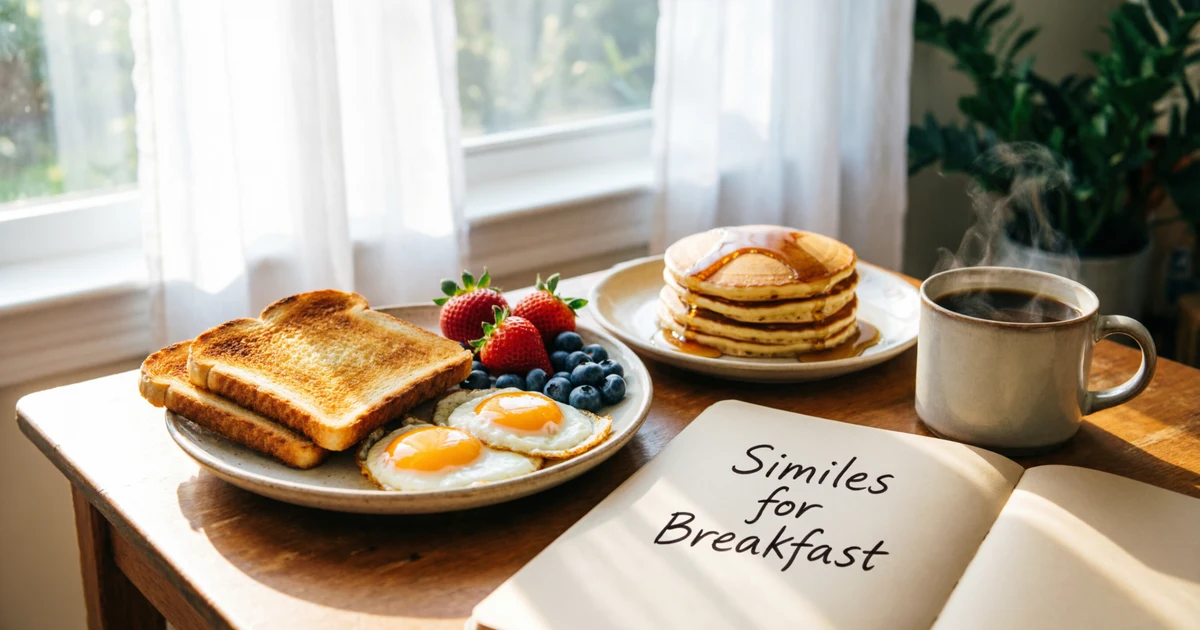
Breakfast can do more than fill a plate. In writing, it can show warmth, comfort, freshness, family life, routine, hunger, joy, or a busy start to the day. A good simile for breakfast helps readers picture a morning scene quickly and clearly.
In this guide, you will learn how to use breakfast similes in simple sentences, stories, poems, school writing, and daily conversation. You will also find clear meanings and examples so you can choose the right comparison without sounding forced.
What Simile for Breakfast Means in Simple Words
A simile for breakfast compares breakfast to something else using words like as or like. Writers use it to make a morning meal feel more vivid.
A breakfast simile can describe:
- Warmth
Example: The breakfast was as warm as sunlight on the kitchen table. - Freshness
Example: The breakfast smelled like a new morning after rain. - Comfort
Example: Her breakfast felt like a hug in a bowl. - Energy
Example: The breakfast gave him strength like fuel in an engine. - Family feeling
Example: Breakfast at home felt like a small celebration.
These comparisons help readers feel the mood instead of only reading plain details.
Best Similes for Breakfast With Clear Meanings
The best breakfast similes sound natural and easy to understand. They do not confuse the reader or overdecorate a simple scene.
Here are strong examples:
- Breakfast was as warm as the first ray of sun.
Meaning: The breakfast felt comforting and pleasant. - The toast smelled like a bakery waking up.
Meaning: The toast smelled fresh and inviting. - The pancakes were as soft as little pillows.
Meaning: The pancakes had a fluffy texture. - The fruit bowl looked like a garden in a dish.
Meaning: The fruit looked colorful and fresh. - The morning meal felt like a fresh start.
Meaning: Breakfast created a hopeful mood. - The eggs shone like small golden suns.
Meaning: The eggs looked bright and warm.
A good simile does not only describe food. It also shows the feeling around the meal.
Simple Similes for Breakfast for Students
Students often need short and clear similes for essays, stories, poems, and class assignments. Simple similes work best because they show meaning quickly.
Examples for students:
- My breakfast was as tasty as a treat.
- The toast was as crisp as dry leaves.
- The milk was as cold as ice.
- The cereal crackled like tiny footsteps.
- The pancakes were as round as the moon.
- The eggs were as yellow as sunshine.
- The juice tasted like fresh oranges from a tree.
Students should choose similes that match the food. For example, do not call cereal soft if the sentence talks about its crunch. The comparison must fit the real quality of the breakfast.
Creative Similes for Describing Breakfast in Writing
Creative breakfast similes help stories feel alive. They can show smell, color, taste, sound, or mood.
Examples:
- The breakfast tray looked like a sunrise arranged on a plate.
- Steam rose from the porridge like morning mist over a field.
- The butter melted like gold sliding across the toast.
- The coffee smelled like a quiet promise of energy.
- The fruit sparkled like little jewels in a bowl.
- The omelet folded like a soft yellow blanket.
A creative simile should still feel believable. Readers enjoy fresh comparisons, but they lose interest when a sentence sounds too dramatic for a normal meal.
Similes for a Warm Breakfast
A warm breakfast often suggests comfort, care, and a peaceful morning. Writers can use warm breakfast similes in family scenes, winter mornings, cozy stories, and personal essays.
Examples:
- The porridge was as warm as a blanket on a cold morning.
- The breakfast felt like sunlight poured into a bowl.
- The tea warmed my hands like a small fire.
- The eggs tasted as comforting as home.
- The toast came from the pan like a piece of morning heat.
- The bowl of soup sat on the table like a warm welcome.
Warm breakfast similes work well when you want the reader to feel safe, cared for, or relaxed.
Similes for a Fresh Breakfast
Fresh breakfast similes focus on clean taste, bright colors, and a healthy start. They suit fruit, juice, yogurt, bread, eggs, and light morning meals.
Examples:
- The breakfast tasted as fresh as spring air.
- The fruit looked like drops of color from a garden.
- The juice was as bright as morning sunshine.
- The bread smelled like it had just left a happy bakery.
- The yogurt tasted like a cool breeze.
- The berries shone like tiny morning jewels.
Fresh similes work best when you want to describe a lively and clean breakfast scene.
Similes for a Sweet Breakfast
A sweet breakfast can show joy, comfort, childhood memories, or a special treat. These similes fit pancakes, waffles, jam, honey, cereal, pastries, and sweet bread.
Examples:
- The pancakes tasted as sweet as a birthday wish.
- The syrup flowed like amber over the stack.
- The jam spread like a ribbon of fruit.
- The waffles smelled like happiness from the kitchen.
- The honey dripped like liquid sunshine.
- The cereal tasted like a small morning dessert.
Sweet breakfast similes should not become too sugary in tone. One strong image often works better than several heavy comparisons in the same paragraph.
Similes for a Healthy Breakfast
A healthy breakfast simile can show energy, balance, freshness, and strength. These similes work well for oats, eggs, fruit, nuts, milk, yogurt, whole grain bread, and smoothies.
Examples:
- The breakfast felt like fuel for a strong day.
- The smoothie tasted as fresh as a green garden.
- The oats gave energy like a steady engine.
- The fruit bowl looked like nature on a plate.
- The eggs felt as filling as a solid start.
- The nuts added crunch like small sparks of strength.
Use healthy breakfast similes when you want to show a positive morning routine or a character who cares about energy and focus.
Similes for a Big Breakfast
A big breakfast suggests hunger, celebration, travel, family gatherings, or a long day ahead. These similes can make the meal feel generous and satisfying.
Examples:
- The breakfast was as big as a feast.
- The plate looked like a morning banquet.
- The meal filled the table like a holiday spread.
- The stack of pancakes rose like a small tower.
- The breakfast gave him strength like a full tank of fuel.
- The food covered the plate like a map of comfort.
A big breakfast simile works well when the meal matters in the scene. It can show abundance, appetite, care, or excitement.
Similes for a Light Breakfast
A light breakfast can feel simple, calm, quick, or delicate. These similes suit toast, tea, fruit, yogurt, cereal, and small meals before school or work.
Examples:
- The breakfast was as light as a morning breeze.
- The toast and tea felt like a quiet start.
- The fruit tasted as gentle as spring rain.
- The yogurt felt like a cool cloud on the tongue.
- The meal sat on the plate like a soft beginning.
- The cereal felt as easy as a calm morning.
Light breakfast similes work best when you want a peaceful, clean, or simple mood.
Similes for a Family Breakfast
A family breakfast can show love, noise, routine, laughter, or closeness. Similes help the scene feel warm and human.
Examples:
- Breakfast with my family felt like a small morning festival.
- The table sounded like a cheerful market.
- The smell of toast filled the room like a family memory.
- The meal brought us together like a quiet tradition.
- The kitchen felt as warm as a shared blanket.
- The children reached for pancakes like birds at sunrise.
Family breakfast similes should focus on emotion as much as food. The plate matters, but the people around it create the heart of the scene.
Similes for Breakfast on a Busy Morning
Busy morning breakfast similes help writers describe speed, rush, noise, and quick choices. They work well in school stories, office scenes, and real life writing.
Examples:
- Breakfast disappeared as fast as a train leaving the station.
- He ate his toast like someone racing the clock.
- The cereal bowl clattered like a tiny alarm.
- The coffee worked like a starter button for the day.
- The kitchen moved like a small storm.
- She grabbed her breakfast like a traveler catching a bus.
These similes show action. They help readers feel the pressure of a morning schedule.
Similes for Breakfast in Stories
In stories, breakfast often reveals character, setting, and mood. A rich breakfast can show comfort or wealth. A rushed breakfast can show stress. A silent breakfast can show conflict.
Examples:
- The breakfast sat between them like an unspoken argument.
- Grandmother’s porridge smelled like every safe morning from childhood.
- The toast cracked like dry paper in the quiet kitchen.
- The meal looked like comfort, but nobody touched it.
- The eggs glowed like little suns on a gray day.
- His breakfast felt like the last calm moment before trouble.
A story simile should support the scene. Do not add a bright simile if the mood feels sad, tense, or serious.
Similes for Breakfast in Poems
Poetry allows more musical and emotional breakfast similes. Poets can use breakfast to show hope, love, routine, hunger, memory, or the start of a new day.
Examples:
- Breakfast opened like a flower in the morning light.
- The tea breathed like mist from a sleeping hill.
- The toast glowed like a small brown sun.
- The honey fell like a golden stream.
- The bowl of oats waited like a quiet heart.
- The first bite tasted like a promise.
Poetic similes can feel softer and more imaginative, but they still need clear meaning.
Funny Similes for Breakfast That Sound Natural
Funny breakfast similes add personality. They work well in captions, creative writing, comic scenes, and casual conversation.
Examples:
- My pancakes were as flat as my Monday mood.
- The toast popped up like it had urgent news.
- The cereal was as loud as a tiny construction site.
- His breakfast vanished like magic at a buffet.
- The egg looked at me like it knew my secrets.
- My coffee worked like a rescue team in a mug.
Funny similes should feel playful, not confusing. The best ones connect breakfast with a real everyday feeling.
Short Similes for Breakfast With Examples
Short similes help when you need quick descriptions. They fit captions, worksheets, short stories, and simple essays.
Examples:
- As warm as toast
Sentence: The kitchen felt as warm as toast. - Like morning sunshine
Sentence: The orange juice looked like morning sunshine. - As soft as pancakes
Sentence: The bread felt as soft as pancakes. - Like a fresh start
Sentence: Breakfast tasted like a fresh start. - As sweet as syrup
Sentence: Her smile at breakfast looked as sweet as syrup. - Like fuel for the day
Sentence: The meal felt like fuel for the day. - As bright as fruit
Sentence: The table looked as bright as fruit.
Short similes work best when the sentence already has enough detail.
Beautiful Similes for a Morning Meal
Beautiful breakfast similes create a soft, polished style. They suit descriptive essays, food writing, lifestyle writing, and emotional scenes.
Examples:
- The morning meal glowed like sunrise on a quiet table.
- The bread smelled like comfort drifting through the room.
- The tea shone like amber in a glass cup.
- The fruit rested on the plate like pieces of summer.
- The butter melted like sunlight over warm toast.
- The meal felt like peace served in small portions.
Beautiful similes often focus on light, color, warmth, and feeling. Use them when you want the reader to slow down and enjoy the scene.
How to Use Breakfast Similes in Sentences
A breakfast simile should fit the sentence naturally. First, choose the thing you want to describe. Then pick a comparison that matches it.
Use this simple pattern:
- Subject plus as plus quality plus as comparison
Example: The pancakes were as soft as pillows. - Subject plus like plus comparison
Example: The coffee smelled like a fresh start. - Action plus like plus comparison
Example: The syrup moved like a golden river.
More examples:
- The toast cracked like dry leaves.
- The fruit bowl looked like a rainbow at sunrise.
- The porridge warmed me like a thick blanket.
- The coffee woke me like a friendly alarm.
- The breakfast table felt like the heart of the house.
Before you use a simile, ask yourself whether it makes the sentence clearer. If it only makes the line longer, remove it.
Common Mistakes When Writing Similes for Breakfast
Many writers make breakfast similes too broad, too strange, or too repetitive. A simple comparison often sounds better than an overdone one.
Common mistakes include:
- Using a comparison that does not fit
Weak: The cereal was as quiet as a cloud.
Better: The cereal crackled like tiny footsteps. - Adding too many similes in one paragraph
One clear simile has more power than five crowded ones. - Choosing a cliché every time
Common phrases can work, but fresh details make writing stronger. - Ignoring the mood of the scene
A funny simile may not fit a sad family breakfast. - Making the image confusing
Readers should understand the comparison right away. - Repeating the same quality
Do not describe every food item as warm, soft, or sweet.
A strong simile helps the reader see, taste, smell, or feel the breakfast scene.
How to Create Your Own Simile for Breakfast
You can create your own breakfast simile by focusing on one clear detail. Think about the food, the mood, and the purpose of the sentence.
Follow these steps:
- Choose one breakfast item
Example: pancakes, toast, cereal, fruit, eggs, tea, coffee. - Pick one quality
Example: warm, crisp, sweet, fresh, bright, soft, filling. - Find a matching comparison
Example: pillows, sunshine, garden, blanket, engine, festival. - Build the sentence
Example: The pancakes were as soft as pillows. - Check if it sounds natural
Read it aloud. If it sounds forced, choose a simpler image.
More original examples:
- The toast smelled like a bakery opening its doors.
- The coffee warmed the room like a small morning fire.
- The fruit bowl looked like summer collected in one dish.
- The cereal snapped like tiny fireworks.
- The eggs glowed like sunshine on a plate.
Your best simile will come from a real detail that readers can picture.
Conclusion
A simile for breakfast can turn a plain morning sentence into a clear and memorable image. It can show warmth, freshness, sweetness, health, family life, rush, humor, or beauty. The best breakfast similes stay simple, fit the food, and match the mood of the writing.
Use breakfast similes when you want readers to feel the scene, not just understand it. Whether you write a school sentence, a poem, a story, or a food description, choose comparisons that sound natural and help the reader picture the morning clearly.
FAQs
What is a simile for breakfast?
A simile for breakfast compares breakfast to something else using words like as or like. Example: Breakfast felt like a fresh start.
What is a good simile for a warm breakfast?
A good simile is: The breakfast was as warm as a blanket on a cold morning. It shows comfort and warmth clearly.
What is a simple breakfast simile for students?
A simple example is: The pancakes were as soft as pillows. Students can use it in stories, poems, or class writing.
How do you describe breakfast with a simile?
Choose one quality, such as warm, fresh, sweet, or crunchy. Then compare it to something familiar. Example: The toast cracked like dry leaves.
What is a funny simile for breakfast?
A funny example is: My coffee worked like a rescue team in a mug. It sounds playful and easy to understand.
What is a simile for a healthy breakfast?
A strong example is: The breakfast felt like fuel for a strong day. It shows energy and health.
What is a simile for a big breakfast?
You can write: The breakfast was as big as a feast. This shows a large and filling meal.
What is a simile for a light breakfast?
A clear example is: The breakfast was as light as a morning breeze. It shows a small and gentle meal.
Can I use breakfast similes in poems?
Yes. Breakfast similes work well in poems because they can show light, warmth, hope, memory, and comfort.
What makes a breakfast simile good?
A good breakfast simile sounds natural, matches the food, creates a clear image, and helps the reader feel the morning scene.