Quick Answer
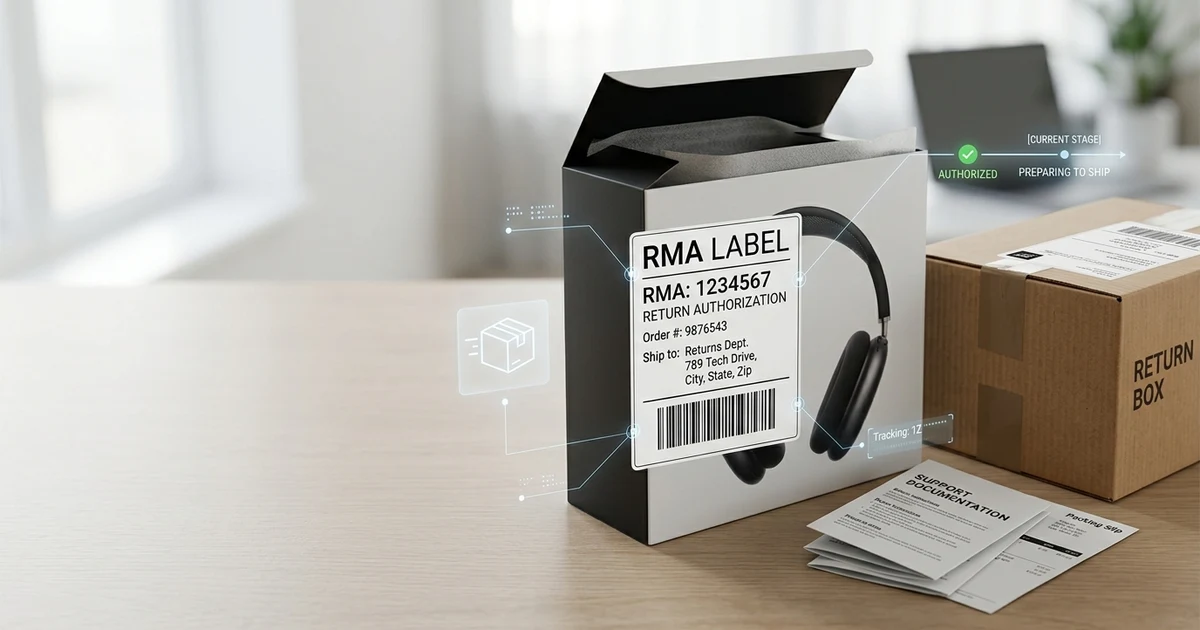
RMA usually stands for Return Merchandise Authorization. It is a process used by retailers, manufacturers, and other sellers to approve and track a product that a customer wants to return, repair, replace, or send back under a warranty. An RMA may also refer to the authorization number assigned to the return. If a company tells you to get an RMA before sending a product back, it usually means you need approval and instructions before shipping the item.
RMA can also have other meanings. In technology and engineering, RMA can mean Reliability, Maintainability, and Availability. In U.S. agriculture, RMA can refer to the USDA’s Risk Management Agency. The correct meaning depends on the context.
Introduction
If you have ever contacted a computer manufacturer because a laptop, graphics card, hard drive, monitor, or another electronic product stopped working, you may have heard the term RMA. Companies often use this abbreviation when handling defective products, warranty repairs, replacements, and returns.
For most shopping, electronics, retail, and warranty conversations, RMA means Return Merchandise Authorization. It describes the formal process a company uses to approve and manage a product return. Instead of simply sending a package back without notice, the customer normally contacts the seller or manufacturer first. If the return qualifies under the company’s policy, the company provides instructions and may issue an RMA number.
Understanding RMA is useful because the process can be slightly different from an ordinary store return. An RMA can help the company identify the customer, product, reason for return, warranty status, and expected resolution. Depending on the situation, the final result may be a repair, replacement, refund, or another solution allowed by the company’s policy.
The abbreviation can also mean other things outside product returns. For example, the National Institute of Standards and Technology uses RMA for Reliability, Maintainability, and Availability in systems engineering. The USDA uses RMA for Risk Management Agency.
What Does RMA Mean?
In retail and technology, RMA means Return Merchandise Authorization. It is the approval or process associated with sending a product back to a seller or manufacturer.
Suppose you purchase a computer component and discover that it does not work correctly. You contact the manufacturer and explain the problem. The company may check your warranty information, ask about the issue, and determine whether the product qualifies for service.
If the company approves the return, it may create an RMA case and give you an RMA number. You then follow the company’s instructions for packaging and shipping the product.
The RMA number helps the company connect the returned item with the correct case. It can also help employees track what happened to the product after it arrives.
An RMA does not automatically mean you will receive a refund. The final result depends on the company’s return or warranty policy and the condition of the product.
| RMA Term | Simple Meaning | Common Situation |
|---|---|---|
| Return Merchandise Authorization | Approval for returning merchandise | Defective product |
| RMA Number | Identifier for a return case | Warranty return |
| RMA Request | Customer’s request for return authorization | Starting a return |
| RMA Process | Steps for handling the return | Repair or replacement |
| RMA Status | Current stage of the return | Product being inspected |
How Does an RMA Work?
The exact procedure differs between companies, but an RMA commonly follows a series of basic steps.
First, the customer contacts the seller or manufacturer. The customer explains the problem and provides information such as the product model, serial number, purchase date, and proof of purchase when required.
The company then reviews the request. It may determine whether the product is still covered by a warranty or whether the request meets its return policy.
If the request is approved, the company provides an RMA number or another return reference. The customer may also receive shipping instructions.
The customer sends the product according to those instructions. When the company receives it, the item may be inspected or tested.
Finally, the company decides how to resolve the case. Depending on the circumstances and policy, it may repair the product, replace it, issue a refund, or provide another approved solution.
RMA Process Step by Step
Although companies use different systems, a typical RMA process looks like this:
- Identify the problemDetermine what is wrong with the product. Describe the issue clearly rather than simply saying that the product does not work.
- Contact the seller or manufacturerUse the company’s official support or returns process. Provide the requested information about the purchase and product.
- Submit the RMA requestExplain why you want to return the product. The company may ask for photographs, troubleshooting information, receipts, or other details.
- Receive approvalIf the request qualifies, the company creates an RMA case and provides a return number or instructions.
- Prepare the productFollow the company’s packaging and shipping instructions. Include only the items the company requests.
- Send the productShip it using the method specified by the company. Keep the shipping information and tracking details when appropriate.
- Product inspectionThe seller or manufacturer may inspect or test the returned item.
- ResolutionThe company completes the approved solution, such as a repair, replacement, or refund.
The important thing to remember is that you should not assume every company uses the same RMA procedure. Always follow the specific instructions provided for your case.
What Is an RMA Number?
An RMA number is a reference number connected to a return or service case.
Think of it as an identification label for the company’s return system. When the product arrives, the RMA number can help the company identify which customer and case the package belongs to.
For example, imagine you purchase a computer monitor and it develops a fault while covered by the manufacturer’s warranty. After reviewing your request, the manufacturer gives you RMA number 123456. You may need to include that number according to the company’s shipping instructions.
The number itself does not guarantee a refund or replacement. It simply identifies the authorized return case.
Some companies may call this a return authorization number, return case number, service number, or another similar term.
Why Do Companies Use RMA?
RMA systems help companies organize product returns and warranty service.
Without a structured return process, a warehouse could receive packages without enough information to determine who sent them, why they were returned, or what should happen next.
An RMA system can connect important information, including:
- Customer details
- Product information
- Serial or model numbers
- Reason for return
- Warranty information
- Return instructions
- Inspection results
- Final resolution
This makes it easier for a company to manage returned products and track their status.
RMA systems can also provide useful information about recurring product problems. If a company receives many returns for the same product issue, that information may help identify quality or manufacturing problems.
RMA vs Regular Return
An RMA and a regular return are related, but the process can differ.
A simple store return may involve taking an eligible product to a retailer, showing proof of purchase, and receiving a refund or exchange.
An RMA usually involves a formal authorization process. The seller or manufacturer first creates a return case and may provide a unique reference number.
| Feature | Regular Return | RMA Return |
|---|---|---|
| Approval before shipping | Depends on retailer | Usually required |
| Reference number | May not be used | Commonly used |
| Warranty service | Sometimes | Common |
| Repair | Less common | Common |
| Replacement | Possible | Common |
| Product inspection | Depends on return | Often part of process |
| Tracking | Basic | Usually more structured |
The exact rules depend on the company. Some businesses use RMA systems even for relatively simple returns.
RMA for Electronics and Computer Parts
RMA is especially common in electronics, computers, and hardware.
A customer might need an RMA for a defective motherboard, graphics card, storage device, monitor, laptop, printer, networking device, or another electronic product.
For example, if a computer component stops working while covered by a manufacturer’s warranty, the manufacturer may ask the customer to submit a support request. After troubleshooting and checking eligibility, the manufacturer may approve an RMA.
The returned product can then be inspected. Depending on the company’s policy and the result of the inspection, the manufacturer may repair or replace the product.
This is why computer users often say that they need to RMA a defective component. In that context, RMA refers to going through the company’s authorized return or warranty process.
RMA and Warranty Claims
RMA and warranty are closely related, but they are not the same thing.
A warranty is a company’s promise or contractual coverage concerning a product under specified conditions.
An RMA is the process or authorization used to handle a return or service request.
For example, a product may have a two year warranty. If it develops a qualifying defect during that period, the customer may contact the manufacturer. If the manufacturer approves the request, it may issue an RMA so the product can be returned for inspection or service.
A warranty does not necessarily mean every problem automatically qualifies for free service. Warranty terms can contain exclusions and conditions.
Always read the specific warranty and return policy for the product involved.
What Happens After You Send an RMA?
After the company receives the product, it may inspect or test it.
The company may check whether the reported problem can be reproduced. It may also examine the product for damage, missing components, signs of misuse, or other conditions relevant to the company’s policy.
After inspection, the company determines the appropriate resolution.
Possible outcomes include:
- Repairing the product
- Replacing the product
- Issuing a refund
- Returning the same product
- Providing another solution under the applicable policy
The exact outcome depends on the seller’s or manufacturer’s terms and the circumstances of the return.
Common RMA Mistakes
One common mistake is sending a product back before receiving the required authorization. Some companies require an RMA number before accepting a warranty return.
Another mistake is failing to follow the company’s packaging instructions. Electronics can be damaged during shipping if they are not packaged properly.
Customers may also forget to keep important records. Saving the RMA number, shipping receipt, tracking information, and support correspondence can make it easier to check the status of a return.
Another mistake is assuming that an RMA guarantees a replacement or refund. An RMA generally means the return has entered the company’s authorized process. The final resolution still depends on the company’s policy and inspection.
Finally, customers should avoid sending accessories, personal items, or other materials unless the company specifically requests them. Follow the return instructions provided for the particular case.
How to Check RMA Status
Many companies allow customers to check the status of an RMA through a support portal or customer account.
You may need the RMA number, order number, email address, or another identifier.
Common statuses can include:
| RMA Status | What It Usually Means |
|---|---|
| Requested | The return request was submitted |
| Approved | The company authorized the return |
| In Transit | The product is being shipped |
| Received | The company received the product |
| Under Inspection | The product is being checked |
| Repairing | The product is being repaired |
| Replacement | A replacement is being processed |
| Completed | The case has been resolved |
Different companies use different status names, so the wording may vary.
Other Meanings of RMA
RMA does not always mean Return Merchandise Authorization.
In systems engineering, the National Institute of Standards and Technology uses RMA as an abbreviation for Reliability, Maintainability, and Availability. These concepts help describe characteristics related to how dependable a system is, how easily it can be maintained, and how available it is for use.
RMA can also mean Risk Management Agency in the United States Department of Agriculture. The agency works with agricultural risk management tools and manages the Federal Crop Insurance Corporation.
Therefore, the surrounding subject is important.
| Context | RMA Meaning | What It Refers To |
|---|---|---|
| Retail | Return Merchandise Authorization | Product returns |
| Electronics | Return Merchandise Authorization | Repair or replacement |
| Warranty | Return Merchandise Authorization | Authorized service |
| Systems engineering | Reliability, Maintainability, and Availability | System characteristics |
| U.S. agriculture | Risk Management Agency | Federal agricultural risk management |
How to Know Which RMA Meaning Applies
The easiest way to identify the correct meaning is to examine the words around RMA.
If the conversation mentions a defective laptop, warranty, replacement, repair, shipping, or returning a product, RMA almost certainly refers to Return Merchandise Authorization.
If the discussion involves system engineering, reliability, maintenance, or availability, RMA may refer to Reliability, Maintainability, and Availability. NIST uses this meaning in its technical glossary.
If the conversation involves crop insurance, farmers, agriculture, or USDA programs, RMA may refer to the Risk Management Agency.
Context is therefore more useful than memorizing only one definition.
Practical Example of an RMA
Imagine you purchase a graphics card and it stops working.
You contact the manufacturer and explain the problem. The support team asks for the product’s serial number and proof of purchase. After troubleshooting, the company determines that the product may qualify for warranty service.
The company creates an RMA case and gives you an RMA number. You follow the company’s shipping instructions and send the graphics card to the specified location.
The manufacturer receives the product and inspects it. If the problem qualifies under the warranty, the company may repair or replace the graphics card according to its policy.
In this example, RMA is not simply the act of putting a product into a box and shipping it. It is the organized authorization and tracking process surrounding the return.
Conclusion
RMA usually stands for Return Merchandise Authorization and refers to the process companies use to manage product returns, repairs, replacements, and warranty claims. An RMA number helps businesses identify and track a returned product throughout the process.
The exact RMA procedure can vary between companies, so customers should always follow the seller’s or manufacturer’s return instructions. An RMA also does not automatically guarantee a refund or replacement because the final result depends on the company’s policy and product inspection.
RMA can also have different meanings in other fields, such as Reliability, Maintainability, and Availability in systems engineering and Risk Management Agency in U.S. agriculture. Therefore, checking the context is the best way to understand what RMA means.
FAQs
What does RMA stand for?
RMA most commonly stands for Return Merchandise Authorization in retail, electronics, and warranty contexts. It refers to the authorization or process used to manage a product return, repair, replacement, or related service.
What is an RMA number?
An RMA number is a reference number assigned to an authorized return or service case. It helps the company identify and track the product through its return process.
Does RMA mean refund?
No. RMA does not automatically mean refund. An authorized return may result in a repair, replacement, refund, or another resolution depending on the company’s policy and the condition of the product.
Do I need an RMA before returning a product?
It depends on the company. Some sellers accept ordinary returns without an RMA, while others require authorization before you send a product back. Always check the specific return instructions.
What does RMA mean for computer parts?
For computer hardware, RMA usually refers to returning a defective component to the manufacturer or seller for warranty service, repair, replacement, or another approved resolution.
What does RMA mean in engineering?
In systems engineering, RMA can mean Reliability, Maintainability, and Availability. NIST uses this abbreviation for these three system characteristics.
What does RMA mean in agriculture?
In the U.S. agricultural context, RMA can refer to the Risk Management Agency, an agency within the USDA that provides and manages agricultural risk management tools, including federal crop insurance programs.
Is an RMA the same as a warranty?
No. A warranty describes the coverage and terms offered for a product, while an RMA is the authorization or process used to handle an approved return or service request.