Quick Answer
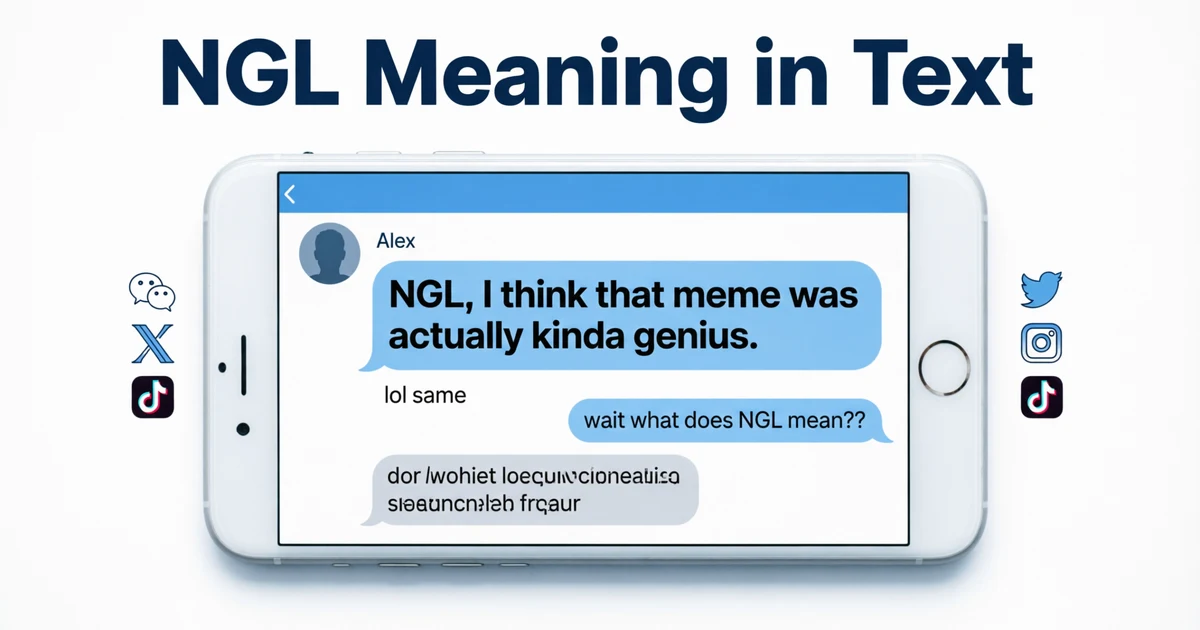
NGL stands for Not Gonna Lie. It is a popular internet slang term used in text messages, social media posts, online chats, and everyday digital conversations. People use NGL to introduce an honest opinion, admit something, or emphasize that they are being truthful about what they are about to say.
Depending on the context, NGL can mean:
- Not Gonna Lie (most common meaning in texting and social media)
- It can also refer to the NGL anonymous messaging app, though this is a separate meaning and depends on the conversation.
For example:
- NGL, that movie was better than I expected.
- NGL, I’m really tired today.
- NGL, you did an amazing job.
In almost every texting conversation, NGL simply means the speaker is being honest or sharing a genuine opinion.
Introduction
If you’ve received a message that starts with NGL, you’re not alone in wondering what it means. Internet abbreviations continue to evolve, and many people encounter new slang while texting friends, browsing social media, or reading online comments. Among these popular expressions, NGL has become one of the most widely used.
Unlike some abbreviations that have several unrelated meanings, NGL meaning in text is usually very straightforward. It helps the writer signal honesty before expressing an opinion, making a confession, or admitting something they might normally hesitate to say. You will often see it on platforms like Instagram, TikTok, Snapchat, X, Facebook, Reddit, Discord, and in private text messages.
In this guide, you’ll learn exactly what NGL means, how people use it in different situations, when it sounds appropriate, common mistakes to avoid, and how it compares with similar texting abbreviations. Whether you’re new to internet slang or simply want to understand a message someone sent you, this article explains everything in simple language.
| Meaning | Where It Is Used | Simple Explanation | Example |
|---|---|---|---|
| Not Gonna Lie | Texting, social media, chats | Introducing an honest opinion | NGL, that pizza was incredible. |
| NGL App | Anonymous messaging app | Social media question app | Send me questions on NGL. |
What Does NGL Mean in Text?
The primary meaning of NGL is Not Gonna Lie.
People place it at the beginning of a sentence to show that they are about to say something truthful, personal, surprising, or sincere. It adds emphasis to the statement without making the conversation overly serious.
For example:
- NGL, I expected the game to be boring.
- NGL, this is my favorite restaurant.
- NGL, I miss talking to you.
Think of it as the online version of saying:
- Honestly
- To be honest
- I’m being completely truthful
- If I’m honest
Although it introduces honesty, it is usually casual rather than formal. Friends, classmates, coworkers, and family members commonly use it during everyday conversations.
Why Do People Say NGL?
People use NGL because it helps make a statement feel more genuine. It often appears before:
- Honest opinions
- Unexpected compliments
- Small confessions
- Personal feelings
- Surprising observations
For example:
Instead of saying:
This coffee is really good.
Someone might write:
NGL, this coffee is really good.
The second version feels more conversational and authentic.
How NGL Is Used in Everyday Conversations
NGL works naturally in many situations.
Sharing an Honest Opinion
Someone wants to express exactly how they feel.
Examples:
- NGL, that concert exceeded my expectations.
- NGL, I liked the first season more.
- NGL, your idea makes a lot of sense.
Admitting Something
Sometimes people use NGL when confessing something small.
Examples:
- NGL, I forgot about the meeting.
- NGL, I slept through my alarm.
- NGL, I haven’t finished the assignment.
Giving a Compliment
NGL often softens compliments and makes them sound sincere.
Examples:
- NGL, you look great today.
- NGL, your presentation was impressive.
- NGL, you’re really good at this.
Expressing Feelings
It also appears when discussing emotions.
Examples:
- NGL, I’m nervous.
- NGL, I’ve been feeling stressed lately.
- NGL, I’m excited for the weekend.
Real Text Message Examples
Here are some realistic conversations.
Example 1
Alex: Did you like the movie?
Jordan: NGL, it was much better than I expected.
Example 2
Emma: How was the interview?
Ryan: NGL, I think it went really well.
Example 3
Sophia: Want another slice?
Chris: NGL, I could eat the whole pizza.
Example 4
Taylor: Do you like my new haircut?
Morgan: NGL, it really suits you.
NGL Compared With Similar Texting Terms
Many texting abbreviations express honesty, but they are not exactly the same.
| Term | Meaning | Best Use | Example |
|---|---|---|---|
| NGL | Not Gonna Lie | Honest opinion | NGL, that was fun. |
| TBH | To Be Honest | Honest statement | TBH, I agree. |
| IMO | In My Opinion | Personal opinion | IMO, this is better. |
| IMHO | In My Humble Opinion | Polite opinion | IMHO, the update helped. |
| FR | For Real | Agreement or emphasis | That’s amazing, FR. |
NGL vs TBH
These abbreviations are very similar.
NGL
- Sounds casual.
- Often introduces a surprising opinion.
- Common on social media.
TBH
- Slightly more direct.
- Can appear in casual or semi formal conversations.
- Often used when giving feedback.
Examples:
- NGL, I wasn’t expecting that.
- TBH, I think you made the right choice.
The NGL Anonymous Messaging App
You may also hear people mention NGL when talking about social media.
In this context, NGL refers to an anonymous question app where users share a link and receive anonymous messages or questions from others. The app became popular because people could ask questions without revealing their identity.
Example:
- Ask me anything on NGL.
- I got some funny questions on NGL today.
When someone specifically mentions downloading NGL, sharing an NGL link, or answering anonymous questions, they are almost certainly talking about the app rather than the slang abbreviation.
When You Should Use NGL
NGL works best in casual conversations.
Good situations include:
- Texting friends
- Social media comments
- Online gaming chats
- Group conversations
- Casual messaging apps
Examples:
- NGL, that recipe turned out great.
- NGL, I’m excited for vacation.
- NGL, today’s weather is perfect.
When You Should Avoid NGL
Avoid using NGL in professional or formal communication.
For example:
- Business emails
- Job applications
- Academic papers
- Official reports
- Professional presentations
Instead of writing:
NGL, I think this proposal is better.
Write:
Honestly, I believe this proposal offers the strongest solution.
Using complete words sounds more professional.
Common Situations Where You’ll See NGL
You may encounter NGL in many online environments.
- Text messages
- Instagram captions
- TikTok comments
- Snapchat chats
- Discord conversations
- Reddit discussions
- Facebook posts
- X replies
- Gaming communities
Its meaning remains the same across nearly all platforms.
Common Mistakes People Make
Understanding NGL is easy, but there are a few common misunderstandings.
Assuming It Has Different Meanings Everywhere
Most of the time, NGL simply means Not Gonna Lie.
Only treat it as the anonymous messaging app when the conversation clearly refers to the app.
Using It in Formal Writing
NGL is internet slang.
Avoid using it in resumes, business documents, or professional emails.
Thinking It Means Someone Was Lying Before
Saying NGL does not imply previous dishonesty.
It simply introduces an honest thought or opinion for emphasis.
Overusing It
Adding NGL before every sentence can make writing repetitive.
Use it naturally when it actually adds emphasis.
Similar Slang Terms
If you’re learning texting abbreviations, you may also come across:
- TBH, meaning To Be Honest
- IMO, meaning In My Opinion
- IMHO, meaning In My Humble Opinion
- FR, meaning For Real
- SMH, meaning Shaking My Head
- BRB, meaning Be Right Back
- IDK, meaning I Don’t Know
- IMO, meaning In My Opinion
Each abbreviation has a slightly different purpose, even though several express opinions or honesty.
Conclusion
The NGL meaning in text is almost always Not Gonna Lie. People use it to introduce an honest opinion, admit something, or emphasize sincerity in casual conversations. It appears frequently in text messages, social media posts, online chats, and digital communities.
Remember that NGL can also refer to the anonymous messaging app, but the surrounding conversation usually makes the intended meaning obvious. By understanding the context, you’ll know exactly what someone means whenever you see NGL in a message.
FAQs
What does NGL mean in text messages?
NGL stands for Not Gonna Lie. It tells the reader that the speaker is about to share an honest opinion, feeling, or admission.
Is NGL rude?
No. NGL is generally considered friendly and casual. However, what follows it can be positive or negative depending on the message.
What is the difference between NGL and TBH?
Both express honesty. NGL often introduces a surprising or sincere opinion, while TBH simply means To Be Honest and can be used in a wider range of situations.
Can I use NGL in work emails?
It is best not to. NGL is internet slang and is more appropriate for casual conversations than professional communication.
Does NGL always mean Not Gonna Lie?
Almost always in texting and social media. In some conversations, especially when discussing social media tools, NGL may refer to the anonymous messaging app.
Why do people say NGL before giving compliments?
Adding NGL makes a compliment sound more genuine and emphasizes that the person truly means what they are saying.
Is NGL popular among younger people?
Yes. Teenagers and young adults use NGL frequently on social media and messaging apps, although people of many ages understand and use it today.
Should I write NGL in uppercase or lowercase?
Both are acceptable. You may see NGL, ngl, or even Ngl. They all have the same meaning.