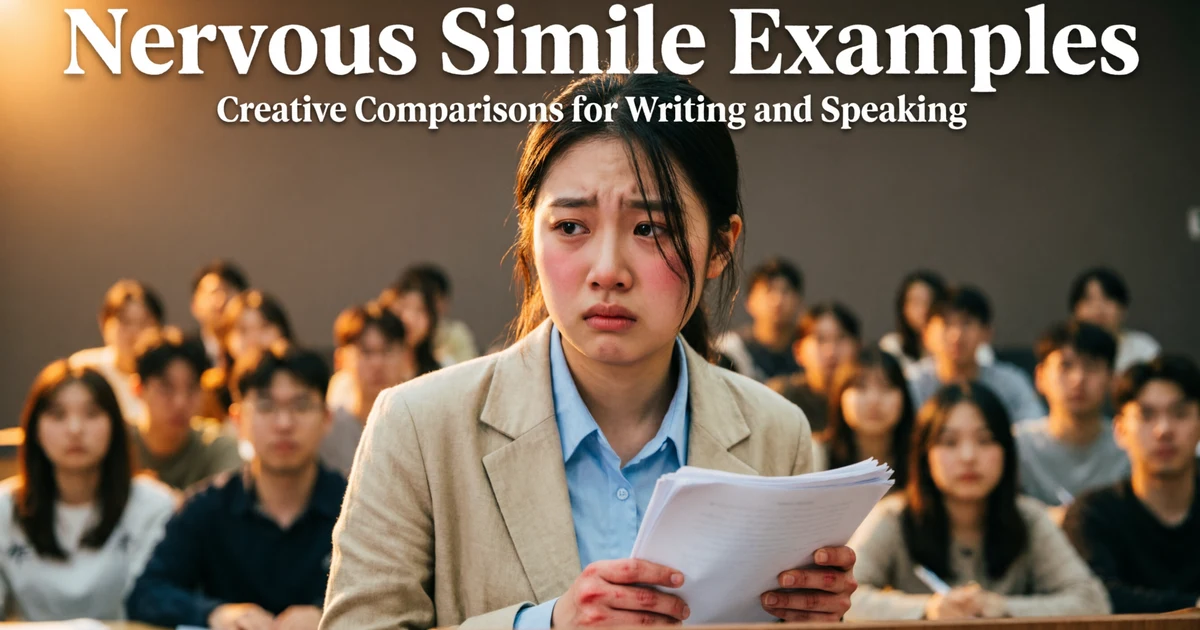
Feeling nervous often creates strong emotions, shaky reactions, and awkward moments. Writers use similes to describe those feelings in a vivid and memorable way. A good nervous simile helps readers picture fear, tension, anxiety, or excitement without long explanations.
In this guide, you will learn creative nervous simile examples for conversations, storytelling, school work, romance, and public speaking. You will also learn how to create original similes that sound natural and expressive.
What a Nervous Simile Means in Everyday English
A nervous simile compares nervous feelings to something familiar by using words like “as” or “like.”
Examples:
- As nervous as a cat in a room full of rocking chairs
- Like a leaf shaking in the wind
- As nervous as a student before final exams
These comparisons make emotions easier to understand. Instead of saying someone felt nervous, the simile paints a picture in the reader’s mind.
People often use nervous similes in:
- Daily conversations
- Speeches
- Stories
- Essays
- Poems
- Social media captions
Why Writers Use Nervous Similes in Descriptive Writing
Nervous similes add emotion and realism to writing. They help readers connect with characters and situations.
Compare these two sentences:
- Jake felt nervous.
- Jake shook like a phone on silent mode before his interview.
The second sentence feels more alive because it creates visual imagery.
Writers use nervous similes to:
- Show emotional tension
- Build suspense
- Reveal personality
- Make scenes memorable
- Add humor or drama
Good similes also improve creative writing skills because they encourage imagination.
Common Nervous Similes With Simple Meanings
Many nervous similes appear often in English because they sound natural and easy to understand.
| Nervous Simile | Meaning |
|---|---|
| As nervous as a cat in a room full of rocking chairs | Extremely anxious |
| Like a deer in headlights | Frozen with fear |
| As shaky as jelly | Physically trembling |
| Like a leaf in the wind | Weak and nervous |
| As jumpy as a rabbit | Easily startled |
| Like a student before exams | Worried and stressed |
| As tense as a stretched rope | Full of pressure |
| Like a mouse near a trap | Careful and frightened |
These similes work well in both speaking and writing.
Nervous Similes People Use in Daily Conversations
People often use nervous similes casually during stressful moments.
Examples:
- I felt like a deer in headlights during the meeting.
- She looked as nervous as a kid on the first day of school.
- My hands shook like leaves before the presentation.
- He acted like a mouse hiding from a cat.
These expressions sound natural because they connect emotions to common experiences.
Funny Nervous Similes That Sound Natural
Funny similes make nervous situations feel lighter and more entertaining.
Examples:
- As nervous as a chicken crossing a highway
- Like a squirrel after too much coffee
- As shaky as a shopping cart with one bad wheel
- Like a waiter carrying ten bowls of soup
- As nervous as someone typing the wrong password for the fifth time
Humorous similes work well in casual stories, blogs, and friendly conversations.
Nervous Similes for Students and ESL Learners
Simple similes help students learn descriptive English more easily.
Examples:
- As nervous as a child before a spelling test
- Like a balloon ready to pop
- As shaky as cold hands in winter
- Like a bird trapped indoors
- As worried as a student waiting for results
ESL learners can practice these similes in speaking exercises and classroom writing tasks.
Short Nervous Similes for Quick Descriptions
Short similes fit perfectly in captions, dialogue, and fast paced writing.
Examples:
- Like a scared rabbit
- As shaky as jelly
- Like a trapped bird
- As tense as wire
- Like ice in the sun
These short comparisons quickly show emotion without slowing the sentence.
Nervous Similes for Public Speaking Situations
Public speaking creates nervous energy for many people. Similes help describe that pressure clearly.
Examples:
- My voice shook like loose windows during a storm.
- I stood there like a deer in headlights.
- My stomach twisted like wet clothes in a washing machine.
- I felt as nervous as a singer forgetting the lyrics on stage.
These similes make speeches and personal stories more relatable.
Nervous Similes for Interview and Exam Stress
Job interviews and exams create fear, pressure, and uncertainty.
Examples:
- As nervous as a boxer before the first punch
- Like a student waiting outside the principal’s office
- As tense as a clock ticking during a test
- Like someone walking on thin ice
These comparisons fit essays, motivational writing, and real life conversations.
Nervous Similes for Storytelling and Fiction Writing
Fiction writers often use nervous similes to reveal hidden emotions.
Examples:
- Her fingers trembled like tiny branches during a storm.
- He sat still like prey hiding from a hunter.
- His heartbeat raced like drums before battle.
- She looked like a candle flickering in the wind.
These descriptions deepen emotional scenes and improve character development.
Emotional Nervous Similes for Deep Character Scenes
Some scenes require emotional intensity rather than humor.
Examples:
- Like glass ready to shatter
- As fragile as paper in heavy rain
- Like a lonely child in a crowded room
- As uneasy as dark clouds before thunder
These similes work well in emotional novels and dramatic stories.
Nervous Similes That Describe Fear and Anxiety
Fear often overlaps with nervousness. Strong similes can describe both emotions together.
Examples:
- Like footsteps in a dark hallway
- As tense as a hunted animal
- Like someone waiting for bad news
- As restless as ocean waves during a storm
These comparisons create atmosphere and emotional depth.
Creative Nervous Similes Inspired by Animals
Animals inspire many expressive similes because their behavior feels easy to imagine.
Examples:
- As nervous as a rabbit near a fox
- Like a fish flopping on dry land
- As restless as a horse before a race
- Like a bird caught in a storm
Animal similes often sound vivid and memorable.
Nervous Similes Inspired by Nature and Weather
Nature provides powerful imagery for nervous emotions.
Examples:
- Like leaves shaking in strong wind
- As uneasy as thunder before rain
- Like waves crashing against rocks
- As unstable as sand under water
Nature similes fit poetry and descriptive writing beautifully.
Romantic Nervous Similes About Love and First Dates
Love often creates nervous excitement.
Examples:
- As nervous as a teenager before a first kiss
- Like fireworks waiting to explode
- As shaky as hands holding a love letter
- Like a heart racing down a steep hill
These similes add emotion to romantic scenes and conversations.
Nervous Similes for Body Language and Facial Expressions
Body language often reveals nervous feelings before words do.
Examples:
- Her smile trembled like weak candlelight.
- His hands moved like fluttering birds.
- Her eyes darted around like trapped fireflies.
- His knees shook like loose table legs.
These details make descriptions more realistic.
Nervous Similes for Children and Young Writers
Children understand simple and playful comparisons more easily.
Examples:
- As nervous as a puppy at the vet
- Like popcorn jumping in a pan
- As shaky as a tower of blocks
- Like a mouse hiding under a chair
Young writers can use these similes in school assignments and creative stories.
Mistakes to Avoid When Writing Nervous Similes
Many writers weaken their similes by using confusing or exaggerated comparisons.
Avoid these mistakes:
- Using similes that make no sense
- Repeating the same comparison too often
- Making similes too long
- Mixing unrelated images
- Copying clichés without creativity
Bad example:
- As nervous as a potato in space
This sounds random and confusing.
Good example:
- As nervous as a singer before opening night
This comparison feels realistic and meaningful.
Tips to Create Original Nervous Similes
Original similes feel fresh and memorable.
Try these techniques:
- Observe real nervous behavior
- Use everyday situations
- Think about movement and sound
- Compare emotions to weather, animals, or objects
- Keep the image easy to imagine
Example process:
Nervous feeling: shaky hands
Comparison: loose paper in wind
Final simile: His hands shook like loose paper in the wind.
Strong similes stay simple but vivid.
Best Nervous Similes for Writers and Bloggers
Here are some strong nervous similes that fit many situations:
- As nervous as a cat near water
- Like a balloon close to bursting
- As shaky as leaves in autumn wind
- Like a candle flickering in darkness
- As tense as a tightrope walker
- Like thunder waiting to break
- As restless as waves before a storm
- Like a trapped bird searching for escape
- As uneasy as footsteps in silence
- Like a heartbeat racing downhill
These examples work well in blogs, fiction, speeches, and social media writing.
Conclusion
Nervous similes bring emotion, tension, and realism into writing. They help readers feel anxiety, fear, excitement, and uncertainty through vivid comparisons. A strong simile turns a simple sentence into something memorable and expressive.
Whether you write stories, essays, captions, or conversations, nervous similes can make your words more engaging. The best comparisons feel natural, visual, and easy to understand. With practice, you can create original similes that fit any emotional scene perfectly.
FAQs
What is a nervous simile?
A nervous simile compares nervous feelings to something familiar using words like “as” or “like.”
What is an example of a nervous simile?
“As nervous as a cat in a room full of rocking chairs” is a common example.
Why do writers use nervous similes?
Writers use them to create stronger emotional imagery and realistic descriptions.
Can nervous similes sound funny?
Yes. Funny similes can make stressful situations feel entertaining and relatable.
Are nervous similes useful in storytelling?
Yes. They help readers understand character emotions more deeply.
What are short nervous similes?
Examples include “like a scared rabbit” and “as shaky as jelly.”
Can students use nervous similes in essays?
Yes. They improve descriptive writing and make essays more engaging.
How do I create original nervous similes?
Use real emotions, everyday situations, and vivid comparisons from nature, animals, or objects.
What makes a nervous simile effective?
An effective simile feels clear, visual, and emotionally accurate.
Are nervous similes good for public speaking writing?
Yes. They describe fear, pressure, and stage anxiety in a relatable way.