Quick Answer
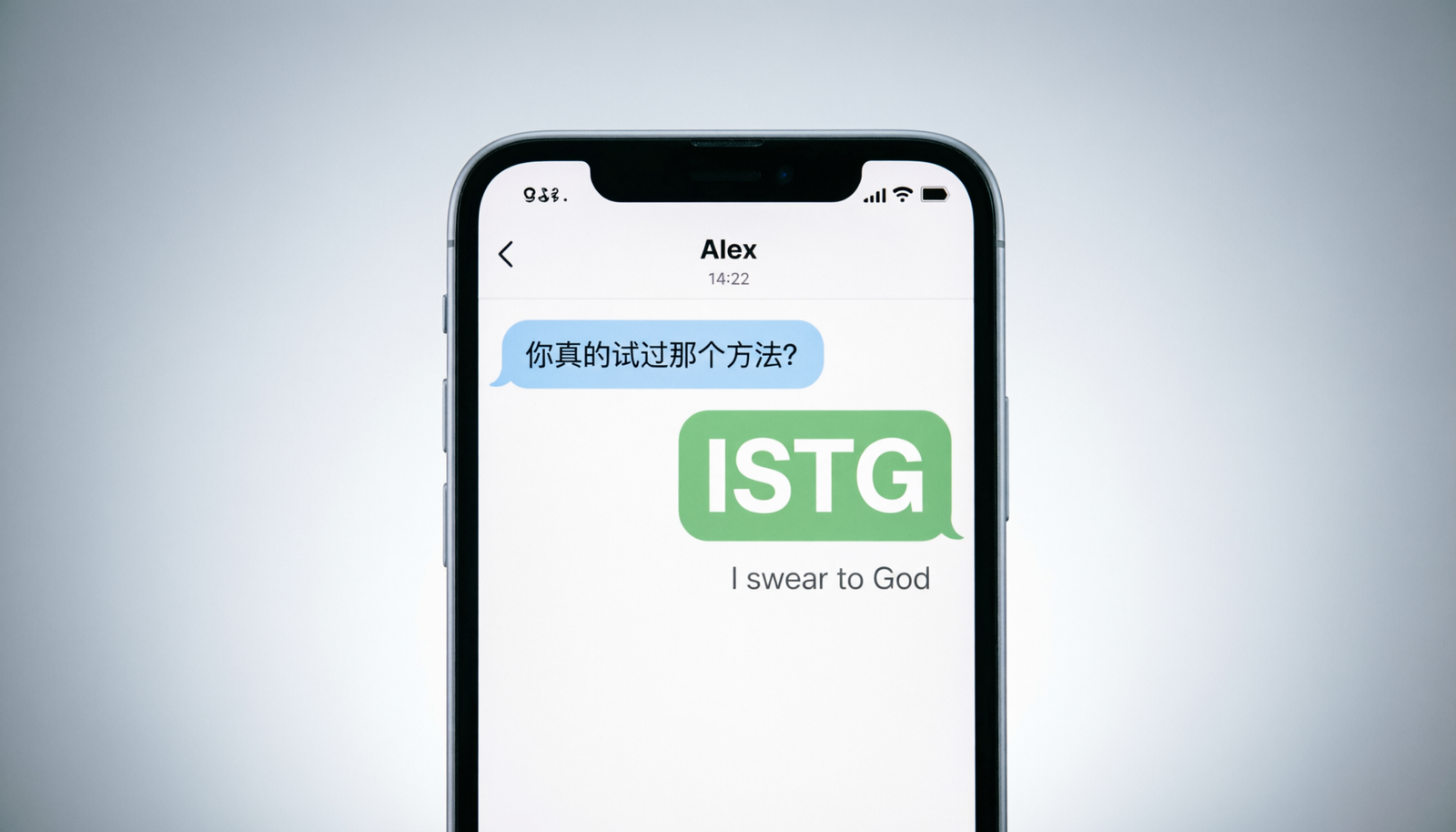
ISTG means I swear to God in text messages, social media posts, comments, and online chats. People use it to show that they are being completely honest, strongly emphasize a statement, express frustration, or warn someone that they are serious.
The exact tone depends on the conversation. ISTG can sound sincere, dramatic, annoyed, playful, or threatening. For example, ISTG I did not take your charger means the person strongly insists they are telling the truth. In another message, ISTG this app crashes every time, it expresses frustration rather than making a literal religious statement.
Introduction
Seeing ISTG in a text can feel confusing if you do not regularly use online slang. The letters do not reveal much on their own, and the phrase can carry several different emotions depending on who sends it and what happened before the message.
The most common ISTG meaning in text is I swear to God. People use it when they want their words to sound more serious or emotionally intense. A friend might use ISTG to prove they are telling the truth. Someone else might type it while complaining about a difficult class, a broken app, or an annoying situation. It can also appear before a warning when someone feels angry.
This guide explains what ISTG means, how people use it in texting and social media, and how its tone changes by context. You will also see natural conversation examples, suitable replies, similar abbreviations, and common mistakes to avoid. Understanding the surrounding message matters because the same four letters can sound funny in one conversation and aggressive in another.
| Term | Meaning | Tone | Example |
|---|---|---|---|
| ISTG | I swear to God | Serious, emotional, or dramatic | ISTG I am telling the truth |
| I swear | I strongly promise | Sincere or emphatic | I swear I sent the email |
| FR | For real | Casual agreement or honesty | That movie was good, fr |
| ONG | On God | Strong agreement or honesty | Ong, that really happened |
| NGL | Not gonna lie | Honest or direct | NGL, I forgot about it |
What Does ISTG Mean in Text?
ISTG is an abbreviation for I swear to God. It is commonly used in texts, direct messages, gaming chats, social media comments, and casual online conversations.
The phrase usually strengthens whatever comes after it. It tells the reader that the sender feels strongly about the statement or wants to be believed.
For example:
ISTG I left my wallet on the kitchen counter.
In this message, the sender strongly insists that the wallet was left in that location.
ISTG this traffic is moving so slowly.
Here, the phrase expresses irritation. The sender is not necessarily making a serious promise. They are adding emotional force to the complaint.
ISTG you better stop sending me spoilers.
This example may sound playful between close friends, but it could sound angry in a tense conversation.
Although the abbreviation contains a religious reference, many people use it casually without thinking about its literal meaning. Still, some readers may consider the phrase disrespectful or inappropriate because it uses God’s name for emphasis. Knowing your audience can help you decide whether to use it.
The Main Ways People Use ISTG
ISTG does not always communicate the same emotion. The words around it, the relationship between the people, and the current situation shape its meaning.
To Prove Someone Is Telling the Truth
One of the most common uses is to make a statement sound honest and believable.
Example:
Person 1: Did you tell anyone about my surprise party?
Person 2: No, ISTG I did not tell anyone.
The second person wants to remove doubt and show that the denial is serious.
To Express Frustration
People often use ISTG when something repeatedly annoys them.
Example:
ISTG my internet stops working every time I join a meeting.
The phrase communicates irritation and emotional exhaustion.
To Emphasize a Strong Opinion
ISTG can make praise, criticism, or an opinion feel more intense.
Example:
ISTG that was the best concert I have ever attended.
The person is not defending themselves. They are strongly emphasizing how much they enjoyed the concert.
To Give a Warning
Sometimes ISTG appears in warnings, especially when the sender feels angry.
Example:
ISTG if you delete my file again, I am changing the password.
This use can sound serious or confrontational. The tone depends on the relationship and situation.
To Be Dramatic or Funny
Friends may use ISTG for playful exaggeration.
Example:
ISTG if there is no pizza left, I am going home.
The person probably does not mean the statement literally. The dramatic wording makes the message humorous.
ISTG Meaning on Social Media
ISTG has the same basic meaning across most social platforms, but its purpose may change slightly depending on the post.
On TikTok, Instagram, Snapchat, X, Reddit, and similar platforms, people may use ISTG in:
- Video captions
- Comment sections
- Private messages
- Reaction posts
- Memes
- Story replies
- Arguments
- Gaming discussions
A comment such as ISTG this happens every Monday expresses relatable frustration.
A caption such as ISTG this is my favorite outfit may show excitement or confidence.
A reply such as ISTG you are making that up questions another person’s honesty while also adding emotional intensity.
Social media messages often lack facial expressions and vocal tone. Emojis, capitalization, punctuation, and context can help show whether ISTG is playful or serious.
For example:
ISTG 😂
This usually feels playful or amused.
ISTG.
The period can make the message feel firm, cold, or serious.
ISTG STOP
Capital letters may show anger, urgency, or dramatic exaggeration.
ISTG Meaning From a Guy or Girl
ISTG does not have a special meaning based on the sender’s gender. Whether it comes from a guy, a girl, a friend, a partner, or a coworker, it still usually means I swear to God.
The more important questions are:
- What were you discussing?
- Was the conversation friendly or tense?
- Did the sender include emojis?
- Was the phrase followed by a promise, complaint, or warning?
- Does the person often use dramatic slang?
For example, ISTG you looked amazing tonight is strong praise.
ISTG I am not talking to anyone else is a serious reassurance, especially in a relationship conversation.
ISTG stop ignoring me may express frustration, hurt, or anger.
Do not assume the phrase is romantic, dishonest, or aggressive without reading the full conversation.
Natural ISTG Examples in Text Messages
Here are common examples showing how the abbreviation works in everyday conversations.
Honest Statement
Person 1: Did you eat the last cookie?
Person 2: No, ISTG it was already gone when I got home.
The sender strongly denies eating it.
Frustration
ISTG this printer only breaks when I need something urgently.
The sender feels annoyed by a repeated problem.
Excitement
ISTG you need to watch this show. It is so good.
The sender strongly recommends the show.
Playful Warning
ISTG if you post that picture, I am blocking you 😂
The laughing emoji suggests that the warning is probably playful.
Serious Warning
ISTG if you touch my phone again, we are going to have a problem.
This version sounds confrontational and should not automatically be treated as a joke.
Strong Agreement
Person 1: That assignment took forever.
Person 2: ISTG, I thought I would never finish it.
The second person strongly relates to the complaint.
Disbelief
ISTG, there is no way he said that in front of everyone.
The phrase shows surprise and disbelief.
Promise
ISTG I will pay you back on Friday.
The sender wants the promise to sound sincere.
How to Reply When Someone Says ISTG
The best reply depends on why the person used it.
| Situation | What ISTG Communicates | Possible Reply |
|---|---|---|
| They are proving honesty | They want you to believe them | Okay, I believe you |
| They are frustrated | They want understanding | That sounds really annoying |
| They are excited | They strongly recommend something | I will check it out |
| They are joking | They are being dramatic for fun | Relax, I saved you some |
| They are warning you | They may be angry or serious | I understand. Let us talk calmly |
| You are unsure | The tone is unclear | Are you being serious? |
You do not always need to respond directly to the abbreviation. Focus on the main message.
For example:
Message: ISTG I sent that document yesterday.
Reply: Let me check my inbox again.
This response addresses the actual issue instead of debating the phrase.
Is ISTG Rude or Offensive?
ISTG is not automatically rude, but it can sound inappropriate in certain situations.
Some people avoid the phrase because it uses God’s name casually. Religious readers may consider it disrespectful, even when the sender does not intend to offend anyone.
It can also sound rude when used in an argument or warning.
Compare these messages:
ISTG this weather is exhausting.
This is a general complaint and does not target another person.
ISTG you need to shut up.
This directly attacks someone and sounds aggressive.
Context matters more than the abbreviation alone. In professional, academic, family, or formal communication, I promise, honestly, seriously, or I assure you may be safer choices.
Is ISTG a Threat?
ISTG by itself is not a threat. It simply adds seriousness or emotion to a statement. However, the words that follow it may contain a threat.
For example:
ISTG I forgot the appointment.
This is not threatening.
ISTG you will regret this.
This sounds intimidating and may need to be taken seriously.
Look at the complete message, the sender’s behavior, and the surrounding situation. If a message makes you feel unsafe, save the conversation, avoid escalating the argument, and contact a trusted person or the appropriate authorities when necessary.
ISTG Compared With Similar Texting Slang
Several texting abbreviations express honesty, emphasis, or strong agreement. They are related, but they are not always interchangeable.
ISTG vs FR
FR means for real. It usually sounds more casual and less intense than ISTG.
Example:
That test was difficult, fr.
ISTG that was the hardest test all semester.
The second message sounds stronger and more emotional.
ISTG vs ONG
ONG means on God. People use it to show honesty or strong agreement.
Example:
ONG, I saw him at the store.
ISTG, I saw him at the store.
Both expressions are strong, but their popularity and tone can vary by age group and online community.
ISTG vs NGL
NGL means not gonna lie. It introduces an honest opinion, confession, or criticism.
Example:
NGL, I did not enjoy the movie.
ISTG that movie was terrible.
NGL sounds more conversational. ISTG adds stronger emotion.
ISTG vs IKR
IKR means I know, right. It shows agreement rather than making a promise.
Example:
Person 1: This room is freezing.
Person 2: IKR.
ISTG could also appear in the reply, but it would add frustration:
ISTG, I cannot feel my hands.
When You Should Avoid Using ISTG
ISTG fits casual conversations, but it may not suit every audience or situation.
Avoid it when:
- Writing a professional email
- Contacting a teacher, manager, or client
- Communicating with someone who may find the phrase religiously offensive
- Discussing a serious conflict where emotional language may make things worse
- Writing formal school or workplace documents
- Making a promise that needs precise terms and clear evidence
Instead of ISTG I submitted the report, write I submitted the report at 3:00 p.m. and attached the confirmation.
Specific details usually sound more credible than emotional emphasis.
Common Mistakes When Reading or Using ISTG
Assuming It Is Always Literal
Many people use ISTG as casual emphasis rather than a formal religious oath. The sender may simply mean seriously, honestly, or I cannot believe this.
Treating Every Message as Aggressive
ISTG can express anger, but it can also show excitement, humor, honesty, or surprise. Read the entire message before judging the tone.
Using It in Formal Writing
The abbreviation can look careless or overly emotional in workplace and academic communication. Use clear language instead.
Ignoring the Words After ISTG
The phrase alone does not tell you whether the message is harmless. A playful complaint and a serious threat may both begin with ISTG.
Overusing It
Using ISTG in every message can make your writing sound dramatic and reduce its impact. Save it for moments when strong emphasis feels natural.
Assuming Gender Changes Its Meaning
ISTG means the same thing regardless of whether a guy, girl, friend, partner, or stranger sends it. Context determines the emotional meaning.
Better Alternatives to ISTG
You can choose a different phrase based on the tone you want.
1-For honesty:
- I promise
- I am telling the truth
- Honestly
- I assure you
- I am being serious
2-For frustration:
- This is so annoying
- I cannot believe this keeps happening
- I am really frustrated
- This is getting ridiculous
3-For emphasis:
- Seriously
- Truly
- Absolutely
- I genuinely mean it
- No exaggeration
4-For casual texting:
- FR
- NGL
- For real
- Seriously though
These alternatives can communicate the same basic idea without using a religious expression.
Conclusion
The most common ISTG meaning in text is I swear to God. People use it to emphasize honesty, frustration, excitement, disbelief, or a warning. Its tone can range from playful to serious, so always consider the surrounding words, punctuation, emojis, and relationship between the people.
In casual conversations, ISTG may simply mean seriously or I promise. In tense messages, it can make a warning sound stronger. When the tone is unclear, asking the sender what they mean is better than making an immediate assumption.
FAQs
What does ISTG mean in texting?
ISTG means I swear to God. It adds strong emphasis and may show honesty, frustration, excitement, disbelief, or anger.
What does ISTG mean on Snapchat?
On Snapchat, ISTG usually means I swear to God. People use it in snaps and chats to sound serious, prove honesty, or react emotionally.
What does ISTG mean on TikTok?
On TikTok, ISTG often appears in captions and comments as a strong version of seriously, honestly, or I cannot believe this.
Is ISTG a bad word?
ISTG is not a swear word in the usual sense, but some people may find it disrespectful because it uses God’s name casually.
Can ISTG be used as a joke?
Yes. Friends often use ISTG for dramatic humor, especially with laughing emojis or an obviously exaggerated statement.
Does ISTG mean someone is lying?
No. People usually use it to convince others that they are telling the truth. However, the abbreviation itself does not prove whether a statement is true.
Is ISTG always angry?
No. It can communicate anger, but it may also express honesty, excitement, surprise, humor, or frustration.
What is the best response to ISTG?
Respond to the meaning of the full message. You might say I believe you, that sounds frustrating, are you serious, or let us talk about it calmly.