Introduction
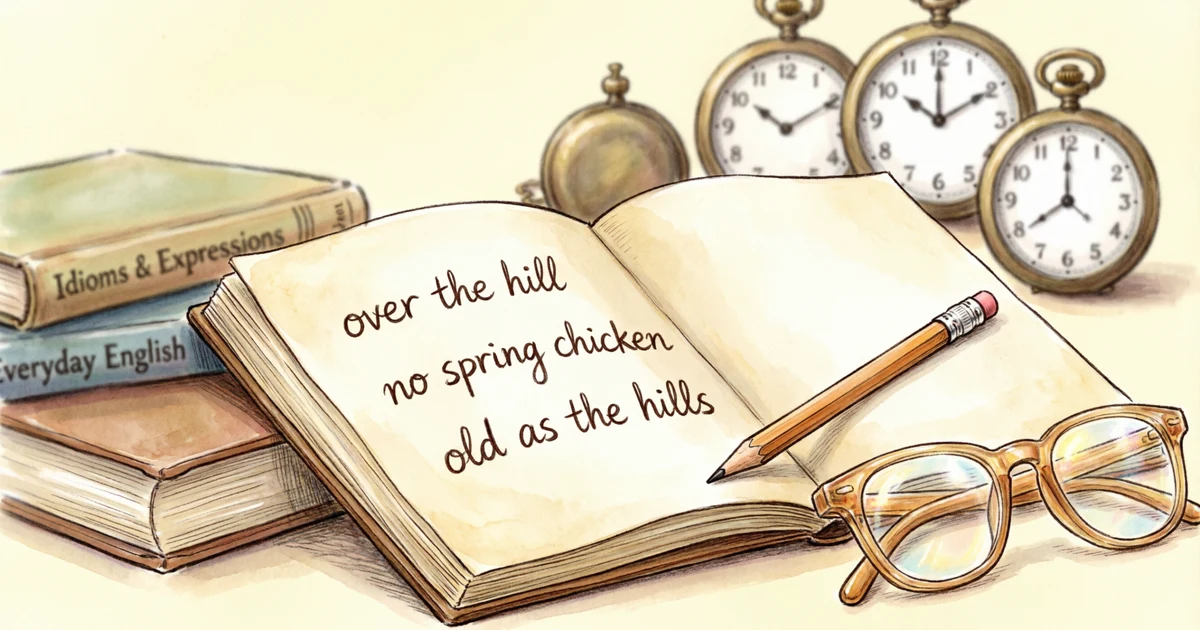
The phrase “idioms for old” usually means expressions people use to describe age, old things, old habits, or long experience in a more colorful way. For example, someone may say a person is “over the hill” instead of simply saying they are old.
But many students, writers, and ESL learners get confused because idioms often sound like metaphors. Both can describe something indirectly. Both can make writing more expressive. Still, they do not work in exactly the same way.
The core difference is simple: an idiom is a fixed expression whose meaning is not always clear from the individual words, while a metaphor is a direct comparison that says one thing is another to create meaning.
For example:
Idiom: He is over the hill.
Meaning: He is past his prime or getting old.
Metaphor: Age is a quiet winter.
Meaning: Age feels calm, cold, slow, or reflective.
This article explains idioms and metaphors through the topic of “old,” so you can understand their differences, their overlap, and how to use them correctly in speech, writing, and literature.
What Idioms Mean
An idiom is a common phrase or expression with a meaning that differs from the literal meaning of its words.
If someone says, “That joke is as old as the hills,” they do not mean the joke is literally the same age as mountains. They mean the joke is extremely old or familiar.
Simple Definition
An idiom is a fixed expression with a special meaning understood by native speakers.
Purpose
Idioms make language sound natural, expressive, informal, and culturally familiar.
How Idioms Work
Idioms work because people in a language community already know what the expression means. You usually cannot understand an idiom by translating each word separately.
Short Natural Example
That excuse is as old as the hills.
This means the excuse is very old, common, or overused.
Why Idioms Get Confused with Metaphors
Many idioms use imagery. “Old as the hills” creates a picture in the mind, just like a metaphor can. But the phrase works as a familiar fixed expression, not as a fresh comparison invented by the writer.
What Metaphors Mean
A metaphor is a figure of speech that describes one thing as if it were another thing. It does not use “like” or “as” in its main form.
For example, “Old age is a library of memories” is a metaphor. It compares old age to a library to suggest wisdom, history, stories, and experience.
Simple Definition
A metaphor is a direct comparison that says one thing is another to create a deeper meaning.
Purpose
Metaphors help writers explain ideas, emotions, and experiences in a vivid or symbolic way.
How Metaphors Work
Metaphors work by transferring meaning from one image or idea to another. The reader understands the comparison through imagination and context.
Short Natural Example
Her old house was a museum of family stories.
This means the house held many memories, not that it was literally a museum.
Why Metaphors Get Confused with Idioms
Some metaphors become so common that people start using them like idioms. Also, both idioms and metaphors often avoid direct literal meaning.
Idioms vs Metaphors: The Core Difference
The main difference is that idioms are fixed expressions with accepted meanings, while metaphors are comparisons that create meaning through imagery.
An idiom usually belongs to everyday language. A metaphor can be original, poetic, literary, or personal.
For example:
Idiom: He is no spring chicken.
This means he is not young anymore.
Metaphor: He is an old oak in a changing forest.
This suggests strength, age, endurance, and wisdom.
The idiom has a known meaning. The metaphor invites interpretation.
Quick Comparison Table
| Point | Idioms | Metaphors |
|---|---|---|
| Definition | A fixed expression with a non-literal meaning | A direct comparison between two unlike things |
| Scope | Usually common in everyday speech | Common in literature, poetry, essays, and speech |
| Purpose | To sound natural, expressive, or conversational | To create imagery, emotion, symbolism, or deeper meaning |
| Length | Often short phrases | Can be short, extended, or developed across a paragraph |
| Structure | Usually fixed wording | Flexible and creative |
| Meaning | Often learned as a whole phrase | Understood through comparison and context |
| Use in writing | Good for natural dialogue and informal tone | Good for description, theme, and literary effect |
| Example | He is over the hill. | Time is a thief stealing youth. |
How Idioms Work
Idioms work through shared meaning. Native speakers understand them because they have heard them before.
Take the idiom “long in the tooth.” It means someone is old or getting old. The phrase comes from the idea that some animals’ teeth appear longer as they age. Today, people use it as an idiom, often in a humorous or slightly informal way.
Examples:
That actor is getting a bit long in the tooth for action roles.
This laptop is long in the tooth, but it still works.
Idioms can describe people, objects, ideas, habits, jokes, trends, or methods.
Common idioms for old include:
| Idiom | Meaning | Example |
|---|---|---|
| Over the hill | Past one’s prime | He jokes that he is over the hill now. |
| No spring chicken | Not young anymore | My grandfather is no spring chicken, but he still gardens daily. |
| Long in the tooth | Old or aging | That software is getting long in the tooth. |
| As old as the hills | Very old | That story is as old as the hills. |
| Seen better days | Old, worn, or damaged | This sofa has seen better days. |
| Ancient history | No longer important because it happened long ago | That argument is ancient history. |
| Old school | Traditional or old-fashioned | She prefers old-school teaching methods. |
Idioms can sound friendly and natural, but they can also sound rude if used carelessly. For example, calling a person “over the hill” may offend them unless the tone is clearly playful.
How Metaphors Work
Metaphors work by creating a direct imaginative link between two things.
When a writer says, “Age is a map of every road we have walked,” they compare age to a map. The metaphor suggests that age carries memory, experience, choices, and personal history.
Metaphors can describe old age in many tones:
Positive:
Old age is a crown of quiet wisdom.
Reflective:
His face was a calendar of hard years.
Sad:
The empty house was a fading photograph.
Strong:
She was an ancient tree still holding the hill together.
Metaphors give writers more freedom than idioms. You can create a new metaphor that fits your exact mood, character, or theme.
Key Differences in Simple Language
Idioms and metaphors both use non-literal language, but they guide the reader in different ways.
An idiom usually says, “Here is a phrase people already know.”
A metaphor usually says, “Here is a comparison that helps you see something differently.”
Idioms often belong to conversation. Metaphors often belong to description, literature, speeches, and creative writing.
Idioms can be difficult for ESL learners because the meaning may not match the words. Metaphors can be difficult because the meaning depends on interpretation.
For example:
He is no spring chicken.
This idiom means he is not young anymore.
He is a fading candle.
This metaphor suggests age, weakness, softness, or the end of life, depending on the context.
The idiom gives a common meaning. The metaphor creates an image.
Can Idioms and Metaphors Overlap?
Yes, idioms and metaphors can overlap.
Many idioms began as metaphors. Over time, people repeated them so often that they became fixed expressions.
For example, “over the hill” works like a metaphor because it imagines life as a hill. Youth climbs upward, and older age moves beyond the peak. But because the phrase has a fixed meaning in English, we usually call it an idiom.
Another example is “as old as the hills.” It compares something old to hills or mountains. It uses comparison, but English speakers recognize it as a set idiom.
So the overlap looks like this:
All idioms are not metaphors, but some idioms use metaphorical ideas.
This matters because learners should not treat every figurative phrase the same way. Some phrases must be learned as fixed expressions. Others can be understood by studying the comparison.
Examples of Idioms for Old
Here are useful idioms connected to the idea of being old, looking old, feeling old, or belonging to the past.
1. Over the Hill
Meaning: Past one’s best or most active years.
Example:
He turned fifty and joked that he was over the hill.
Usage note:
This can sound humorous, but it may sound insulting if used about someone else.
2. No Spring Chicken
Meaning: Not young anymore.
Example:
She is no spring chicken, but she still runs every morning.
Usage note:
This idiom often sounds informal and slightly playful.
3. Long in the Tooth
Meaning: Old or aging.
Example:
That car is getting long in the tooth, but it still runs well.
Usage note:
People use this for both people and things, though it can sound blunt.
4. As Old as the Hills
Meaning: Very old.
Example:
That legend is as old as the hills.
Usage note:
This idiom works well for stories, traditions, jokes, and ideas.
5. Seen Better Days
Meaning: Old, worn, damaged, or no longer in good condition.
Example:
My favorite jacket has seen better days.
Usage note:
This phrase often describes objects, buildings, clothes, or places.
6. Ancient History
Meaning: Something from the past that no longer matters.
Example:
Their argument is ancient history now.
Usage note:
This idiom does not always mean physically old. It often means emotionally or socially finished.
7. Old School
Meaning: Traditional, old-fashioned, or connected with earlier methods.
Example:
My teacher is old school and still loves handwritten notes.
Usage note:
This can sound positive or negative depending on tone.
Examples of Metaphors for Old
Metaphors for old age or old things often create deeper emotional meaning. They can suggest wisdom, weakness, memory, decay, beauty, survival, or history.
1. Age Is a Library
Example:
Her age was a library full of stories no one had written down.
Meaning:
Old age carries knowledge, memories, and experience.
2. Time Is a Thief
Example:
Time was a thief that had stolen the brightness from his hair.
Meaning:
Time takes youth, beauty, energy, or opportunity.
3. The House Was a Tired Old Soldier
Example:
The house was a tired old soldier, still standing after every storm.
Meaning:
The old house seems strong, worn, and full of history.
4. His Face Was a Map
Example:
His face was a map of every winter he had survived.
Meaning:
Wrinkles and marks show experience and hardship.
5. The Town Was a Faded Photograph
Example:
The town was a faded photograph of its former glory.
Meaning:
The town feels old, changed, and less lively than before.
6. Her Voice Was Autumn
Example:
Her voice was autumn, warm but touched by the end of summer.
Meaning:
Her voice suggests age, warmth, softness, and change.
Idioms vs Metaphors in Literature and Writing
In literature, idioms and metaphors serve different jobs.
Writers use idioms to make dialogue sound natural. A character might say, “I’m no spring chicken,” and readers immediately understand the speaker’s personality, age, humor, or cultural background.
Writers use metaphors to build imagery, mood, and theme. A narrator might write, “The old man was a lighthouse in a sea of noise.” This metaphor suggests guidance, age, isolation, and steadiness.
Idioms often reveal voice. Metaphors often deepen meaning.
For example:
Dialogue with idiom:
“I’m too old for this nonsense. I’m no spring chicken.”
Narration with metaphor:
He stood at the doorway, an old lighthouse watching the storm arrive.
The idiom sounds conversational. The metaphor sounds literary.
Good writers know when to use each one. Too many idioms can make writing sound casual or clichéd. Too many metaphors can make writing feel heavy or unclear. The best choice depends on purpose, audience, and tone.
Idioms vs Metaphors for Students and ESL Learners
Students and ESL learners should learn idioms and metaphors differently.
For idioms, learn the whole phrase and its real meaning. Do not translate word by word.
For example:
No spring chicken does not mean a chicken.
It means someone is not young.
Seen better days does not mean a person literally saw better days.
It means something looks old, worn, or damaged.
For metaphors, ask what two things the writer compares and what qualities they share.
For example:
Age is a winter garden.
Ask:
What is compared?
Age and a winter garden.
What qualities connect them?
Quietness, beauty, fading life, stillness, memory.
What feeling does it create?
Peaceful, sad, reflective, or gentle.
This method helps learners understand figurative language without guessing wildly.
Common Mistakes and Confusion
Mistake 1: Taking Idioms Literally
Many ESL learners try to understand idioms word by word. This usually fails.
Incorrect understanding:
He is over the hill = He walked across a hill.
Correct meaning:
He is older or past his prime.
Mistake 2: Calling Every Figurative Phrase a Metaphor
Not every non-literal phrase is a metaphor. Idioms, similes, symbols, personification, and hyperbole can also use non-literal meaning.
As old as the hills is usually an idiom, even though it uses comparison.
Mistake 3: Using Rude Age Idioms in Formal Writing
Some idioms for old can sound disrespectful.
For example:
My manager is over the hill.
This sounds rude. A better formal sentence would be:
My manager has many years of experience.
Mistake 4: Mixing Idiom Wording
Idioms usually have fixed wording. Changing the words can confuse readers.
Awkward:
He is not a summer chicken.
Correct:
He is no spring chicken.
Mistake 5: Creating Unclear Metaphors
A metaphor should help the reader understand something better. If the comparison feels random, it weakens the writing.
Unclear:
Old age is a blue spoon.
Clearer:
Old age is a quiet room full of memories.
When to Use Idioms and When to Use Metaphors
Use idioms when you want language that sounds natural, familiar, casual, or conversational.
Good places for idioms:
- Dialogue
- Informal essays
- Blog writing
- Everyday speech
- Character voice
- Light humor
Example:
My old phone has seen better days.
Use metaphors when you want to create imagery, emotion, symbolism, or a deeper idea.
Good places for metaphors:
- Poetry
- Fiction
- Personal essays
- Speeches
- Descriptive writing
- Literary analysis
Example:
My old phone was a tiny museum of forgotten messages.
Use idioms for quick familiar meaning. Use metaphors for fresh description.
Related Terms People Often Confuse with Idioms and Metaphors
Simile
A simile compares two things using “like” or “as.”
Example:
He is as old as the hills.
This example also works as an idiom because it is a fixed common expression.
Hyperbole
Hyperbole means extreme exaggeration.
Example:
This chair is a million years old.
The chair is not literally that old. The speaker exaggerates to make a point.
Proverb
A proverb is a short traditional saying that gives advice or wisdom.
Example:
You can’t teach an old dog new tricks.
This saying suggests that people may resist learning new habits later in life. It can sound unfair or insulting, so use it carefully.
Cliché
A cliché is an expression used so often that it feels unoriginal.
Some idioms become clichés when writers overuse them.
Example:
Age is just a number.
This phrase can still work in casual speech, but it may feel predictable in serious writing.
Symbol
A symbol is an object, image, or action that represents a larger idea.
Example:
An old clock may symbolize time, memory, aging, or mortality.
Conclusion
Idioms and metaphors both help writers and speakers describe “old” in more expressive ways, but they are not the same.
An idiom is a fixed expression with a known meaning, such as “over the hill,” “no spring chicken,” or “seen better days.” Idioms often sound natural in conversation, but learners must study them as whole phrases.
A metaphor is a direct comparison that creates meaning through imagery, such as “age is a library” or “time is a thief.” Metaphors give writers more freedom and often create deeper emotional or literary effects.
The easiest way to remember the difference is this: idioms are learned expressions, while metaphors are meaningful comparisons. Some idioms contain metaphorical ideas, but not every metaphor is an idiom.
When you understand both, you can describe age, old objects, old habits, and old memories with more accuracy, style, and confidence.
FAQs
1. What are idioms for old?
Idioms for old are common expressions that describe age, old things, or past times in a non-literal way. Examples include “over the hill,” “no spring chicken,” “long in the tooth,” and “as old as the hills.”
2. Is “old as the hills” an idiom or a simile?
“As old as the hills” works as both. It is a simile because it uses “as” to compare two things. It is also an idiom because English speakers use it as a fixed expression meaning very old.
3. Is “over the hill” rude?
It can be rude if used about another person, especially in a serious context. It sounds safer when someone uses it jokingly about themselves. In formal writing, use phrases like “older,” “experienced,” or “past the peak of his career” instead.
4. What is the difference between an idiom and a metaphor?
An idiom is a fixed phrase with a special meaning. A metaphor is a direct comparison that says one thing is another. “No spring chicken” is an idiom. “Age is a library of memories” is a metaphor.
5. Can an idiom also be a metaphor?
Yes. Some idioms use metaphorical ideas. “Over the hill” imagines life as a hill, so it has a metaphorical base. But because people use it as a fixed phrase with a known meaning, we usually call it an idiom.
6. What is a polite idiom for old?
Be careful with idioms for age because many sound blunt or humorous. “Getting on in years” is softer than “over the hill.” In respectful writing, direct phrases like “older adult” or “person with many years of experience” often work better.
7. What is a good metaphor for old age?
A good metaphor for old age depends on tone. For wisdom, you might write, “Old age is a library of lived stories” , For sadness, you might write, “Old age is a fading photograph.” For strength, try “She was an ancient oak still holding the ground.”