Introduction
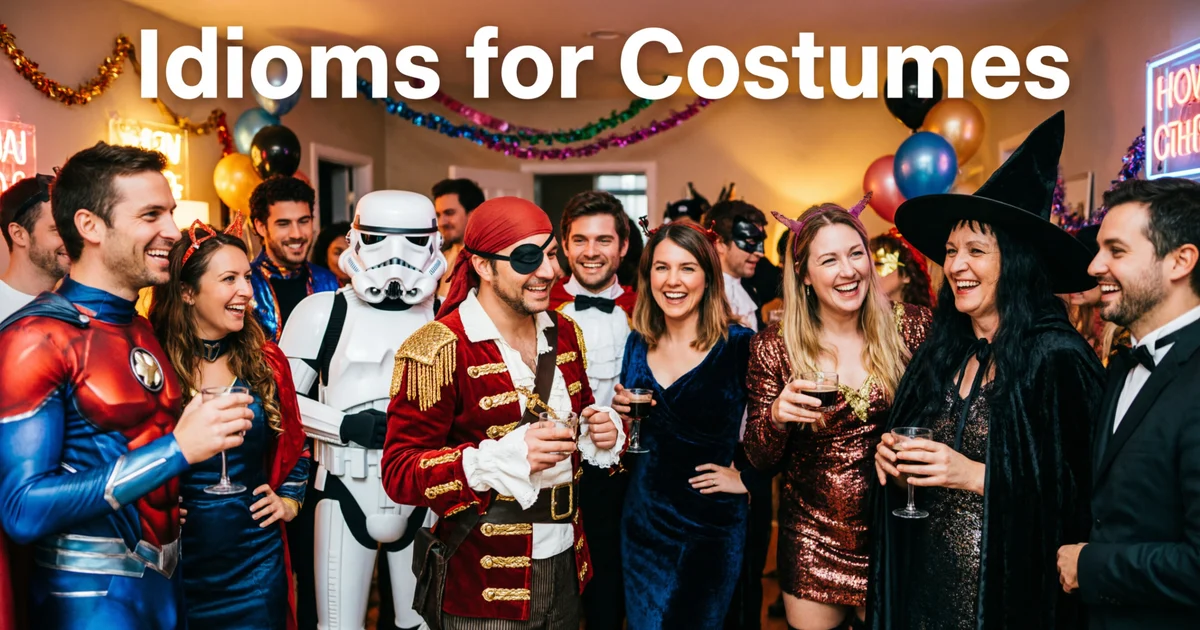
Costumes make parties, festivals, theater shows, and celebrations more exciting and memorable. People often use creative expressions and idioms when talking about dressing up, disguises, masks, and funny outfits. These phrases help conversations sound more colorful and natural. Writers also use costume related idioms to describe characters, emotions, and appearances in a lively way.
Learning idioms for costumes can improve speaking, writing, and storytelling skills. Students and ESL learners enjoy these expressions because they are easy to imagine and fun to use in daily English. From dressing to kill to hiding in disguise, these idioms add humor, creativity, and personality to conversations.
What Idioms for Costumes Mean
Idioms for costumes describe clothing, disguises, appearance, fashion, or dressing up in creative and colorful ways. People often use these expressions during parties, theater events, Halloween, festivals, and everyday conversations.
Here are a few simple meanings connected to costume idioms:
- Expressions about dressing differently
- Phrases about disguise or pretending
- Idioms linked to fashion and appearance
- Funny sayings about unusual outfits
- Creative expressions for role playing and costumes
Costumes play a big role in movies, celebrations, school events, and storytelling. Because of that, English contains many fun expressions related to clothing and appearance.
People use idioms for costumes in casual conversations, creative writing, stage performances, and social events. These expressions make language feel more visual and lively.
Students and ESL learners often enjoy costume related idioms because they are easy to imagine and fun to use. Writers also use them to describe characters, emotions, and dramatic scenes in a more interesting way.
Common and Popular Idioms for Costumes
Dressed to Kill
Meaning: Wearing extremely stylish or impressive clothes.
Example: Sarah arrived at the costume party dressed to kill in a sparkling vampire outfit.
Wolf in Sheep’s Clothing
Meaning: Someone who hides bad intentions behind a harmless appearance.
Example: The magician looked friendly, but he turned out to be a wolf in sheep’s clothing.
Wear Many Hats
Meaning: To perform many different roles or responsibilities.
Example: During the school play, Emma wore many hats as an actor, designer, and costume helper.
Dress the Part
Meaning: To wear clothing suitable for a role or situation.
Example: Jake dressed the part of a pirate with boots, a hat, and a fake sword.
Pull a Rabbit Out of a Hat
Meaning: To do something surprising or clever at the last moment.
Example: The costume team pulled a rabbit out of a hat and created amazing outfits overnight.
In Disguise
Meaning: Hidden behind another appearance or costume.
Example: The famous actor entered the festival in disguise.
Emperor’s New Clothes
Meaning: People pretending something is impressive when it is not.
Example: Everyone praised the strange costume, but it felt like the emperor’s new clothes.
Fancy Dress
Meaning: Special clothing worn for costume parties.
Example: Our school organized a fancy dress competition for Halloween.
Masked Up
Meaning: Wearing a mask or hiding identity.
Example: The dancers arrived masked up for the carnival parade.
Steal the Show
Meaning: To attract the most attention.
Example: Mia stole the show with her glowing fairy costume.
Funny Idioms and Expressions for Costumes
Look Like a Million Bucks
Meaning: To look fantastic or expensive.
Example: Grandpa looked like a million bucks in his old movie star costume.
Paint the Town Red
Meaning: To celebrate wildly and have fun.
Example: The friends painted the town red after the costume contest ended.
Decked Out
Meaning: Dressed in fancy or decorative clothing.
Example: The children came decked out as superheroes and cartoon characters.
All Dressed Up
Meaning: Wearing formal or special clothes.
Example: We were all dressed up for the comic convention.
Show Your True Colors
Meaning: To reveal your real personality.
Example: Tom showed his true colors when he chose a funny clown costume.
Idioms for Costumes With Meanings and Examples
Behind the Mask
Meaning: Hidden feelings or identity.
Example: Behind the mask, the shy student felt more confident.
Clothes Make the Man
Meaning: Appearance influences how people judge others.
Example: The actor believed clothes make the man during stage performances.
Fit for a King
Meaning: Very grand or luxurious.
Example: Her royal costume looked fit for a king.
Walk in Someone Else’s Shoes
Meaning: To understand another person’s experience.
Example: Wearing historical costumes helped students walk in someone else’s shoes.
Put on a Brave Face
Meaning: To appear confident even when nervous.
Example: Liam put on a brave face before performing in costume on stage.
How to Use Idioms for Costumes in Sentences
Costume idioms work best when talking about appearance, theater, celebrations, fashion, or role playing. Try using them naturally in conversations and writing.
Examples:
- My sister dressed to kill at the cosplay event.
- The detective entered the party in disguise.
- The little boy stole the show in his dinosaur costume.
- We all dressed the part for the school drama.
Short and natural sentences help these expressions sound more realistic.
Idioms for Costumes in Writing and Speaking
Writers use costume idioms to create colorful scenes and memorable characters. These phrases help readers imagine clothing, emotions, and personality quickly.
Speakers use them during:
- Halloween conversations
- Theater discussions
- Fashion topics
- Storytelling
- Party invitations
- Social media captions
These expressions also make English sound more fluent and natural.
Idioms for Costumes for Students and ESL Learners
Students can remember costume idioms more easily because the images feel vivid and entertaining. ESL learners often improve speaking confidence by practicing short idiomatic phrases.
Helpful learning tips:
- Match idioms with pictures
- Use one idiom daily in conversation
- Practice role play activities
- Create costume themed dialogues
- Watch movies with subtitles
Learning idioms through costumes also improves imagination and vocabulary.
Idioms for Costumes in Conversations
Here are some natural conversation examples.
At a Costume Party
Amina: You look amazing tonight.
Sara: Thanks. I wanted to dress the part of a movie queen.
During Halloween
Ali: Who stole the show this year?
Hamza: Probably the boy in the dragon costume.
In School Theater
Teacher: Everyone should dress the part before rehearsal starts.
Students: Okay, we will change into our costumes now.
Similar Phrases and Expressions
These expressions connect closely with costume idioms:
- Dress up
- Blend in
- Stand out from the crowd
- Put on an act
- Hide behind a mask
- Costume change
- Role playing
- Make an entrance
Writers often mix these phrases with idioms to create richer descriptions.
Common Mistakes
Using Idioms Too Literally
Wrong: He actually killed someone because he dressed to kill.
Correct: He looked very stylish.
Mixing Formal and Casual Tone
Some costume idioms sound playful and casual. Avoid using them in serious academic writing unless the context fits.
Overusing Idioms
Too many idioms can confuse readers. Use them naturally and only where they improve the sentence.
Choosing the Wrong Situation
Do not use funny costume idioms during serious emotional conversations.
Conclusion
Idioms for costumes add creativity, humor, and vivid imagery to English communication. These expressions help students, writers, and ESL learners describe clothing, disguise, celebrations, and personality in a more colorful way. Whether someone dresses to kill, steals the show, or hides in disguise, costume idioms make conversations feel lively and memorable. They also improve storytelling and speaking skills because they create strong mental pictures. Learning these phrases through simple examples makes them easier to remember and use naturally. With regular practice, costume related idioms can make both writing and everyday English sound more fluent, expressive, and enjoyable.
FAQs
What are idioms for costumes?
Idioms for costumes are expressions related to dressing up, disguise, fashion, appearance, and role playing.
Why are costume idioms useful?
They make speaking and writing more colorful, natural, and expressive.
Are costume idioms good for ESL learners?
Yes. They are visual, fun, and easy to remember through examples.
What is the meaning of dressed to kill?
It means someone looks extremely stylish or impressive.
Can writers use costume idioms in stories?
Yes. Writers use them to describe characters, emotions, and dramatic scenes.
What is a common costume related idiom?
Wolf in sheep’s clothing is one of the most popular costume related idioms.
How can students learn idioms faster?
Students can practice short sentences, role play activities, and daily conversations.