Quick Answer
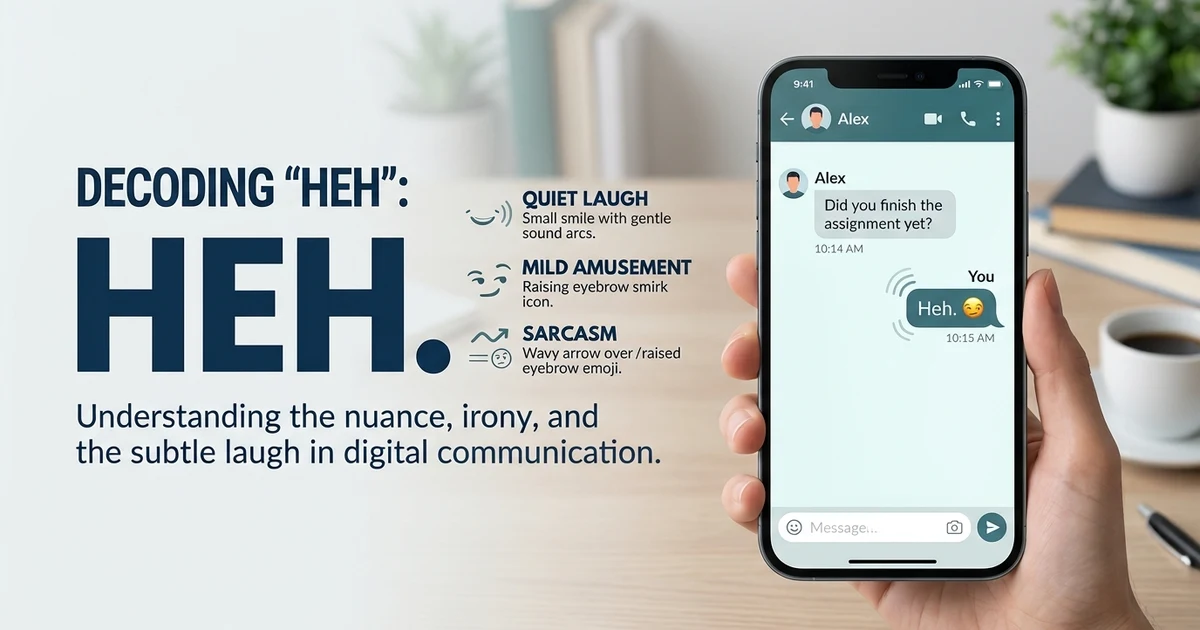
Heh is an informal expression commonly used in texting, online conversations, comics, and casual writing. It usually represents a short, quiet, or slightly awkward laugh. Depending on the context, it can also communicate amusement, sarcasm, disbelief, embarrassment, or a feeling of satisfaction. Unlike a normal laugh such as “haha,” heh often sounds more restrained or subtle. Its exact meaning depends heavily on the surrounding message and the tone the writer intends to convey.
Introduction
Online conversations have created many short expressions that imitate sounds, reactions, and emotions. Heh is one of them. You may see it in text messages, social media comments, online communities, games, and fictional dialogue.
At first glance, it may look like a simple variation of “hehe” or “haha.” However, it can communicate a slightly different feeling. A person might use it after making a clever observation, reacting to an awkward situation, or expressing amusement without showing a big reaction.
For English learners, understanding expressions like this can be useful because their meanings are often determined by context rather than a dictionary definition alone. The same three letters can sound friendly in one message and sarcastic in another.
Learning how heh differs from similar expressions such as “haha,” “hehe,” and “hmm” can make online conversations easier to understand.
What Does Heh Mean?
Heh is generally a written representation of a short, subdued laugh.
For example:
“Heh, I knew that would happen.”
The writer may be amused or quietly satisfied.
It can also appear at the end of a sentence:
“That was pretty funny, heh.”
Here, it adds a small laugh to the statement.
Unlike “HAHA,” which often represents a stronger reaction, heh usually feels quieter, drier, or more understated.
How Heh Is Used
The expression can communicate several different feelings.
Mild amusement
Someone may use it when something is slightly funny.
“Heh, that’s actually pretty clever.”
The person finds the situation amusing but is not expressing strong laughter.
Sarcasm
Heh can sometimes signal sarcasm.
“Heh, great timing.”
Depending on the context, this could mean the speaker genuinely appreciates the timing or is sarcastically criticizing it.
Awkwardness
Someone might use the expression when they feel uncomfortable or unsure how to respond.
“Heh, I guess that didn’t go as planned.”
The expression can make the sentence sound less serious or slightly embarrassed.
Satisfaction
It can sometimes suggest that someone feels pleased about being right or accomplishing something.
“Heh, told you I was right.”
The tone here can sound playful or smug.
Heh vs. Haha
Both expressions can represent laughter, but they often create different impressions.
| Expression | Typical Impression | Common Use |
|---|---|---|
| Heh | Quiet, dry, subtle, or amused | Mild reactions |
| Haha | Friendly or clear laughter | Something genuinely funny |
| Hehe | Playful or mischievous | Lighthearted reactions |
| LOL | Online laughter or amusement | Texting and social media |
These are not strict rules. People use them differently, so context remains important.
Heh in Texting
In texting, heh can be used as a quick reaction instead of writing a complete sentence.
For example:
“Heh.”
A single “heh” might communicate mild amusement, awkwardness, sarcasm, or even uncertainty.
The surrounding conversation is especially important when the expression appears by itself.
Compare:
“Heh 😂”
This is more likely to communicate playful amusement.
With:
“Heh.”
The period can make the response feel more restrained or potentially sarcastic.
Heh in Online Communities
The expression is common in informal online communication. It can appear in comments, forums, gaming chats, social media, and fictional dialogue.
Writers may use it to make a character sound amused, confident, awkward, or sarcastic.
For example:
“Heh, nice try.”
Depending on the situation, this could sound playful, competitive, or mocking.
Because online communication does not provide facial expressions or vocal tone, readers often use punctuation, emojis, and surrounding words to interpret the intended meaning.
Heh in Fiction and Dialogue
Writers sometimes use heh to represent a particular type of laugh.
A character might say:
“Heh, you really thought that would work?”
This can make the character appear confident or amused.
In fiction, the expression is not necessarily meant to represent ordinary laughter. It can help communicate personality and attitude.
Common Mistakes
Assuming heh always means happiness
The expression can communicate several emotions. It may indicate amusement, awkwardness, sarcasm, or satisfaction.
Treating it exactly like haha
Although both can represent laughter, they often have different tones. Heh usually sounds quieter or more restrained.
Ignoring context
A single “heh” can be difficult to interpret without knowing what came before it.
Using it in formal writing
Heh is an informal expression. It generally belongs in casual communication, dialogue, or situations where conversational language is appropriate.
Conclusion
Heh is a short informal expression that usually represents a quiet or restrained laugh. Depending on context, it can communicate mild amusement, sarcasm, awkwardness, confidence, or satisfaction.
The best way to understand it is to look at the entire message rather than relying on the expression alone. Compared with “haha,” heh often feels more subtle, dry, or understated.
FAQs
What does heh mean in texting?
Heh usually represents a quiet or subtle laugh. It can also communicate amusement, awkwardness, sarcasm, or satisfaction depending on the context.
Is heh the same as haha?
Not exactly. Haha generally communicates clearer or stronger laughter, while heh often sounds quieter, drier, or more restrained.
Can heh be sarcastic?
Yes. A person may use heh to make a statement sound sarcastic or slightly mocking.
What does a single “heh” mean?
A single “heh” can have several meanings. It might indicate mild amusement, awkwardness, sarcasm, or satisfaction. The surrounding conversation helps determine the intended meaning.
Is heh informal?
Yes. It is mainly used in casual conversations, texting, online communication, fictional dialogue, and similar settings.
What is the difference between heh and hehe?
Heh usually sounds more restrained or dry, while hehe often has a more playful, lighthearted, or mischievous feeling. The exact interpretation depends on the person using it.
Can heh be used in formal writing?
Generally, no. It is an informal expression and is better suited to casual communication or dialogue.