Quick Answer
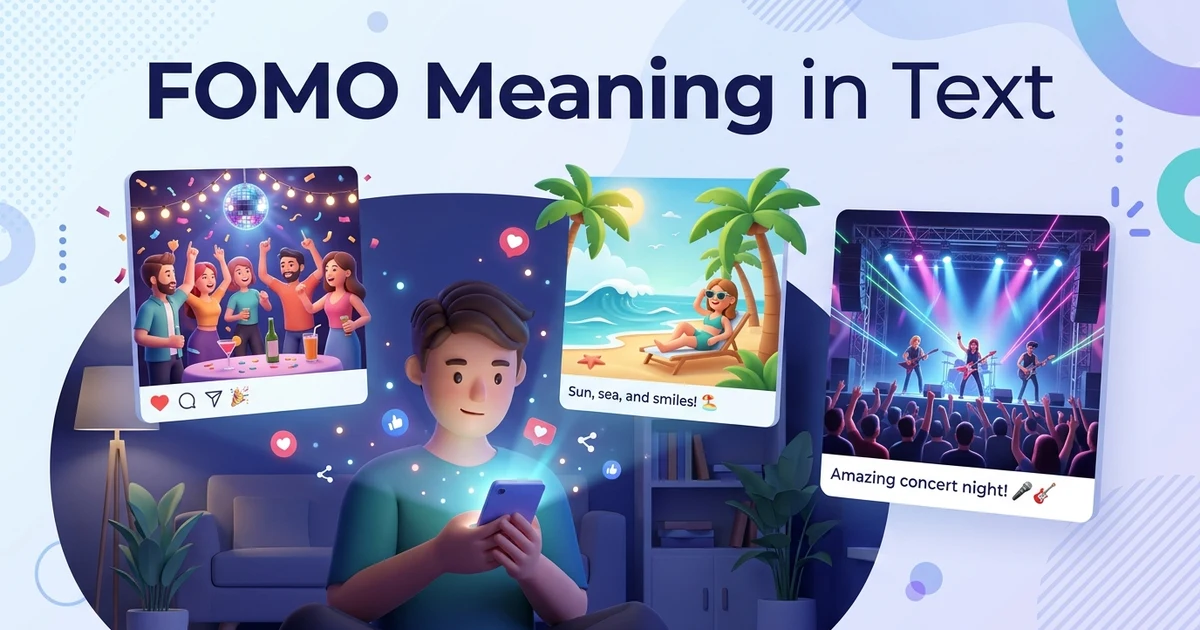
FOMO means Fear of Missing Out. In text messages, social media posts, and online chats, people use FOMO to describe the feeling that others are having fun, enjoying opportunities, or experiencing something exciting without them. It often expresses worry, curiosity, or regret about missing an event, trend, vacation, party, or even an online conversation. Today, FOMO is one of the most common internet slang terms and appears frequently on platforms like Instagram, TikTok, Snapchat, Facebook, and in everyday texting.
Introduction
If you have ever seen someone text, “I’m getting serious FOMO” or “Don’t make me have FOMO,” you may have wondered what they meant. The phrase appears everywhere online, from group chats and social media captions to comments on viral videos. Because it is so common, many people search for FOMO meaning in text to understand when and how to use it correctly.
FOMO has become part of everyday internet language because people constantly see updates about friends, family, celebrities, and influencers. Seeing others attend concerts, travel, celebrate birthdays, or try new experiences can make someone feel left out. That emotional response is exactly what FOMO describes.
In this guide, you’ll learn the meaning of FOMO in texting, where the term came from, how people use it in conversations, real examples, similar internet slang, and the mistakes people often make when using it. Whether you’re new to online slang or simply want to understand modern texting language better, this article covers everything you need to know.
FOMO Meaning at a Glance
| Term | Meaning | Tone | Example |
|---|---|---|---|
| FOMO | Fear of Missing Out | Casual | I have FOMO after seeing everyone’s vacation photos. |
| FOMO | Feeling left out of an event or experience | Emotional | You’re making me feel FOMO by posting those concert videos. |
| FOMO | Anxiety about missing trends or opportunities | Informal | I bought it because of FOMO. |
What Does FOMO Mean in Text?
FOMO stands for Fear of Missing Out. It describes the feeling that other people are enjoying something exciting while you are not part of it. In texting, the word usually expresses disappointment, curiosity, excitement, or even a little jealousy after seeing what others are doing.
For example, imagine your friends go to a football game without inviting you. They start sharing photos and videos in the group chat. You might reply:
I have serious FOMO right now.
This doesn’t necessarily mean you’re angry. It simply means you wish you were there too.
The term is commonly used in casual conversations and is understood by teenagers, college students, and adults alike. Businesses and marketers also use the word when talking about limited time offers or exclusive events because people often don’t want to miss special opportunities.
Other Meanings of FOMO
Although Fear of Missing Out is by far the most common meaning, the abbreviation may appear in a few specialized situations. These are much less common than the internet slang meaning.
| Meaning | Where It Is Used | Simple Explanation | Example |
|---|---|---|---|
| Fear of Missing Out | Texting and social media | Feeling left out | I have FOMO seeing everyone’s vacation. |
| Marketing term | Business | Encouraging people not to miss an offer | Limited seats create FOMO among buyers. |
| Psychology | Mental health discussions | Emotional response to missing experiences | Researchers study how FOMO affects social media users. |
In almost every everyday text conversation, Fear of Missing Out is the meaning people intend.
How FOMO Is Used in Text Messages and Social Media
People use FOMO whenever they feel they are missing an enjoyable experience or opportunity. It can refer to almost anything, including parties, sports events, vacations, shopping deals, movies, online trends, or even conversations happening in a group chat.
Here are some common situations where people use FOMO:
- Friends sharing pictures from a trip you couldn’t attend.
- Seeing classmates hanging out after school.
- Missing a concert by your favorite artist.
- Watching everyone talk about a new movie.
- Seeing a limited time shopping sale.
- Missing a gaming event with friends.
- Finding out about an exciting event after it ended.
The term often appears with expressions like:
- I have FOMO.
- Major FOMO.
- Serious FOMO.
- Weekend FOMO.
- Vacation FOMO.
- Travel FOMO.
- Concert FOMO.
These phrases all describe the same feeling of missing something enjoyable.
Examples of FOMO in Text Conversations
Understanding FOMO becomes much easier when you see it used naturally.
Example 1
Alex: We all went to the beach today.
Ryan: Those pictures look amazing. I’m getting FOMO!
Meaning: Ryan wishes he had gone too.
Example 2
Emma: Everyone is watching the new series tonight.
Lily: Don’t give me FOMO. I’ll watch it tomorrow.
Meaning: Lily doesn’t want to feel left out of the conversation.
Example 3
Chris: Tickets are almost sold out.
Ben: I just bought mine because of FOMO.
Meaning: Ben didn’t want to miss the event.
Example 4
Sarah: We had pizza after the game.
Olivia: Now I have food FOMO.
Meaning: Olivia wishes she had joined them.
Example 5
Jake: Everyone’s posting photos from the festival.
Mia: My FOMO is getting worse!
Meaning: Mia feels left out after seeing everyone’s updates.
FOMO vs YOLO vs JOMO
Many internet slang terms sound similar, but they have very different meanings.
| Term | Meaning | Best Use | Example |
|---|---|---|---|
| FOMO | Fear of Missing Out | Feeling left out | I have FOMO after seeing those photos. |
| YOLO | You Only Live Once | Encouraging someone to enjoy life | Just book the trip. YOLO. |
| JOMO | Joy of Missing Out | Enjoying staying home instead of joining activities | I’m staying home tonight. JOMO feels great. |
next
Common Use Cases of FOMO
People use FOMO in many everyday situations, not just when talking about parties. The phrase can describe almost any situation where someone feels they are missing an experience, opportunity, or trend.
Social Events
One of the most common uses of FOMO is when friends gather without someone.
Example:
Everyone went bowling last night. I had major FOMO after seeing the photos.
Travel
Travel photos on social media often make people feel like they are missing exciting adventures.
Example:
Your beach vacation is giving me FOMO.
Shopping
Retailers sometimes create FOMO by offering discounts that expire soon.
Example:
I ordered the shoes before the sale ended because I had FOMO.
Entertainment
People also use FOMO when everyone is watching the same movie, TV show, or sporting event.
Example:
Everyone keeps talking about the new series, and now I have FOMO.
Gaming
Gamers often use FOMO when they miss limited time events or special rewards.
Example:
I logged in today because I didn’t want to miss the event rewards. Total FOMO.
When Should You Use FOMO?
FOMO works best in casual conversations. It fits naturally in text messages, social media comments, and chats with friends.
You can use FOMO when:
- You wish you had attended an event.
- You missed an exciting opportunity.
- You feel left out after seeing photos or videos.
- You don’t want to miss a limited time offer.
- You want to jokingly tell friends you wish you were there.
Avoid using FOMO in formal business emails, academic papers, or professional reports unless you are specifically discussing psychology, marketing, or social media behavior.
Similar Terms and Related Internet Slang
FOMO is part of a larger group of internet slang words. Knowing these can help you understand online conversations even better.
| Term | Meaning | Example |
|---|---|---|
| JOMO | Joy of Missing Out | I’m staying home tonight. JOMO! |
| YOLO | You Only Live Once | Book the trip. YOLO. |
| IMO | In My Opinion | IMO, that movie was great. |
| TBH | To Be Honest | TBH, I liked the first one more. |
| SMH | Shaking My Head | SMH, that was a bad decision. |
| ICYMI | In Case You Missed It | ICYMI, the game was amazing. |
Common Mistakes People Make
Many people misunderstand or misuse FOMO. Here are the most common mistakes to avoid.
Thinking FOMO Only Means Jealousy
FOMO is not always jealousy. It usually describes feeling left out or wishing you could join an experience.
Using It in Formal Writing
FOMO is internet slang. While professionals sometimes use it in marketing or psychology, it generally sounds too casual for formal writing.
Assuming It Always Refers to Parties
People use FOMO for many situations, including shopping, travel, gaming, sports, movies, school events, and even missing important news.
Confusing FOMO With YOLO
These terms are almost opposites.
- FOMO means you are afraid of missing something.
- YOLO encourages you to do something because life is short.
Believing FOMO Is Always Negative
Although FOMO often describes an uncomfortable feeling, people frequently use it humorously.
For example:
You’re making me hungry with those pizza pictures. I have food FOMO!
Conclusion
Understanding FOMO meaning in text is simple once you know that it stands for Fear of Missing Out. People use it to describe the feeling of being left out of exciting events, opportunities, conversations, or experiences. Whether you see it in a group chat, on social media, or in everyday texting, FOMO usually expresses the wish to be part of what others are enjoying.
Now that you know what FOMO means, you’ll be able to recognize it instantly and use it naturally in your own conversations whenever the situation fits.
FAQs
What does FOMO mean in text?
FOMO stands for Fear of Missing Out. It describes the feeling of missing an exciting event, opportunity, or experience that others are enjoying.
Is FOMO a slang word?
Yes. FOMO is a popular internet slang term that is widely used in text messages, social media posts, and online conversations.
Can FOMO be used in a sentence?
Yes. For example: Everyone went to the concert without me, and now I have serious FOMO.
What is the opposite of FOMO?
The opposite is JOMO, which stands for Joy of Missing Out. It means enjoying your own time instead of feeling left out.
Is FOMO only used on social media?
No. While it became popular through social media, people also use it in text messages, face to face conversations, marketing, and discussions about psychology.
Why do people experience FOMO?
People experience FOMO because they worry about missing enjoyable activities, valuable opportunities, or memorable experiences that others are having.
Is FOMO always a bad thing?
Not always. Sometimes people use FOMO humorously or casually. However, constant FOMO can lead to stress or excessive social media use for some individuals.