Quick Answer
The most common DTM meaning in text is Doing Too Much. People use it when someone is overreacting, acting overly dramatic, trying too hard, or putting more effort into something than the situation requires.
For example, if a friend sends ten angry messages about a small problem, someone might reply, You are DTM right now.
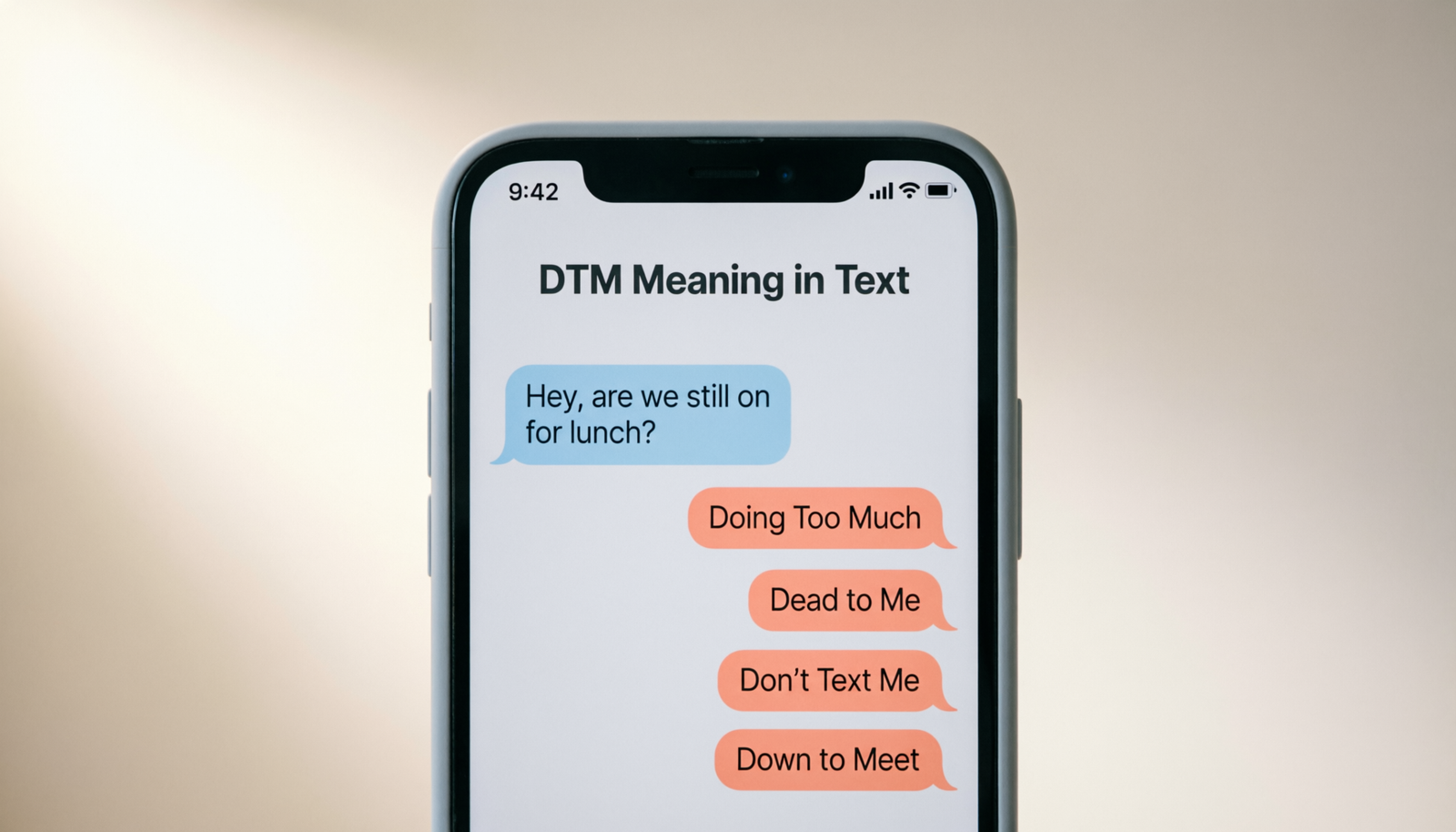
DTM can also have other meanings depending on the conversation:
- Doing Too Much
- Dead to Me
- Don’t Text Me
- Down to Meet
- Don’t Touch Me
The surrounding message, relationship between the people, and emotional tone usually reveal which meaning is intended.
Introduction
Seeing DTM in a message can be confusing because the same three letters may communicate criticism, anger, rejection, or interest in meeting. Someone might use it jokingly in a group chat, while another person may use it during a serious disagreement. That is why reading the full conversation matters more than memorizing only one definition.
In most casual texts and social media conversations, DTM means Doing Too Much. It describes behavior that seems excessive, dramatic, unnecessary, or attention seeking. The expression is especially common in chats between friends and in comments where people react quickly to someone’s actions.
However, DTM meaning in text can change completely in emotional or relationship based conversations. It may mean Dead to Me when someone is angry, Don’t Text Me when they want communication to stop, or Down to Meet when they are discussing plans. This guide explains each meaning, shows natural examples, and helps you identify the intended message without making the wrong assumption.
What Does DTM Mean in Text?
DTM usually stands for Doing Too Much. It is a shortened way of saying that someone is making a situation bigger than necessary, behaving dramatically, trying too hard, or giving an excessive reaction.
A person might use DTM when a friend becomes extremely upset about a minor issue. It can also describe someone who is showing off, seeking attention, sending too many messages, or putting unnecessary effort into something simple.
For example:
Person 1: I called him twelve times because he did not reply.
Person 2: You are DTM. He might be busy.
In this conversation, DTM means the first person’s reaction seems excessive.
The expression can be playful or critical. Close friends may use it as harmless teasing, but it can sound dismissive during a serious conversation. Calling someone DTM may suggest that their feelings or effort are unreasonable. Tone and relationship therefore matter.
DTM may also mean Dead to Me, Don’t Text Me, Down to Meet, or Don’t Touch Me. These meanings are less predictable, so the surrounding words provide the best clues.
The Most Common Meanings of DTM
Doing Too Much
Doing Too Much is the most widely recognized slang meaning of DTM. It describes behavior that appears excessive for the situation.
Someone may be DTM when they:
- React dramatically to a small problem
- Send repeated messages without waiting
- Try too hard to impress people
- Turn a simple disagreement into a major argument
- Add unnecessary details or effort
- Seek excessive attention online
Example:
You bought balloons, flowers, gifts, and a custom cake for a first date. You might be DTM.
This does not always mean the effort is bad. Sometimes people use DTM jokingly when they are impressed by how much someone has done.
Example:
You decorated the entire house for movie night. You are DTM, but I love it.
Here, the phrase sounds playful and appreciative rather than insulting.
Dead to Me
DTM can mean Dead to Me when someone feels deeply angry, betrayed, disappointed, or finished with another person.
Example:
He shared my private messages with everyone. He is DTM.
This usage usually sounds more serious than Doing Too Much. It suggests that the speaker no longer wants a relationship or connection with that person.
Friends may also use it dramatically as a joke.
Example:
You ate the last slice of pizza. You are officially DTM.
The exaggerated situation shows that the speaker is probably joking.
Don’t Text Me
DTM may stand for Don’t Text Me when someone wants to end or pause a conversation.
Example:
I need some space tonight. DTM until tomorrow.
This meaning is direct and may sound cold, especially without an explanation. Someone who receives it should usually respect the request and avoid sending more messages immediately.
In some conversations, the person may only want temporary space. In others, they may be ending contact completely. The words before and after DTM help clarify their intention.
Down to Meet
DTM can also mean Down to Meet when people are discussing plans, dates, events, or casual hangouts.
Example:
I will be downtown after work. DTM?
Here, the sender is asking whether the other person is interested and available to meet.
This meaning is normally easy to recognize because the conversation includes a place, time, event, or invitation.
Example:
We are getting coffee around six. Are you DTM?
In this situation, DTM clearly relates to meeting rather than criticism or anger.
Don’t Touch Me
DTM sometimes means Don’t Touch Me, especially when someone is setting a physical boundary or responding to unwanted contact.
Example:
I already said DTM. I need space.
This meaning should be taken seriously. If someone says not to touch them, stop physical contact and respect their boundary.
The phrase may occasionally appear in a playful conversation, but it should not automatically be treated as a joke.
How to Understand DTM From Context
The easiest way to identify the correct DTM meaning is to examine what the conversation is about.
Look at the Topic
If the discussion involves dramatic behavior, repeated messages, or unnecessary effort, DTM probably means Doing Too Much.
If the conversation involves betrayal, anger, or ending a friendship, it may mean Dead to Me.
If someone is requesting space, it may mean Don’t Text Me or Don’t Touch Me.
If people are discussing plans, DTM likely means Down to Meet.
Notice the Sentence Structure
The position of DTM can provide a clue.
You are DTM usually means You are Doing Too Much.
He is DTM may mean He is Dead to Me.
DTM tonight may mean Don’t Text Me tonight.
Are you DTM may mean Are you Down to Meet.
Please DTM may mean Don’t Touch Me or Don’t Text Me, depending on the situation.
Consider the Emotional Tone
Emojis, punctuation, and previous messages can change how DTM feels.
A laughing emoji may make the message playful.
An angry emoji may signal frustration.
A location or clock emoji may suggest Down to Meet.
A serious argument may point toward Dead to Me or Don’t Text Me.
Do not depend on emojis alone. Some people use them sarcastically, while others use no emojis even when joking.
DTM Examples in Text Conversations
The following examples show how the meaning changes with context.
Example 1: Doing Too Much
Person 1: She did not like my picture, so I deleted every photo of us.
Person 2: You are DTM. Just ask her if something is wrong.
DTM means the reaction is excessive.
Example 2: Playful Criticism
Person 1: I created a twenty page schedule for our weekend trip.
Person 2: You are DTM, but at least we will be organized.
The phrase is teasing but not hostile.
Example 3: Dead to Me
Person 1: Are you still friends with Alex?
Person 2: No. After what happened, he is DTM.
The speaker considers the relationship finished.
Example 4: Don’t Text Me
Person 1: Can we keep talking about this?
Person 2: Not tonight. DTM until I calm down.
The person wants temporary space from messaging.
Example 5: Down to Meet
Person 1: I am near the mall this afternoon. DTM?
Person 2: Yes, I can be there around four.
The sender is asking whether the other person wants to meet.
Example 6: Don’t Touch Me
Person 1: Why did you move away?
Person 2: I am uncomfortable. DTM, please.
The person is setting a clear physical boundary.
What Does DTM Mean on Social Media?
On platforms such as TikTok, Instagram, Snapchat, and X, DTM most commonly means Doing Too Much. People use it in comments, captions, direct messages, and reaction posts when someone seems dramatic, excessive, or overly eager.
Example comment:
Posting ten videos about one argument is DTM.
A creator might also describe their own behavior humorously.
Example caption:
I brought three outfits for a one hour event. I know I am DTM.
In this type of post, the person is admitting that they may be overprepared or extra.
The meaning can still change in private messages. A direct message about plans could use DTM to mean Down to Meet, while an argument could use it to mean Don’t Text Me. The platform does not determine the meaning. The conversation does.
Is DTM Rude?
DTM can sound rude when it means Doing Too Much because it judges another person’s behavior. It may suggest that they are dramatic, annoying, attention seeking, or unreasonable.
The phrase is usually safer with close friends who understand your humor. It may not work well with a coworker, manager, customer, teacher, or person you do not know closely.
Compare these messages:
You are DTM. Calm down.
Your message seems stronger than the situation requires. Can we talk about it calmly?
The second version is more respectful and explains the concern clearly.
DTM can also sound harsh when it means Dead to Me or Don’t Text Me. Those meanings communicate rejection and may intensify an argument. When the relationship matters, using complete words can prevent misunderstanding.
How to Reply When Someone Says DTM
Your response should depend on the intended meaning and the tone of the conversation.
When DTM means Doing Too Much, you could reply:
- Fair enough, I may be overthinking it.
- I am just trying to make sure everything works.
- Maybe, but this matters to me.
- What part seems excessive?
When it means Don’t Text Me, respect the request:
- Understood. I will give you space.
- Okay. Message me when you are ready.
When it means Down to Meet, answer clearly:
- Yes, what time?
- I cannot today, but tomorrow works.
- Sure, where should we meet?
When you are uncertain, ask directly:
What do you mean by DTM here?
Asking is better than reacting to the wrong meaning.
DTM Compared With Similar Text Slang
DTM is related to several expressions used to describe excessive or dramatic behavior.
Extra describes someone whose behavior is more dramatic or elaborate than necessary.
Example: That entrance was so extra.
Doing the most has nearly the same meaning as Doing Too Much.
Example: He is doing the most for a simple group photo.
TMI means Too Much Information. It refers to sharing private, uncomfortable, or unnecessary details rather than behaving excessively.
Example: I did not need to know that. TMI.
OTT means Over the Top. It describes something exaggerated, excessive, or highly dramatic.
Example: The decorations were completely OTT.
Try hard describes someone who appears to make an obvious or excessive effort to impress others.
Example: That caption feels a little try hard.
DTM is broader because it can describe emotional reactions, messages, effort, appearance, arguments, and social behavior.
When Should You Use DTM?
DTM works best in casual communication with people who understand slang and your tone.
You may use it when:
- Teasing a close friend
- Reacting to exaggerated behavior
- Describing your own excessive effort
- Commenting casually on a dramatic post
- Asking someone whether they are willing to meet
Avoid it in professional emails, formal school assignments, customer support messages, serious relationship discussions, and conversations where the meaning may be unclear.
Writing the complete phrase is usually better when the message involves boundaries, conflict, or an important decision.
Common Mistakes With DTM
Assuming It Always Means Doing Too Much
Doing Too Much is common, but it is not the only definition. A conversation about meeting could use DTM as Down to Meet, while an argument could use it as Dead to Me.
Ignoring the Emotional Tone
You are DTM with a laughing emoji may be friendly teasing. The same words during an argument may feel dismissive and insulting.
Using It in Formal Communication
DTM may confuse coworkers, clients, teachers, or people unfamiliar with internet slang. Use complete words when clarity matters.
Treating a Boundary as a Joke
When DTM means Don’t Touch Me or Don’t Text Me, respect the request. Do not assume the person is being playful.
Responding Before Confirming the Meaning
A defensive response may create unnecessary conflict. When the context is unclear, ask what the sender means.
Conclusion
The most common DTM meaning in text is Doing Too Much. It usually describes someone who is overreacting, trying too hard, acting dramatically, or putting excessive effort into a situation.
DTM may also mean Dead to Me, Don’t Text Me, Down to Meet, or Don’t Touch Me. Read the surrounding conversation before responding. When the meaning is unclear or the message involves a serious boundary, ask the sender directly instead of guessing.
FAQs
What does DTM mean in texting?
DTM most commonly means Doing Too Much. It describes behavior that seems excessive, dramatic, or unnecessary. It can also mean Dead to Me, Don’t Text Me, Down to Meet, or Don’t Touch Me.
What does You are DTM mean?
You are DTM usually means You are Doing Too Much. The sender believes you are overreacting, trying too hard, or making the situation more dramatic than necessary.
What does DTM mean from a girl?
The meaning does not depend on the sender’s gender. It commonly means Doing Too Much, but context may show that it means Don’t Text Me, Down to Meet, Dead to Me, or Don’t Touch Me.
What does DTM mean on TikTok?
On TikTok, DTM usually means Doing Too Much. It often appears in comments criticizing or joking about behavior that seems dramatic, excessive, attention seeking, or overly complicated.
Can DTM mean Down to Meet?
Yes. DTM can mean Down to Meet when people are discussing plans or asking whether someone wants to meet. A message such as DTM after work? is usually an invitation.
Can DTM mean Dead to Me?
Yes. During an argument or conversation about betrayal, DTM may mean Dead to Me. It suggests that the speaker feels finished with the person or relationship.
Is DTM an insult?
It can be. Calling someone DTM may sound playful between close friends, but it can also dismiss their feelings or criticize their behavior. Tone and relationship determine how it is received.
How do I know which DTM meaning is correct?
Look at the topic, sentence structure, tone, emojis, and previous messages. Discussions about excessive behavior usually mean Doing Too Much. Plans suggest Down to Meet, while conflict may suggest Dead to Me or Don’t Text Me.